
INDUSTRIAL WAREHOUSE SOLUTIONS
Conveyors & Automated Systems
MWS has designed and installed conveyors for distribution warehouses ranging from Healthy & Beauty to E-Commerce fulfillment for over 40 years.
Speak with an expert  515-635-1555
Home / Warehouse Equipment / Conveyors & Automated Systems
Conveyor Systems Designed Around Your Operation
MWS plans, designs, and installs conveyor solutions ranging from simple product transfers to fully automated fulfillment systems. We work with your team to assess how products move through your operation, from picking and packing to labeling and truck loading, and identify the equipment and level of automation that best fit your workflow.
By reviewing current throughput, capacity requirements, and growth plans, we develop a layout that meets today’s needs and supports future expansion. Whether you need a basic conveyor line or an integrated system, MWS helps you plan improvements and add automation as your operation grows.
Product Movement & Accumulation
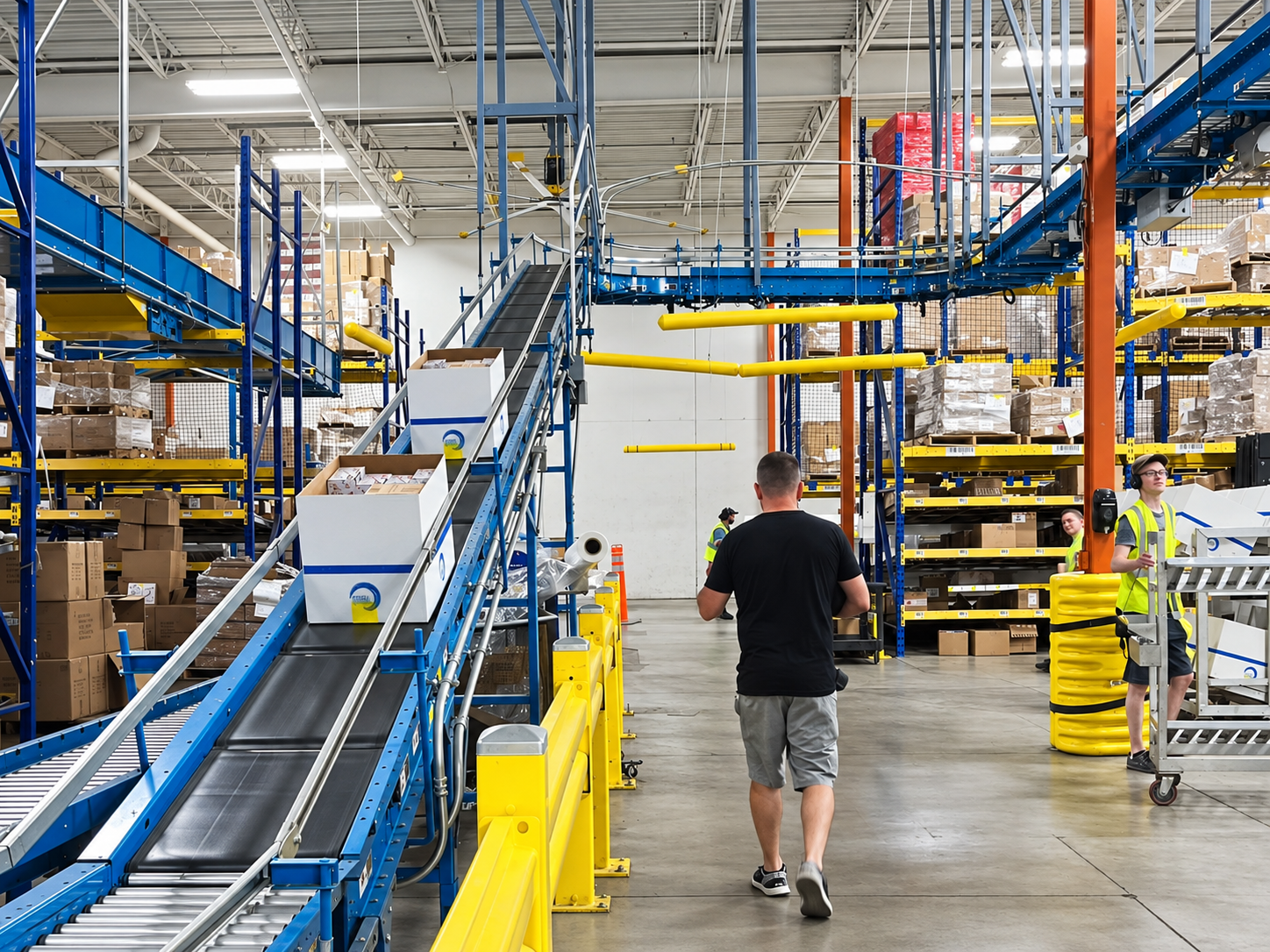
Move products between workstations and manage carton flow through each stage of your operation. From basic gravity conveyors to powered accumulation systems, MWS helps you select equipment that supports efficient transfers, controlled spacing, and changing throughput needs.
Gravity Conveyor
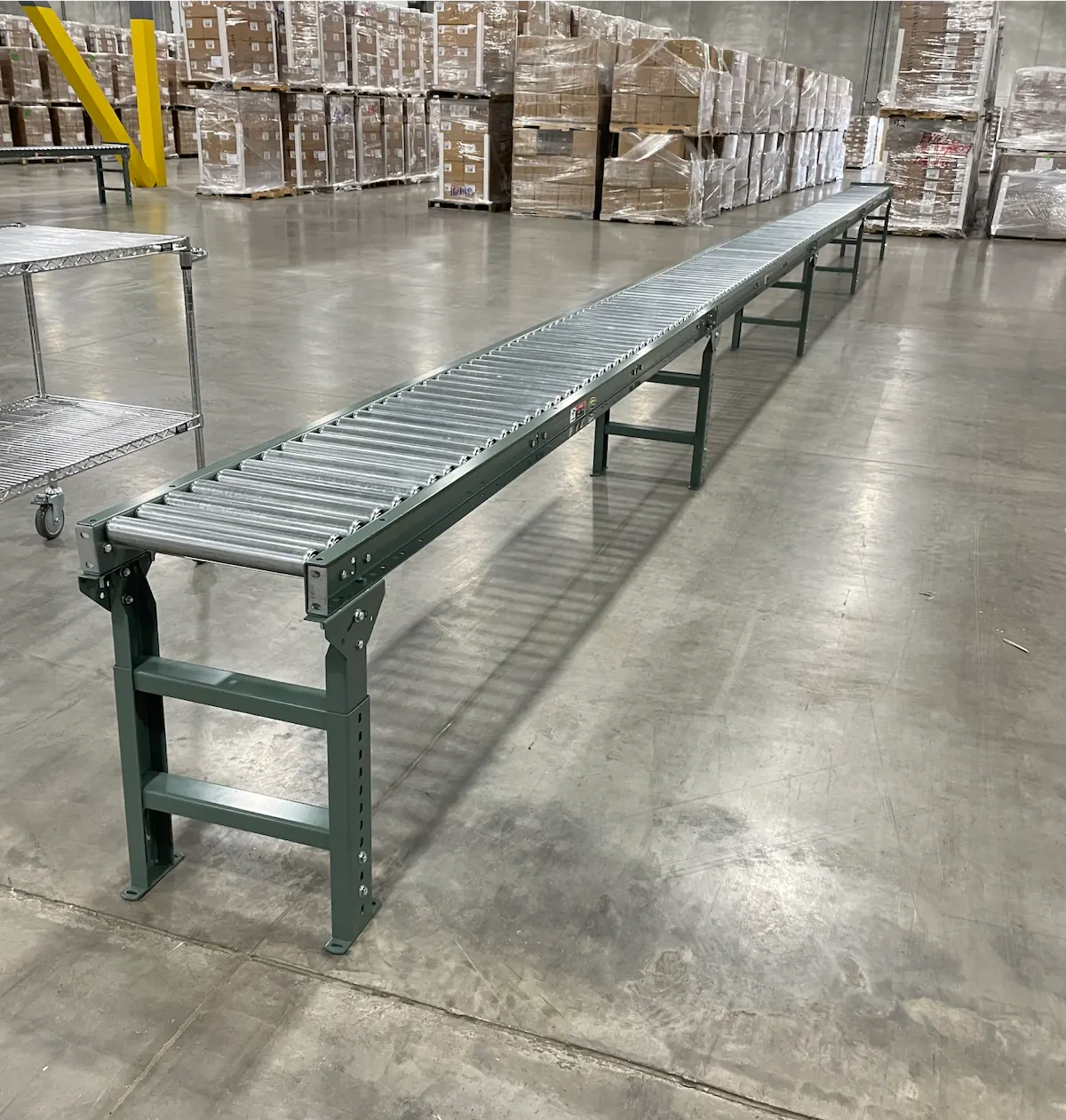
Gravity conveyors provide an economical way to improve picking operations, support a growing ecommerce business, and move products between workstations. Using a slight decline or manual force, they transport cartons and other suitable items without powered equipment, making them a practical solution for staging, temporary layouts, and lower-throughput areas.
Sections can be set up, relocated, and repurposed as your operation grows. Common configurations include widths from 18 to 30 inches and 10-foot lengths with standard-height legs, with both new and used equipment options.
Key Benefits
- Moves product without powered equipment
- Offers an economical solution for basic material handling
- Requires minimal maintenance
- Easily relocated or repurposed as operations grow
Use When
- Simple transfers between workstations are needed
- Temporary or lower-volume handling areas require conveyor
- Picking and staging operations need an affordable starting point
Powered Conveyor
24-volt accumulation conveyors provide quiet, energy-efficient product handling for operations that require more coordinated movement and integrated automation. Electrically driven conveyor sections manage the movement and accumulation of cartons between processes, supporting more complex picking, packing, and shipping layouts.
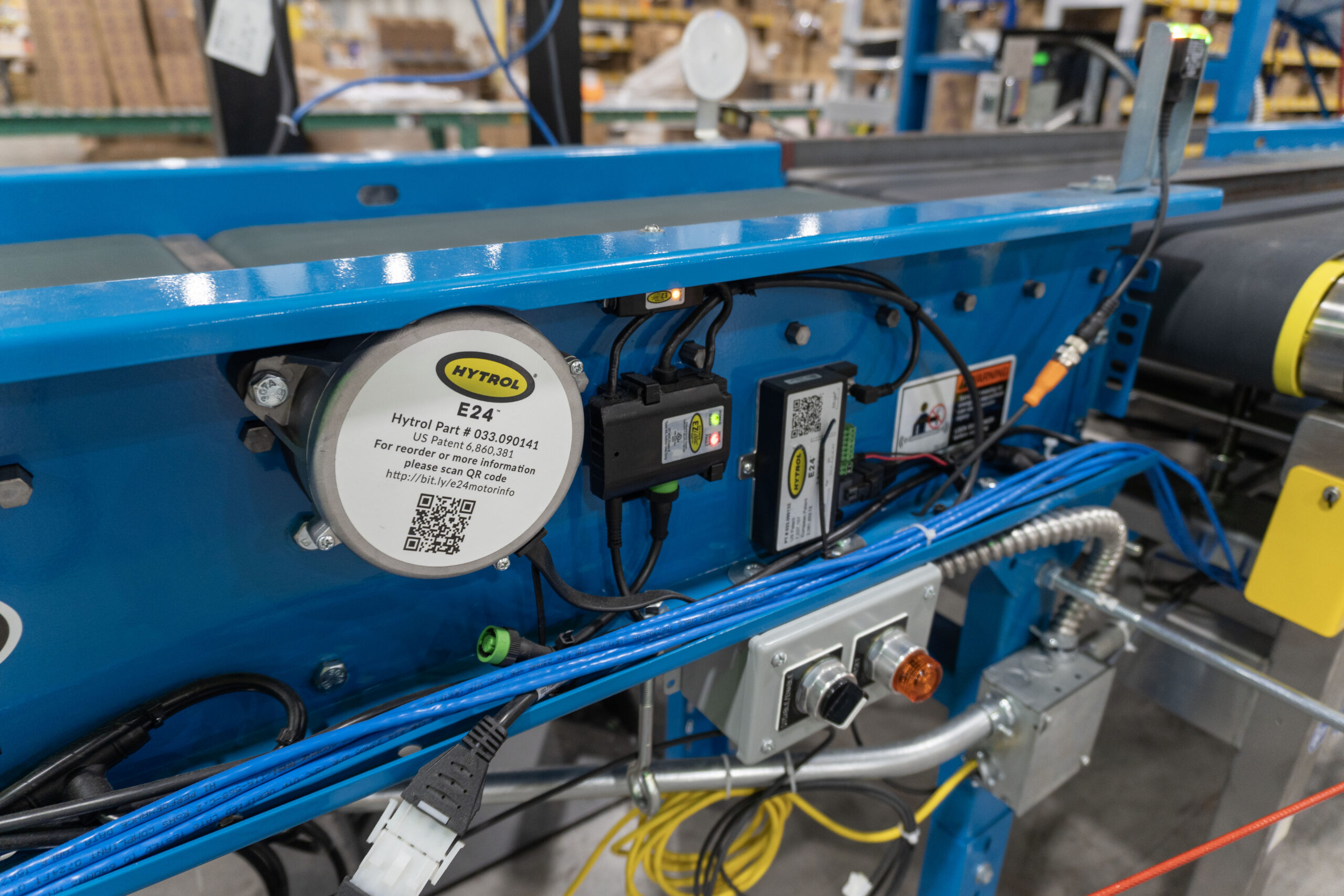
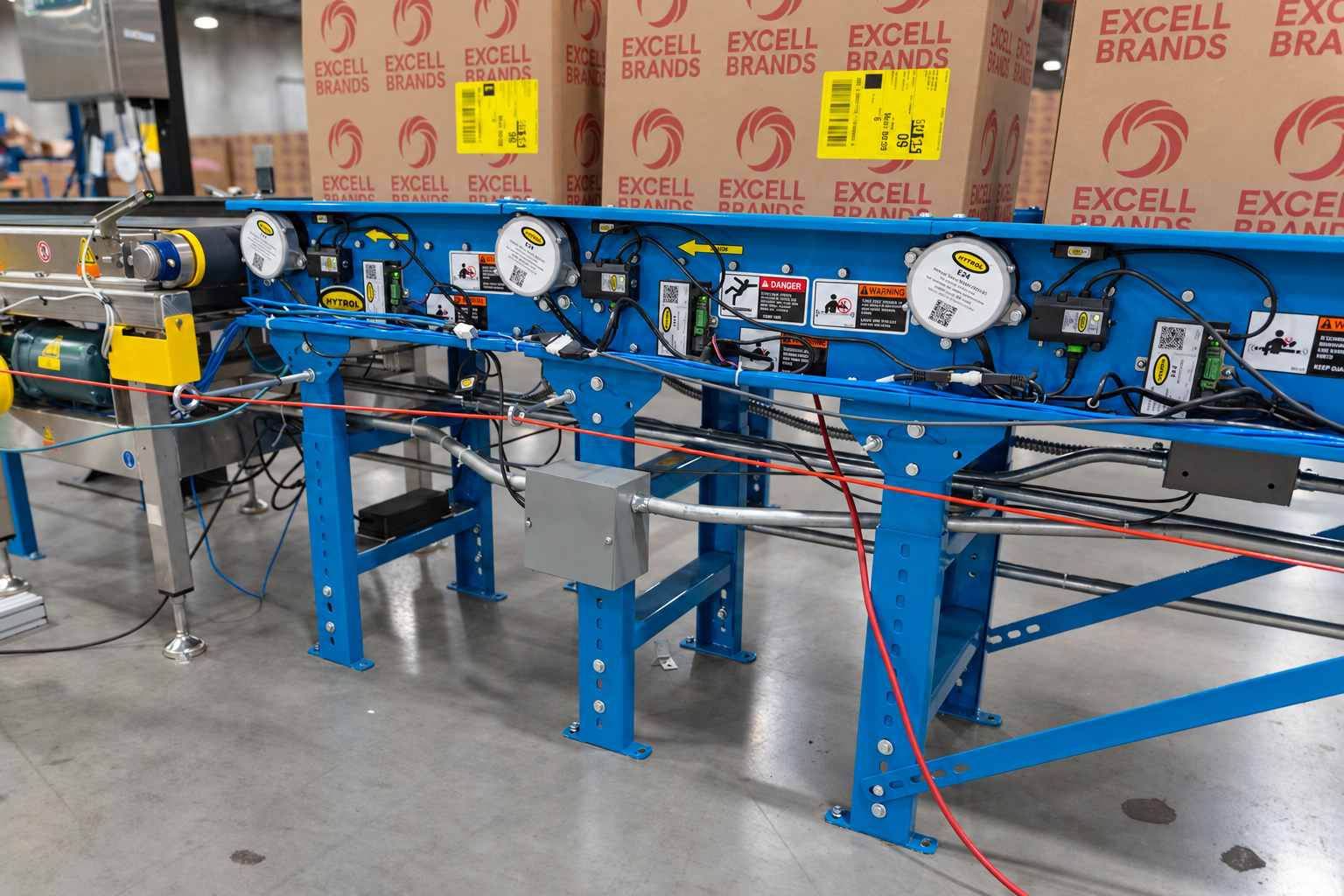
Hytrol E-24 powered conveyor simplifies system design by combining flexible zone controls with adjustable conveyor speeds. Traditional layouts often used separate conveyor types for transportation, minimum-pressure handling, and accumulation. E-24 can serve these functions with customizable EZLogic® controls managing product accumulation and release. This gives MWS greater flexibility to configure conveyor zones, maintain spacing between boxes, and adjust speeds to support your operation.
Key Benefits
- Maintains consistent movement between work areas
- Reduces manual carrying of boxes and totes
- Offers roller and belt options for different applications
- Accommodates level travel, inclines, declines with appropriate equipment
Use When
- Products need to move between picking, packing, and shipping
- Manual transportation is slowing production
- Your layout requires powered movement over longer distances or elevation changes
Hytrol EZLogic® Controls
Hytrol’s EZLogic® controls manage how products accumulate and move through conveyor zones, helping maintain spacing and keep product flow organized. EZLogic NET adds networked controls that allow zone settings to be adjusted from one location, supporting everything from basic speed and direction control to more advanced automation. Designed for E24™ zero-pressure accumulation conveyors, the system offers flexible configuration and simplifies maintenance as your operation’s needs change.
Controls & Software
LaFayette Engineering provides conveyor controls and warehouse control system (WCS) software that coordinate equipment throughout an automated conveyor system. With expertise in Hytrol’s E-24 conveyor, LaFayette integrates print-and-apply systems, in-motion scales, lane diverts, sortation, and dock loading equipment to manage product flow from one process to the next.


Package Processing & Accuracy
Identify, verify, and label packages as they move toward sortation or shipping. Automated solutions help streamline processing, reduce repetitive tasks, and keep package information connected throughout your operation.
Print & Apply
Print and apply machines automatically print shipping labels, barcodes, and other package information and apply them to cartons as part of the conveyor process. Integrated with weighing, scanning, and shipping software, these systems reduce manual labeling and support consistent label placement as orders move toward sortation and dispatch.
- Automate repetitive labeling
- Integrated with weighing & scanning
In-Motion Scale
In-motion scales capture package weights as cartons travel along the conveyor, reducing the need to stop and weigh each shipment manually. Integrated with scanning, labeling, and conveyor controls, they support shipping calculations and weight verification. Packages outside established weight limits can be flagged or diverted for review.
- Weigh packages without stopping
- Capture weight data for shipping
Barcode Scanning Systems
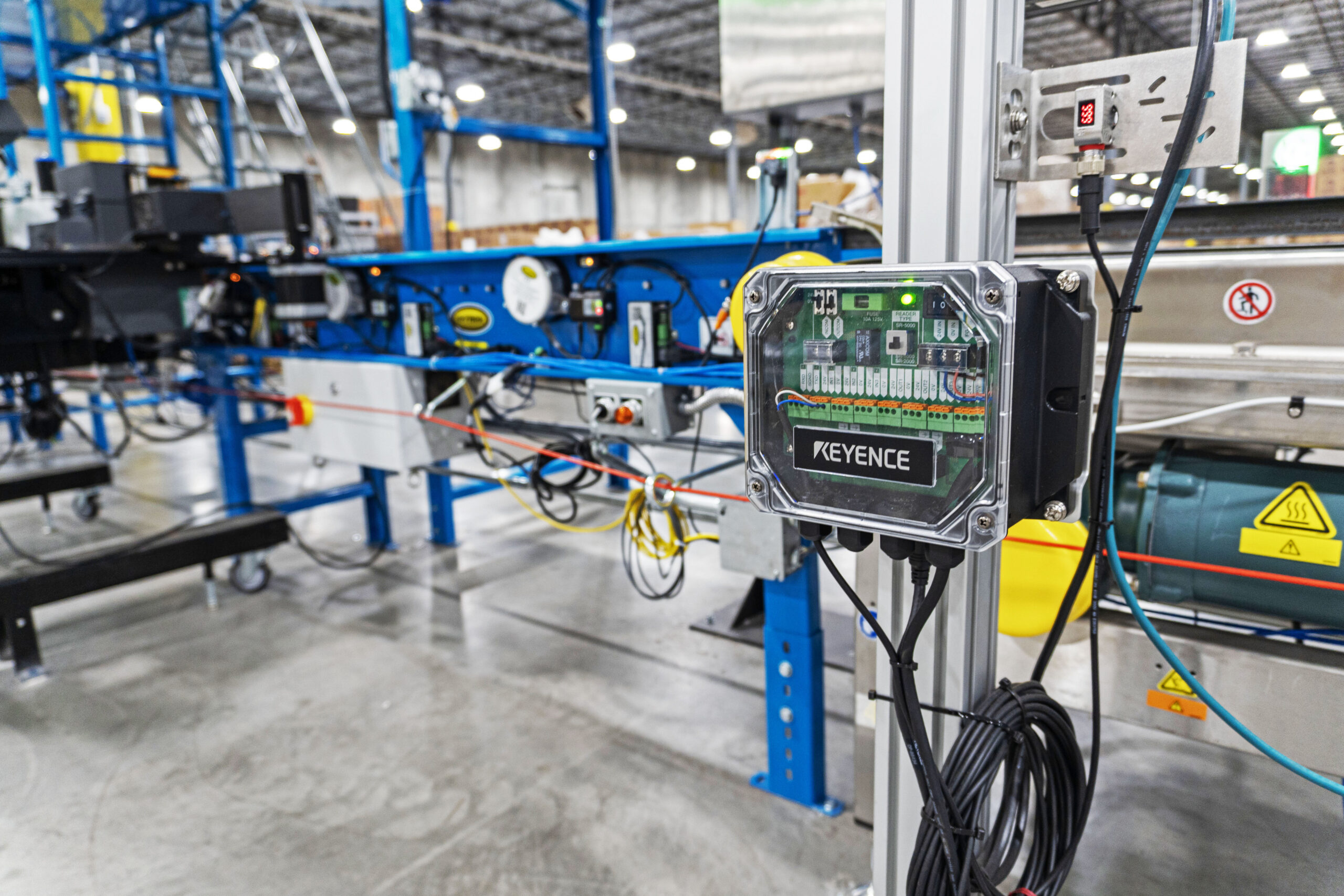
KEYENCE barcode readers automatically capture barcodes and 2D codes as packages move through your conveyor system, supporting product tracking and automated sorting. High-speed reading technology accommodates varying package sizes and label positions, helping reduce manual scanning and maintain efficient product flow.
- Identify packages automatically
- Connect package data to routing
- Reduce manual scanning

Integrated Packing Systems
Keep orders moving through packing with systems that streamline carton handling, lid application, and sealing. Integrated corrugated takeaway lines help remove discarded cardboard from work areas and support a more efficient workflow.
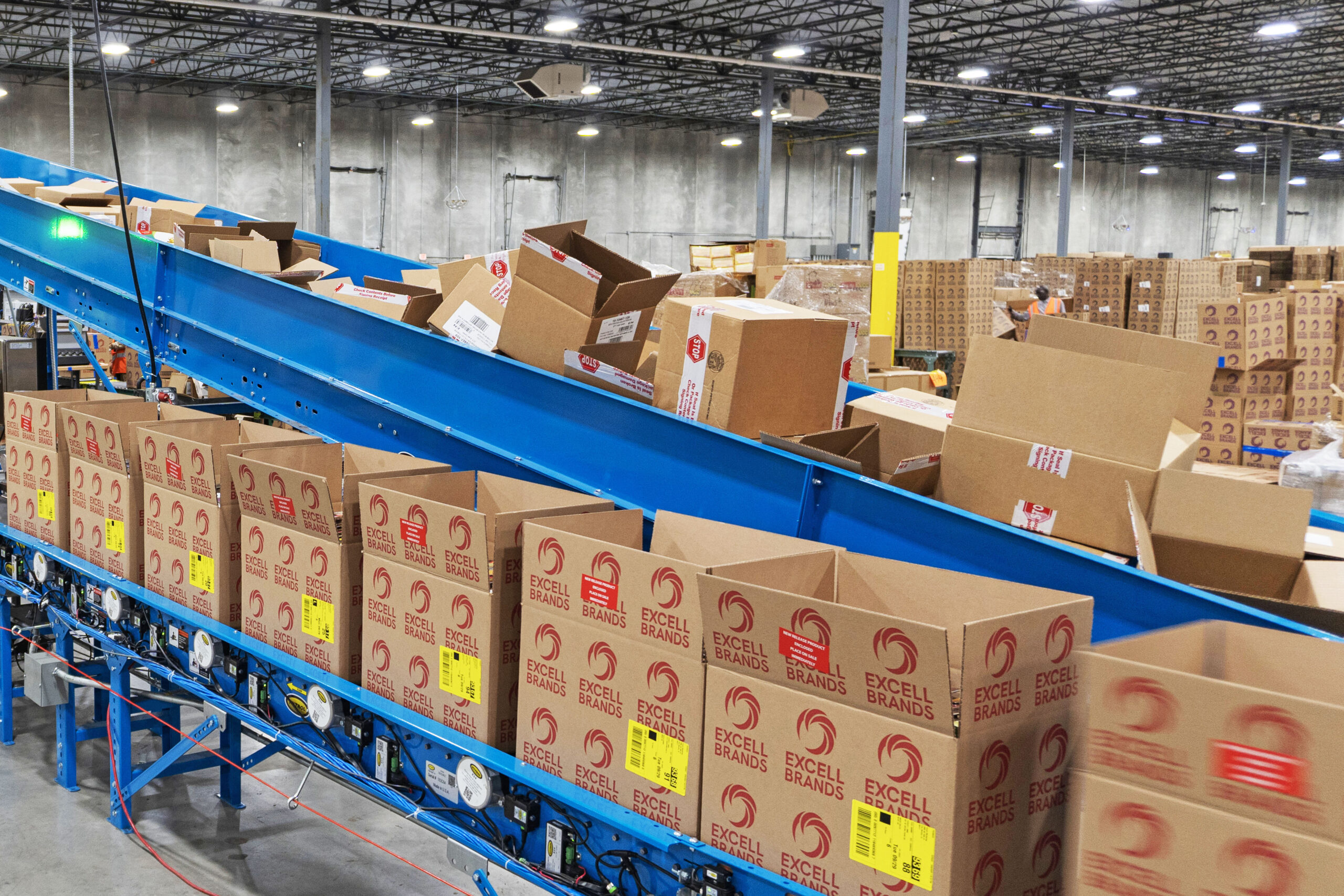
Corrugated Takeaway Conveyor
Corrugated takeaway conveyors carry empty boxes and discarded cardboard away from picking and packing stations to a designated collection area or baler. Removing this material from active work areas helps reduce clutter, limit manual carrying, and keep employees focused on processing orders.
- Clear cardboard from workstations
- Reduce trips to collection areas
- Keep packing areas organized
Automated Cartoning System
Cartoning systems streamline the preparation and handling of cartons as products move through the packing process. Depending on the equipment selected, they can form cartons, support product loading, and transfer packed orders to downstream closing and sealing equipment. MWS helps integrate these steps into a layout that fits your products, order volume, and available space.

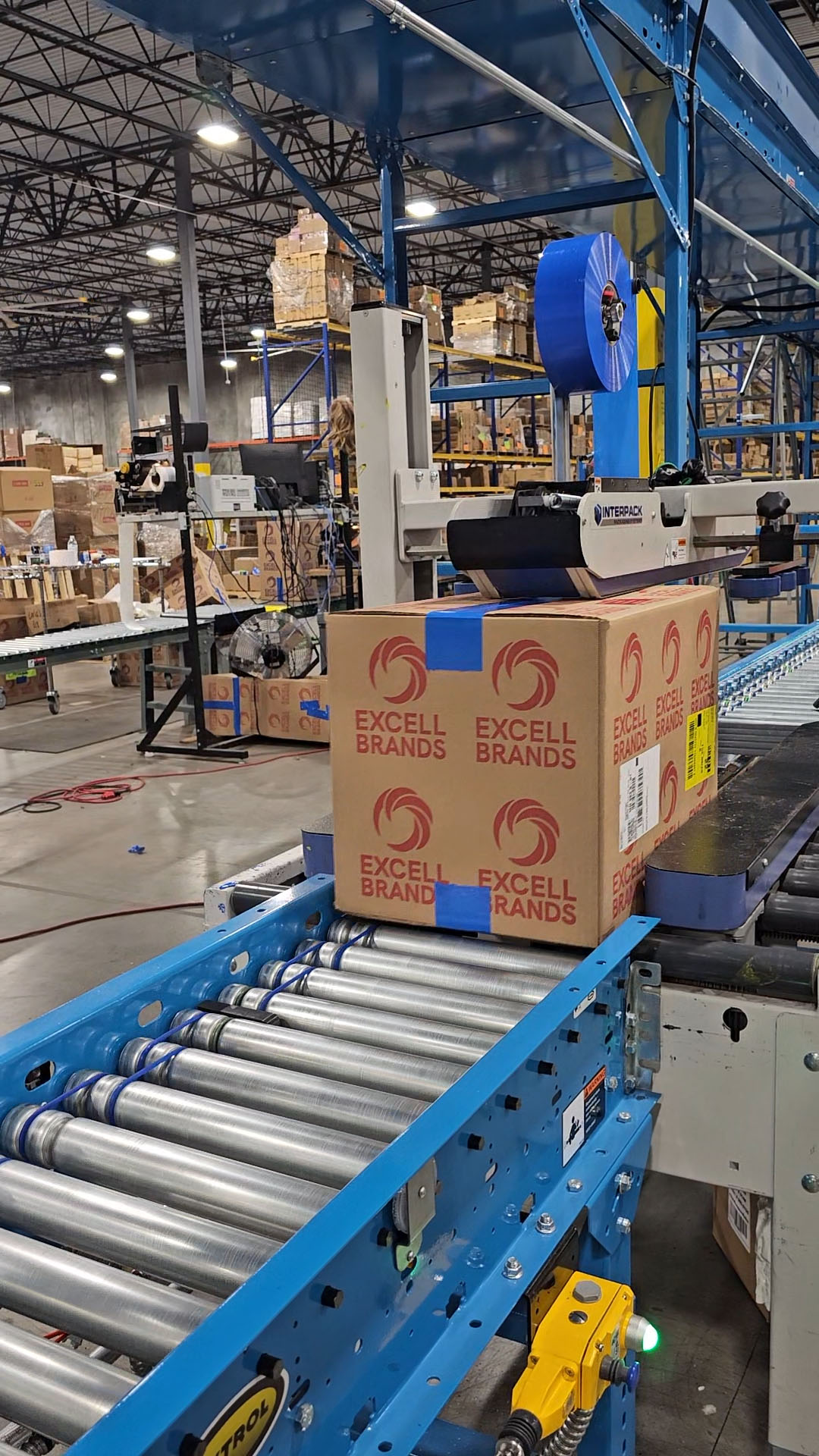
Box Taper
Box tapers apply tape to close and seal cartons, creating a consistent finish while reducing repetitive manual taping. Available in configurations for uniform or varying carton sizes, these machines can support individual packing stations or connect directly to a conveyor line for continuous order processing.
- Fully-automated & consistent sealing of cartons
Automated Carton Lidding
Automated lidding equipment applies and seals corrugated lids to filled cartons as they move through the packing line. Integrated with upstream cartoning equipment and conveyor controls, these systems reduce manual closing tasks and prepare packages for labeling, sortation, and shipping.

Package Sorting & Loading
Route packages to designated shipping lanes and streamline their transfer into trucks and trailers. MWS can integrate sortation equipment and loading conveyors into a coordinated system that supports your layout and shipping volume.
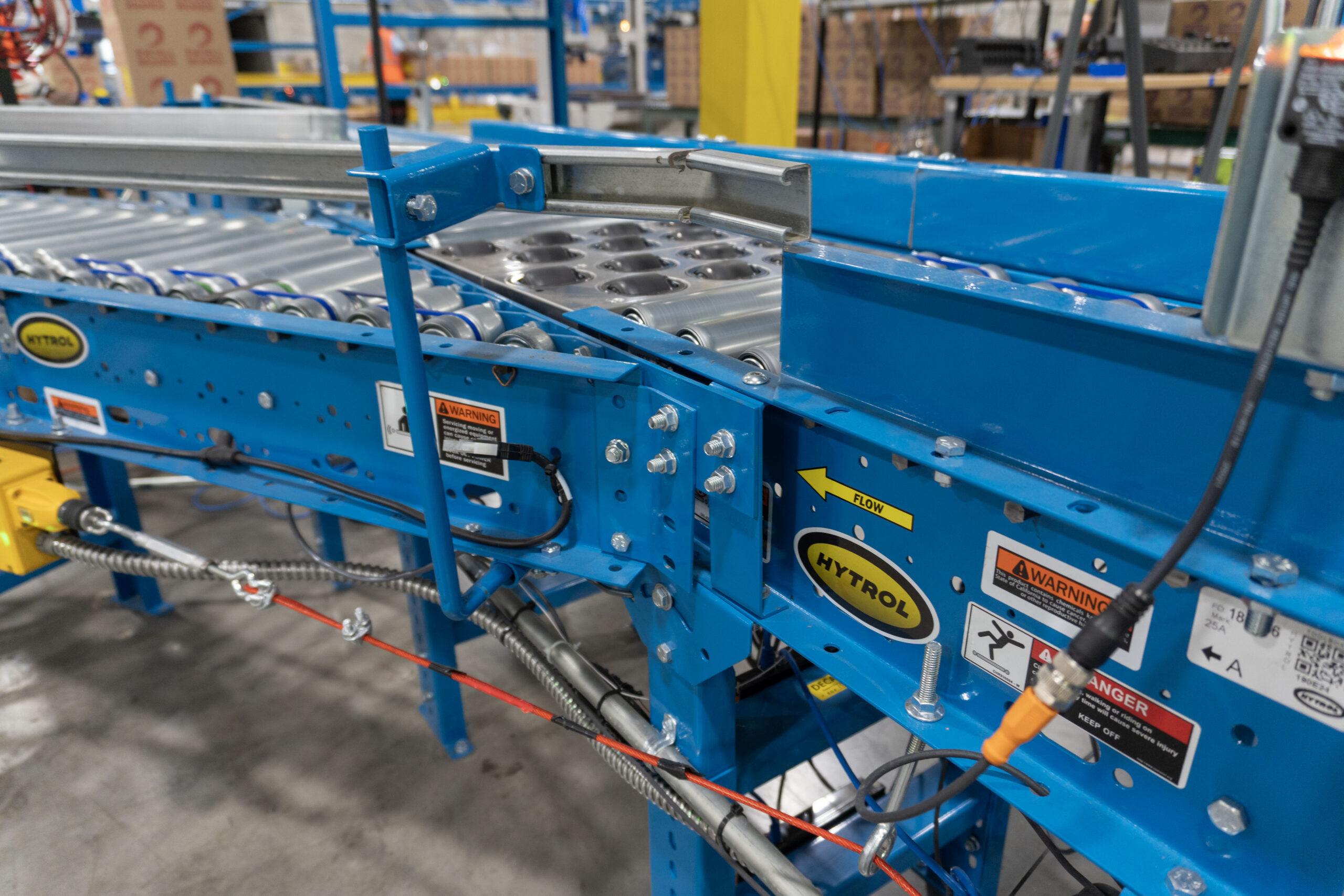
Pop-Up Divert
Air activated pop-up diverts use pneumatically raised wheels or rollers to direct cartons from the main conveyor into designated lanes. When paired with scanners, scales, or inspection equipment, they can route packages requiring review to a separate lane while other orders continue downstream. They also provide controlled transfers to packing stations or other processing areas.
- Direct cartons to designated lanes
- Separate exceptions for review
Shipping Sorter
Shipping sorters automatically direct completed orders to designated shipping lanes or dock doors based on carrier, destination, or other routing criteria. Integrated scanners and conveyor controls help reduce manual sorting and keep outbound orders organized.
Elevated conveyor layouts can also help preserve floor space for pallet staging and dock traffic.
- Organize orders by destination
- Reduce manual sorting

Truck & Dock Loaders
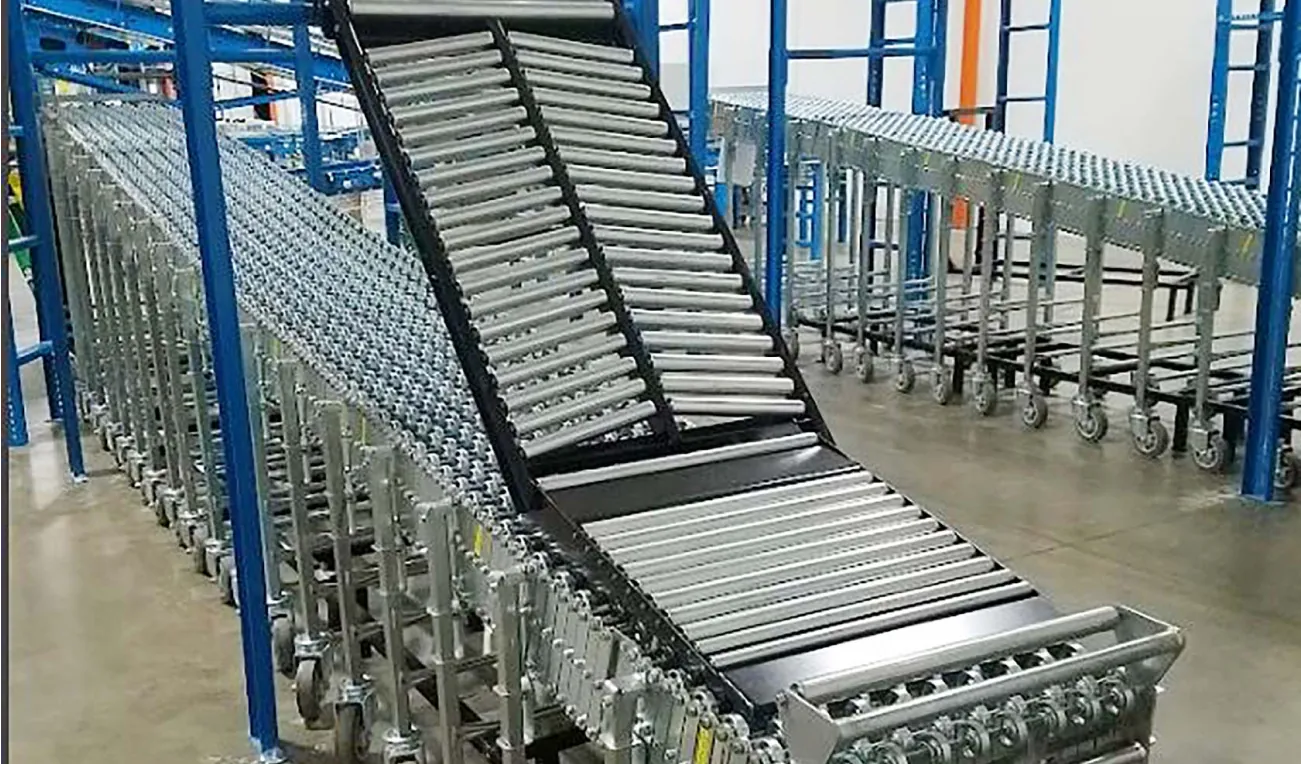
Gravity dock loaders connect outbound conveyor lines with the loading area, using a decline or manual assistance to move cartons toward workers inside the trailer. Expandable sections extend as needed and retract for compact storage, reducing carrying distances and adapting to changing loading positions.
Powered conveyor options are also available when controlled movement or powered extension is needed.
How to Choose the Right
Automated Conveyor System
Selecting the right automated conveyor system is one of the most important decisions you'll make for your warehouse operation. Here's a structured framework to guide your evaluation
- Size and weight: Determines belt width, roller spacing, and motor power
- Shape: Flat-bottomed items suit rollers; irregular shapes need belts
- Fragility: Delicate items require accumulation zones and gentle transitions
- Packaging: Polybags, loose items, and small parts need belt conveyors; rigid cartons work on rollers
- Most automated conveyor systems deliver full ROI in 2–3 years
- Phased approaches let you start smaller and expand as savings compound
- Higher upfront investment in sortation and WMS integration typically yields the fastest payback
- MWS provides transparent pricing and custom ROI analysis at no cost
- Low volume (under 1,000/hr) — Simple powered conveyors may suffice
- Medium volume (4,000–8,000/hr) — Powered conveyors with basic accumulation and sortation
- High volume (10,000–100,000+/hr) — Multi-zone sortation, high-speed belts, and full automation
- Your automated conveyor system speed, width, and number of lines all flow from this number
- Modular conveyor system design allows adding zones, lines, and automation layers
- Building in expansion capacity upfront costs less than retrofitting later
- Consider 3–5 year growth projections when sizing your system
- Available floor space, ceiling height, and column locations constrain system routing
- Dock door positions and traffic patterns affect conveyor entry/exit points
- Mezzanine or multi-level operations may require spiral or vertical conveyors
- Existing equipment and workflows must be integrated, not disrupted
- Cold storage: Requires cold-rated motors, bearings, and lubricants (-20°F to -40°F)
- Washdown / sanitary: Stainless steel, FDA-grade belts, IP-rated components
- Cleanroom: Particle-controlled environments with specialized materials
- Outdoor / harsh: Weather-resistant and dust-tight enclosures
- WMS / ERP: SAP, Oracle, Manhattan, Blue Yonder, Körber, HighJump
- Automation equipment: Robotic picking, AS/RS, print-and-apply, palletizers
- Scanning / vision: Barcode readers, RFID, dimensioners, vision systems
- Your conveyor system's PLC must communicate with all of these in real time
- Simple single-line installs: 1–3 weeks
- Mid-sized systems: 15 weeks
- Large sortation networks: 6–8 months
- Total project (design through commissioning):4–12 months
Pro tip: The most reliable way to choose the right automated conveyor system is to work with an experienced conveyor system integrator like MWS. We evaluate all of these factors during our free consultation and recommend a system tailored to your exact needs.
Industries That Use Automated
Conveyor Systems
Automated conveyor systems power operations across a wide range of industries.
If you move products or materials at volume, MWS can help you design and install the right warehouse conveyor system for your operation.
E-Commerce & Retail
The explosive growth of online retail demands automated conveyor systems that can handle massive SKU variety, seasonal surges, and same-day shipping windows. MWS designs fulfillment-grade conveyor systems with integrated sortation and WMS connectivity.
Manufacturing & Assembly
Automated conveyor systems keep manufacturing lines fed with components and raw materials while moving work-in-process between stations. MWS integrates conveyors with robotic cells, palletizers, and quality inspection systems.
Automotive & Heavy Industry
The automotive industry relies on pallet conveyors and heavy-duty roller systems to move engine blocks, stamped panels, and subassemblies between workstations. MWS builds automated conveyor systems engineered for extreme weight and continuous duty cycles.
Food & Beverage
Food and beverage operations require conveyor systems built with sanitary materials, washdown-rated components, and temperature-tolerant designs. MWS supplies stainless steel, FDA-grade belt conveyors and cold storage systems for the entire food supply chain.
Cold Storage & Frozen Goods
Specialized cold storage conveyor systems minimize worker exposure to hazardous freezer environments while maintaining product integrity through the cold chain. MWS uses cold-rated motors, stainless steel frames, and low-temperature lubricants.
3PL & Logistics
Third-party logistics providers need automated conveyor systems that can adapt to multiple clients, changing product mixes, and seasonal volume spikes. MWS designs modular, reconfigurable warehouse conveyor systems that scale with your business.
Key Factors That Affect
Conveyor System Cost
Understanding what drives price helps you budget accurately and avoid surprises. Here are the key factors that affect your total automated conveyor system investment:
Total System Length
More linear feet means a higher total cost, but cost per foot typically decreases at scale. A 500-foot belt mainline will cost significantly more than a 100-foot workstation feed, but delivers greater efficiency gains.
Conveyor Type
Sortation and spiral systems carry the highest per-foot costs ($1,000–$5,000+/ft), while gravity conveyors are the most economical ($100–$300/ft). Your mix of conveyor types has a major impact on total project cost.
Automation Level
The more sensors, PLCs, VFDs, and software integration your system requires, the higher the cost. A basic powered roller line is far less expensive than a fully WMS-integrated sortation network with real-time tracking.
Controls & Software
PLC programming, WMS integration, HMI touchscreen panels, and SCADA monitoring can add $20,000 to $200,000+ to your project, depending on complexity and the number of integration points.
Installation Complexity
Mezzanine integration, structural reinforcement, electrical upgrades, and phased installations (to minimize operational disruption) all increase labor and project management costs.
Manufacturer & Brand
Premium manufacturers like Hytrol, Dematic, Interroll, and TGW command higher prices but offer longer warranties, better parts availability, and proven reliability.
The bottom line: A complete automated conveyor system for a mid-sized distribution center typically ranges from $500,000 to $5 million+ depending on scope, complexity, and automation level. The best approach is to contact an automated conveyor systems supplier like MWS for a free consultation and custom quote

Built Around Your Operation.
Backed by Our Team.

Planning & Design
MWS works with your team to assess product flow, capacity needs, and growth plans. From individual conveyor lines to integrated systems, we develop practical layouts built around your operation.
- Full facility assessment and layout design
- CAD modeling and 3D system simulation
- Equipment selection and integration planning
- Flexible designs for future growth

Installation
Our experienced team coordinates conveyor installation with equipment manufacturers and controls specialists. We bring the components together, supporting system integration, testing, and startup for a smooth transition into operation.
- Conveyor assembly and installation
- Full integration with existing equipment
- System testing and startup support
Ongoing Support
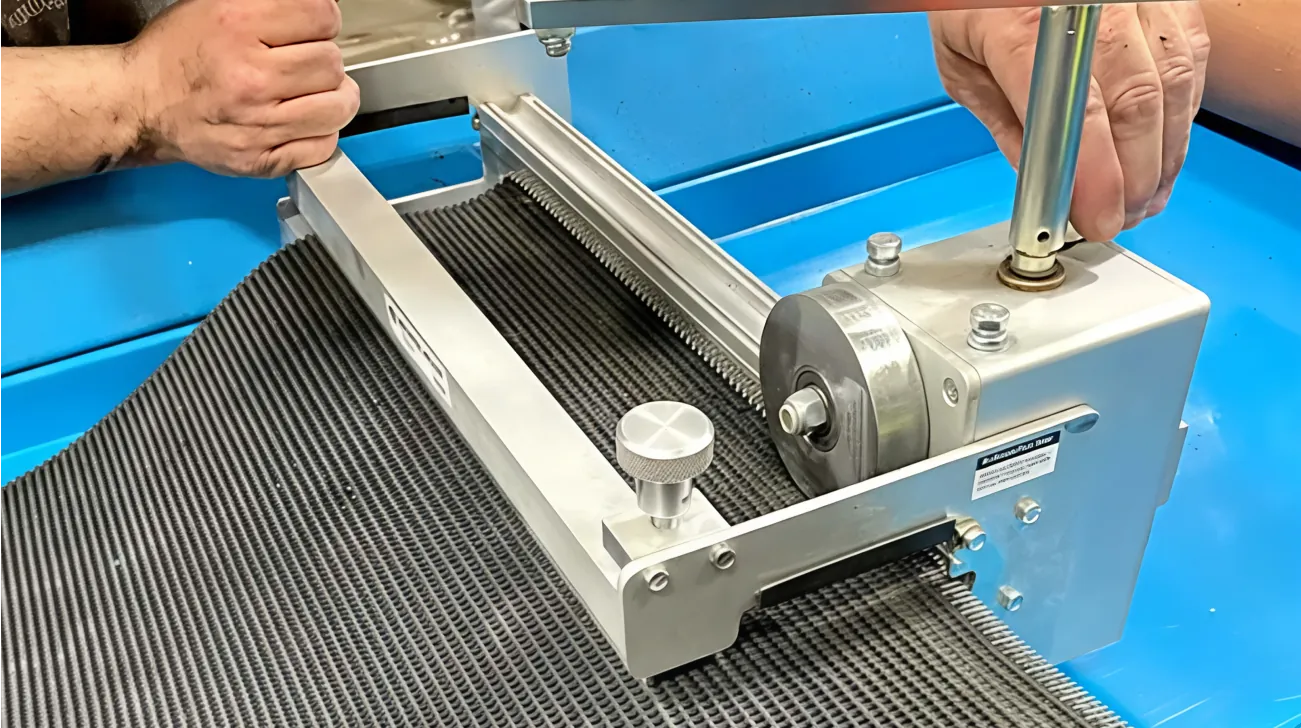
MWS helps keep your conveyor system running with preventative maintenance, repair services, and spare parts guidance. We work with your team to address wear, reduce unexpected downtime, and support reliable performance.
- Scheduled preventative maintenance programs
- Critical spare parts inventory management
- Emergency conveyor repair response across the Midwest
Conveyor FAQ’S
Can MWS help if we have a different brand conveyor?
Yes, we have worked with many brands of conveyor over the years. We have plenty of experience with most brands accumulation and transportation conveyor, drives, chains rollers, bearings - etc. Adding new conveyor to existing layouts can be achieved quite easily when keeping drive styles similar.
What brand of conveyor system does MWS prefer to use for new projects?
MWS works with established conveyor manufacturers to select equipment that fits your products, throughput requirements, facility layout, and budget. Our recommendations also consider compatibility with existing equipment, maintenance needs, and future expansion.
We already have conveyor in house, can MWS help us with service work?
Yes. MWS provides service, repairs, and preventative maintenance for existing conveyor systems, including equipment from different manufacturers. Our team can assess your system, address worn components, and help identify critical spare parts to keep on hand. We can also review options for upgrades or expansion as your operation grows.

Plan Your Project
with Our Team
Questions?
Let’s Chat About Your Conveyor Project Today!
Or call us at 515-635-1555
Save time. We will contact you
Provide your details, and we’ll help you find exactly what you need