
VERTICAL RECIPROCATING CONVEYORS
VRC Lift Systems for Industrial Material Handling
Engineered vertical material lifts for mezzanines, warehouses, and multi-level operations
Speak with an expert  515-635-1555
Home / Vertical reciprocating conveyors
At Midwest Warehouse Solutions (MWS), VRC lifts — also known as Vertical Reciprocating Conveyors (VRCs) — are one of the most effective ways to move materials, pallets, and equipment vertically inside industrial facilities.
When operations add mezzanines, platforms, or multiple working levels, the challenge quickly becomes vertical movement. Forklifts, ramps, and traditional elevators are often unsafe, inefficient, or non-compliant.
VRC lifts are purpose-built industrial material lifts, engineered to move goods safely and efficiently between elevations, without carrying passengers.
As a warehouse systems integrator, MWS designs and installs VRC lift systems that integrate seamlessly with mezzanines, pallet racking, conveyors, and material handling workflows across manufacturing, distribution, and logistics facilities.
What Is a VRC Lift?
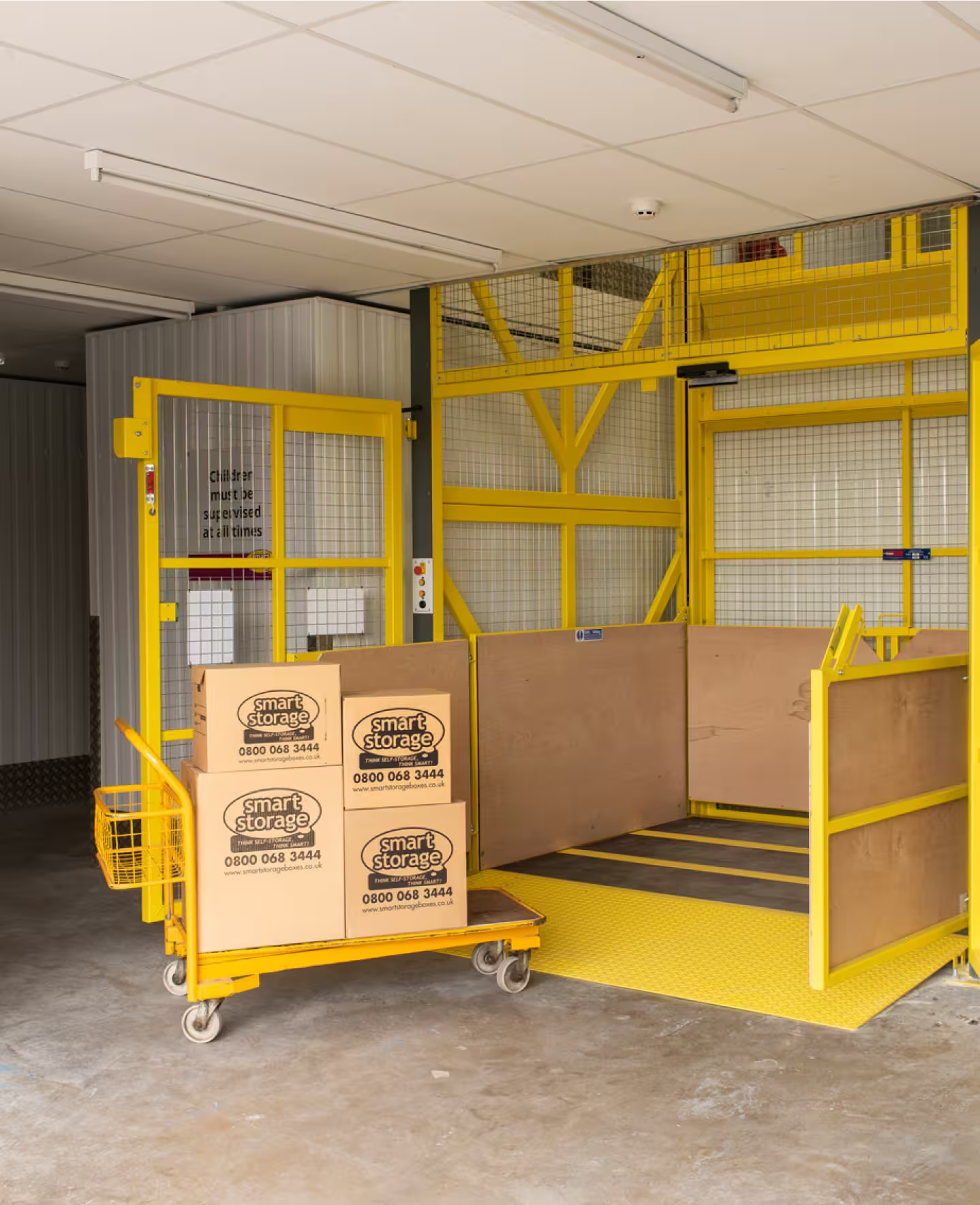
A VRC lift (Vertical Reciprocating Conveyor) is an industrial material lift designed to move pallets, equipment, and materials between two or more vertical levels inside warehouses and manufacturing facilities.
A VRC lift uses a load-carrying platform that travels vertically within a guided structure, allowing materials to be transferred safely between elevations such as a warehouse floor and a mezzanine. Depending on the application, VRC lifts are commonly referred to as mezzanine lifts, equipment lifts, or material lifts.
Because VRC lifts are designed exclusively for material handling, they are governed by material handling and conveyor standards, not passenger elevator codes. This makes them a more practical and cost-effective solution than industrial elevators when the requirement is moving materials rather than people.
Common items transported by VRC lifts include:
- Pallets and skids
- Cartons and totes
- Machinery and equipment
- Carts and material handling devices
- Mezzanine inventory and work-in-process material
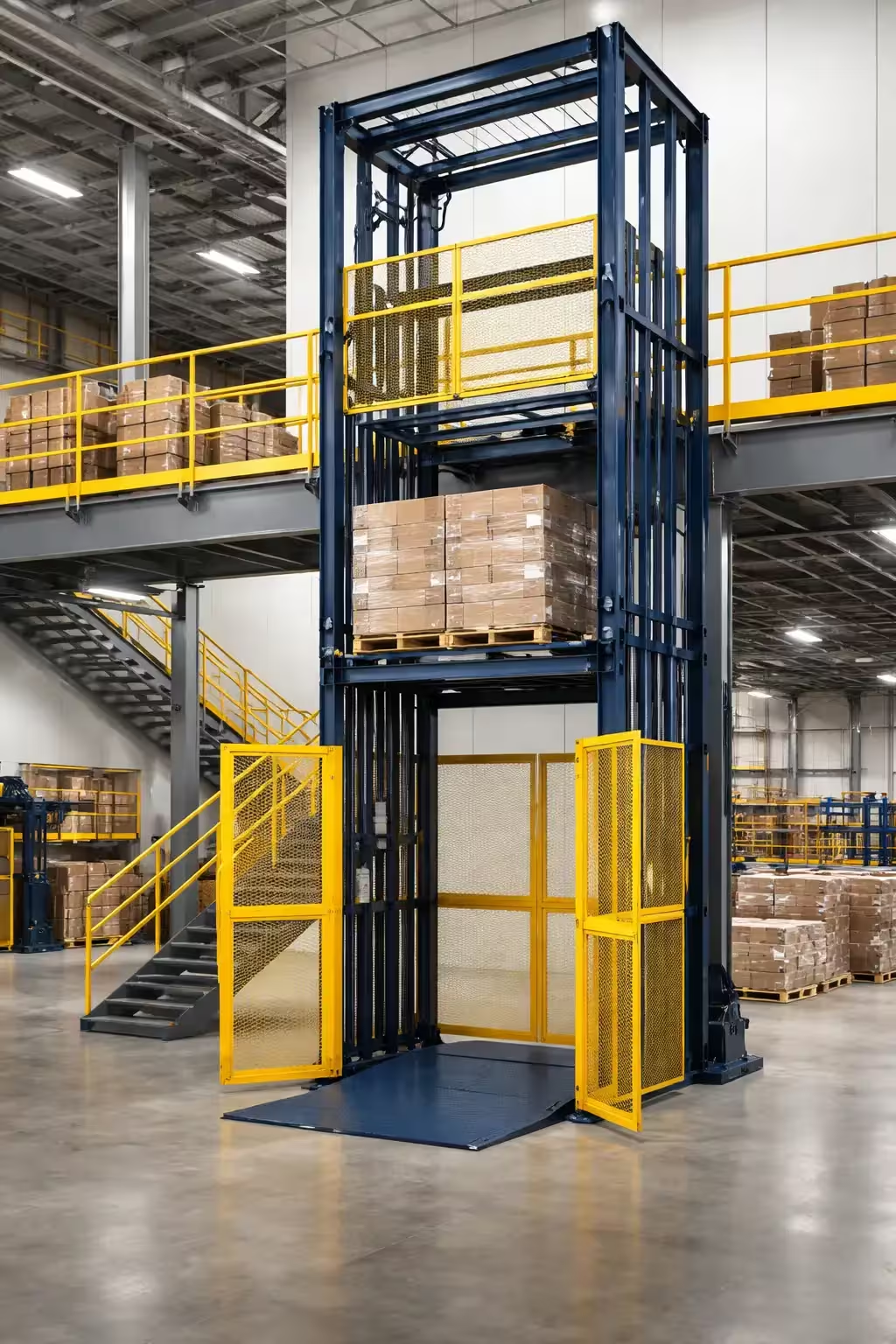
VRC Lift vs. Freight Elevator:
What's the difference?
When moving materials between floors in a warehouse, manufacturing plant, or distribution center, choosing the right lifting solution is critical. Two common options are Vertical Reciprocating Conveyors (VRC Lifts) and Freight Elevators. While both move materials vertically, they are built for different purposes, budgets, and operational needs.
Understanding the differences helps ensure your facility stays efficient, safe, and compliant.
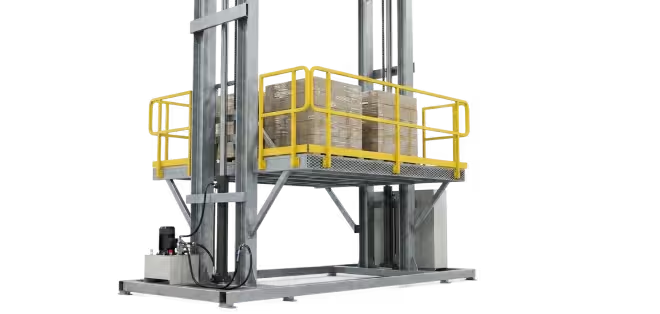
|
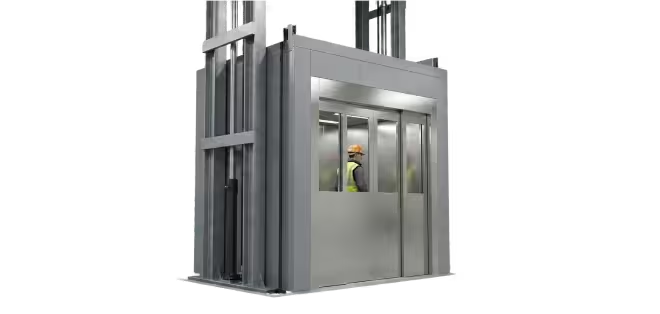
|
Feature | VRC Lift | Industrial Elevator |
|---|---|---|
| Primary use | Materials only | Materials + Personnel |
| Passenger use | Not Allowed | Allowed |
| Installation cost | Lower | Higher |
| Installation time | Faster | Longer |
| Code requirements | Material lift safety standards | Full elevator code compliance |
| Material requirements | Lower | Higher |
| Ideal environment | Warehouse & Industrial Facilities | Commercial & Personnel-Access Buildings |
VRC Lift
Feature
| Primary use | Materials only |
| Passenger use | Not allowed |
| Installation cost | Lower |
| Installation time | Faster |
| Code requirements | Material lift safety standards |
| Maintenance requirements | Lower |
| Ideal environment | Warehouse & Industrial Facilities |
Industrial Elevator
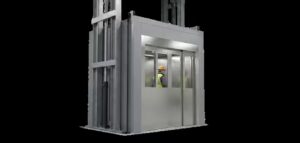
Feature
| Primary use | Materials + Personnel |
| Passenger use | Allowed |
| Installation cost | Higher |
| Installation time | Longer |
| Code requirements | Full elevator code compliance |
| Maintenance requirements | Higher |
| Ideal environment | Comercial & Personnel-Access Buildings |
If personnel do not need to ride the lift, a VRC is typically the most efficient and practical solution for vertical material movement
How a VRC Lift System Works
When facilities need to move materials vertically, VRC lifts and industrial elevators are often compared. Although VRC lifts are sometimes informally called “VRC elevators,” they are not elevators and are regulated under material handling standards rather than passenger elevator codes. While they may appear similar, they serve very different purposes.
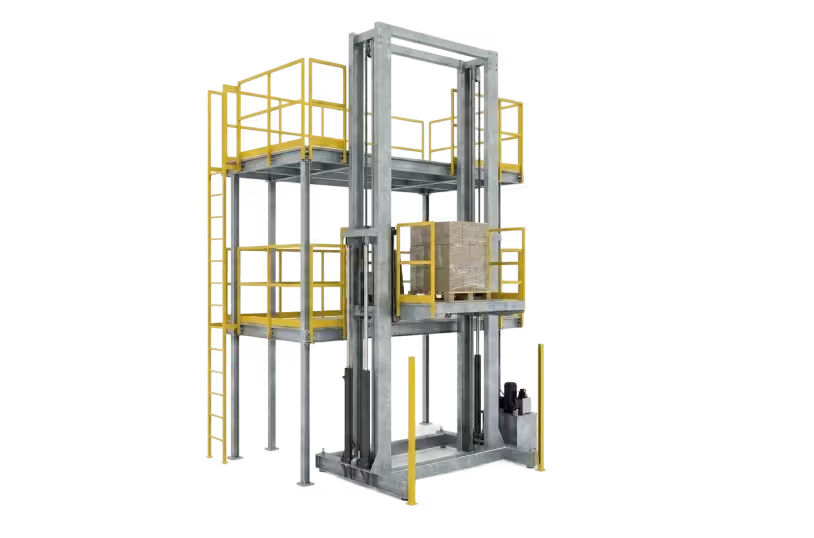
A typical VRC system includes:
- A load platform or carriage
- Vertical guide columns or mast structure
- Lifting mechanism (hydraulic or mechanical)
- Upper and lower access gates
- Safety interlocks and control systems
- Structural anchoring and guarding
The platform travels between levels in a controlled vertical path. Access gates prevent loading or unloading unless the platform is properly positioned, ensuring safe operation at every level.
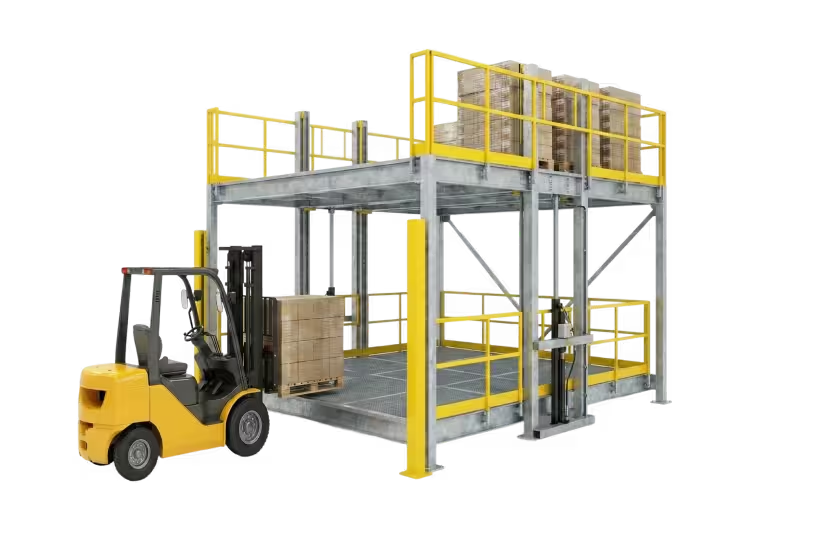
At MWS, every VRC lift is engineered to account for:
- Load size and weight
- Platform dimensions and orientation
- Travel height and number of stops
- Throughput and cycle frequency
- Integration with forklifts, pallet jacks, or conveyors
- OSHA and applicable safety standards
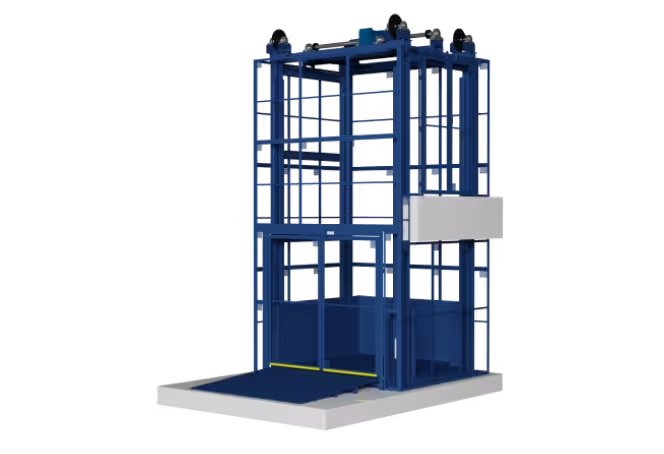
Whats the difference between mechanical lift and hydraulic VRC Lifts?
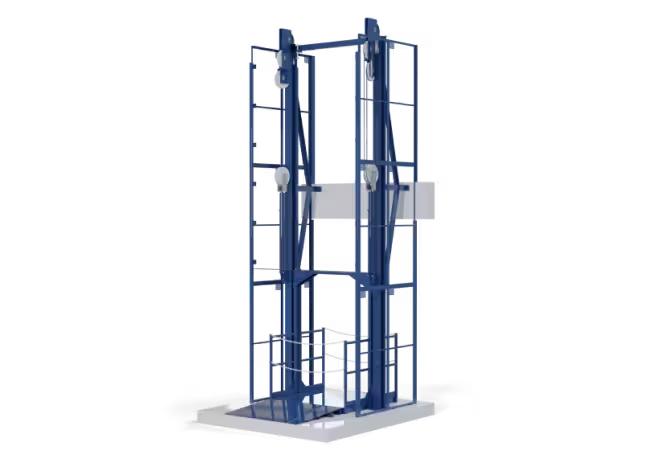
The main difference between mechanical and hydraulic VRC (Vertical Reciprocating Conveyor) lifts is how the platform is powered and how often it can run.
Hydraulic lifts use fluid pressure to raise the platform
Mechanical lifts use chains, cables, and gears powered by an electric motor
Both types safely move materials between floors, mezzanines, or levels—but each is best suited for different applications.
|
|
Feature | Hydraulic VRC Lift | Mechanical VRC Lift |
|---|---|---|
| Power Source | Motor-driven chains or cables | Hydraulic fluid pressure |
| Best For | High-cycle, heavy-duty use | Moderate use between 2 levels |
| Cycle Capacity | Unlimited or continuous use | Limited cycles per hour |
| Lift Height | Very high (multi-level capable) | Typically lower heights |
| Speed | Faster cycle speeds | Slower than mechanical |
| Load Capacity | Higher capacities available | Moderate capacities |
| Upfront Cost | Higher initial cost | Lower initial cost |
| Maintenance | Typically lower long-term cost | Requires fluid maintenance |
| Environmental Concerns | No hydraulic oil | Hydraulic fluid required |
Hydraulic VRC Lift
Feature
| Power Source | Hydraulic fluid pressure |
| Best for | Moderate use between 2 levels |
| Cycle Capacity | Limited cycles per hour |
| Lift Height | Typically lower heights |
| Spped | Slower than mechanical |
| Load Capacity | Moderate capacities |
| Upfront Cost | Lower initial cost |
| Maintenance | Requires fluid maintenance |
| Environment Concerns | Hydraulic fluid required |
Mechanical VRC Lift
Feature
| Power Source | Motor-driven chains or cables |
| Best for | High-cycle, heavy-duty use |
| Cycle Capacity | Unlimited or continuous use |
| Lift Height | Very high (multi-level capable) |
| Spped | Faster cycle speeds |
| Load Capacity | Higher capacities available |
| Upfront Cost | Higher initial cost |
| Maintenance | Typically lower long-term cost |
| Environment Concerns | No hydraulic oil |
At MWS, we help clients select the appropriate drive system based on performance requirements, maintenance considerations, and long-term operational needs.
Why VRC Lifts Are Ideal
for Mezzanine Systems
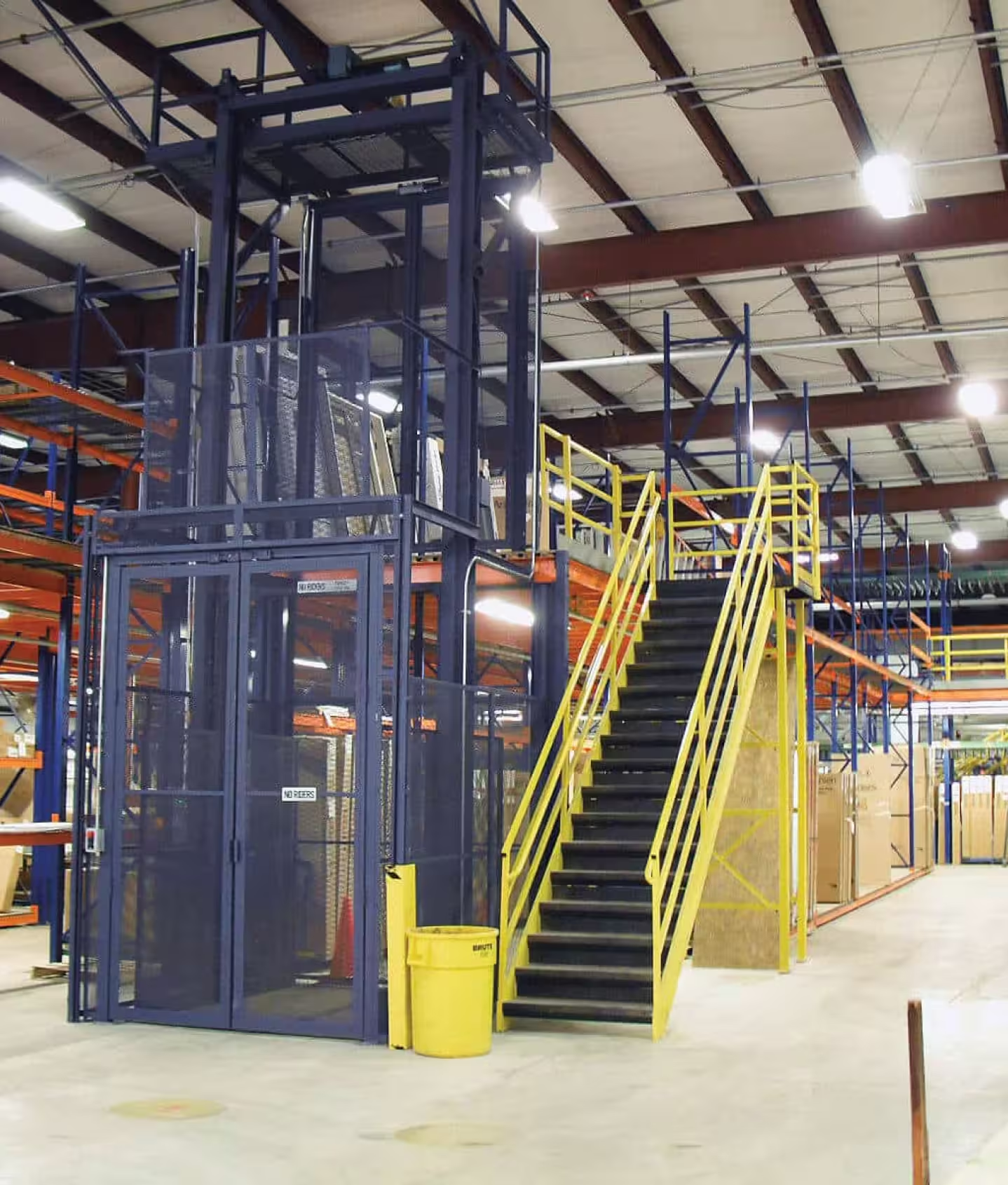
When mezzanines are added to a facility, vertical material movement often becomes the limiting factor for efficiency and safety.
VRC lifts are commonly paired with mezzanine systems because they:
- Provide a dedicated vertical transfer point for materials
- Eliminate unsafe forklift lifting between levels
- Reduce congestion on stairs and acces points
- Improve replenishement and picking workflows
- Integrate directly with mwzzanine safety gates and landings
| Solution | Safety | Efficiency | Space Required | Best Use Case |
|---|---|---|---|---|
| VRC Lift | High | High | Minimal | Mezzanine material transfer |
| Forklift lifting | Low | Moderate | High | Short-term or low volume |
| Ramps | Moderate | Low | Very high | Light loads, limited height |
Solution
VRC Lift
Safety:
High
Efficiency:
High
Space Required:
Minimal
Best Use Case:
Mezzanine material transfer
Forklift lifting
Safety:
Low
Efficiency:
Moderate
Space Required:
Low
Best Use Case:
Short-term or low volume
Ramps
Safety:
Moderate
Efficiency:
Low
Space Required:
Very High
Best Use Case:
Light loads, limited height
Common VRC Lift Applications
At Midwest Warehouse Solutions, we work with facilities across a wide range of industries, and one of the first things we help our clients evaluate is how a VRC lift will be used within their specific operation.
While the core function of a VRC lift is always the same — moving materials safely between levels — the way it is configured depends heavily on the industry, the type of materials being handled, and how the lift integrates with mezzanines, production processes, or storage systems.
The table below outlines some of the most common VRC lift applications we design and install, based on industry and operational needs.
| Industry | Typical VRC Lift Use |
|---|---|
| Warehousing & distribution | Pallet movement between floors, mezzanine replenishment |
| Manufacturing | Work-in-process transfer, equipment handling |
| Industrial storage | Heavy machinery and skid movement |
| E-commerce & fulfillment | Multi-level picking and inventory transfer |
| Mezzanine systems | Safe vertical access for materials |
Industry
Warehaouse & distribution
Pallet movement between floors, mezzanine replenishment
Manufacturing
Work-in-process transfer, equipment handling
Industrial storage
Heavy machinery and skid movement
E-commerce & fullfilment
Multi-level picking and inventory transfer
Mezzanine systems
Safe vertical access for materials
Key Features & Benefits
of VRC Lift Systems
At Midwest Warehouse Solutions, VRC lift projects typically begin when a facility needs to move materials between levels safely and efficiently, often after adding a mezzanine or multi-level operation.
In these environments, forklifts, ramps, and manual handling methods are rarely ideal. VRC lift systems provide a purpose-built solution for controlled vertical material movement.
Why we regularly recommend VRC lift systems:
Purpose-built for vertical material movement
VRC lifts are designed exclusively to move materials between elevations. This allows the system to be engineered around real pallet sizes, weights, and handling methods instead of adapting passenger
Improved safety compared to forklifts
and ramps
VRC lifts eliminate the need for forklifts to raise loads between levels and reduce reliance on ramps or manual lifting. This significantly lowers the risk of accidents, damage, and unsafe operating practices.
Lower cost than passenger elevators
Because VRC lifts are governed by material handling standards rather than elevator codes, they typically involve lower equipment costs, simpler permitting, and reduced long-term maintenance.
Custom load-rated platform design
Each VRC lift is engineered around actual operating loads, platform dimensions, and usage frequency. This ensures the system performs reliably without being overbuilt or undersized.
Seamless integration
with mezzanines and warehouse systems
VRC lifts are most effective when designed as part of a complete warehouse system. We integrate VRCs with mezzanine landings, safety gates, and material flow to support efficient operations.
Scalable systems that support future growth
Many facilities begin with a two-level VRC and later add additional stops or higher throughput. When planned correctly, VRC systems can be adapted as operational needs change.
VRC Lift Design Considerations
Every VRC lift designed by Midwest Warehouse Solutions is engineered around how the system will operate in real-world conditions. Before a VRC is specified, we help clients evaluate several key factors that directly influence safety, performance, and long-term usability.
Key design considerations include:
- Maximun load capacity
Ensures the list safely supports actual pallet or equipment - Platform size and configuration
Determines how materials are loaded, positioned, and transferred - Number of levels served
Affects controls, safety systems, and overall complexity - Required cycle times
Impacts throughput and operational efficiency - Pit or pit-less installation
Influences site preparation and structural requirements - Structural suport and clearances
Ensures proper integration with the building and mezzanine systems
Addressing these considerations early allows the VRC lift to be designed correctly from the start, avoiding operational limitations or costly modifications later.
VRC Lift Safety & Compliance
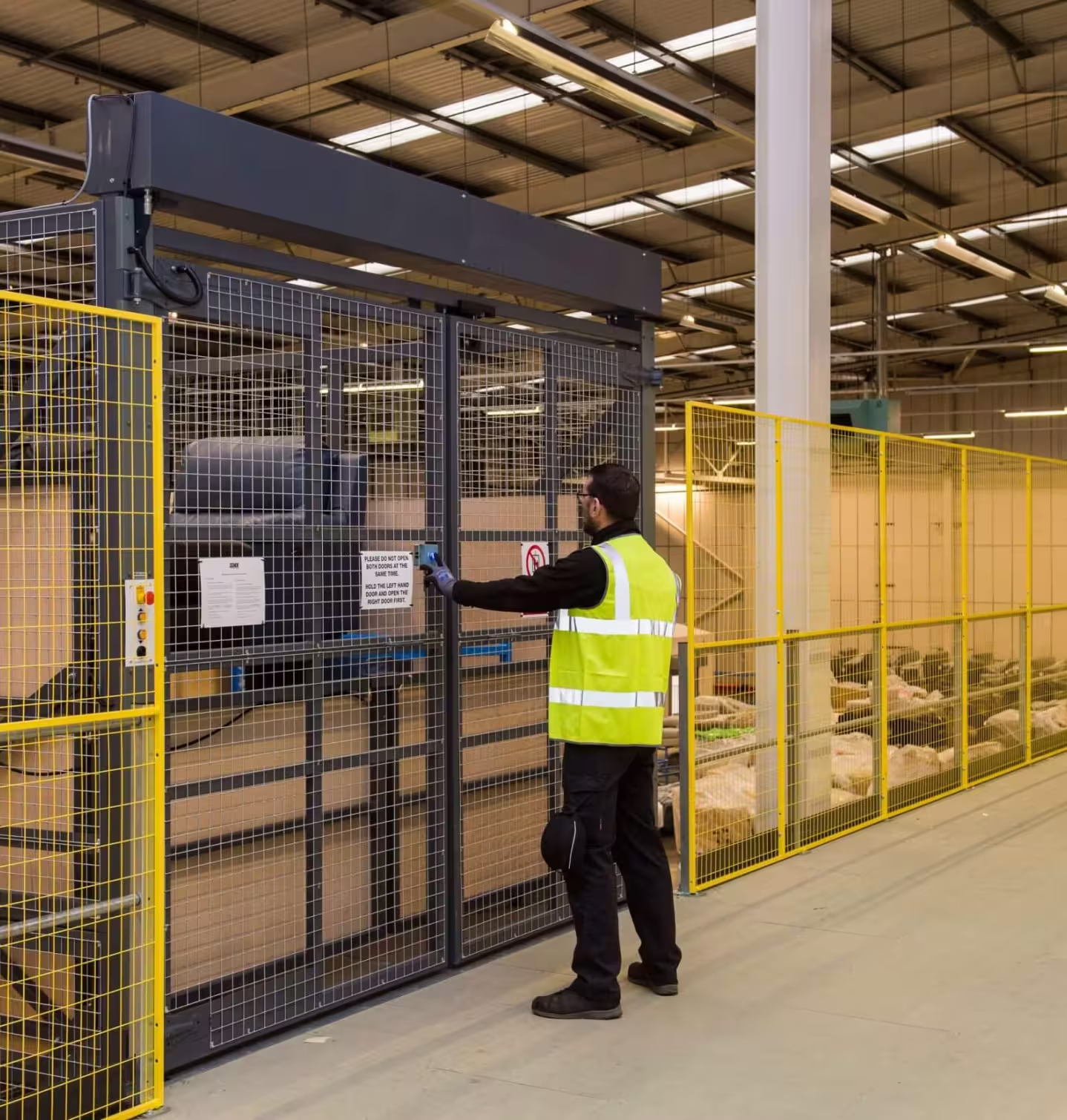
VRC lifts are material handling systems and are designed with safety as a core requirement, not an afterthought. Properly engineered VRC systems control access, prevent unsafe operation, and protect both personnel and materials during vertical transfer.
Typical VRC safety features include:
- Interlocked access gates
That prevent platform movement unless gates are secured - Controlled load and unload zones
To manage material transfer when required - Emergency stop systems
For immediate shutdown when required - Structural guarding and barriers
To protect personnel around the lift
All VRC lift systems designed by MWS are engineered to meet applicable OSHA and material handling safety standards, ensuring compliant and reliable operation in industrial environments.
VRC Lift Cost
What Impacts Pricing?
VRC lift pricing varies based on how the system is engineered and how it integrates into a specific facility. Load requirements, travel height, platform size, and site conditions all influence the final configuration and overall cost.
Compared to industrial elevators and lifts designed for passenger use, VRC lifts are typically a more cost-effective solution when the requirement is moving materials rather than people. Because they are governed by material handling standards, VRC systems often involve simpler permitting and lower long-term ownership costs.
The table below outlines the primary factors that impact VRC lift pricing and why they matter.
| Cost Factor | Impact on Price |
|---|---|
| Load capacity | Higher capacity increases structural and drive requirements |
| Platform size | Larger platforms require more steel and reinforcement |
| Vertical travel height | Taller lifts require more robust lifting systems |
| Drive type | Hydraulic vs mechanical affects equipment and install cost |
| Number of levels | Additional stops increase controls and safety systems |
| Site conditions | Structural support and integration complexity |
Industry
Load capacity
Higher capacity inceases structural and drive requirements
Platform size
Larger platforms require more steel and reinforcement
Vertical travel height
Taller lifts require more robust lifting systems
Drive type
Hydraulic vs mechanical affects equipment and install cost
Number of levels
Additional stops increase controls and safety systems
Site conditions
Structural support and integration complexity
Rather than offering generic price ranges, MWS focuses on designing the right system first, then optimizing cost based on actual operational needs.
Why Choose Midwest Warehouse Solutions for VRC Lifts
Many companies sell VRC lift equipment. Fewer operate as a true warehouse systems supplier and integrator. As a warehouse systems integrator with over 50 years of experience, MWS designs and installs VRC lift systems as part of complete, integrated warehouse solutions.
As your VRC lift supplier and integrator, MWS provides:
- Manufacturer-engineered VRC lift systems
Designed and sized for real pallet, equipment, and material handling loads. - Expertise integrating VRC lifts with mezzanines and warehouse systems
Including coordination with mezzanine landings, safety gates, racking, conveyors, and material flow. - Application-specific VRC lift engineering
Each system is engineered around travel height, throughput requirements, load capacity, and site conditions. - Safety-focused, code-compliant designs
With integrated access gates, interlocks, guarding, and material handling safety features. - End-to-end project support
From layout and engineering through installation, integration, and future system modifications.
Frequently Asked
Questions About VRC Lifts
Can people ride a VRC lift?
No. VRC lifts are designed exclusively for moving materials and are not intended for passenger use.
Is a VRC the same as an industrial elevator?
No. VRC lifts are material handling systems, not elevators, and are governed by different codes and standards.
Are VRC lifts safe?
Yes. When properly engineered and installed with interlocks, guarding, and access controls, VRC lifts provide a safe method for vertical material movement.
Are VRC lifts hydraulic?
Some VRC lifts use hydraulic systems, while others use mechanical lifting systems. The appropriate drive type depends on load requirements, travel height, and throughput needs.
Can a VRC serve multiple mezzanine levels?
Yes. VRC lifts can be designed to serve two or more elevations depending on the application.
How much does a VRC lift cost?
VRC lift cost varies based on factors such as load capacity, travel height, platform size, drive type, and site conditions. Each system is engineered to match the specific application.
Is a VRC lift cheaper than an elevator?
In most cases, yes. Because VRC lifts are designed for materials only and do not follow passenger elevator codes, they typically involve lower equipment and installation costs.
Do VRC lifts require permits or inspections?
Permitting requirements vary by jurisdiction. VRC lifts are governed by material handling standards rather than elevator codes, which often simplifies permitting compared to passenger elevators.
Does a VRC lift require a pit?
Some VRC designs require a pit, while others are pit-less. The requirement depends on platform height, load, and site conditions.
Plan Your Project
with Our Team
Request a VRC Lift Quote
Whether you need a mezzanine lift, pallet lift, equipment lift, or vertical reciprocating conveyor, work with a team that designs VRC lift systems around real operating conditions, not generic assumptions.
Our team will help you evaluate load requirements, travel height, safety considerations, and integration with your existing warehouse systems to determine the right solution for your facility.
Speak to a VRC Lift Expert
515-635-1555
Save time. We will contact you
Provide your details, and we’ll help you find exactly what you need