CONVEYOR REPAIR

Conveyor Repair & Spare Parts Services for Midwest Warehouses

Expert conveyor repair, belt splicing, roller and idler replacement, motor and drive service, and same-day spare parts across 12 Midwest states. All brands. 24/7 emergency response.

Speak with an expert phone-icon 515-635-1555

Available 24/7 for Emergency Conveyor Repair

50+

Years experience

12

Midwest states served

24/7

Emergency service

500+

Conveyor systems serviced

100%

OSHA Compliant

Home / Services / Conveyor Repair

Why Conveyor Repair Matters:
The Hidden Cost of Downtime

In modern warehouse and distribution operations, conveyor repair is not a routine maintenance expense — it is a strategic business imperative. When a conveyor system goes down unexpectedly, the financial consequences escalate rapidly. Industry research puts unplanned conveyor downtime at $10,000–$260,000 per hour across manufacturing and distribution sectors, with e-commerce and parcel sortation operations often experiencing losses exceeding $100,000 per hour during peak season. A single belt splice failure or seized roller that goes unaddressed can cascade into a full system shutdown, idle labor costs, missed SLAs, and emergency overtime — all while the root cause sits waiting for a technician. Midwest Warehouse Solutions has been providing professional conveyor repair services since 1979, and our team understands that every minute of downtime is money leaving your operation.

MWS delivers conveyor repair and spare parts services across 12 Midwest states — Iowa, Illinois, Indiana, Michigan, Minnesota, Missouri, Ohio, Wisconsin, Kansas, Nebraska, North Dakota, and South Dakota. From conveyor belt repair and splicing to motor and drive overhauls, sensor and controls diagnostics, chain and sprocket replacement, and full structural repairs, our ISN-Certified technicians respond to emergency calls 24 hours a day, 7 days a week. We service all major conveyor brands — our preferred new-installation brand is Hytrol with Lafayette Engineering controls, but our technicians work on every make and model in the field. Whether your facility runs belt conveyors, roller conveyors, sortation systems, ZPA accumulation conveyors, lineshaft systems, or overhead conveyors, MWS has the parts, tools, and expertise to restore your operation — fast.

Conveyor Down? Call MWS Now
24/7 Emergency Response

Our technicians are on call around the clock. Don't let downtime costs pile up — get a conveyor repair specialist dispatched fast.

Or call us at 515-635-1555

Conveyor Repair Service
Every System, Every Failure

MWS provides a comprehensive range of conveyor repair services for warehouse, distribution, and manufacturing facilities across the Midwest. From emergency belt repairs to full system overhauls, our experienced technicians handle it all.

Conveyor system downtime cost impact in Midwest warehouse operations

Conveyor Belt Repair & Splicing

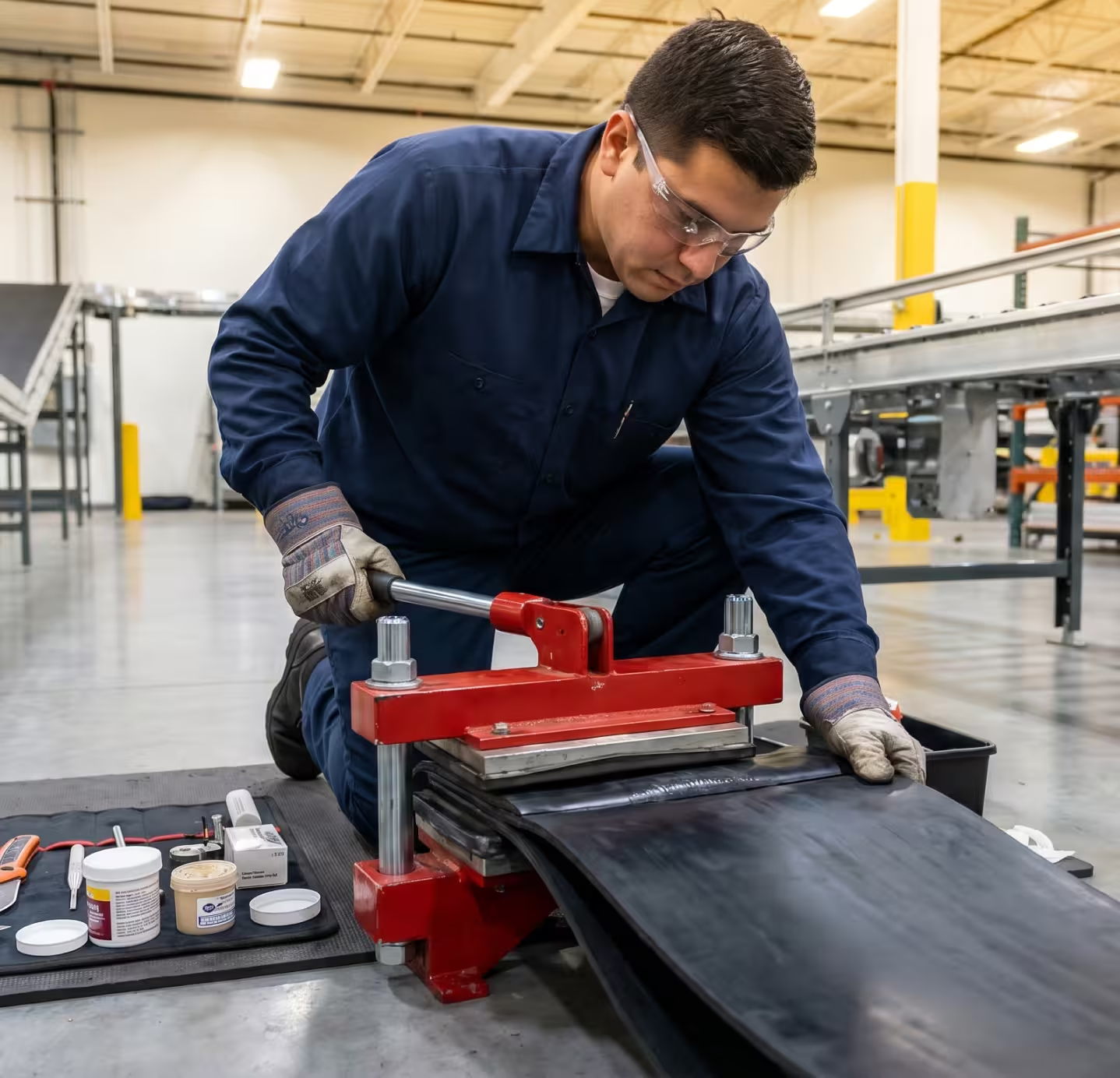
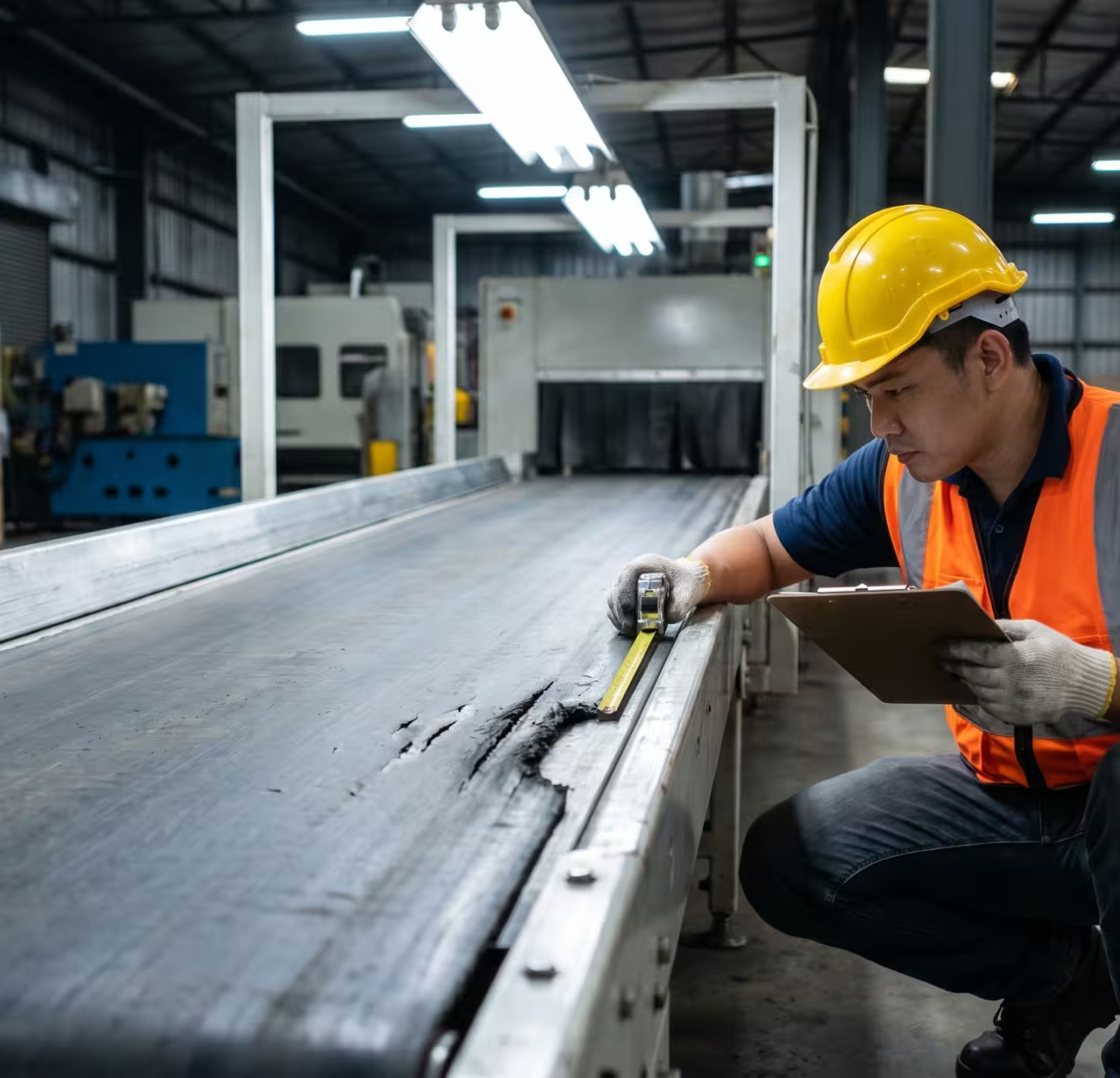
A damaged or mistracked belt is the most common conveyor repair call MWS receives. Our technicians perform hot vulcanization, cold vulcanization, and mechanical fastener splicing — selecting the method best suited to your belt type, damage severity, and how quickly you need the system back online. We handle full belt replacements, partial section repairs, tracking adjustments, and tensioning. Whether your belt has a minor surface gouge or a full carcass tear, MWS has the skills and parts on-hand to get it running again

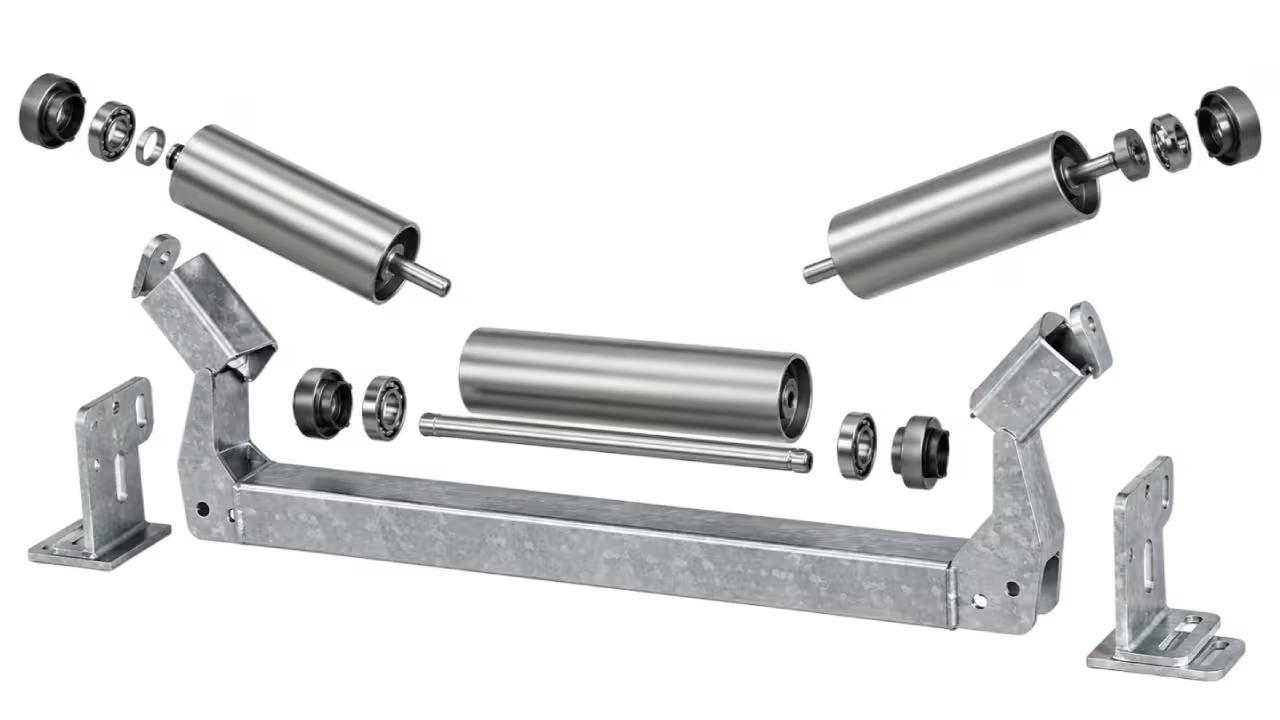
Roller & Idler Replacement

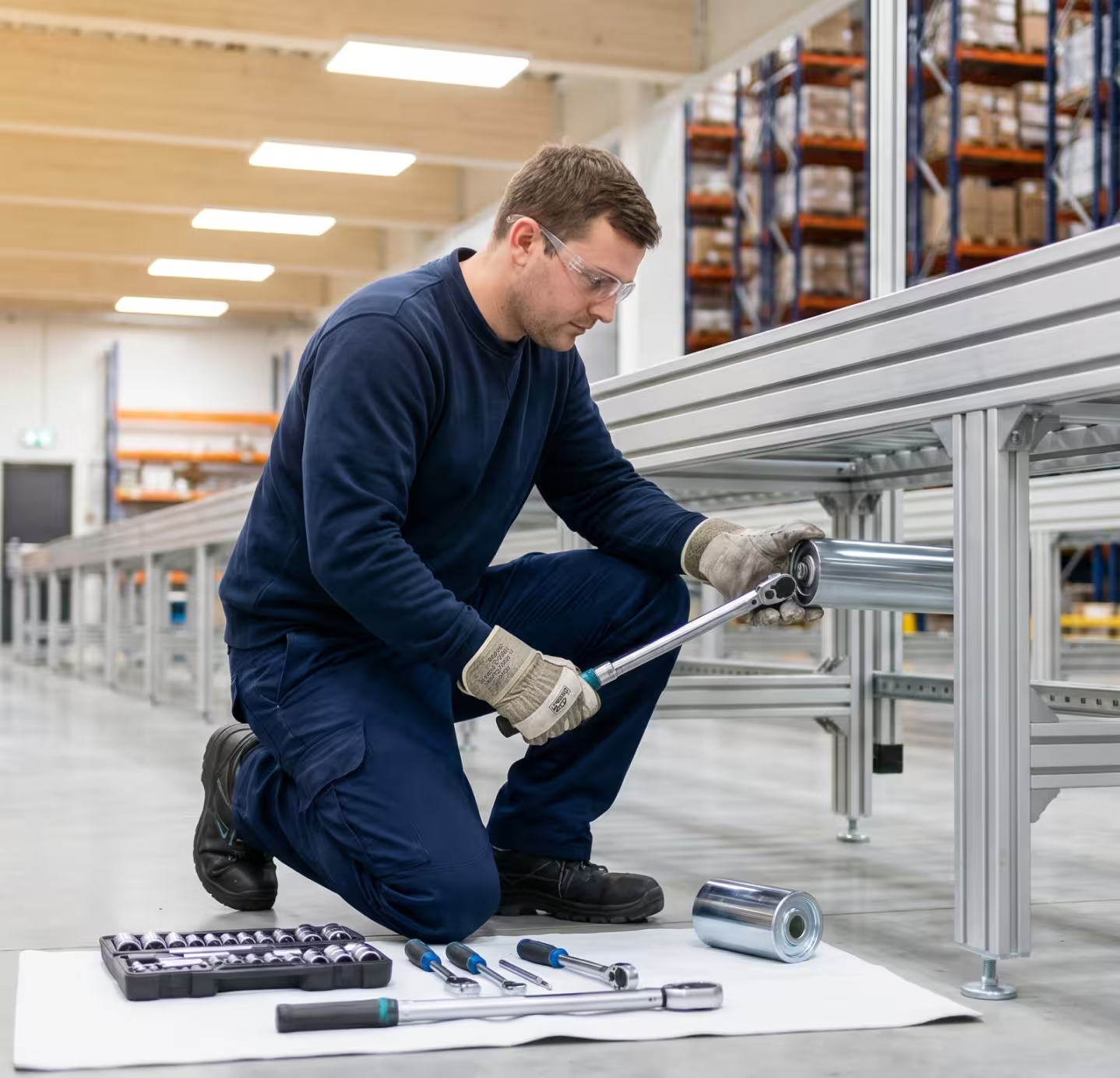
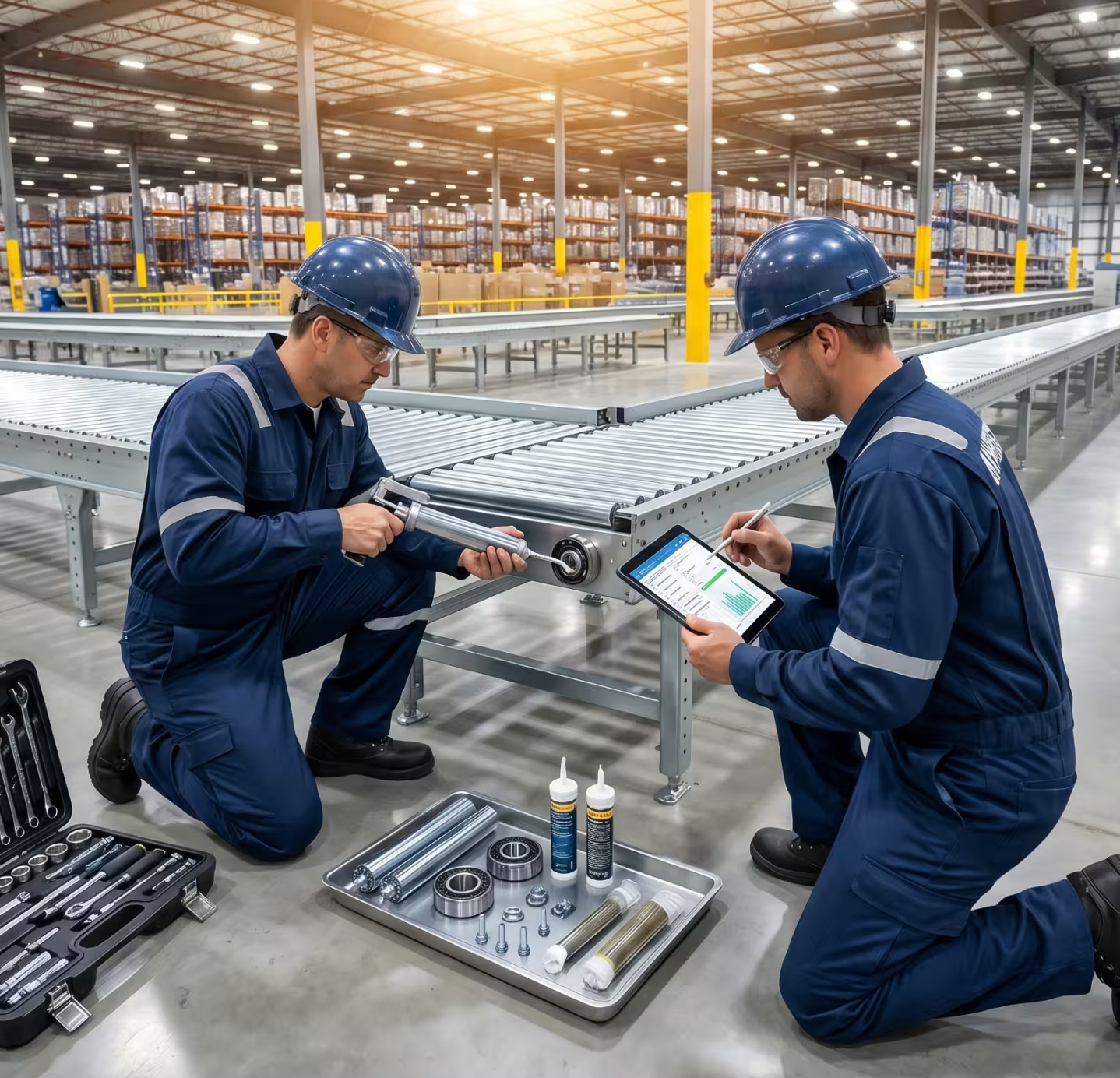
Seized, cracked, or worn rollers create belt damage, carryback problems, and noise that accelerates system-wide wear. MWS technicians identify failing rollers during inspections or emergency conveyor repair calls and replace them with OEM-specification or compatible high-quality rollers on the spot. We stock carrying idlers, return rollers, impact rollers, self-training idlers, and drive rollers for most major conveyor brands, including Hytrol and Intelligrated systems.

Conveyor belt repair and splicing service by MWS technician
Industrial roller and idler replacement for warehouse conveyor system

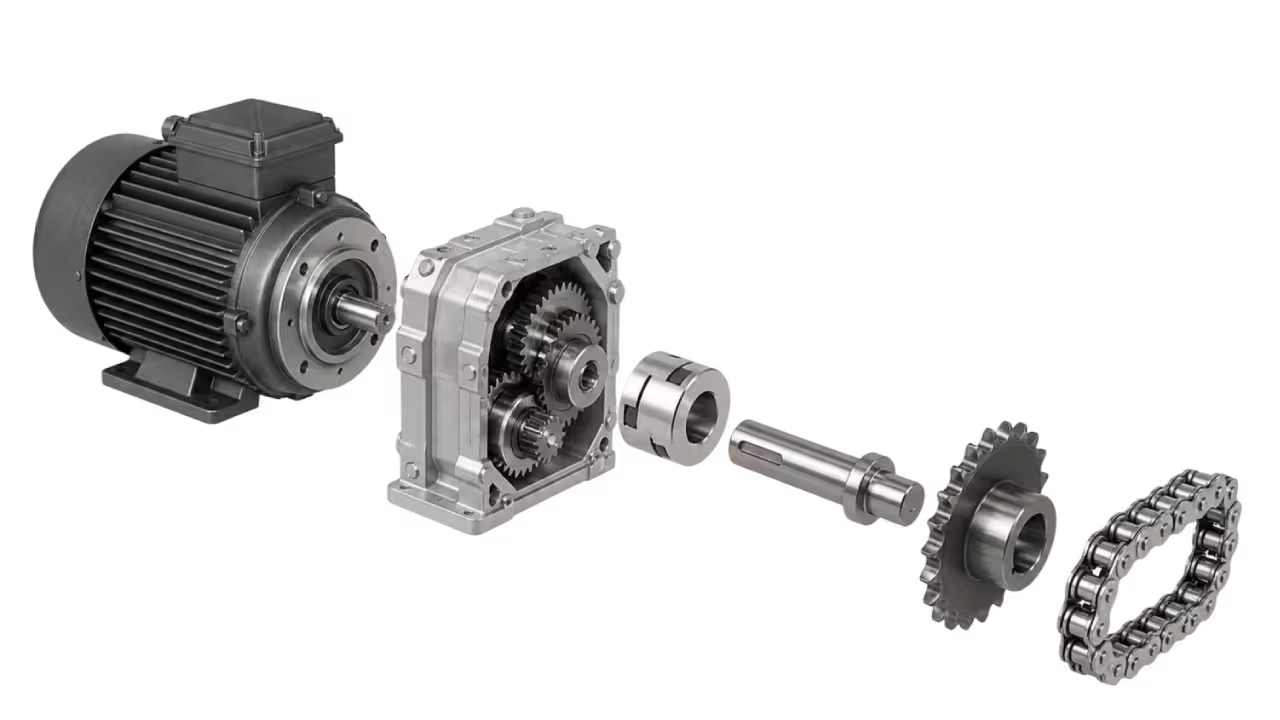
Motor & Drive Repair

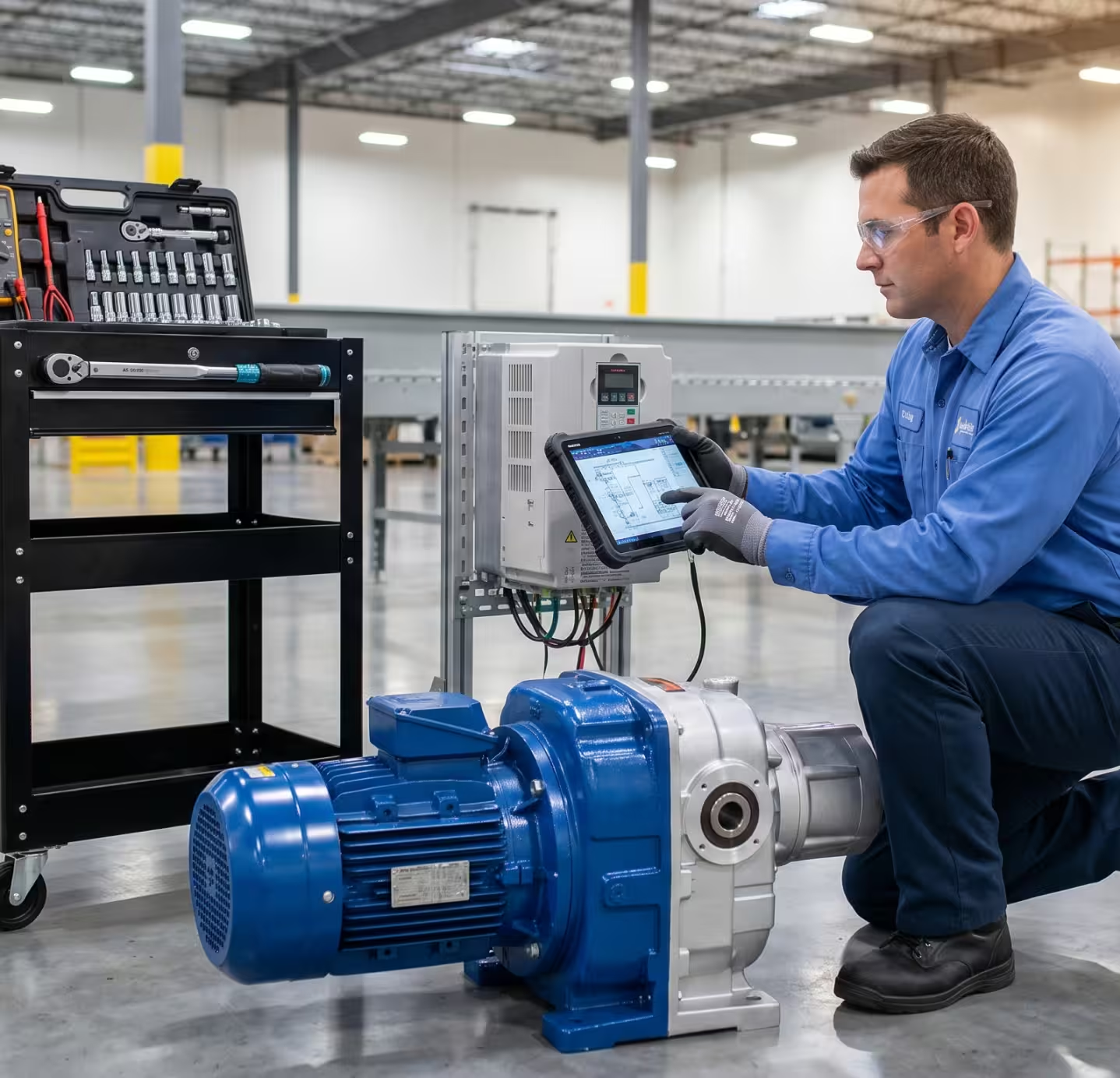
Motor failures and drive system breakdowns are among the most disruptive conveyor repair scenarios — when the drive stops, everything stops. MWS handles AC and DC motor service, gearbox inspection and replacement, VFD (variable frequency drive) diagnostics and swap-out, coupling replacement, and V-belt replacement. Our technicians are experienced with single-phase and three-phase motor systems across all common horsepower ranges used in warehouse and distribution conveyor applications.

Chain & Sprocket Service

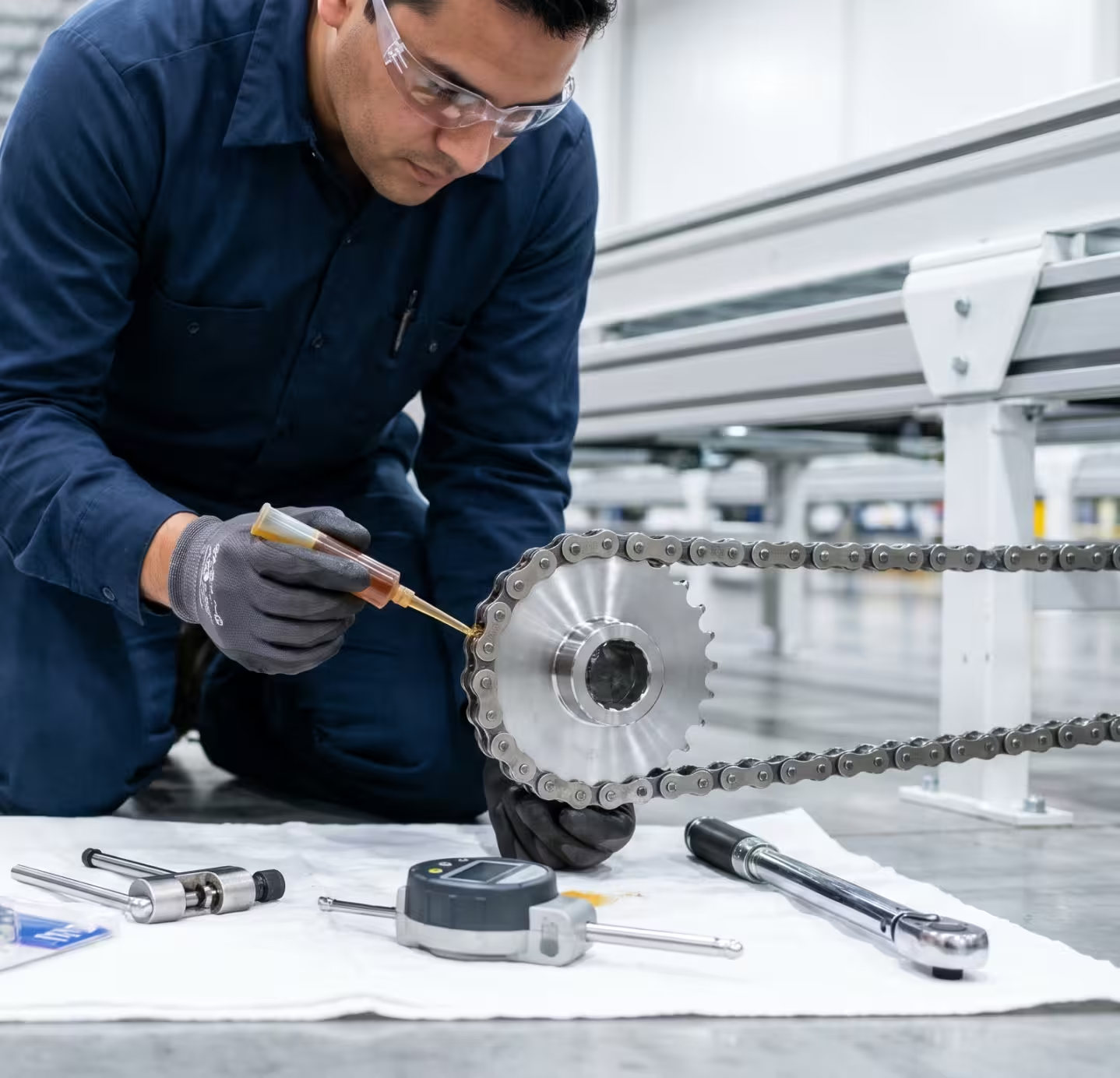
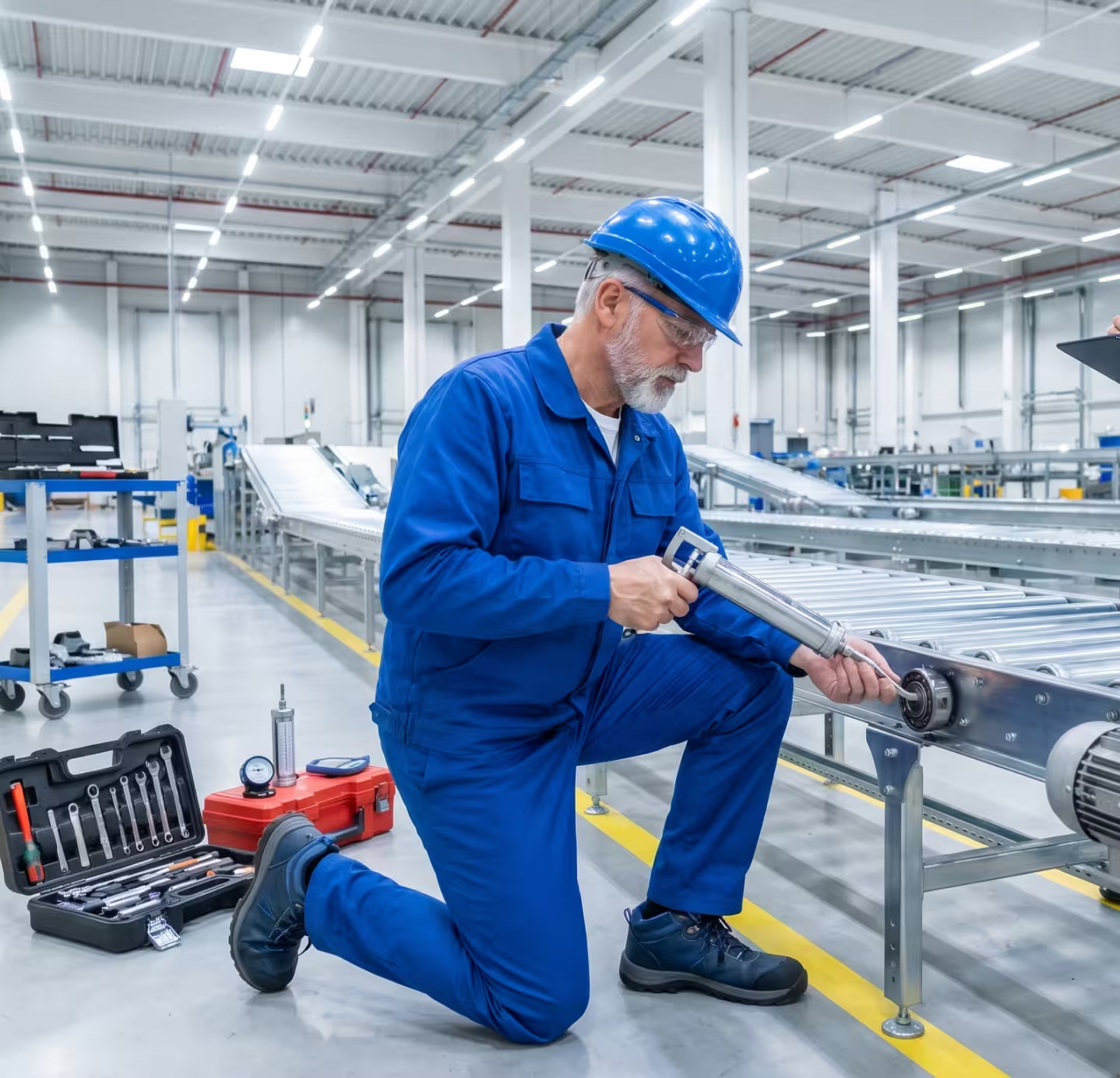
Conveyor chain elongation, wear, and improper lubrication are leading causes of drive failures and product jams. MWS performs chain inspection, lubrication, tensioning, and full replacement for drive chains, lineshaft conveyor chains, and overhead chain systems. We pair chain service with sprocket inspection and replacement, ensuring the full power-transfer system is restored to proper operating specification rather than just swapping one component at a time.

Conveyor roller and idler inspection during Midwest conveyor repair
Conveyor chain and sprocket inspection and lubrication service

Sensor & Controls Repair

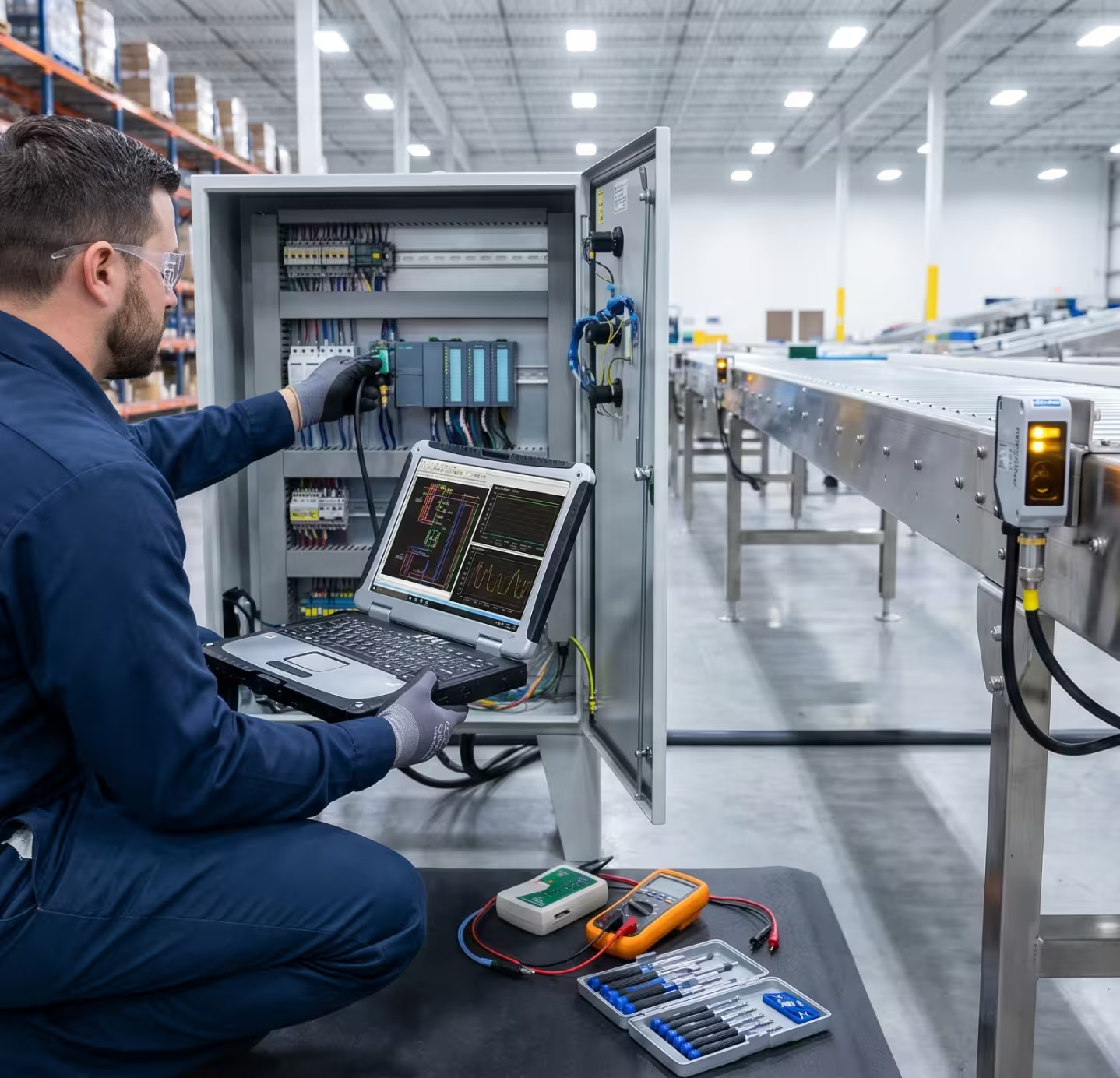
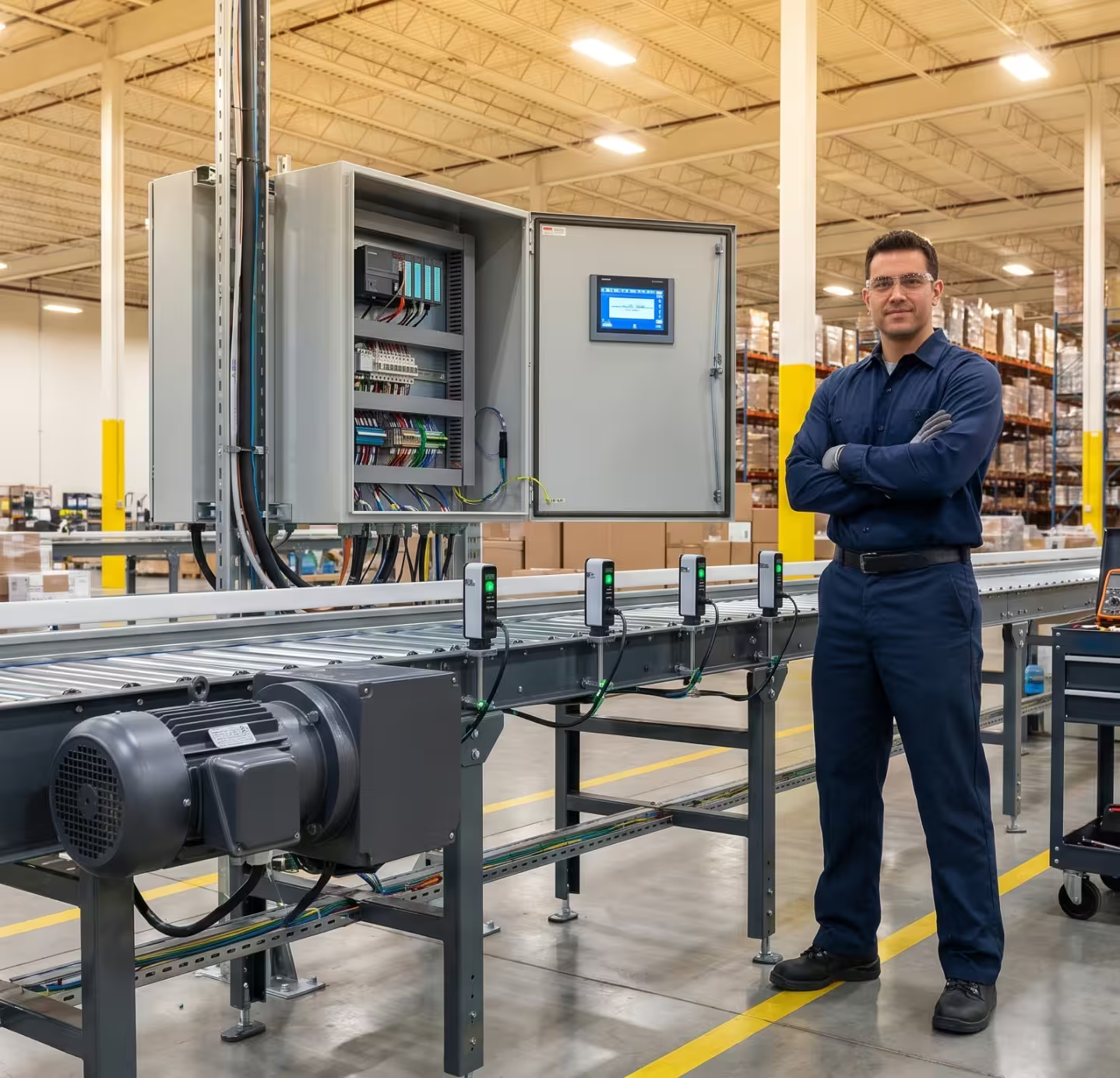
Photoeyes, proximity sensors, limit switches, zone control cards, and PLC modules are the nervous system of any modern conveyor or sortation system. When they fail, packages get misrouted, jams spike, and production grinds to a halt. MWS technicians diagnose and repair sensor faults, perform photoeye calibration and replacement, troubleshoot PLC and zone control card issues, and replace VFDs and control components — including for EZlogic accumulation controls and Lafayette Engineering control systems paired with Hytrol conveyors.

Structural & Frame Repair

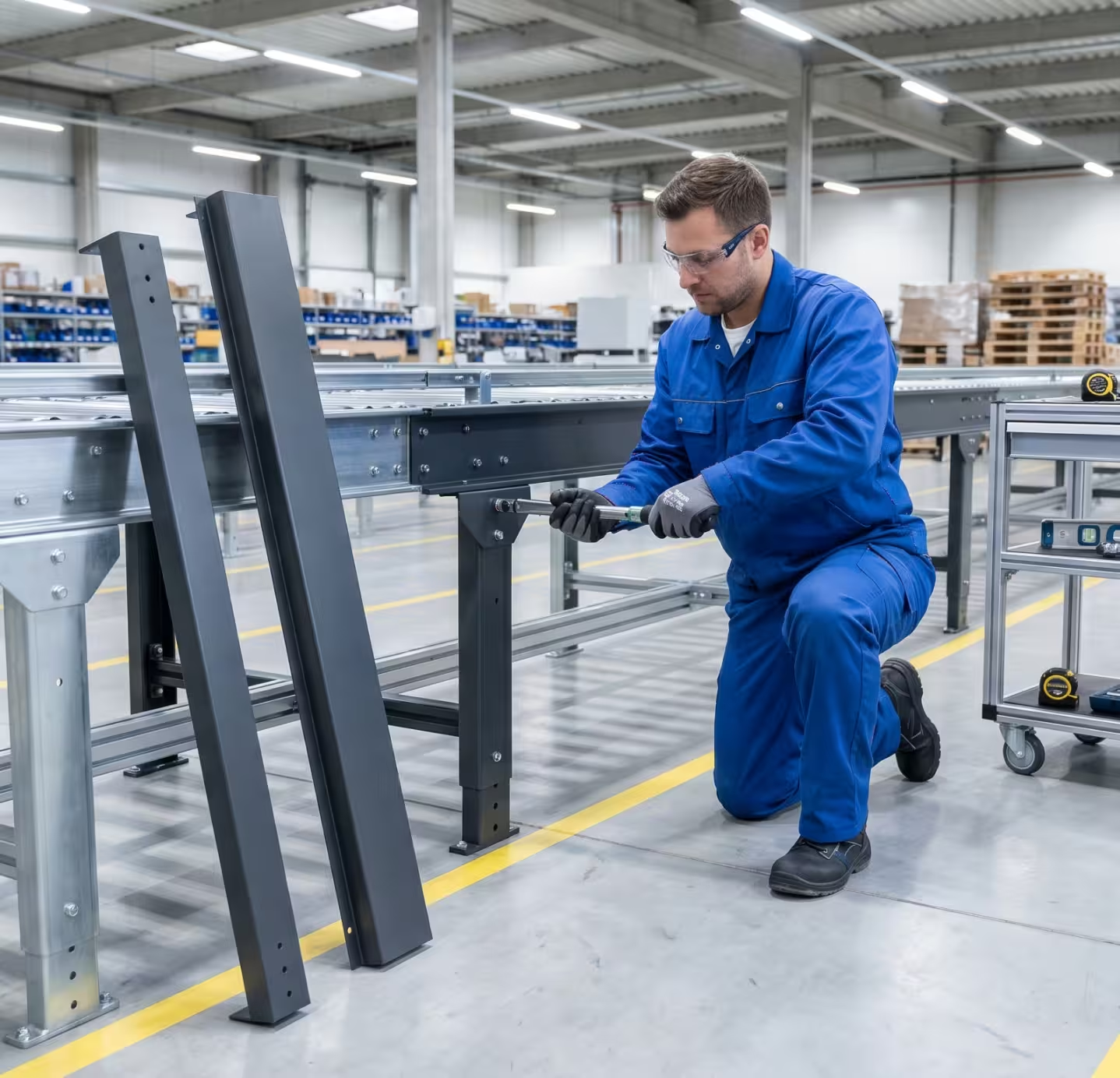
Forklift collisions, improper loading, and years of vibration stress can warp conveyor frames, bend support legs, and compromise the structural integrity that keeps belts tracking properly. MWS repairs and replaces conveyor frame sections, leg assemblies, guardrails, side channels, and safety guards. Our in-house fabrication capability means MWS can manufacture custom replacement sections for older or discontinued conveyor models where standard replacement parts are no longer available.

Worn conveyor chain and sprocket requiring replacement in distribution center
Conveyor frame structural repair after forklift collision in warehouse

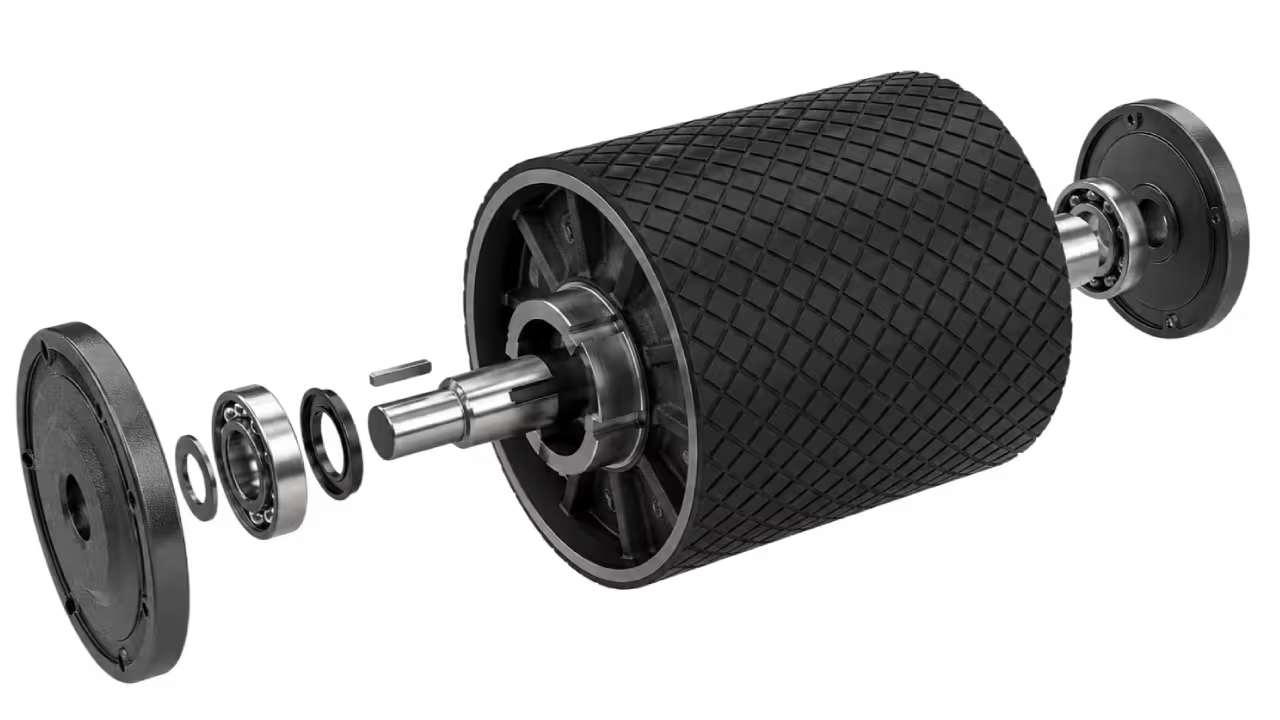
Pulley Lagging & Pulley Replacement

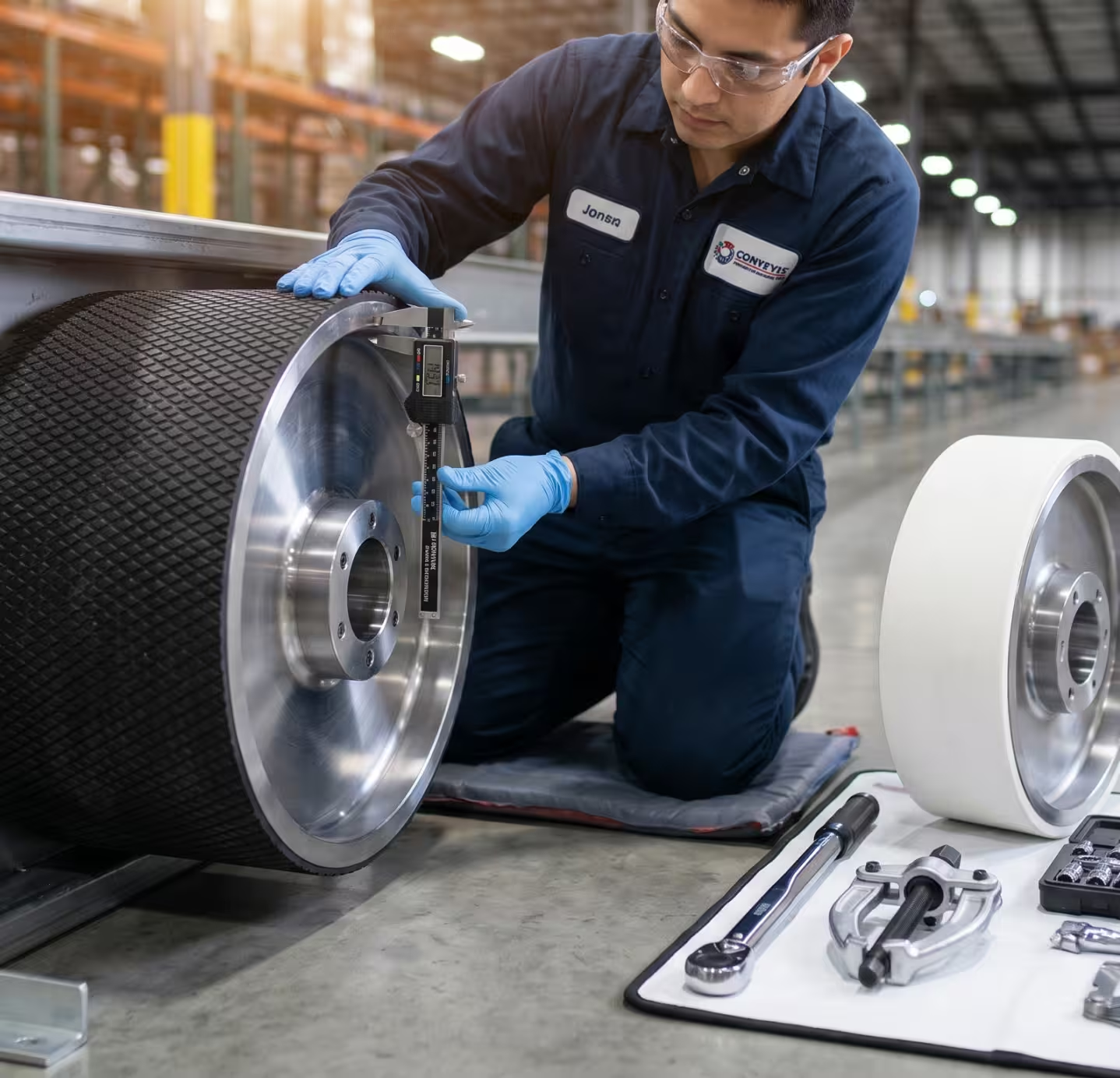
Drive pulley lagging — the rubber or ceramic coating that gives the belt traction — is one of the most commonly overlooked conveyor spare parts. Worn lagging is a primary cause of belt slippage and mistracking, yet it's often invisible during a quick visual check. MWS inspects lagging wear during every service call and replaces it proactively before it causes a belt slip or downstream damage. We also replace head, tail, snub, and bend pulleys on all standard conveyor configurations.

Conveyor System Inspections & Audits

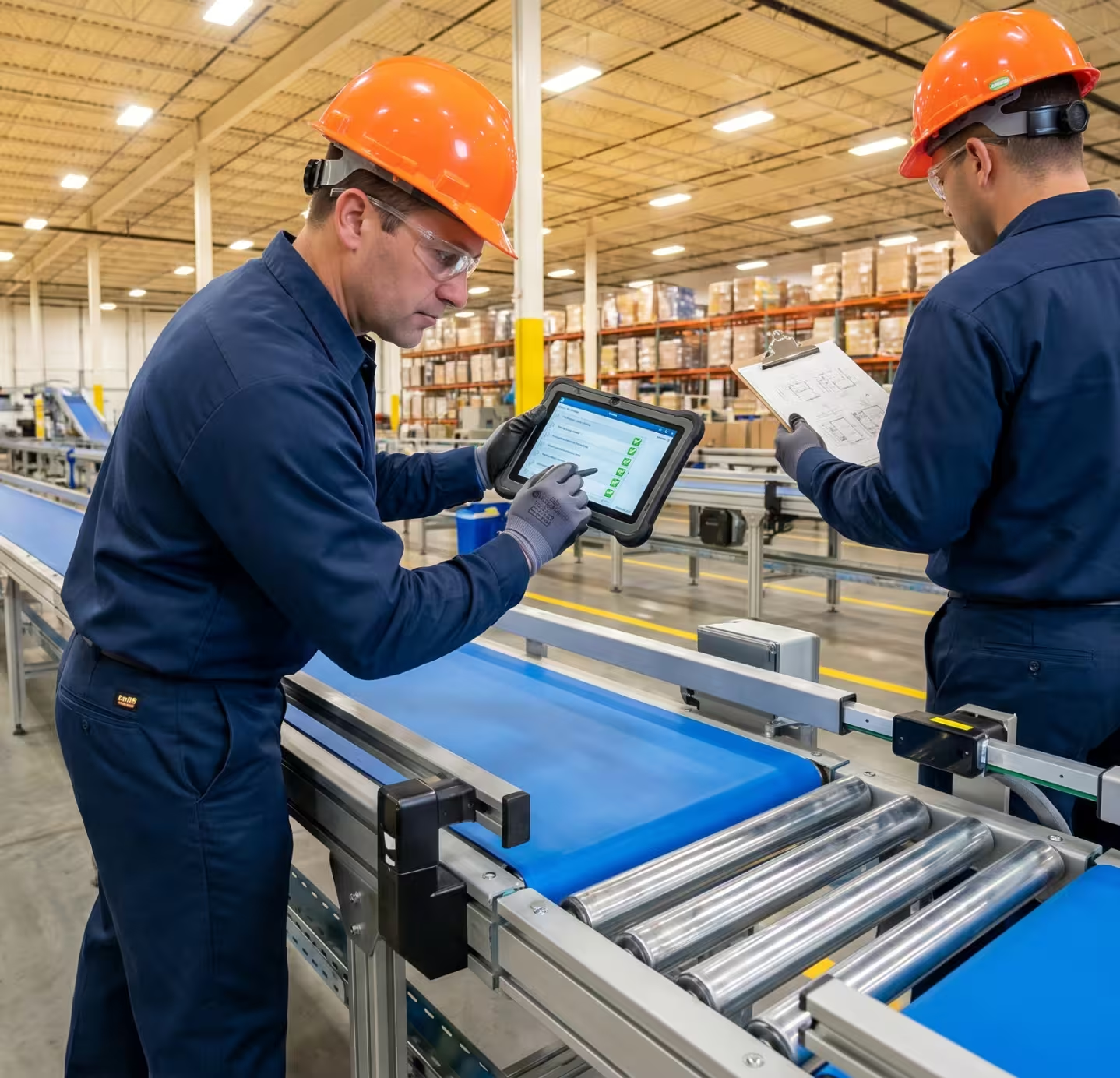
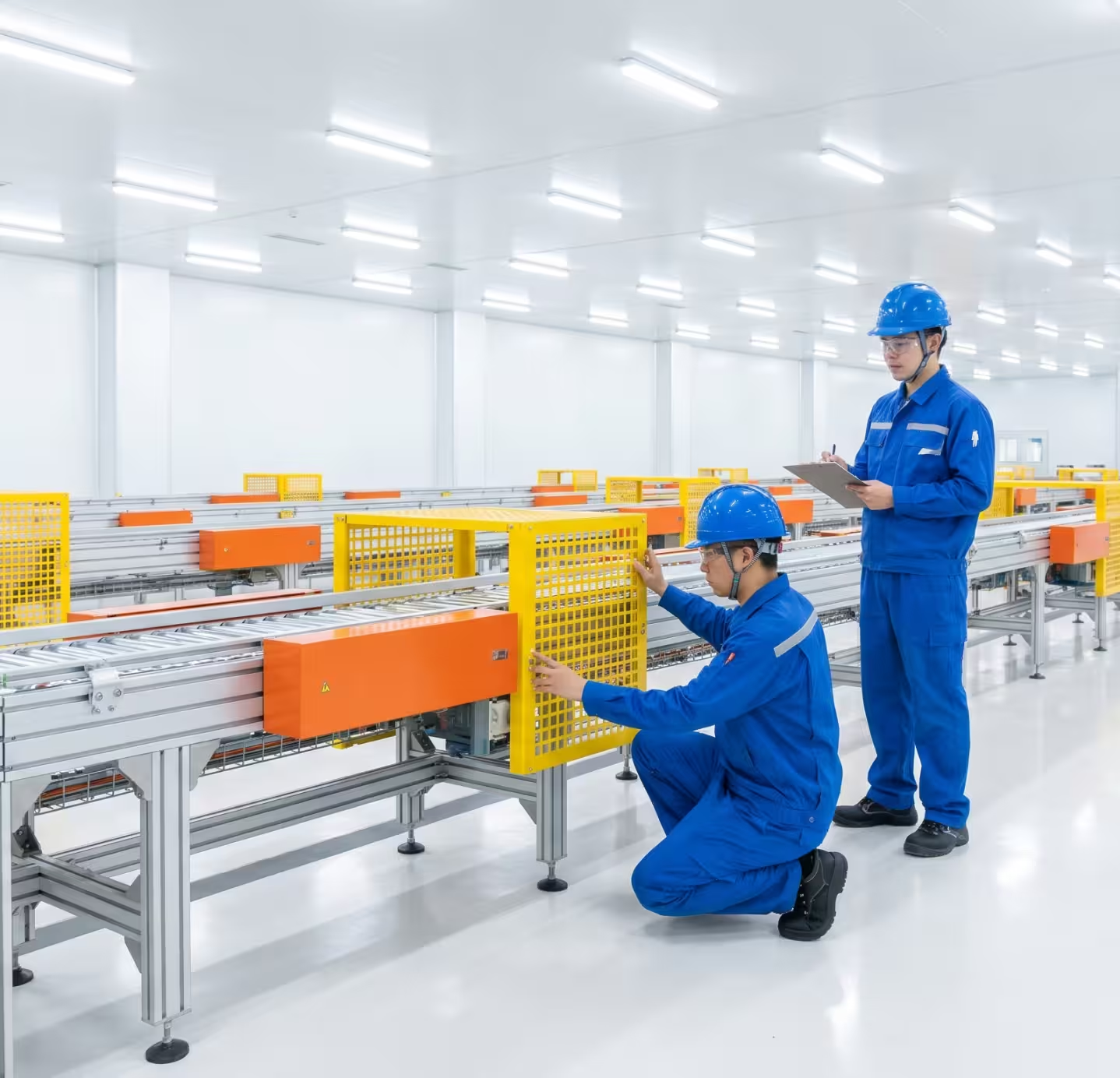
Before breakdowns happen, MWS offers formal conveyor system inspections and operational audits. A trained technician walks your entire conveyor line, documents condition ratings for every major component, identifies parts approaching end-of-life, and delivers a prioritized repair and replacement schedule. System inspections are the foundation of any effective conveyor preventive maintenance program and the most cost-effective form of conveyor repair — because they prevent the breakdown from happening in the first place.

Damaged conveyor frame and support legs being repaired by MWS
MWS technician performing conveyor system inspection and operational audit

Preventive Maintenance Programs

MWS offers structured conveyor preventive maintenance contracts that cover scheduled inspections, lubrication, adjustments, and component replacement on a defined calendar. PM program customers receive priority dispatch for emergency conveyor repair calls, a documented service history for every visit, and proactive parts identification to keep your spare parts inventory stocked with what actually matters for your specific systems. See the full PM program details in the section below.

Conveyor Modernization
& Upgrades

Sometimes the right conveyor repair is an upgrade. MWS helps customers extend the useful life of aging conveyor systems by replacing obsolete controls with modern equivalents, upgrading drive components to more energy-efficient motors and VFDs, integrating new sensors and safety devices, and adding accumulation capability to previously non-accumulating lines. Modernization often costs a fraction of system replacement while delivering years of additional reliable service.

Conveyor system audit documentation and condition rating walkthrough

Common Conveyor Failure Modes Causes & Solutions

Understanding why conveyors fail is the first step toward preventing the next breakdown. The table below covers the nine most frequent failure types MWS technicians encounter across Midwest distribution and manufacturing facilities.

Failure Mode Common Causes Common Options
Belt Slippage Insufficient belt tension, worn drive pulley lagging, overloading, oil or debris on pulley surface Adjust take-up tension, replace worn lagging, clean contact surfaces, verify load requirements
Belt Mistracking Frame misalignment or twist, improper splice, uneven product loading, worn or seized idlers Frame alignment check, splice inspection and re-cut, idler replacement, tracking roller adjustment
Belt Tears & Splice Separation Improper splicing technique, impact from falling materials, pulley buildup, overloading Hot vulcanization, cold bonding, or mechanical fastener repair; pulley cleaning; load point inspection
Seized Rollers Lack of lubrication, debris and material accumulation, bearing failure, corrosion Full roller replacement; bearing inspection; lubrication program; debris management improvements
Motor & Drive Failures Electrical supply irregularities, thermal overload, bearing wear, overloading, poor ventilation Motor replacement or rewind, VFD inspection/replacement, overload protection calibration, motor venting
Sensor Malfunctions Dust and debris accumulation on lens, physical dislodgment, calibration drift, wiring damage Lens cleaning and realignment, photoeye replacement, wiring repair, recalibration to manufacturer spec
Material Carryback Worn or improperly installed belt scrapers, belt surface buildup, inadequate secondary cleaning Scraper blade replacement, scraper pressure adjustment, installation of secondary belt cleaning systems
Chain Elongation Insufficient lubrication, overloading, sprocket wear, debris contamination in chain links Chain stretch measurement, full chain replacement, sprocket replacement, lubrication program establishment
Structural Damage Forklift or vehicle collision, fastener loosening over time, seismic activity, corrosion Frame section replacement or weld repair, guard installation, fastener retorquing, structural reinforcement
Belt Slippage
Causes
Insufficient belt tension, worn drive pulley lagging, overloading, oil or debris on pulley surface
Options
Adjust take-up tension, replace worn lagging, clean contact surfaces, verify load requirements
Belt Mistracking
Causes
Frame misalignment or twist, improper splice, uneven product loading, worn or seized idlers
Options
Frame alignment check, splice inspection and re-cut, idler replacement, tracking roller adjustment
Belt Tears & Splice Separation
Causes
Improper splicing technique, impact from falling materials, pulley buildup, overloading
Options
Hot vulcanization, cold bonding, or mechanical fastener repair; pulley cleaning; load point inspection
Seized Rollers
Causes
Lack of lubrication, debris and material accumulation, bearing failure, corrosion
Options
Full roller replacement; bearing inspection; lubrication program; debris management improvements
Motor & Drive Failures
Causes
Electrical supply irregularities, thermal overload, bearing wear, overloading, poor ventilation
Options
Motor replacement or rewind, VFD inspection/replacement, overload protection calibration, motor venting
Sensor Malfunctions
Causes
Dust and debris accumulation on lens, physical dislodgment, calibration drift, wiring damage
Options
Lens cleaning and realignment, photoeye replacement, wiring repair, recalibration to manufacturer spec
Material Carryback
Causes
Worn or improperly installed belt scrapers, belt surface buildup, inadequate secondary cleaning
Options
Scraper blade replacement, scraper pressure adjustment, installation of secondary belt cleaning systems
Chain Elongation
Causes
Insufficient lubrication, overloading, sprocket wear, debris contamination in chain links
Options
Chain stretch measurement, full chain replacement, sprocket replacement, lubrication program establishment
Structural Damage
Causes
Forklift or vehicle collision, fastener loosening over time, seismic activity, corrosion
Options
Frame section replacement or weld repair, guard installation, fastener retorquing, structural reinforcement

Don't Let a Small Issue
Become a Costly Breakdown

Most conveyor failures start as minor, fixable issues. Early conveyor repair saves 2-5x the cost of emergency service.

Or call us at 515-635-1555

Conveyor Types MWS Services
Every System in Your Facility

Midwest Warehouse Solutions repairs, maintains, and supplies spare parts for every major conveyor type used in modern warehouse and distribution operations. No matter what equipment is running in your facility, MWS has the experience and conveyor spare parts to keep it running.

Conveyor modernization upgrade replacing obsolete controls with modern components

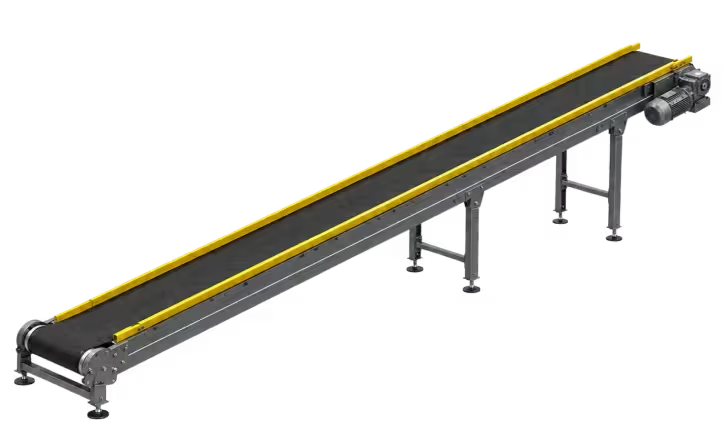
Belt Conveyors

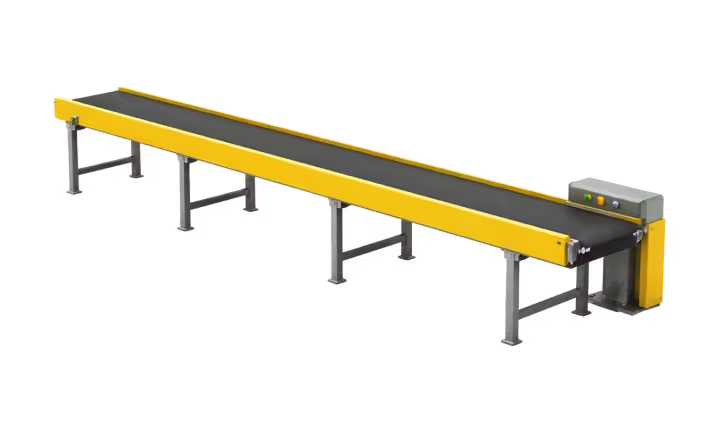
The backbone of most distribution center and warehouse operations, belt conveyors are the most common conveyor repair request MWS handles. We service flat belt, slider bed, and roller-bed belt conveyor configurations — handling tracking, tensioning, belt replacement, drive component repair, and structural issues on systems from Hytrol, Intelligrated, TGW, and all other major manufacturers.

Types of conveyor systems serviced by Midwest Warehouse Solutions

Roller Conveyors
(Powered & Gravity)

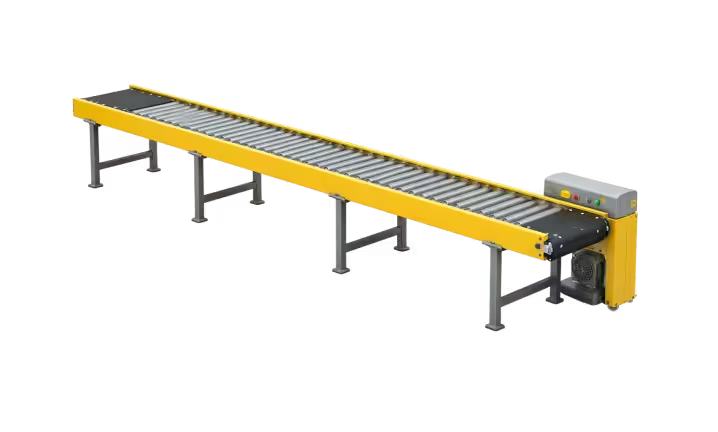
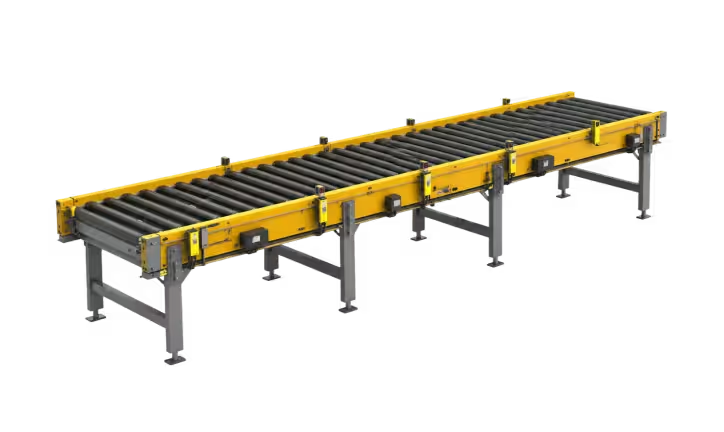
From simple gravity chutes to powered roller lines, MWS technicians diagnose and repair all roller conveyor configurations. We replace rollers, service belt-over-roller and chain-driven roller drives, and troubleshoot accumulation faults on both standard and specialized roller conveyor lines.

Flat belt conveyor repair service for warehouse distribution center

Chain Conveyors

Chain conveyors — including drag chain, roller chain, and slat conveyors — require precise lubrication schedules and regular chain condition monitoring to prevent stretch, wear, and sprocket damage. MWS provides full chain conveyor repair services including chain tensioning, chain and sprocket replacement, and drive system overhaul.

Powered roller conveyor and gravity roller conveyor repair in Midwest

Sortation Conveyors

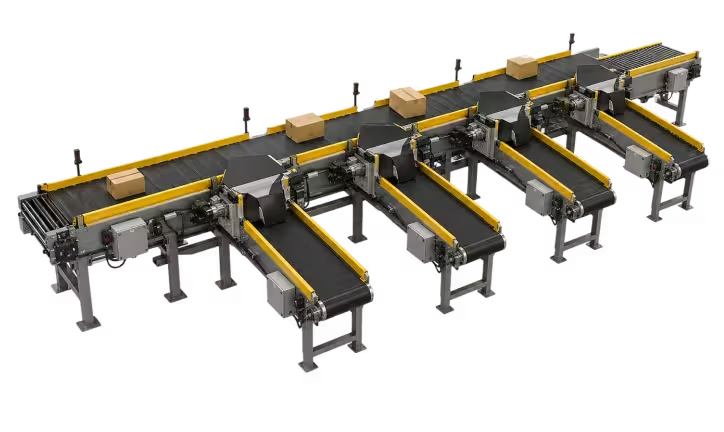
Cross-belt sorters, sliding shoe sorters, tilt-tray sorters, pop-up wheel divert units, and shoe-and-slat sortation systems are among the most complex conveyors in any distribution center — and among the most expensive to have offline. MWS technicians are experienced in sortation conveyor repair, including divert mechanism service, controls troubleshooting, and belt and shoe replacement.

Chain conveyor repair service for manufacturing and warehouse facilities

Zero-Pressure Accumulation (ZPA) Conveyors

Zero-pressure accumulation conveyors, including 24-volt and EZlogic-controlled systems, require both mechanical and controls expertise to repair properly. MWS has hands-on experience with ZPA conveyor repair, zone board replacement, photoeye calibration, and motor roller servicing — keeping your accumulation zones functioning without product damage or production jams.

Sortation conveyor repair and maintenance for e-commerce fulfillment

Lineshaft Conveyors

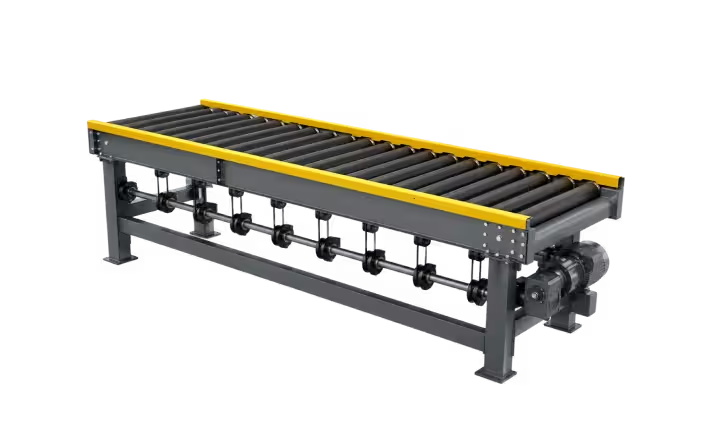
Lineshaft-driven roller conveyors are common in older warehouse and mail-order fulfillment facilities. MWS services lineshaft conveyor components including drive O-bands, spools, rollers, and shaft assemblies — and stocks lineshaft conveyor spare parts for the most common configurations.

Zero-pressure accumulation ZPA conveyor repair and zone control service

Incline & Decline Conveyors

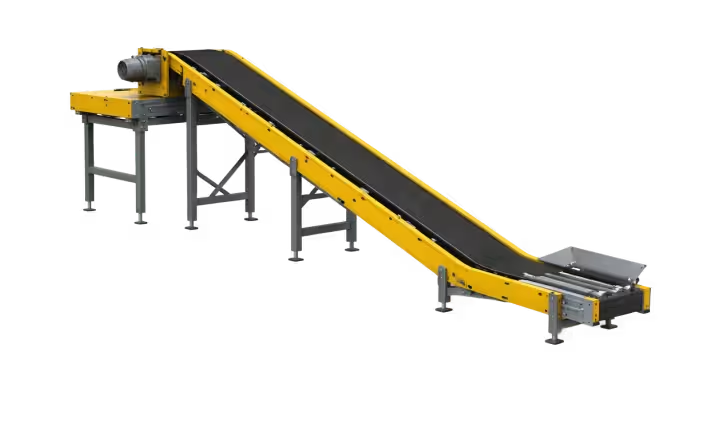
Incline and decline belt conveyors present unique conveyor repair challenges — belt tension, lagging wear, and load distribution are all amplified by the angle of travel. MWS technicians are experienced with incline conveyor repair, including anti-rollback device service, nose-over roller replacement, and belt tension recalculation after component changes.

Lineshaft conveyor repair and belt replacement service

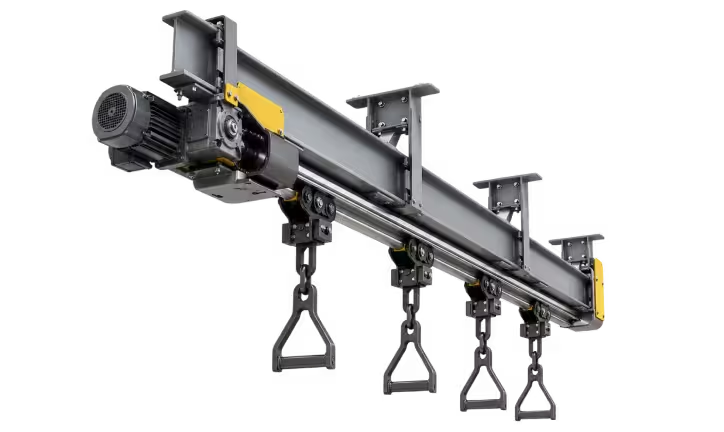
Overhead Conveyors

Power-and-free, enclosed track, and I-beam overhead conveyor systems require specialized service that most warehouse equipment companies can't provide. MWS repairs overhead conveyor trolleys, drive components, chain and track systems, and controls — keeping overhead material flow running in manufacturing and assembly environments.

Incline and decline conveyor repair for warehouse material handling

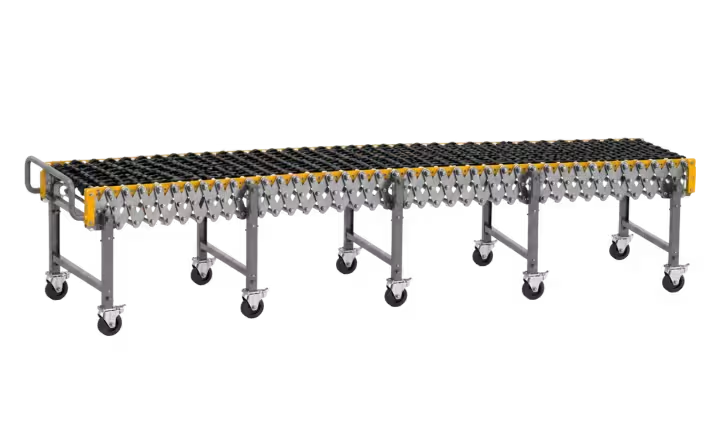
Flexible & Extendable Conveyors

Flexible boom conveyors and extendable belt conveyors used for truck loading and unloading are subject to frequent mechanical wear from constant repositioning. MWS services extendable conveyor drive components, belts, and structural elements.

Overhead conveyor repair and maintenance in manufacturing facility

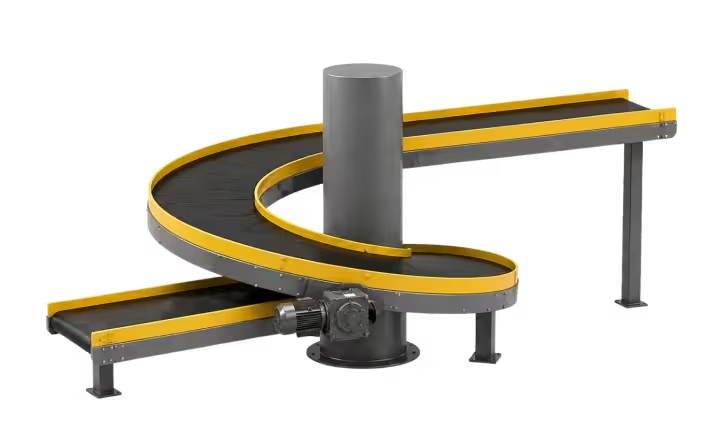
Spiral & Vertical
Conveyors

Spiral elevators and vertical reciprocating conveyors (VRCs) are critical for multi-level operations. MWS provides spiral conveyor maintenance and repair, including belt and drive service, and coordinates with VRC manufacturers for service on vertical lift systems integrated with conveyor lines.

Conveyor Spare Parts
OEM, Compatible & Hard-to-Find Components

Midwest Warehouse Solutions stocks and sources conveyor spare parts across all eight major component categories. Whether you need a standard replacement belt, a specific Hytrol motor roller, a control zone card, or a hard-to-find part for an older discontinued conveyor system, MWS can help you source it — often with same-day or next-day availability. We also offer on-site Parts Management Contracts for high-throughput facilities where emergency shipping delays are not an option. Call 515-635-1555 to request a parts quote or inquiry.
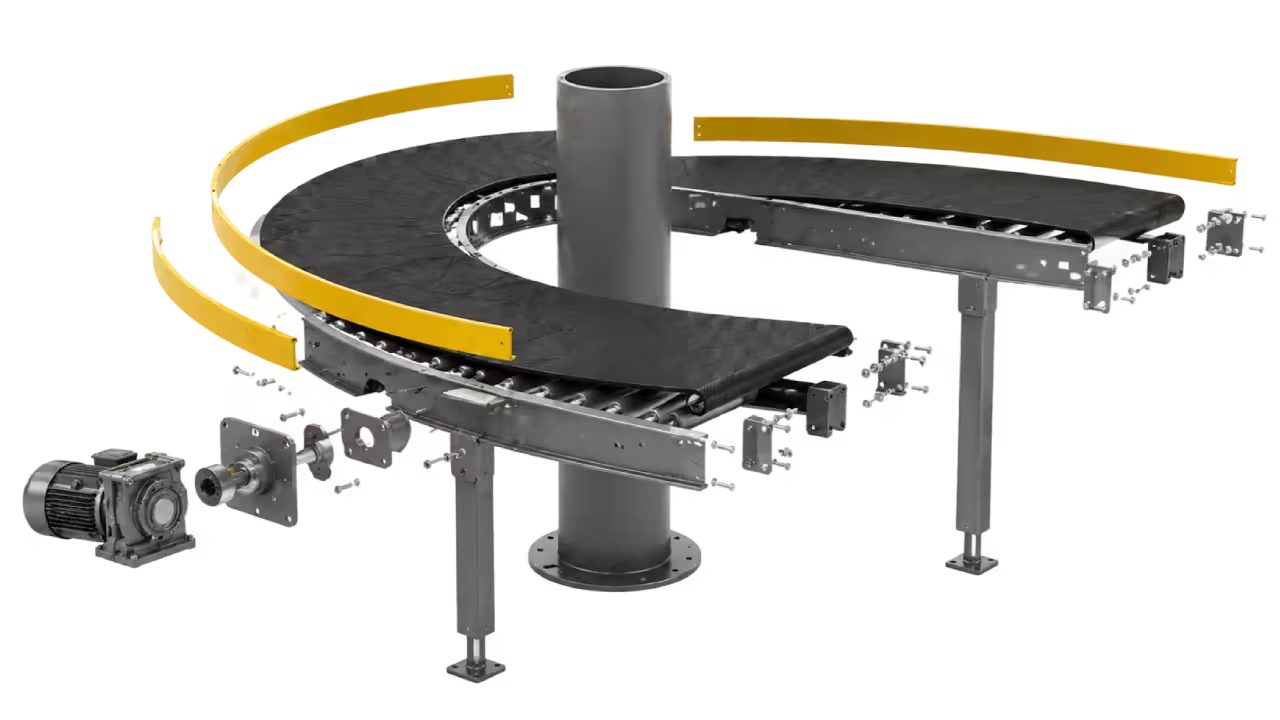
Flexible and extendable conveyor repair for loading dock operations

Belt & Belt Components

Part Function Replacement frequency
Conveyor belt (flat, modular, PVC, PU, rubber) Primary carrying surface for all conveyor products 2–7 years depending on type and use intensity
Wear strips (slider bed strips) Protect belt edges and slider bed frame from friction wear 1–3 years
Belt lacing / mechanical fasteners Splice connection for conveyor belt ends Inspect every 6 months; replace as needed
Scraper blades (primary/secondary) Remove carryback material from belt surface after head pulley 3–12 months depending on material type
Belt clamps and clips Temporary fastening for emergency repairs and tracking As needed
Conveyor belt (flat, modular, PVC, PU, rubber)
Function
Primary carrying surface for all conveyor products
Replacement frequency
2–7 years depending on type and use intensity
Wear strips (slider bed strips)
Function
Protect belt edges and slider bed frame from friction wear
Replacement frequency
1–3 years
Belt lacing / mechanical fasteners
Function
Splice connection for conveyor belt ends
Replacement frequency
Inspect every 6 months; replace as needed
Scraper blades (primary/secondary)
Function
Remove carryback material from belt surface after head pulley
Replacement frequency
3–12 months depending on material type
Belt clamps and clips
Function
Temporary fastening for emergency repairs and tracking
Replacement frequency
As needed
OEM and aftermarket conveyor spare parts stocked by MWS

Rollers & Idlers

Part Function Replacement frequency
Carrying idlers (flat, troughed) Support the loaded belt between head and tail pulleys 2-5 years
Return rollers Support the empty belt on the return run 3-7 years
Impact rollers/idlers Absorb shock at material load zones to protect belt 1-3 years (high wear zone)
Self-training/tracking idlers Automatically correct belt drift and mistracking 2-5 years
Drive rollers Power belt movement in motorized roller conveyors 3-7 years
Coated/rubber-lagged rollers High-grip or product-gentle surface for sensitive handling 2-5 years
Carrying idlers (flat, troughed)
Function
Support the loaded belt between head and tail pulleys
Replacement frequency
2-5 years
Return rollers
Function
Support the empty belt on the return run
Replacement frequency
3-7 years
Impact rollers/idlers
Function
Absorb shock at material load zones to protect belt
Replacement frequency
1-3 years (high wear zone)
Self-training/tracking idlers
Function
Automatically correct belt drift and mistracking
Replacement frequency
2-5 years
Drive rollers
Function
Power belt movement in motorized roller conveyors
Replacement frequency
3-7 years
Coated/rubber-lagged rollers
Function
High-grip or product-gentle surface for sensitive handling
Replacement frequency
2-5 years
Conveyor belt and belt components spare parts for warehouse repair

Pulleys

Part Function Replacement frequency
Head/drive pulley Drives belt forward; primary power transfer point 5–10 years
Tail pulley Returns belt at discharge end; provides takeup point 5–10 years
Snub pulley Increases belt wrap angle on drive pulley for better traction 5–10 years
Bend/redirect pulley Changes belt direction in complex conveyor routing 5–10 years
Pulley lagging (rubber/ceramic) Increases traction and protects drive pulley surface 2–4 years
Head/drive pulley
Function
Drives belt forward; primary power transfer point
Replacement frequency
5–10 years
Tail pulley
Function
Returns belt at discharge end; provides takeup point
Replacement frequency
5–10 years
Snub pulley
Function
Increases belt wrap angle on drive pulley for better traction
Replacement frequency
5–10 years
Bend/redirect pulley
Function
Changes belt direction in complex conveyor routing
Replacement frequency
5–10 years
Pulley lagging (rubber/ceramic)
Function
Increases traction and protects drive pulley surface
Replacement frequency
2–4 years
Industrial conveyor rollers and idlers replacement parts in stock

Drive Components

Part Function Replacement frequency
AC/DC motors Primary power source for conveyor belt and roller movement 5-15 years
Gear reducers / gearboxes Torque multiplication and speed reduction for conveyor drive 7-15 years
VFDs (variable frequency drives) Motor speed control and soft start/stop capability 5-10 years
Drive chains Power transfer from motor/gearbox to drive sprocket 2-5 years
Drive sprockets Chain engagement and power transfer to conveyor shaft 2-5 years
V-belts Secondary drive power transfer between motor and gearbox 1-3 years
Motor pulleys/sheaves V-belt drive interface on motor shaft 5-10 years
Couplings and shaft collars Motor-to-gearbox connection and shaft positioning 5-10 years
AC/DC motors
Function
Primary power source for conveyor belt and roller movement
Replacement frequency
5-15 years
Gear reducers / gearboxes
Function
Torque multiplication and speed reduction for conveyor drive
Replacement frequency
7-15 years
VFDs (variable frequency drives)
Function
Motor speed control and soft start/stop capability
Replacement frequency
5-10 years
Drive chains
Function
Power transfer from motor/gearbox to drive sprocket
Replacement frequency
2-5 years
Drive sprockets
Function
Chain engagement and power transfer to conveyor shaft
Replacement frequency
2-5 years
V-belts
Function
Secondary drive power transfer between motor and gearbox
Replacement frequency
1-3 years
Motor pulleys/sheaves
Function
V-belt drive interface on motor shaft
Replacement frequency
5-10 years
Couplings and shaft collars
Function
Motor-to-gearbox connection and shaft positioning
Replacement frequency
5-10 years
Conveyor drive pulleys and tail pulleys spare parts

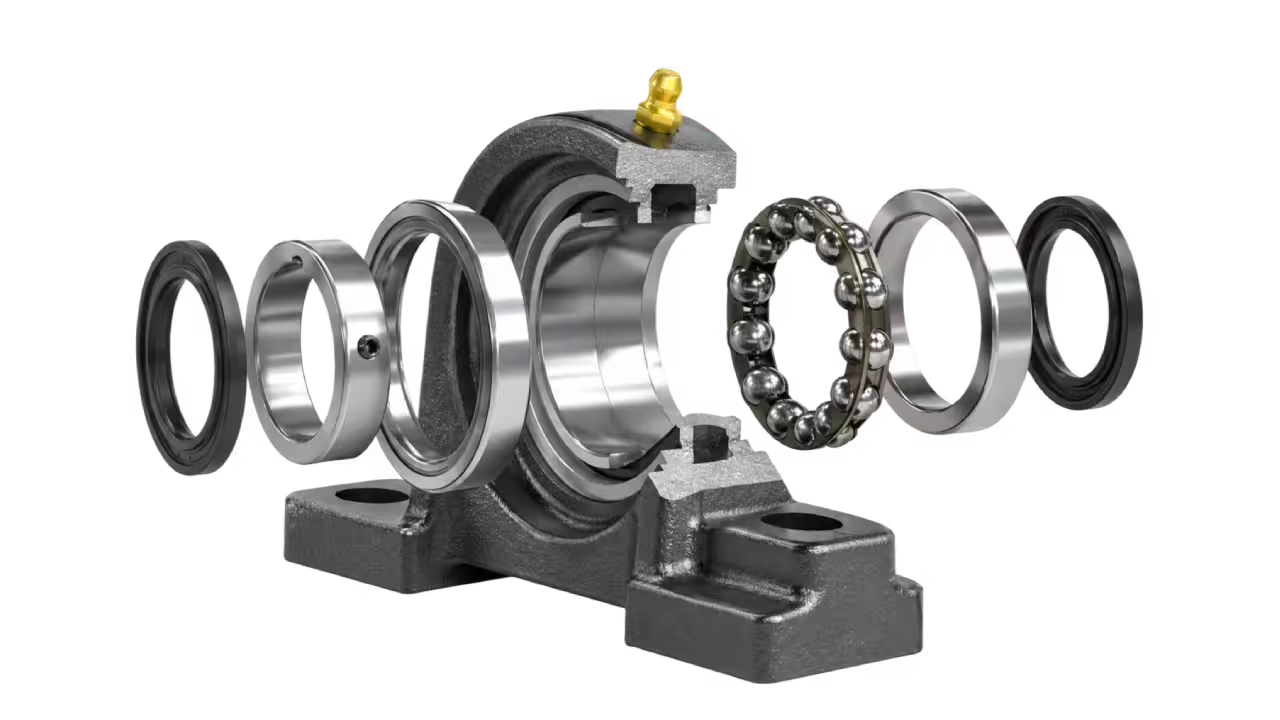
Bearings & Seals

Part Function Replacement frequency
Pillow block bearings Shaft support for conveyor pulleys and drive components 2–7 years
Flange bearings Frame-mounted shaft support in tight-clearance applications 2–7 years
Take-up bearings (screw/gravity) Belt tension adjustment mechanism support 3–7 years
Shaft seals Prevent lubricant loss and contamination ingress 2–5 years
Pillow block bearings
Function
Shaft support for conveyor pulleys and drive components
Replacement frequency
2–7 years
Flange bearings
Function
Frame-mounted shaft support in tight-clearance applications
Replacement frequency
2–7 years
Take-up bearings (screw/gravity)
Function
Belt tension adjustment mechanism support
Replacement frequency
3–7 years
Shaft seals
Function
Prevent lubricant loss and contamination ingress
Replacement frequency
2–5 years
Conveyor drive components motors gearboxes and sprockets for repair

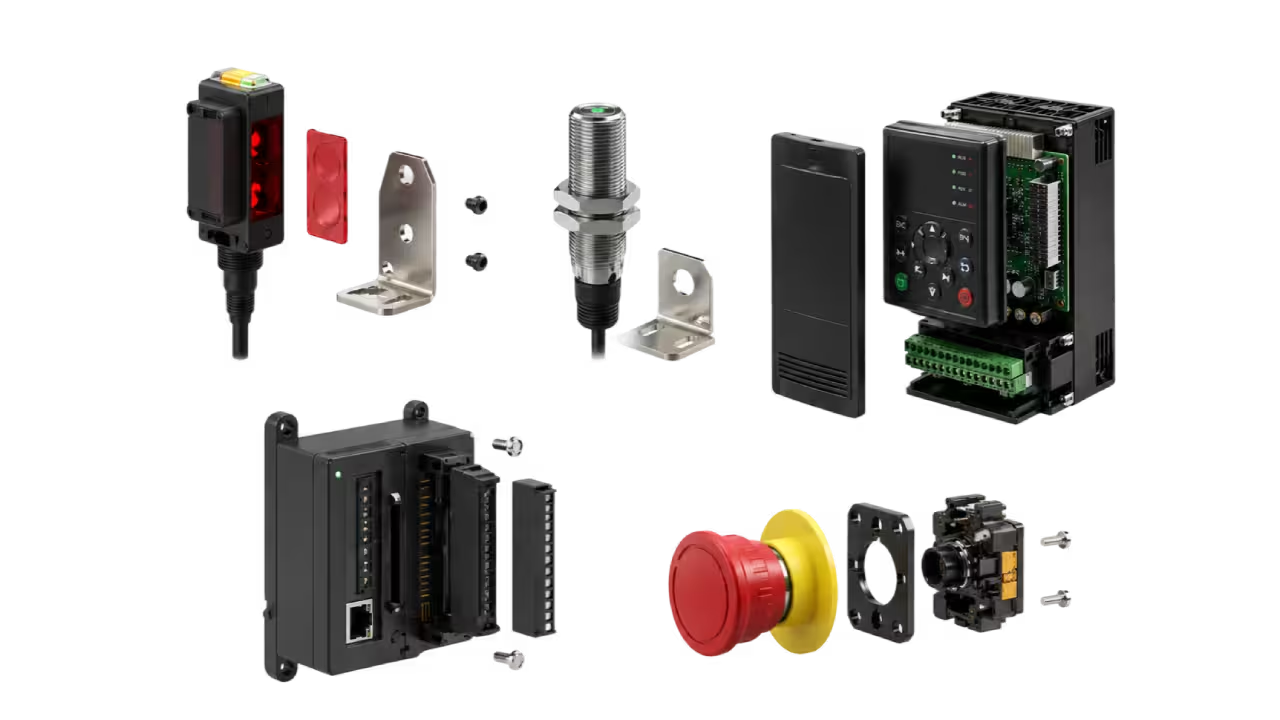
Sensors & Controls

Part Function Replacement Frequency
Photoeyes (diffuse, through-beam, retro) Package detection and zone control signaling 2–7 years
Proximity sensors Metal and object detection for product presence sensing 3–7 years
Limit switches Position sensing for diverters, gates, and end-of-travel detection 3–7 years
Barcode scanners (fixed) Package identification and routing decision input 5–10 years
PLC modules (I/O cards) Programmable logic control for conveyor sequencing 7–15 years
Control cards (zone boards) ZPA zone control for accumulation conveyor segments 3–10 years
Emergency stop buttons/pull cords Safety shutdown mechanism — OSHA 1910.212 required Test annually; replace as needed
Speed sensors Belt and roller speed monitoring for VFD control feedback 3–7 years
Conveyor bearings and seals replacement parts for preventive maintenance

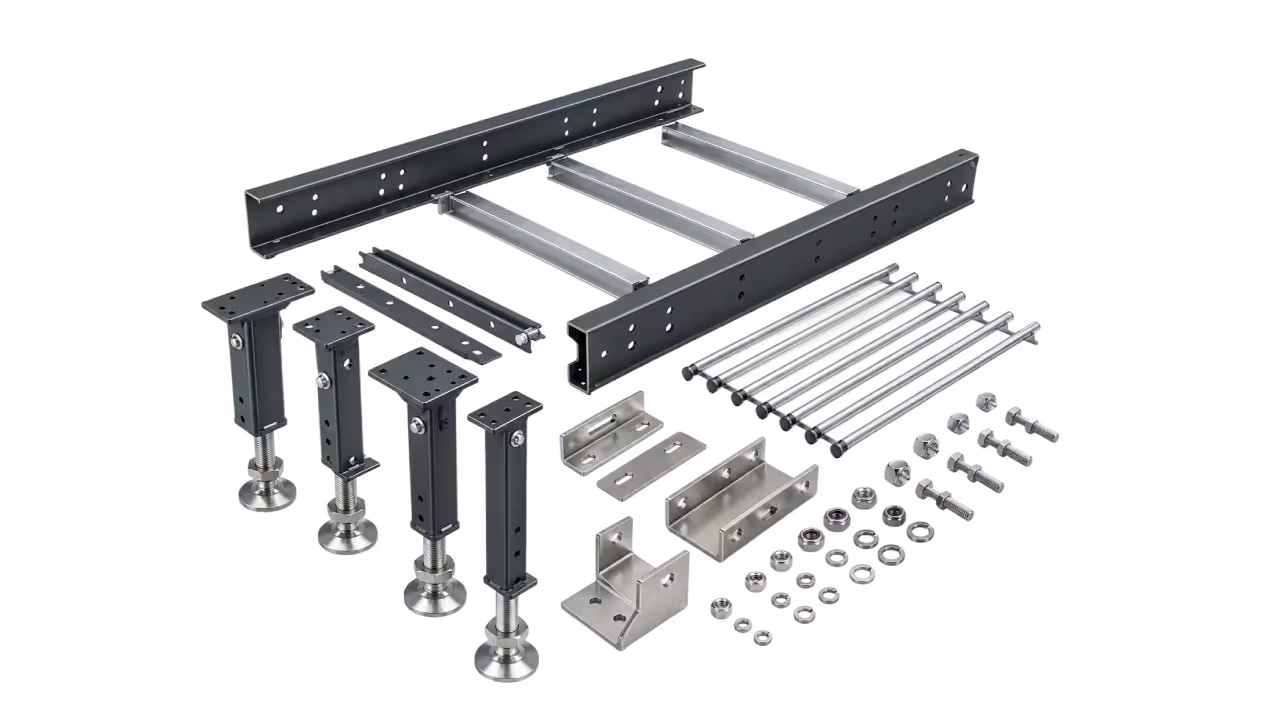
Structural & Hardware

Part Function Replacement frequency
Conveyor frame sections Function Structural support and alignment base for all components Replacement Frequency As needed (primarily collision damage)
Leg assemblies Function Height support and elevation adjustment for conveyor lines Replacement Frequency As needed
Guardrails and side channels Function Product containment and operator safety on conveyor lines Replacement Frequency As needed
Safety guards and covers Function OSHA 29 CFR 1910.212 compliance covers for moving parts Replacement Frequency Replace when damaged
Support brackets and hardware Function Frame fastening, cross-member support, and junction connections Replacement Frequency Inspect annually; replace as needed
Floor anchors Function Conveyor stability and seismic resistance anchoring Replacement Frequency As needed
Conveyor sensors photoeyes proximity switches and PLC control parts

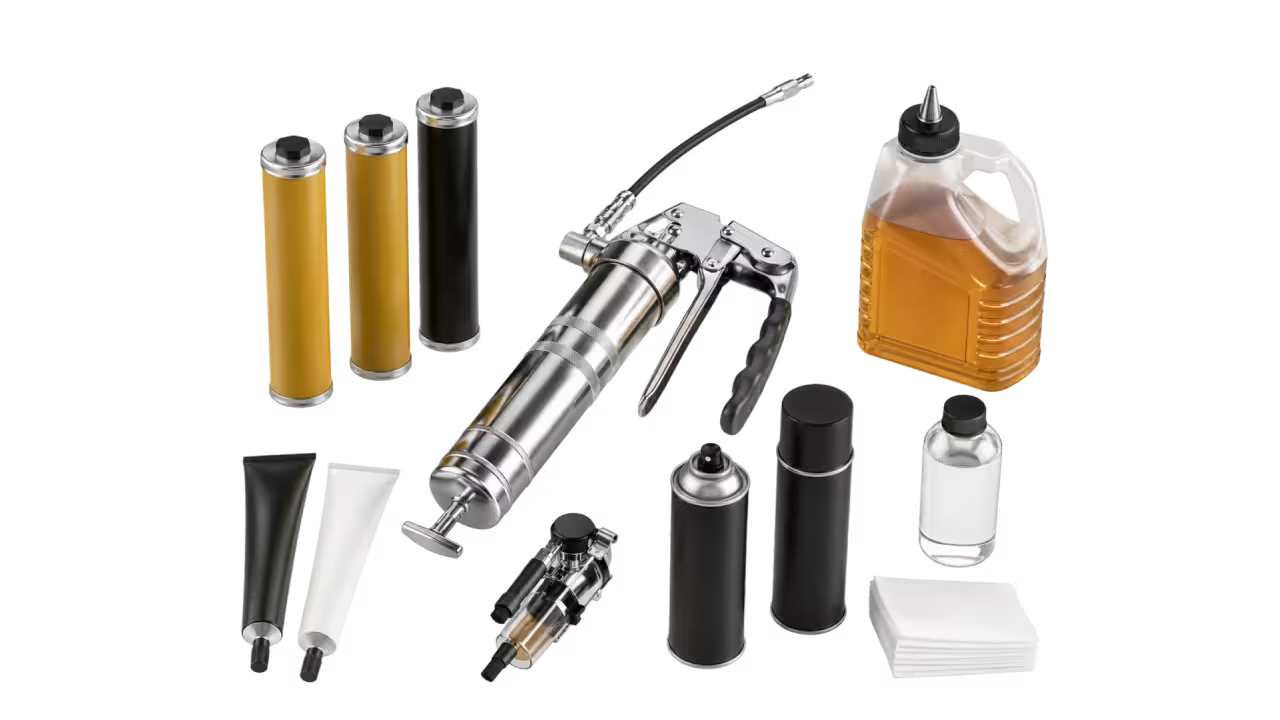
Lubrication & Maintenance

Part Function Replacement frequency
Chain lubricant Drive chain wear protection and corrosion prevention Per PM schedule (typically monthly to quarterly)
Bearing grease Bearing protection, heat reduction, and contamination resistance Per PM schedule (typically quarterly)
Gearbox oil Gear reducer lubrication and heat dissipation Annually or per OEM specification
Cleaning brushes/scrapers Belt surface maintenance and carryback prevention 3-12 months

Need Conveyor Spare Parts Fast? We Stock What You Need.

OEM and compatible parts for all major conveyor brands. Parts management contracts available for on-site critical inventory stocking.

Or call us at 515-635-1555

OEM vs. Aftermarket Conveyor Parts
Which Is Right for Your Repair?

Choosing between OEM (original equipment manufacturer) parts and aftermarket alternatives is one of the most common questions MWS customers ask during a conveyor repair or planned maintenance project. The right answer depends on equipment age, component criticality, budget, and whether the conveyor is still under warranty. The comparison table below gives you a clear framework.

Factor OEM Parts Aftermarket parts
Cost Higher — typically 20–40% more than aftermarket equivalents Lower — 20–40% cost savings for comparable components
Fit & Compatibility Guaranteed drop-in fit; manufactured to original specs Variable — may require modification; some aftermarket parts fit perfectly, others require adjustment
Warranty Maintains OEM system warranty; OEM support available Separate warranty from aftermarket supplier; may void OEM system warranty
Availability Excellent for current systems; limited for discontinued models Often broader availability, especially for older or discontinued systems
Performance Built to original performance specification; predictable lifespan Variable — quality varies widely by manufacturer; some match OEM, others wear faster
Best For Critical drive components, newer systems under warranty, high-downtime-cost operations Low-criticality wear parts, older equipment past warranty, budget-constrained repairs

MWS recommendation: Use OEM parts for critical components — motors, VFDs, gearboxes, and primary drive pulleys — where premature failure creates significant downtime risk. Aftermarket parts are often appropriate for consumable wear components (belts, scraper blades, rollers) on older systems past their original warranty period. Our technicians will advise you on the best approach for your specific equipment and budget.

Repair vs. Replace
Conveyor Decision Guide

One of the most consequential decisions a facility manager makes is whether to continue investing in conveyor repair for an aging system or commit to a full replacement. There is no universal right answer — but there is a clear framework. Use the comparison table and decision criteria below, then call MWS for an expert assessment specific to your equipment.

Scenario Repair Replace
Belt Damage Extent Less than 25% of belt width affected — repair is viable Greater than 25% damage, or damage to carcass/tension members
Cumulative Repair Cost Repair cost below 50% of belt/system replacement cost Repair cost approaching or exceeding 50-60% of replacement cost
System Age System under 10 years old with normal wear patterns System 10+ years old with increasing failure frequency
Parts Availability OEM parts readily available; short lead times Parts discontinued or require long lead times; sourcing becomes a persistent problem
Damage Type Isolated, localized damage with intact structural integrity Widespread wear, multiple failure modes, compromised belt carcass or frame structure
Capacity Alignment System capacity matches current and projected throughput needs System cannot meet current throughput requirements even after repair
Conveyor structural hardware and frame components for repair

Key Decision Criteria
When to Repair

Belt damage rule
If belt damage covers less than 25% of the belt width and does not compromise the structural carcass, repair is viable.

Cost-to-replacement ratio
If the repair cost is less than 40-50% of the cost of a comparable new system, repair is typically the right economic choice.

Isolated failure
A single motor, drive component, or section of belt or rollers that has failed while the rest of the system is in good condition is almost always a repair scenario.

Newer system
A conveyor under seven years old with a first or second major failure is a strong repair candidate.

Key Decision Criteria
When to Replace

Frequency is accelerating
If the interval between conveyor repair calls has been shrinking steadily over the past 12-18 months, the system is approaching end-of-life.

Cumulative repair cost threshold
When the total invested in repairs over the last 12 months approaches 50-60% of what a new comparable system costs, replacement economics become compelling.

Capacity mismatch
Conveyors designed for 5,000 packages per hour that are now being asked to handle 12,000 are chronically stressed, regardless of repair quality.

Parts unavailability
When critical conveyor spare parts for a system are discontinued and no compatible aftermarket alternative exists, the risk profile of continued operation is too high.

Conveyor repair vs replace decision guide — when to repair your system

The 25% Belt Width Rule: If conveyor belt damage spans less than 25% of the belt width, repair is typically viable using mechanical fasteners, cold vulcanization, or hot vulcanization depending on damage severity. Damage exceeding 25% of belt width, or any damage that compromises the belt carcass (the tension-bearing fabric layers), typically requires full belt replacement. When in doubt, call MWS at 515-635-1555 — our technicians can assess your belt and give you a same-day repair vs. replace recommendation.

Not Sure Whether to Repair
or Replace Your Conveyor?

Let our experienced technicians assess your system and give you a clear, honest recommendation. Free phone consultation available now.

Or call us at 515-635-1555
for a free consultation

Conveyor Repair Cost Guide
What to Budget for Every Scenario

Transparent pricing is rare in the conveyor repair industry — most providers won't publish even ballpark figures online. MWS believes you deserve a realistic baseline before you call. The cost ranges below reflect typical all-in costs (parts + labor) for common conveyor repair scenarios across our 12-state Midwest service area. Every job is unique; contact MWS at 515-635-1555 for a specific quote.

Factor OEM Parts Aftermarket parts
Minor Repairs $500 – $2,000 Belt tracking adjustment, sensor recalibration, lubrication service, minor belt patching, photoeye cleaning/alignment
Mid-Range Repairs $2,000 – $8,000 Motor replacement (standard HP), bearing replacement, belt splice repair (vulcanization), roller replacement (full section), chain replacement
Major Overhauls $10,000 – $50,000+ Full belt replacement, gearbox rebuild or replacement, VFD replacement, major structural repair, drive system overhaul, full zone board replacement
Major Overhauls +25-50% labor premium Same scope as above but after-hours, weekend, or holiday dispatch adds a 25-50% premium on labor rates
PM Contracts (Annual) $7,500 – $20,000 / year Scheduled inspections, lubrication, adjustments, wear part replacement, priority emergency dispatch, inspection documentation

$10K–$260K

Industry-estimated cost of unplanned conveyor downtime per hour — across general distribution ($10,000–$50,000/hr), e-commerce sortation ($25,000–$100,000+/hr), and automotive supply chains ($1M+/hr). A single prevented emergency equates to years of preventive maintenance investment. Source: Aberdeen Research / industry benchmarks.

We Service Your Conveyor
Whatever Brand You Run

Over 50 years working on warehouse conveyor systems of every type, brand, and age. Reach out today for a fast assessment.

Or call us at 515-635-1555
for a free consultation

Emergency Conveyor Repair

Conveyor failures don't follow business hours. A belt tear at 2 a.m. during peak season, a motor failure on a Friday afternoon, a photoeye jam that shuts down a sortation line on a Sunday — these are exactly the situations Midwest Warehouse Solutions is built to handle.

MWS provides true 24/7/365 emergency conveyor repair service across all 12 of our Midwest service states. When you call 515-635-1555, you reach a real person who can dispatch a technician, walk you through remote diagnostics, or connect you to the right support immediately.

Call 515-635-1555

Reach our 24/7 emergency line. A live MWS team member answers — not an answering service. Available days, nights, weekends, and holidays.

Phone Triage

Our technician asks targeted questions about your system brand, symptoms, error codes, and operational context. Many controls issues are resolved remotely without a truck roll.

Technician Dispatch

If on-site service is required, we dispatch the closest available technician with the appropriate tools and commonly needed spare parts loaded on their service vehicle.

On-Site Repair

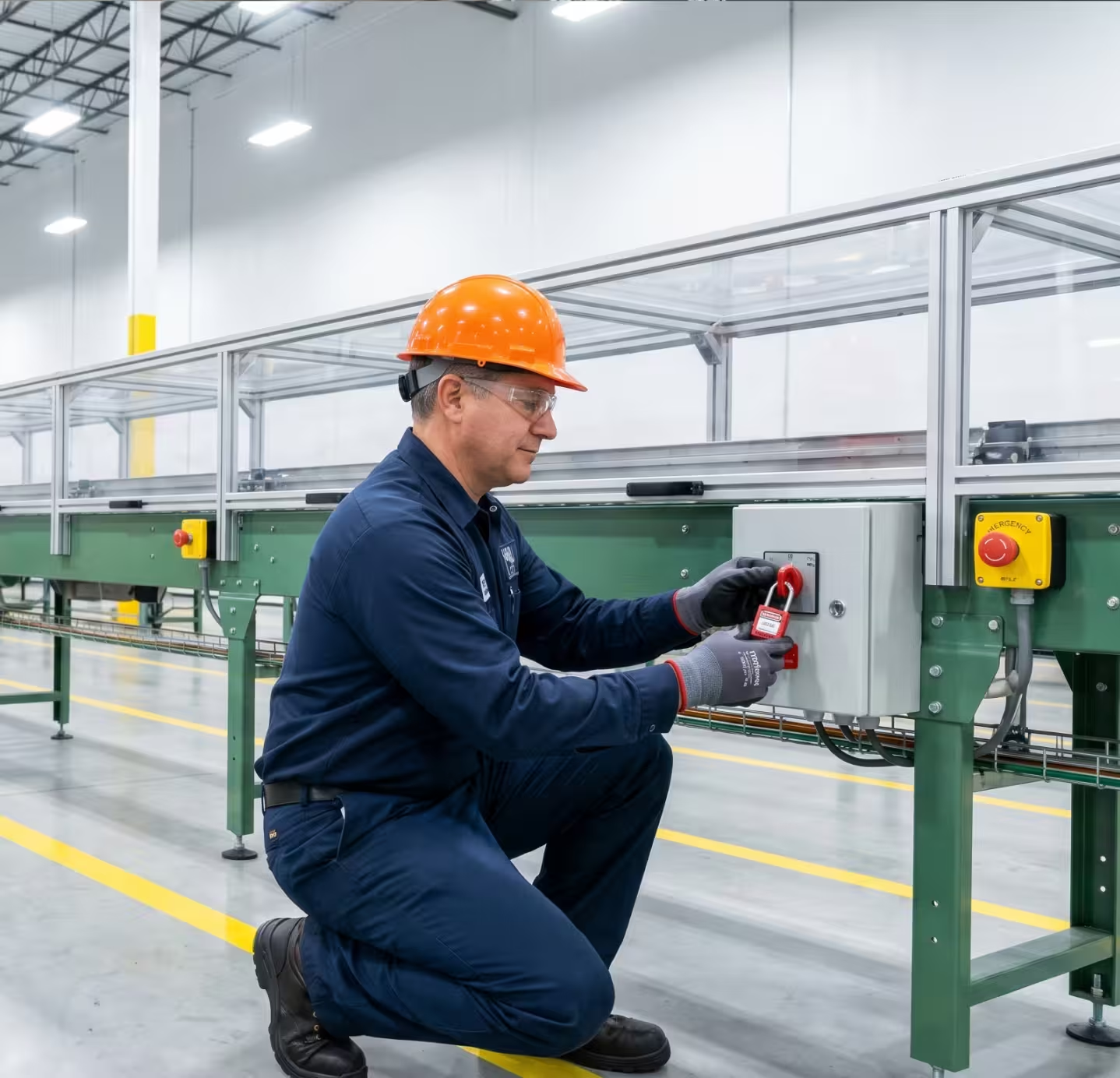
Our technician performs the conveyor repair following OSHA 1910.147 lockout/tagout procedures. Emergency repairs completed same-visit whenever parts are available.

Documentation & Follow-Up

You receive a written service report documenting the repair performed, root cause analysis, and recommended next steps to prevent recurrence.

When to replace conveyor system vs repair — cost and age criteria

What to Have Ready
when You Call

Conveyor brand and model number (check the nameplate on the drive unit or head section)
Description of symptoms — what is the conveyor doing (or not doing)?
Any error codes or fault indicators on the control panel or VFD display
Approximate age of the conveyor system and last maintenance date
Your facility address, contact name, and 24-hour access information
Whether any recent changes were made to loading, speed, or product type before the failure

OSHA & CEMA Compliance

Every MWS Repair Meets the OSHA
& CEMA Standards

Every conveyor repair MWS performs is executed in full compliance with applicable federal safety standards and industry best practices. Our technicians are trained on Lockout/Tagout (LOTO) procedures, machine guarding requirements, and CEMA maintenance recommendations — so you can be confident that MWS's work on your systems leaves them not just operational, but safe and compliant.

OSHA 29 CFR 1910

General Industry Standards

  • Machine guarding (29 CFR 1910.212)
    All moving conveyor components — belts, pulleys, chains, drive shafts, and sprockets — must be guarded to prevent worker contact. MWS inspects and replaces safety guards as part of every service visit.
  • Lockout/Tagout (LOTO, 29 CFR 1910.147)
    Every conveyor must be fully de-energized, locked out, and tagged out before any maintenance or repair work begins. This is non-negotiable on every MWS service call — no exceptions.
  • Emergency stops
    Conveyor systems must have accessible emergency stop devices along the entire conveyor line, and all stops must require a deliberate manual reset before the conveyor can restart. MWS tests and documents emergency stop function during every PM visit.
  •  Housekeeping and illumination
    Conveyor working areas must be kept clean, free of product spillage and debris accumulation, and properly illuminated. MWS addresses spillage and carryback issues as part of routine conveyor repair and belt service.
  • Walkway clearance
    Adequate aisle width and overhead clearance must be maintained adjacent to conveyor lines.
MWS 24/7 emergency conveyor repair dispatched across 12 Midwest states
OSHA general industry standards compliance for conveyor safety

ANSI B20.1

Safety Standard for Conveyors, Cableways, and Related Equipment

ANSI B20.1 is the comprehensive safety code for conveyor systems in the United States. All MWS conveyor repair work is performed in accordance with B20.1 requirements for conveyor guarding, operational safety, and maintenance procedures.

CEMA Standards

Conveyor Equipment Manufacturers Association

CEMA establishes the industry's recommended practices for conveyor design, construction, installation, and maintenance. CEMA standards define accepted inspection frequencies, lubrication specifications, and component replacement criteria — and are the benchmark for what constitutes "industry-standard" conveyor maintenance. MWS PM programs are structured around CEMA-recommended inspection intervals and procedures, and our service documentation satisfies compliance record-keeping requirements for enterprise and regulated-industry customers

ASME B20.1 safety standard for conveyors and cableways compliance badge
CEMA Conveyor Equipment Manufacturers Association standards logo

ISN Certified
ID: 400-690402

MWS is ISN Certified through ISNetworld, the leading contractor safety management platform used by major enterprise clients to verify contractor safety records, compliance training, and insurance status. ISN Certification confirms MWS meets the contractor safety standards required by Fortune 500 distribution and manufacturing operations.

BRANDS WE SERVICE

Conveyor Brands MWS Services
Your Equipment Is in Good Hands

MWS services all major conveyor brands. Our preferred new-installation brand is Hytrol with Lafayette Engineering controls — but our technicians work on every make and model in the field. If it conveys, we can repair it.

Our Preferred
New-System Brand

Hytrol Conveyor (with Lafayette Engineering controls) MWS's preferred conveyor brand for new installations, giving our technicians the deepest experience base with Hytrol's full product line, including EZlogic zero-pressure accumulation systems and standard belt and roller conveyor configurations.

Hytrol preferred partner — MWS authorized conveyor brand service provider

Brands MWS Services
(All Makes & Models)

  • Hytrol Preferred brand; deepest parts and repair expertise; all Hytrol system types
  • Honeywell Intelligrated
  • Dematic
  • Dorner
  • FMH Conveyors
  • SpanTech
  • Rapistan (now Dematic)
  • Roach Conveyors
  • TGW / Ermanco
  • Mathews / Hytrol Group
  • Interroll
  • FlexLink
  • Ashland Conveyor
  • Multi-Conveyor
  • Komatsu / Interlake Mecalux
  • Bastian Solutions
  • Hanel / Kardex

Industries MWS Serves
Conveyor Repair Across Every Sector

Midwest Warehouse Solutions brings 50+ years of conveyor repair and spare parts experience to a wide range of industries. From high-throughput e-commerce fulfillment centers to food-grade processing lines, our technicians understand the specific demands, compliance requirements, and operational pressures of each sector.

Distribution Centers & Warehouses

Distribution centers run on conveyors — and when a conveyor fails, distribution stops. MWS provides emergency conveyor repair, scheduled PM programs, and spare parts supply for DC operations of all sizes, from regional single-site facilities to multi-building campus operations. Our 12-state coverage means MWS is always nearby when you need fast response.

E-Commerce & Fulfillment

E-commerce fulfillment operations run conveyors harder and faster than almost any other industry — and the cost of downtime during peak season is enormous. MWS serves fulfillment centers operating sortation conveyors, high-speed belt systems, ZPA accumulation conveyors, and automated divert systems, with 24/7 emergency conveyor repair capability and conveyor spare parts stocking programs to minimize any downtime window.

Food & Beverage Processing

Food-grade conveyor systems require sanitary belt materials, FDA-compliant parts, and technicians who understand food safety protocols. MWS services food-grade conveyor repair using appropriate belt and component materials, and we train our technicians on sanitary maintenance practices for food processing and packaging environments.

 Health, Beauty & Consumer Goods

Consumer goods manufacturers and packaging operations depend on reliable conveyors to maintain production velocity and product integrity. MWS provides conveyor repair and preventive maintenance services for FMCG, health and beauty, and consumer goods facilities throughout the Midwest, with experience on a wide range of light-duty and medium-duty conveyor configurations.

Manufacturing & Production

Production line conveyor failures have immediate, direct impacts on output. MWS serves Midwest manufacturers with on-site conveyor repair, preventive maintenance programs built around production schedules, and parts management contracts that keep critical conveyor spare parts at the ready without tying up working capital in excess inventory.

Parcel & 3PL Operations

Third-party logistics and parcel handling operations depend on sortation and transportation conveyors running at high volumes with high accuracy. MWS provides sortation conveyor repair, controls troubleshooting, and belt and divert system maintenance for 3PL facilities across the Midwest.

 Retail & Wholesale Distribution

Retail DC and wholesale distribution operations rely on conveyor reliability to keep store shelves stocked and order accuracy high. MWS provides conveyor repair and PM programs tailored to the throughput demands and scheduling constraints of retail supply chain operations across our Midwest service area.

Automotive & Tier-1 Supply Chain

Automotive supply chain conveyor failures are among the most financially severe in any industry — with downtime costs that can reach $1 million per hour at OEM production facilities. MWS provides conveyor repair services for automotive and tier-1 supplier operations, with documented compliance records, LOTO-trained technicians, and ISN Certification to meet the contractor requirements of major

MWS Conveyor Repair Service Area
12 Midwest States

Midwest Warehouse Solutions provides conveyor repair, spare parts, and preventive maintenance services across 12 states throughout the Midwest. Our service teams are positioned strategically to minimize drive times and emergency response windows across this broad geographic footprint. For large-scale projects or special situations, MWS has the capability to travel beyond our primary states — but the Midwest is home.

Iowa

Des Moines, Cedar Rapids, Davenport, Sioux City, Iowa City, Waterloo, Ames, West Des Moines, Ankeny, Council Bluffs, Dubuque, Urbandale

Illinois

Chicago, Rockford, Aurora, Naperville, Joliet, Springfield, Peoria

Indiana

Indianapolis, Fort Wayne, Evansville, South Bend, Hammond

Michigan

Detroit, Grand Rapids, Lansing, Ann Arbor, Flint, Kalamazoo

Minnesota

Minneapolis, St. Paul, Rochester, Duluth, Bloomington, Brooklyn Park, Plymouth, Minnetonka

Missouri

Kansas City, St. Louis, Springfield, Columbia

Ohio

Columbus, Cleveland, Cincinnati, Toledo, Akron

Wisconsin

Milwaukee, Madison, Green Bay, Kenosha, Racine

Kansas

Wichita, Overland Park, Kansas City

Nebraska

Omaha, Lincoln, Bellevue

North Dakota

Fargo, Bismarck, Grand Forks

South Dakota

Sioux Falls, Rapid City, Aberdeen

MWS is headquartered in Goldfield, Iowa and has served clients throughout the Midwest — and in states beyond our primary footprint — for over 50 years. For facilities outside the 12-state area, contact us at 515-635-1555 to discuss project-specific coverage.

Ready to Get Started?

Request a free consultation and let our team design a belt conveyor system built for your operation.

Or call us at 515-635-1555
for a free consultation

Why Choose Midwest
Warehouse Solutions for Conveyor Repair & Spare Parts

Six reasons why Midwest warehouse and distribution operations trust MWS with their most critical conveyor repair needs.

50+ Years of Warehouse Expertise

Founded in Iowa in 1979, MWS brings decades of hands-on conveyor repair, installation, and maintenance experience across Midwest facilities.

True 24/7 Emergency Response

Conveyor breakdowns don’t wait. MWS answers emergency calls 24/7 at 515-635-1555, with fast triage and fully stocked service vehicles ready to dispatch.

Hytrol Preferred Partner
+ Multi-Brand Expertise

MWS specializes in Hytrol systems while servicing all major conveyor brands, including Intelligrated, Dematic, Dorner, SpanTech, TGW, Rapistan, and Roach.

ISN Certified — Enterprise-Ready

MWS is ISN Certified through ISNetworld, meeting the safety, insurance, and compliance standards required by enterprise-level clients.

12-State Coverage, Local Knowledge

MWS serves 12 Midwest states with deep knowledge of regional facilities, equipment needs, and operational pressures.

In-House Fabrication for Hard-to-Source Parts

Our Goldfield, Iowa fabrication shop can build, modify, or assemble custom parts for legacy and hard-to-source conveyor systems.

Ready to Work with a Trusted Midwest Conveyor Repair Company?

MWS delivers complete conveyor repair, preventive maintenance, and spare parts supply across the Midwest. 50+ years of experience. ISN Certified. 24/7 emergency dispatch.

Or call us at 515-635-1555
for a free consultation

Frequently Asked Questions Conveyor Repair & Spare Parts

How much does conveyor repair cost?

Conveyor repair costs vary significantly based on what's broken, how urgently it needs to be fixed, and how accessible the system is. As a general baseline:

- Minor repairs (belt tracking, sensor calibration, lubrication service, V-belt replacement): $500–$2,000 including parts and labor
- Mid-range repairs (motor or gearbox replacement, full belt splice or belt replacement, multi-bearing swap, chain and sprocket service): $2,000–$8,000
- Major overhauls and system-level repairs (drive system rebuilds, multi-zone controls repair, structural restoration, full belt and roller replacement on long conveyor lines): $10,000–$50,000+
- Emergency and after-hours service adds a 25–50% labor premium to whichever repair tier applies

The often-overlooked cost is unplanned downtime. Industry data puts unplanned conveyor downtime between $10,000 and $260,000 per hour across general distribution and manufacturing. A preventive maintenance contract with MWS — ranging from $7,500 to $20,000 per year — routinely prevents incidents that would cost 5–10 times as much in combined repair and downtime costs. Call 515-635-1555 for a site-specific estimate.

Should I repair or replace my conveyor belt?

The industry-standard rule of thumb is the 25% rule: if belt damage affects less than 25% of the belt's width and does not compromise the structural carcass (the tension members inside the belt), the belt is a repair candidate. Damage exceeding 25% of the belt width, damage that cuts through the carcass, or damage that has compromised the splice typically means the belt should be replaced.

Beyond the damage assessment, factor in belt age, the repair-to-replacement cost ratio, and how critical the conveyor is to your operation. If cumulative repair costs — including the current repair — are approaching 50–60% of the cost of a new belt, replacement is almost always the smarter long-term investment. MWS also offers temporary field repairs using mechanical fasteners that can bridge to a planned replacement window without requiring an emergency replacement on short notice. Call MWS at 515-635-1555 for a belt assessment.

When should I replace my entire conveyor system instead of repairing it?

Key indicators that a full system replacement makes more sense than continued conveyor repair include:

- The system is 10 years or older and failure frequency has been increasing
- Annual repair costs for the past 12 months have reached or exceeded 50–60% of what a comparable new system would cost
- Critical spare parts are discontinued and no reliable aftermarket equivalent exists
- The system's throughput capacity no longer matches your operational volume — it was designed for a different operation
- Safety or OSHA compliance gaps require structural modifications that approach the cost of replacement anyway
- Controls are obsolete, with no available software or hardware support from the manufacturer

If your system is relatively young, the damage is isolated, and repair can be completed quickly, repair is almost always the right call. MWS provides no-obligation conveyor system assessments to help you make this decision with complete information. We'll give you an honest recommendation — not a sales pitch for either option.

How quickly can MWS respond to an emergency conveyor repair call?

MWS operates a 24/7/365 emergency line at 515-635-1555. When you call, you reach a live dispatcher who begins qualifying your situation immediately. In many cases, our technicians can perform remote triage via phone or VPN diagnostics, resolving conveyor control and electrical issues without a truck roll — getting you running in minutes rather than hours.

When an on-site visit is required, MWS dispatches the nearest qualified technician from our 12-state Midwest service area. Response times vary by location, but MWS works to minimize every response window. PM contract customers receive priority dispatch.

Do you repair all conveyor brands, or only Hytrol?

MWS repairs all major conveyor brands. While Hytrol — paired with Lafayette Engineering controls — is our preferred brand for new conveyor installations, we have hands-on experience with every significant conveyor manufacturer in use across the Midwest, including Honeywell Intelligrated, Dematic, Dorner, FMH Conveyors, SpanTech, Rapistan, Roach, TGW/Ermanco, Interroll, FlexLink, Mathews, Bastian Solutions, Ashland Conveyor, Multi-Conveyor, and many others.

For older or legacy systems where OEM parts are no longer available, MWS leverages our in-house fabrication capability and parts sourcing network to find compatible alternatives. Whatever brand is in your facility, MWS can service it. Call us at 515-635-1555 and describe your system — we'll confirm service availability immediately.

What conveyor spare parts should I keep on hand?

A well-stocked spare parts inventory for a typical warehouse belt or roller conveyor system should prioritize the components with the highest failure frequency and the longest restock lead times. MWS recommends the following baseline inventory:

- Consumables (replace frequently): Conveyor belts or belt sections, scraper blades, V-belts, wear strips, O-rings and seals, chain lubricant and bearing grease
- Electrical / controls spares: Photoeyes and sensors (one set of each type in use), VFDs (one per motor size used in the facility), zone control cards, fuses and circuit breakers
- Mechanical wear parts: Bearings in every size used on the system, rollers, drive chain sections, sprockets, drive bands
- Drive components: At least one spare motor for each horsepower rating used; gearbox oil; couplings

For high-throughput facilities, MWS recommends a Parts Management Contract — a supplier-managed, on-site spare parts inventory customized to your specific equipment. This eliminates emergency shipping delays entirely and ensures the right conveyor spare parts are on the shelf when you need them. Call 515-635-1555 to discuss a stocking program.

What are the different methods for repairing a conveyor belt?

Three primary belt repair methods are used in the industry, each appropriate for different damage types and urgency levels:

Hot Vulcanization: The gold standard for structural belt repairs. A technician uses heat and pressure to bond a rubber repair compound to the damaged area, creating a seamless repair that matches the belt's original strength and flexibility. Requires specialized equipment and skilled technicians, but delivers the most durable and long-lasting result. Best for major tears, splice failures, and any damage involving the belt's structural carcass.

Cold Vulcanization (Chemical Bonding): Uses chemical adhesive compounds to bond a repair patch to the damaged area without heat. Faster than hot vulcanization and well-suited to minor punctures, surface gouges, and edge damage that doesn't penetrate the carcass. Generates a durable repair for low-to-medium stress applications.

Mechanical Fasteners: Metal staple or plate connectors allow rapid reconnection of a torn belt in the field. This is the fastest option — a skilled technician can complete a mechanical fastener repair in a fraction of the time required for vulcanization. It is considered a temporary or emergency fix and should be followed by a proper vulcanized splice during the next scheduled maintenance window. Widely used in production environments where getting the belt running immediately is the only priority.

MWS technicians are trained and equipped for all three methods. Call 515-635-1555 to discuss which approach is right for your current conveyor repair situation.

What is the difference between OEM and aftermarket conveyor parts?

OEM (original equipment manufacturer) parts are made by or to the specification of the company that built your conveyor. They are guaranteed to fit, maintain any active warranty, and perform to the original design specification. They are the right choice for critical components, newer equipment under warranty, and any situation where a premature failure would cause significant downtime.

Aftermarket parts are manufactured by third-party suppliers and are typically 20–40% less expensive than OEM equivalents. Quality varies significantly by supplier, but high-quality aftermarket parts are a practical and cost-effective choice for low-criticality wear components — belts, V-belts, scraper blades, standard rollers — on older out-of-warranty equipment where perfect OEM specification is less critical.

MWS sources both OEM and aftermarket conveyor spare parts and will always recommend the option that delivers the best total value for your specific application. For a parts sourcing conversation, call 515-635-1555.

What does a preventive maintenance contract with MWS include?

MWS preventive maintenance contracts are customized to your facility's conveyor system mix, but all tiers include: scheduled on-site inspection and service visits (frequency varies by tier — Essential = 1/year, Professional = 2/year, Enterprise = quarterly), full lubrication service, belt tension and tracking checks, sensor and photoeye function testing, motor and drive inspections, emergency stop verification, structural fastener inspection, and documented condition reports after every visit.

Higher tiers add more frequent visits, included parts replacement for scheduled wear items, more detailed condition reporting, and priority emergency dispatch for breakdown calls. An optional Parts Management Contract can be added to any tier to establish an on-site spare parts inventory. Contact MWS at 515-635-1555 for a PM proposal specific to your facility.

How do I fix conveyor belt tracking problems?

Belt mistracking is the most common conveyor repair request MWS handles. A systematic approach to diagnosis and correction:

1. Check frame level and square. Even minor frame twist causes persistent belt drift. Use a level and tape measure to verify the frame is true before adjusting anything else.
2. Inspect and replace seized or worn idlers. Idlers that don't rotate freely or that have flat spots create tracking bias. Identify and replace them first.
3. Check and adjust belt tension. A belt that is too loose drifts unpredictably; too tight stresses bearings. Adjust to manufacturer specification.
4. Inspect the splice. A poorly cut splice — where the ends aren't square to the belt centerline — creates a permanent tracking bias that can't be corrected with roller adjustments.
5. Clean pulleys and idlers. Material buildup on pulleys and idlers shifts the belt laterally. Clean surfaces before making any tracking adjustments.
6. Adjust tracking rollers and self-trainers. Follow the manufacturer's specified adjustment sequence — typically starting at the tail end and working toward the drive.
7. Verify load centering. Off-center loading is a frequently overlooked cause of chronic belt mistracking.

If the problem persists after working through this sequence, the issue may be structural — a frame section that has bent or shifted. Call MWS at 515-635-1555 for an on-site diagnosis.

What OSHA standards apply to conveyor systems and conveyor repair?

OSHA regulates conveyor safety under 29 CFR 1910 (General Industry). The key requirements are:

- Machine guarding (29 CFR 1910.212): All conveyor moving parts — belts, pulleys, chains, rotating shafts, sprockets — must be guarded to prevent worker contact. MWS inspects and replaces guards as part of every service visit.
- Lockout/Tagout (29 CFR 1910.147): Conveyors must be fully de-energized, locked out, and tagged out before maintenance or repair begins. MWS follows LOTO procedures on every service call without exception.
- Emergency stops: Accessible e-stop devices are required along the entire conveyor line; all stops must require deliberate manual reset before restart.
- Housekeeping (29 CFR 1910.22): Conveyor areas must be clean, free of spillage, and properly illuminated.

In addition to OSHA requirements, conveyors must meet ANSI B20.1 (the Safety Standard for Conveyors, Cableways, and Related Equipment), and CEMA standards define the industry-accepted practices for conveyor maintenance frequency and procedures. All MWS conveyor repair work and PM programs are executed in full compliance with these standards.

What is a Parts Management Contract and does MWS offer one?

A Parts Management Contract is an arrangement where MWS maintains a curated inventory of your most critical conveyor spare parts — physically stocked at your facility — so they are immediately available when a breakdown occurs. There are no emergency shipping delays, no waiting for overnight freight, and no scrambling to identify a part number at 2 a.m. during a production emergency.

MWS designs each Parts Management Contract specifically for the equipment in your facility. We identify the components with the highest failure frequency and the longest restock lead times, and we stock those items on your shelves. Inventory is monitored by MWS and replenished as items are used. Parts Management Contracts are available as a standalone service or as an add-on to any MWS preventive maintenance program tier. This service is especially valuable for high-throughput e-commerce, distribution, and manufacturing operations where a two-day shipping delay for a $50 motor roller could cost $100,000 in lost production. Call 515-635-1555 to discuss a program for your facility.

How long does a conveyor belt last?

In warehouse and distribution environments with a properly executed preventive maintenance program, conveyor belt life typically ranges from 3 to 7 years. Several factors significantly influence actual belt lifespan:

- Load and abrasion: Heavier, more abrasive products wear belts faster
- Belt material: Rubber belts for heavy-duty applications typically last 3–5 years; food-grade PU and PVC belts with proper cleaning can last 5–10 years; lightweight fabric belts may last 7+ years on light-duty applications
- Splice quality: A well-executed splice can outlast the belt; a poor splice fails in months
- Tension management: Overtensioned belts wear carcasses prematurely; undertensioned belts slip and misbehave
- Tracking and alignment: A consistently mistracking belt experiences concentrated edge wear that dramatically shortens its life
- Maintenance: Facilities that follow regular PM schedules consistently get 20–40% more life from their belts than facilities that don't

The best way to extend belt life is a proactive preventive maintenance program that catches tracking problems, splice issues, and tension drift before they cause accelerated wear. MWS PM programs are designed to do exactly that.

What happens if conveyor repairs are delayed?

Deferred conveyor repair follows a predictable and expensive escalation path. A small belt tear or tracking problem that costs $500–$800 to fix today causes uneven belt wear, which over the following days and weeks accelerates damage in adjacent components — bearings wear faster under a misaligned belt, rollers seize, pulleys develop flat spots. By the time the system stops, what was a $500 fix has become a $5,000 repair plus hours of production downtime.

The pattern holds at every scale: a minor motor vibration that goes unchecked leads to a bearing failure that leads to a coupling failure that leads to a full drive system replacement. Industry observation puts the cost of a deferred repair at two to five times the cost of the original repair, plus the cost of unplanned downtime on top. The operational lesson is simple: when your conveyor shows signs of trouble, calling MWS immediately for a conveyor repair or inspection is always the cheaper choice. Call 515-635-1555 to schedule service.

Is MWS certified, and what qualifications do your technicians have?

MWS holds ISN Certification through ISNetworld (Company ID: 400-690402), the contractor safety verification platform used by Fortune 500 manufacturers and distributors to qualify service providers. ISN Certification verifies that MWS maintains documented safety programs, adequate insurance, and trained technicians who meet enterprise contractor requirements.

Our technicians are trained on OSHA Lockout/Tagout procedures, machine guarding standards, and CEMA maintenance practices — and they bring hands-on experience across the full range of conveyor makes, models, and system configurations used in Midwest warehouse and industrial facilities. MWS was founded in 1979, which means our most experienced technicians have decades of conveyor repair, installation, and maintenance experience across hundreds of different facility types and system configurations. When you call MWS at 515-635-1555, you're connecting with a team that has seen virtually every conveyor failure mode — and knows exactly how to fix it.

Request a free conveyor repair consultation with Midwest Warehouse Solutions

CLAIM YOUR

FREE

Consultation

Save Time and Money

24/7 EMERGENCY & SCHEDULED SERVICE

Request Conveyor Repair
Service or a Parts Quote

Get a Response Within One Business Day
Get a Response Within One Business DayTell us about your conveyor system and our team will respond fast. Emergency situations — call 515-635-1555 directly. 50+ years of expertise behind every recommendation.

What's Your Timeline?

Or call us at 515-635-1555