
MIDWEST'S MOST EXPERIENCED EXECUTION TEAM
Warehouse
Reconfiguration &
Relocation Services
Lease ending. Footprint changing. Operations growing. Whatever is forcing the move, MWS executes the entire project — rack teardown, equipment relocation, and turnkey reinstallation, with in-house crews who have been doing this work across 12 Midwest states since 1979. No subcontracting. No downtime surprises. No move done twice.
Speak with an expert  515-635-1555
50+
Years of Warehouse
Installation Experience
12
Midwest States in
Our Service Territory
1,200+
Projects Successfully Completed
800+
Rack Systems Relocated
& Reinstalled
200+
Weekend & Night
Cutovers Executed
ISN
Certified — Contractor
ID: 400-690402
Home / Services / Warehouse Reconfiguration & Relocation Services
Warehouse Reconfiguration & Relocation Services for the Midwest
Your warehouse is working against you. The lease is expiring and you have 90 days to clear a 200,000-square-foot facility. An acquisition just handed you a second building that duplicates everything you already operate. Your footprint is fine, but the rack layout you installed eight years ago no longer fits the SKU mix driving your operation today. These are the moments that define how smoothly — or how painfully — a warehouse operation transitions from where it is to where it needs to be.
Midwest Warehouse Solutions has been executing these transitions since 1979. MWS is a turnkey warehouse systems integrator headquartered in Goldfield, Iowa, serving businesses across 12 Midwest states — Iowa, Illinois, Indiana, Michigan, Minnesota, Missouri, Ohio, Wisconsin, Kansas, Nebraska, North Dakota, and South Dakota. In 50+ years and 1,200+ completed projects, we have relocated and reconfigured facilities for some of the region's best-known operations, including Hy-Vee distribution centers, Wells Blue Bunny, Hillshire Farms, 3M, and Stanley Vidmar.
Our in-house crews handle rack teardown, palletizing, conveyor disassembly, mezzanine teardown, equipment transport coordination, reinstallation, and full post-move recommissioning — all under one roof, with one dedicated project contact.
Move smart, not twice. That is the MWS thesis for every relocation and reconfiguration engagement. The most expensive warehouse move is the one executed without a verified layout, a compliance plan, and a business continuity strategy — because you end up doing it again when the reinstalled racks fail inspection, the sprinkler coverage is wrong, or operations can't run the way the new layout was set up. We engineer the project before we touch a single bolt, and we sign off on the reinstallation before we leave the site. Call 515-635-1555 to begin.
TWO DISTINCT SERVICES. ONE EXPERT TEAM
What is a Warehouse
Reconfiguration & Relocation?
Warehouse reconfiguration and warehouse relocation are related disciplines — both involve physically dismantling, moving, and reassembling storage systems and material handling equipment — but they serve fundamentally different operational triggers, and understanding the distinction helps you make the right call on project scope.
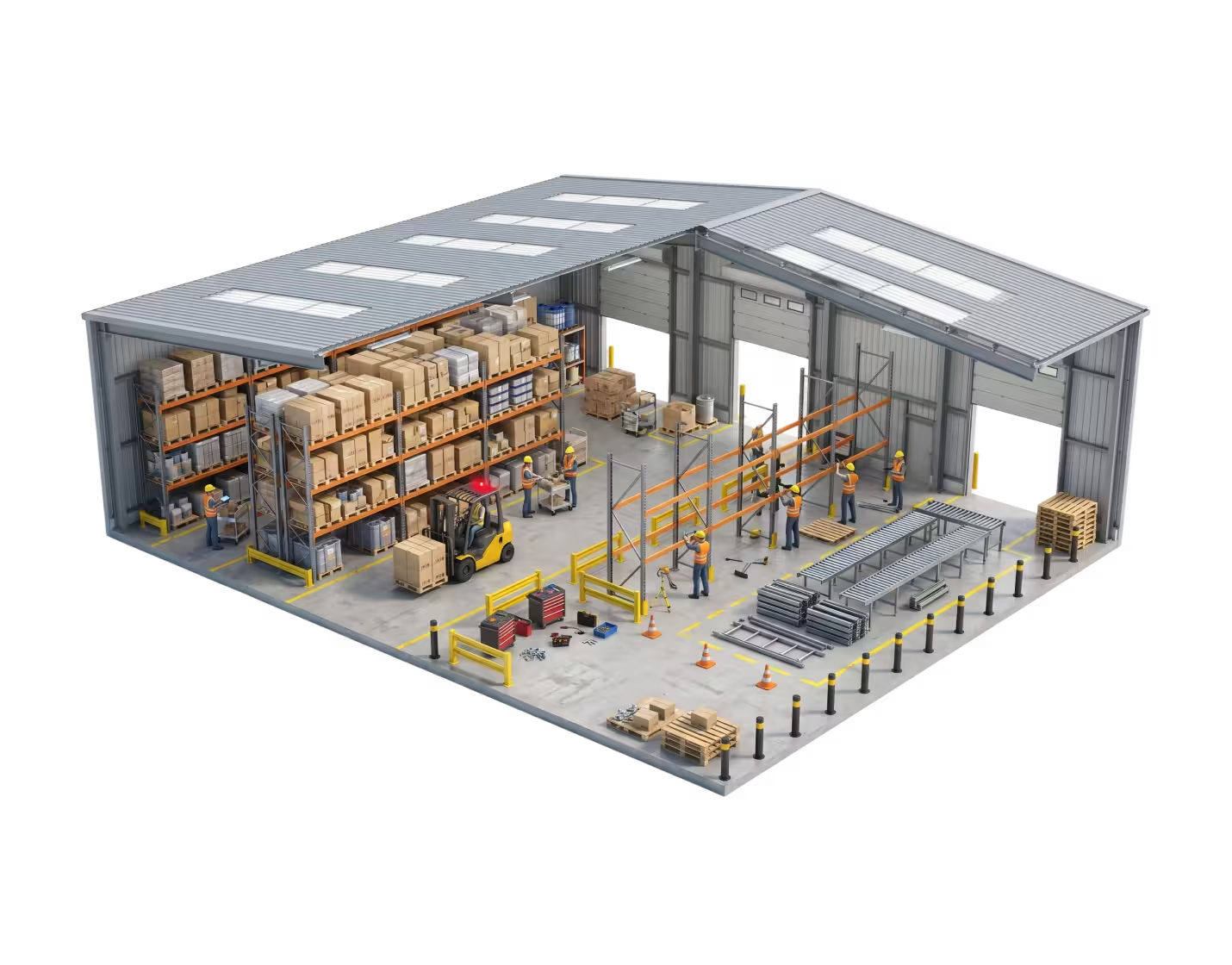
Warehouse reconfiguration
Is the physical rearrangement or modification of storage systems within an existing facility. The building does not change. The equipment moves, is repositioned, or is partially replaced to improve density, throughput, or operational flow.
A reconfiguration might mean widening a pick aisle, raising beam heights to match new pallet dimensions, adding rack bays to underutilized floor areas, removing a conveyor loop that no longer fits the order profile, or overhauling a full zone to accommodate new automation. The warehouse stays operational throughout — MWS designs reconfiguration projects in phases so production continues in unaffected aisles while work proceeds section by section.
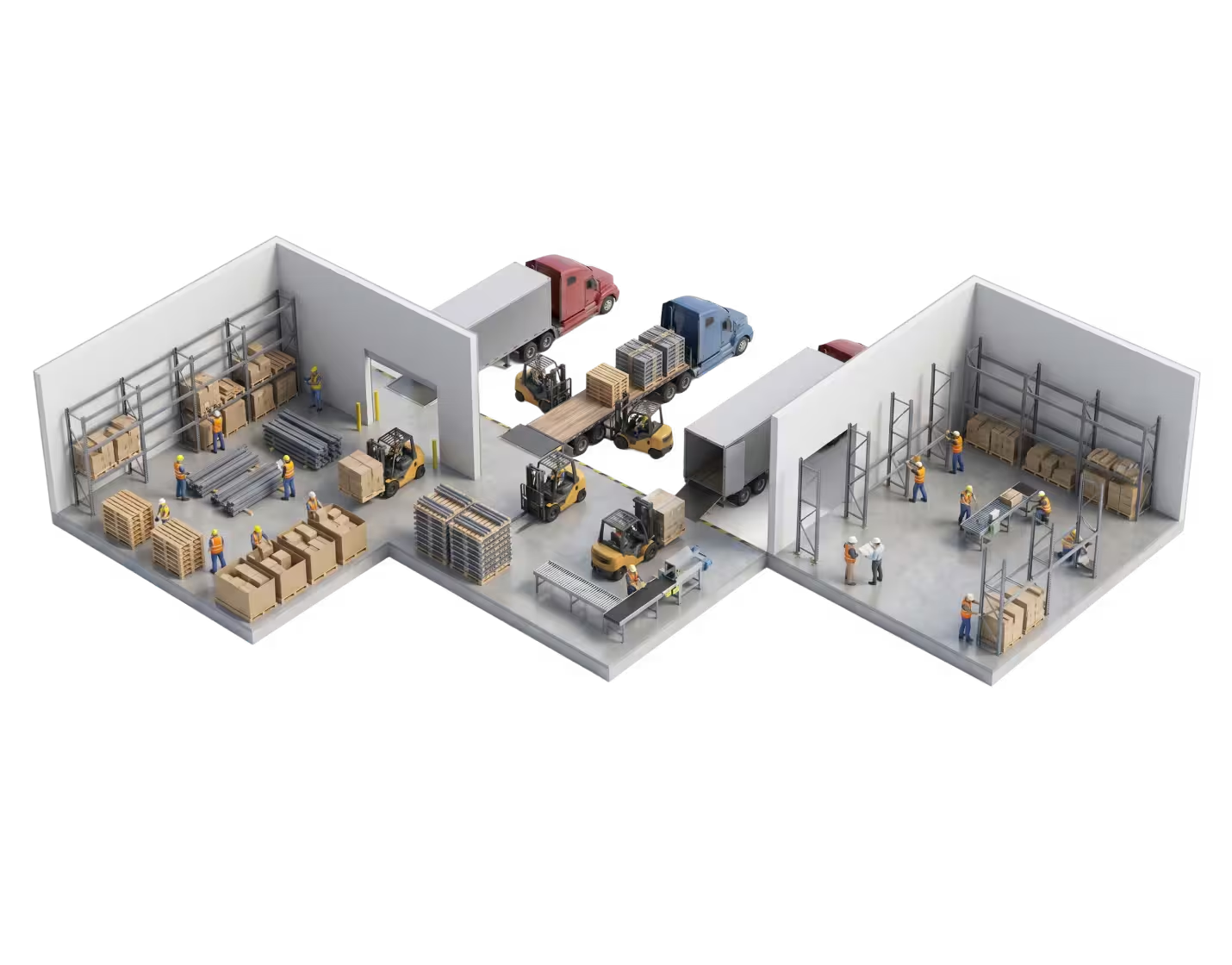
Warehouse relocation
is the physical move of storage systems and material handling equipment from one facility to another.
The work includes systematic teardown and component inventory, palletizing for transport, freight coordination, and full reinstallation at the destination facility — including site assessment, engineered layout confirmation, anchor installation, load placard updates, and post-move recommissioning to RMI/ANSI MH16.1 standards.
The relocation buyer's primary concern is timing: a lease expiration deadline, a consolidation window, an M&A integration schedule.
Both services require the same foundational capability: Trained installation crews who understand how storage systems are built, how they must be taken apart, and what compliance obligations govern the reinstallation. A general moving company does not have this capability. MWS does — and has since 1979.
When to Engage MWS for Reconfiguration or Relocation
Engage for Reconfiguration if:
- Aisle widths, beam heights, or rack bay depth no longer match your current equipment or SKU profile
- Storage utilization is over 90% but your footprint has unrealized vertical cube
- You are installing automation (conveyor, AS/RS, VLM, AMR) that requires layout changes around active operations
- Your rack system is a mix of sizes, brands, or conditions accumulated over time and needs rationalization
- A 3PL client onboarding requires zone modifications within an active facility
- You want to recapture density without relocating to a larger building
Engage for Relocation if:
- Lease is expiring and you need a full facility cleared and moved on a hard deadline
- A merger or acquisition created a redundant facility that must be consolidated
- Business growth requires a larger building and you want to move existing equipment rather than buy new
- A facility closure, natural disaster, or building sale requires rapid decommissioning
- You are moving to a new facility and need the layout at the destination engineered and installed correctly the first time
A Complete Suite of Warehouse Reconfiguration & Relocation Services
MWS delivers every phase of warehouse reconfiguration and relocation from pre-move site assessment through post-move recommissioning. Whether you need an in-place rack reconfiguration around live operations or a full facility relocation executed over a single weekend cutover, our crews and project managers are mobilized from the same team that has been executing these projects across Iowa, Illinois, Indiana, Michigan, Minnesota, Missouri, Ohio, Wisconsin, Kansas, Nebraska, North Dakota, and South Dakota since 1979. Call 515-635-1555 to discuss scope and scheduling.
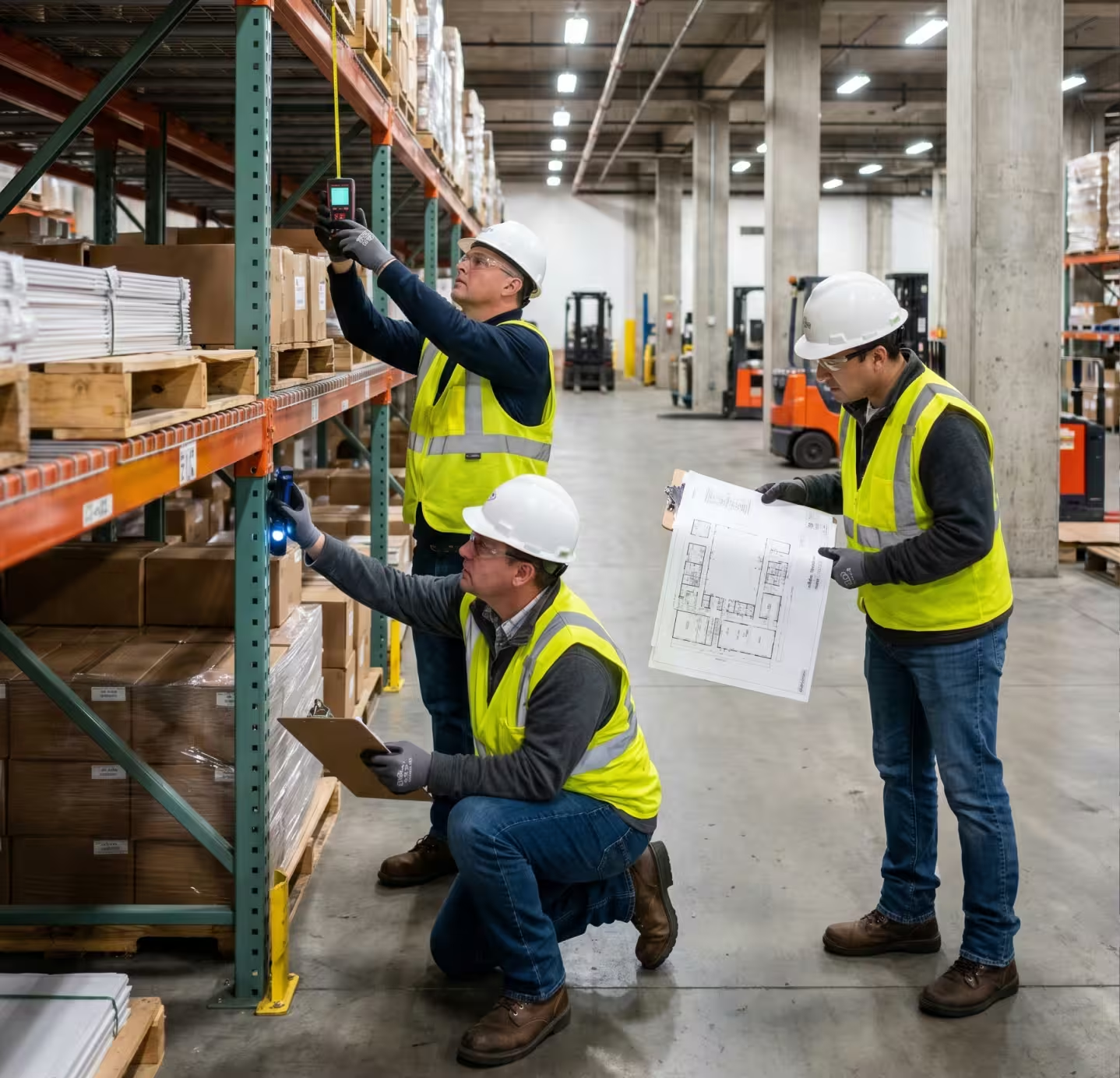
Pre-Move Site
Assessment
Every reconfiguration and relocation begins with an on-site assessment — not an estimate from a spreadsheet. MWS visits both the origin facility and the destination, evaluates every rack component for condition and compatibility, confirms the new layout fits the destination footprint, and identifies compliance requirements before teardown begins.
- Component condition audit
(uprights, beams, footplates, anchors) - Destination site assessment: floor condition, column grid, clear height, sprinkler type
- Written project scope and preliminary schedule delivered before mobilization
In-Place Rack Reconfiguration
Reconfigure your existing pallet rack, shelving, or pick module systems around live warehouse operations — without shutting down. MWS executes zone-by-zone, aisle-by-aisle, or bay-by-bay reconfiguration plans designed to maintain operational continuity throughout the project.
- Beam height adjustment, upright repositioning, bay addition and removal
- Phased execution: each zone signed off before the next zone opens
- RMI/ANSI MH16.1 anchor re-inspection and torque documentation upon completion
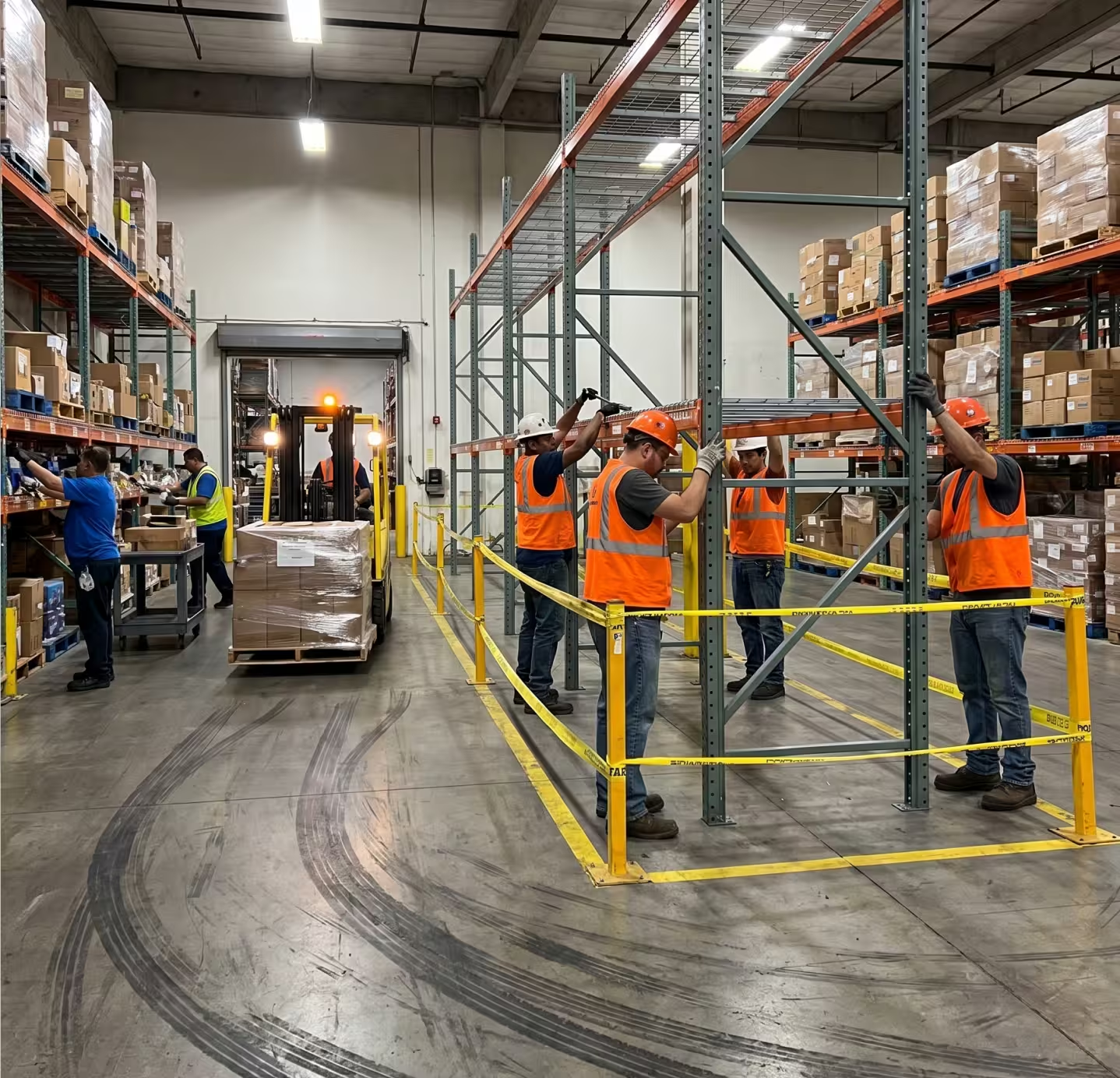
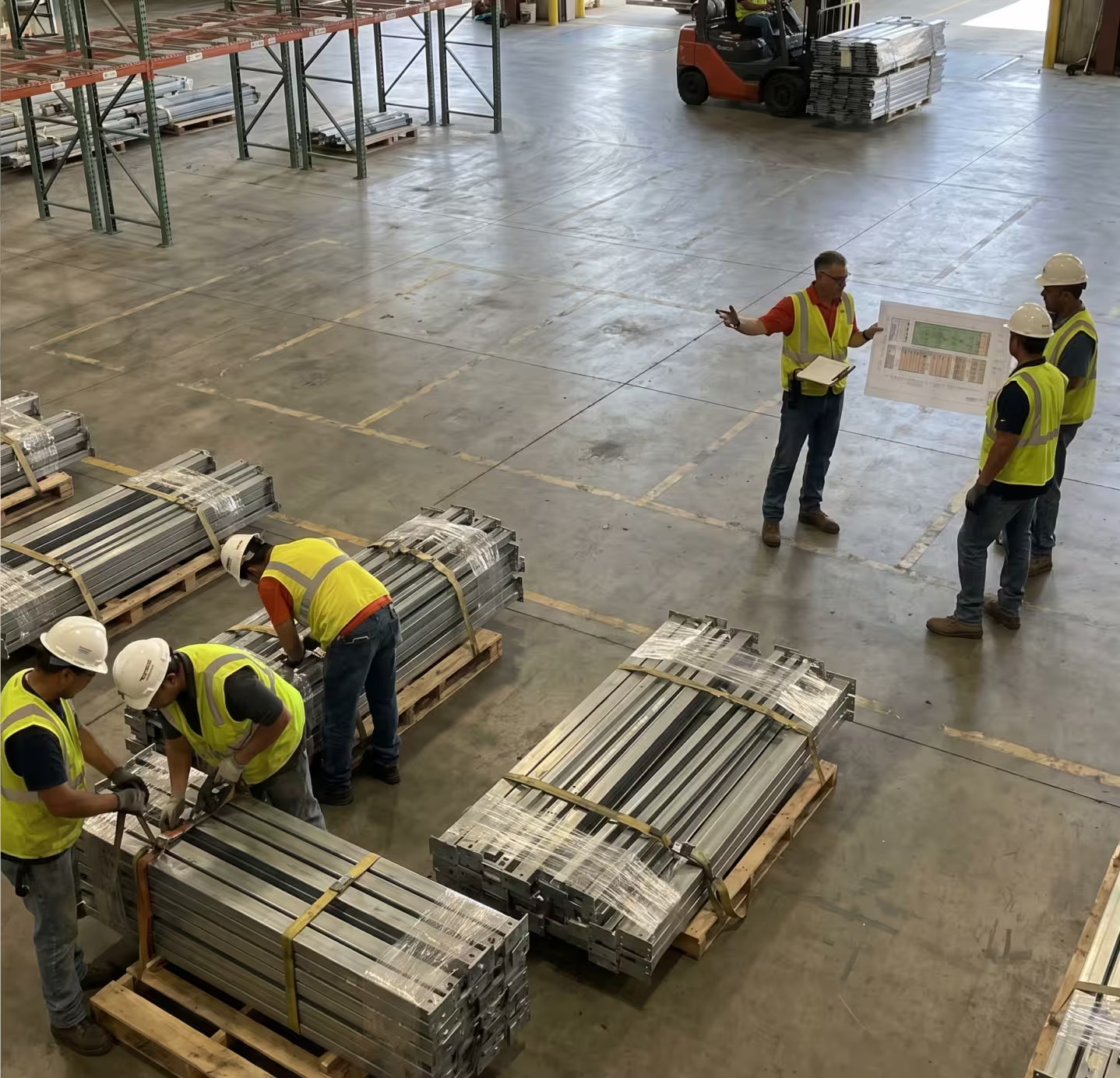
Full Warehouse
Relocation
Turnkey facility-to-facility rack and equipment relocation from teardown through reinstallation. MWS manages the complete project: systematic disassembly, component inventory and labeling, palletizing for transport, reinstallation at the destination per engineered drawing, and post-move sign-off documentation.
- Full-scope: teardown, component inventory, freight coordination, reinstall
- Engineered CAD layout confirmed at destination before teardown begins
- RMI/ANSI MH16.1-compliant reinstallation with load placard updates
Pallet Rack Teardown
& Reinstall
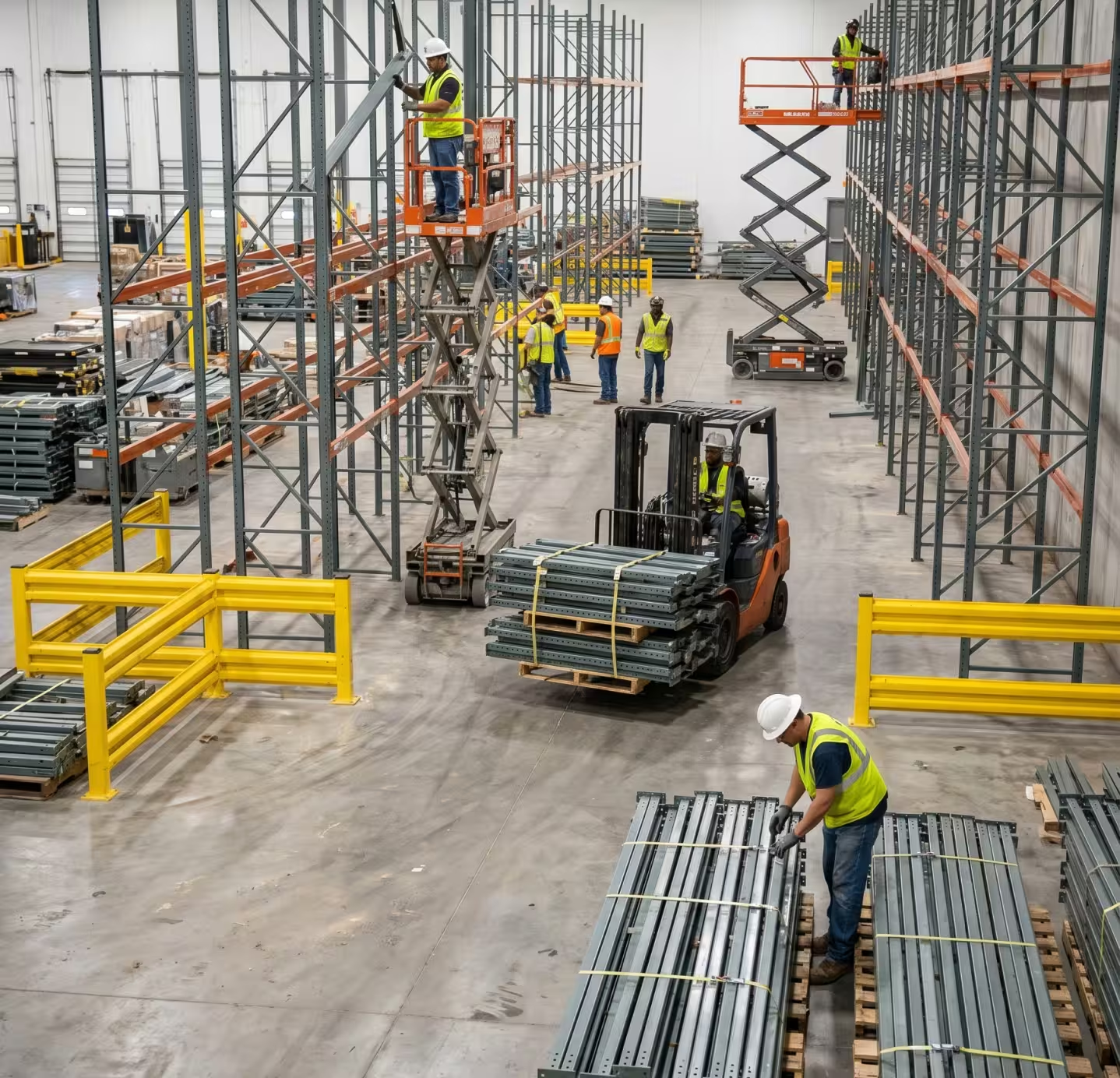
Specialized teardown and reinstallation for all pallet rack configurations — selective, drive-in, push-back, pallet flow, cantilever, and structural. All uprights inspected per RMI damage tolerance criteria during disassembly; damaged components flagged for replacement before reinstallation.
- Top-down teardown sequencing per OSHA and RMI standards
- Component-level damage assessment: uprights, beams, footplates, connectors
- Beam compatibility and connector-type verification before reassembly at destination
Conveyor Relocation
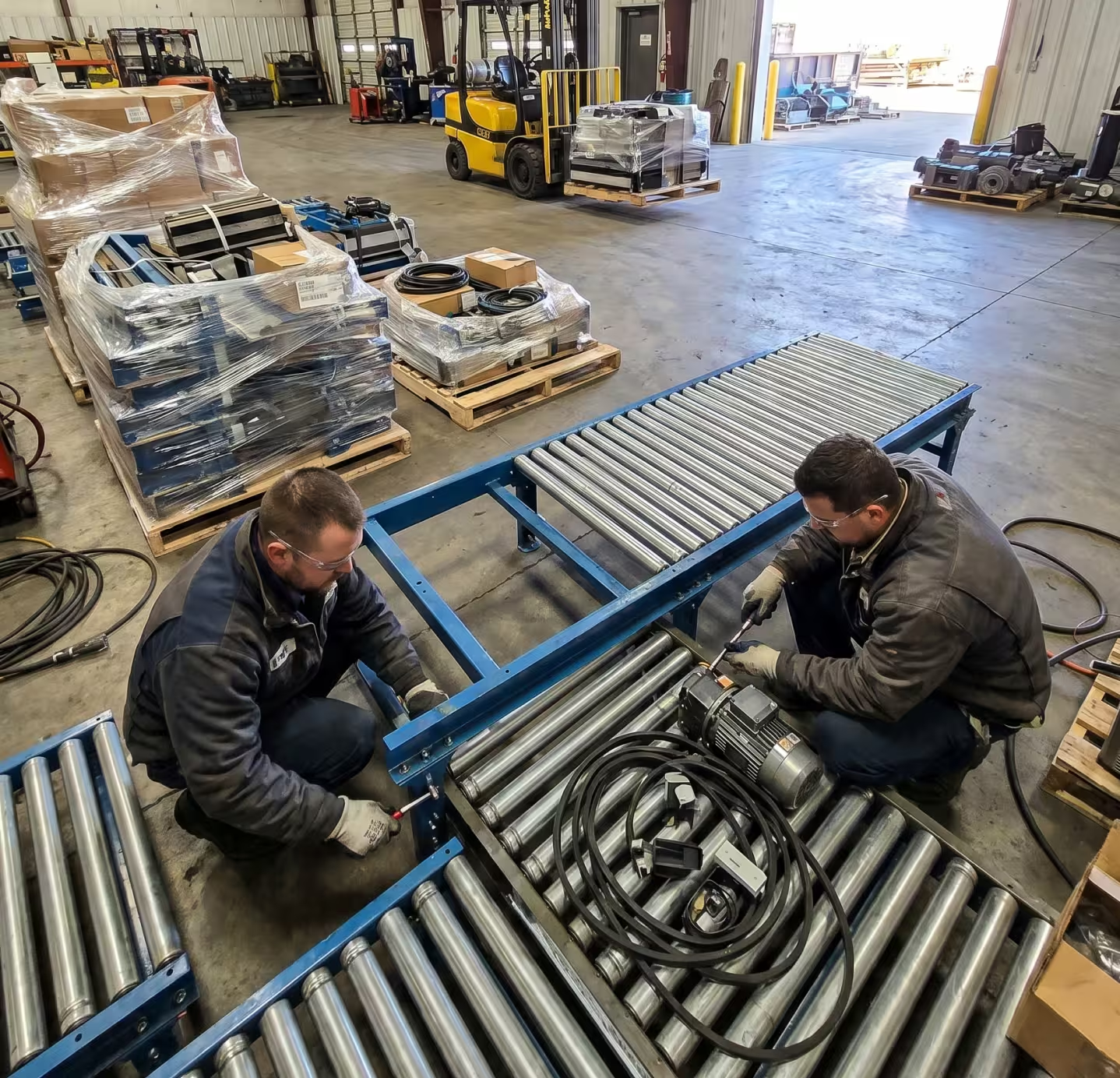
Turnkey facility-to-facility rack and equipment relocation from teardown through reinstallation. MWS manages the complete project: systematic disassembly, component inventory and labeling, palletizing for transport, reinstallation at the destination per engineered drawing, and post-move sign-off documentation.
- Drive unit, frame, and belt/roller disassembly with component labeling
- Re-leveling and re-tensioning at destination per manufacturer spec
- Controls integration and sensor recalibration before
go-live sign-off
Mezzanine Relocation
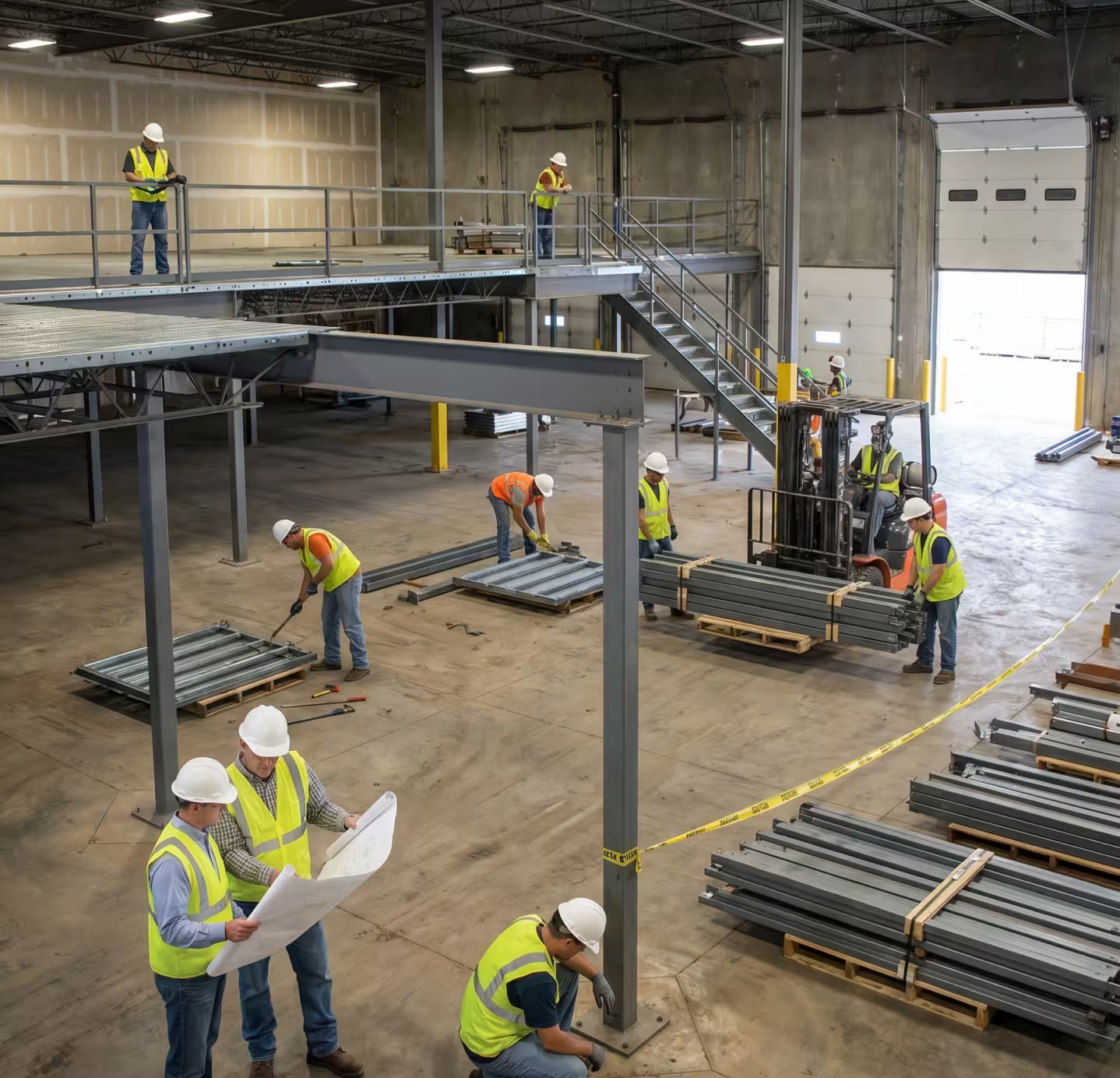
Mezzanine teardown, transport, and reinstallation at a new facility — including re-engineering review for the new footprint. Destination floor slab load capacity, column spacing, and ceiling height must all be re-evaluated before a mezzanine is reinstalled. MWS coordinates updated PE-stamped drawings and permitting for the new location.
-
Mezzanine platform, stair, gate, and flooring disassembly and palletizing
-
PE-stamped drawing and permit coordination for destination facility
-
Reinstallation and structural inspection before occupancy approval
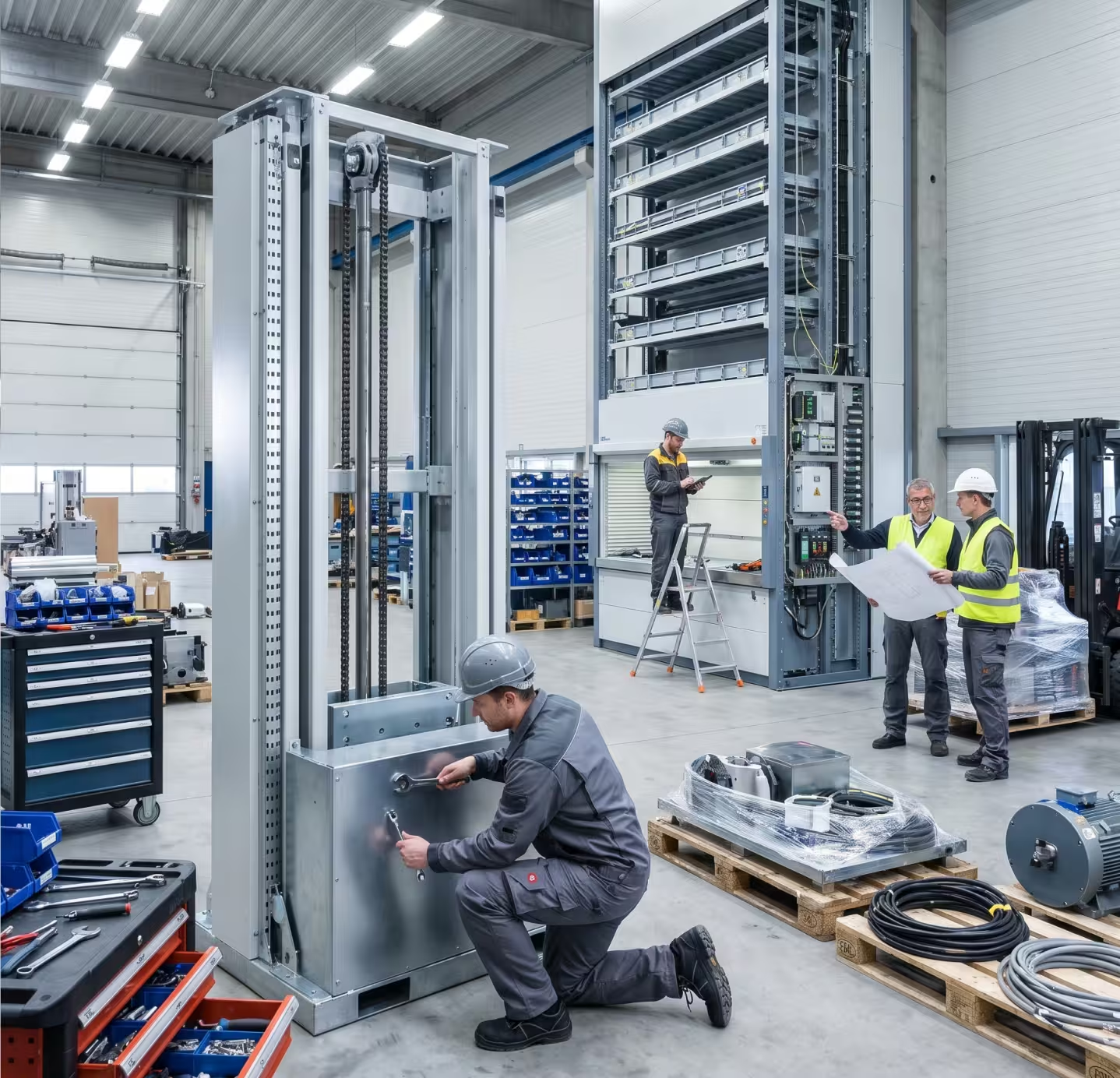
VRC & VLM Relocation
Vertical Reciprocating Conveyors (VRCs) are classified as elevators and require code re-inspection and re-permitting after any relocation. Vertical Lift Modules (VLMs) and automated carousels have specific structural and software integration requirements. MWS coordinates OEM involvement for AS/RS systems where required.
- VRC disassembly, transport, and reinstallation with code re-permitting
- VLM and AS/RS relocation with OEM coordination for Vidir, Effimat, and ClassicMat systems
- Controls reconnection, software reconfiguration, and commissioning validation
Decommissioning &
Asset Liquidation
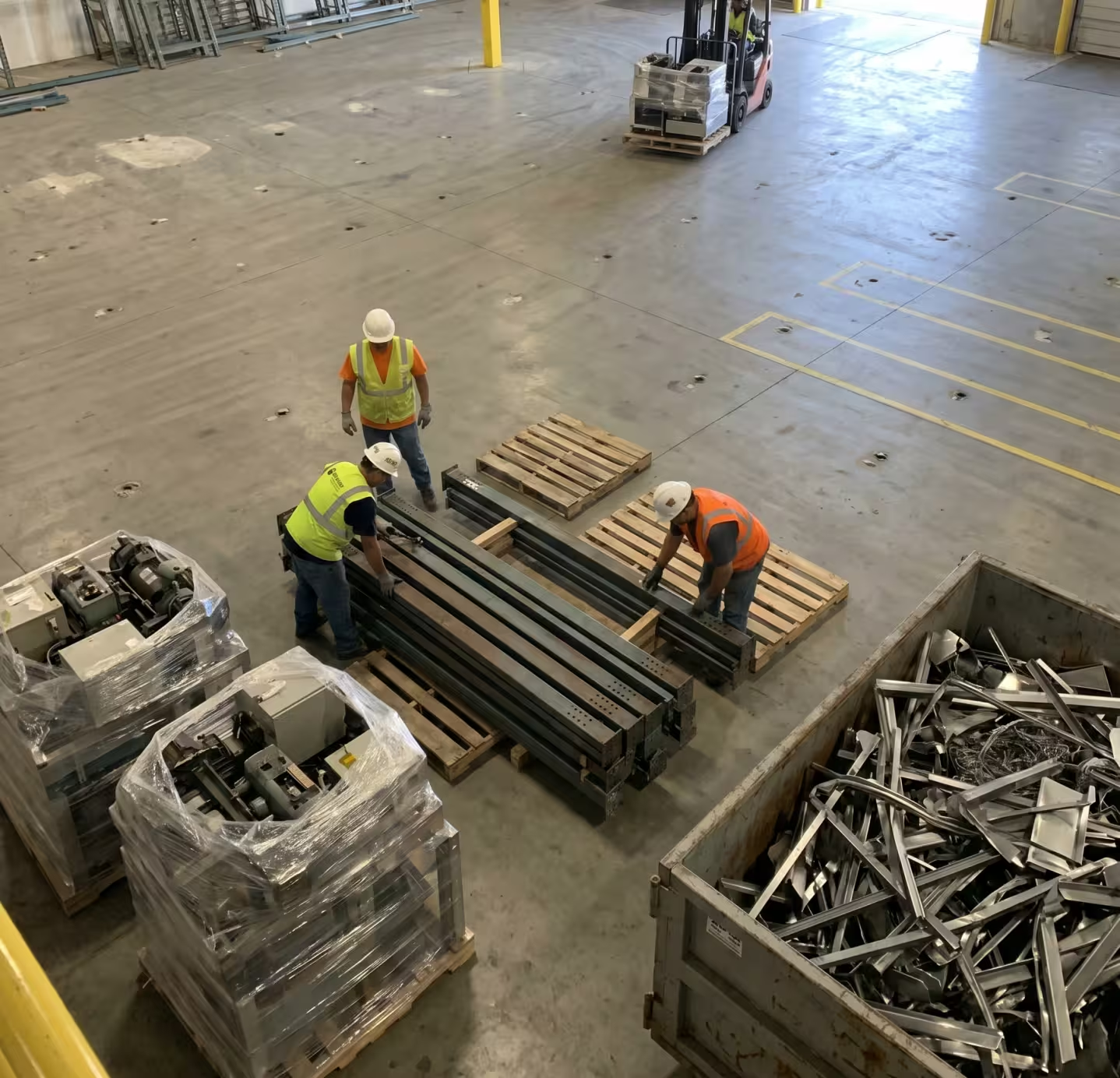
Full facility teardown for lease exit or facility closure. MWS handles systematic rack disassembly, component inventory, asset grading (reuse, resale, or scrap), removal, and landlord documentation. Surplus equipment can be sold through MWS's used equipment program to offset project costs.
-
Top-down teardown with component-level inventory and grading
-
Usable equipment listed through MWS used equipment channels; scrap coordinated
-
Landlord handoff documentation: photos, anchor hole status, broom-clean verification
Phased, Weekend & Night Moves
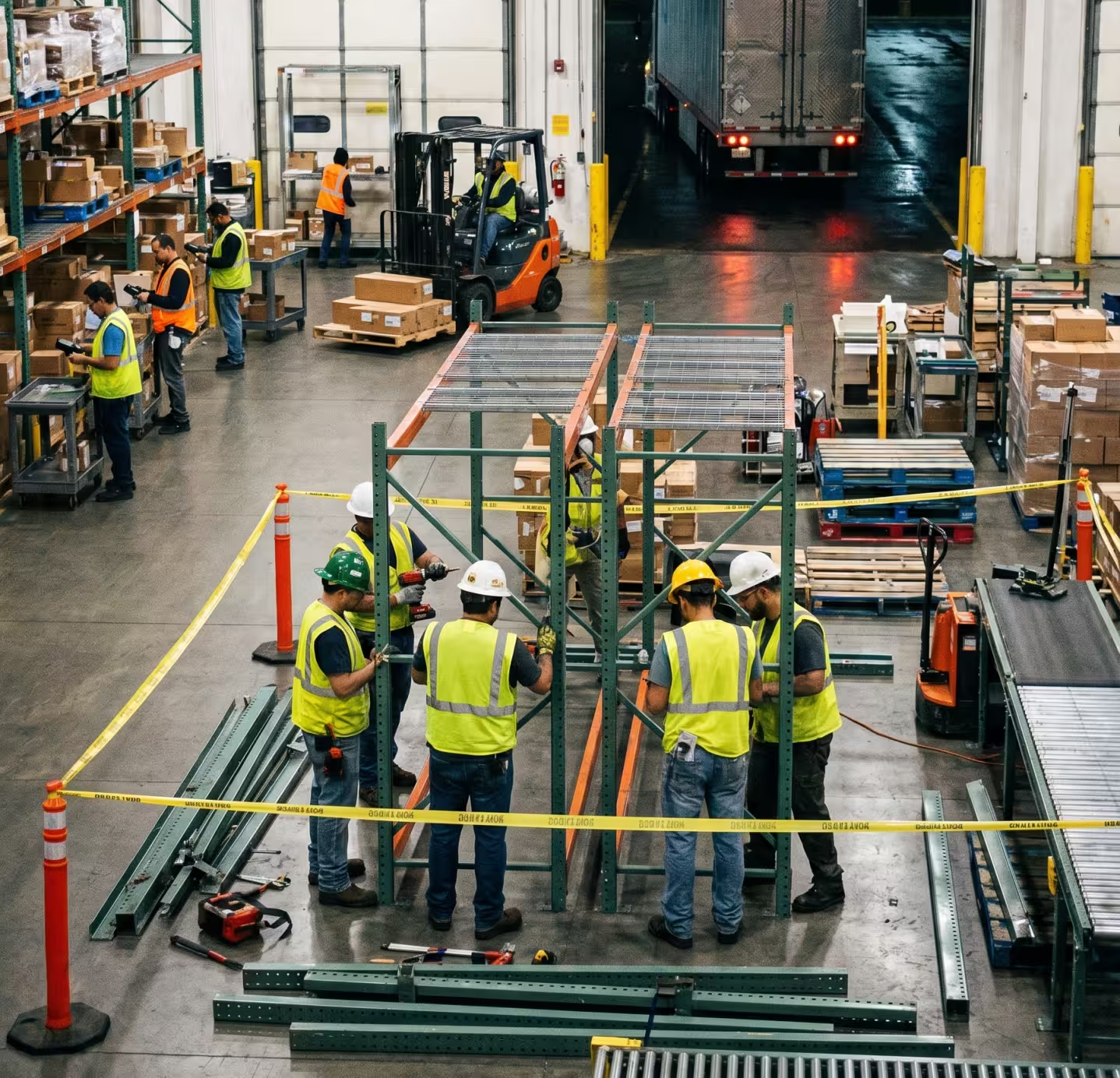
For active warehouses that cannot stop, MWS designs phased relocation plans that move equipment in zones, overnight, or across weekends — maintaining production continuity throughout the project. Weekend cutover plans consolidate the most disruptive work into a single Friday-to-Sunday window.
- Zone-by-zone or aisle-by-aisle sequencing: production never fully stops
- Weekend cutover scheduling: full rack row teardown, conveyor cutover, dock transition
- Coordination with your logistics and operations team on buffer stock and alternate pick capacity
Post-Move Recommissioning &
Sign-Off
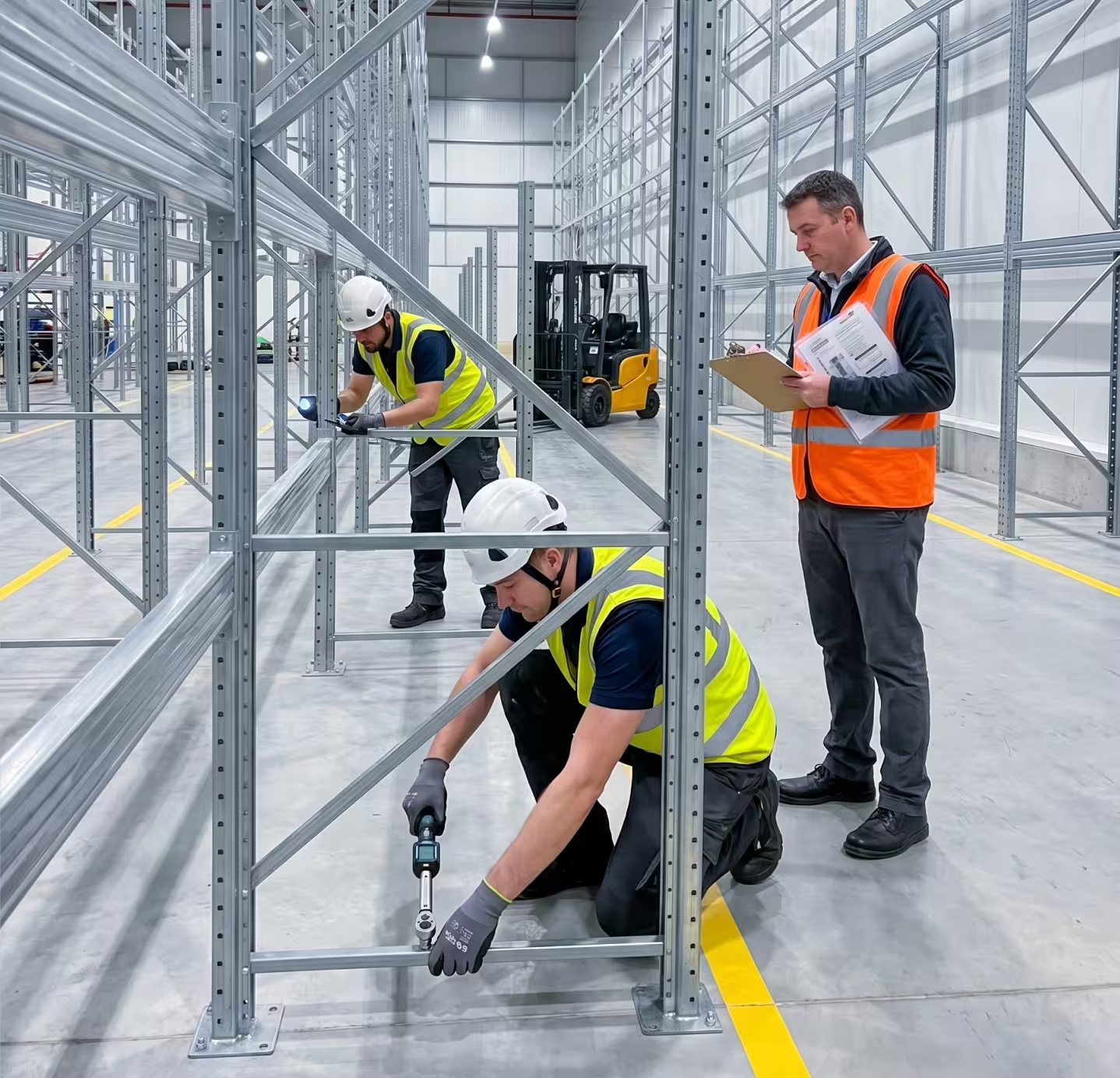
Every MWS relocation project ends with a formal recommissioning step — not just physical reinstallation. Our crew verifies anchor torque to manufacturer spec, confirms beam seating at every connection, updates load plaques to reflect any configuration changes, and delivers a written sign-off document before we leave the site.
-
Anchor torque verification and documentation per RMI/ANSI MH16.1
-
Load placard review and update for all configuration changes
-
Written recommissioning report: your compliance record for any OSHA or insurance inspection
Ready to Optimize Your
Warehouse Layout?
Talk to a warehouse design consultant who has been solving Midwest storage and distribution challenges since 1979. Your free consultation includes an initial assessment of your current layout, throughput challenges, and design options — with no obligation and no pressure.
Or call us at 515-635-1555
The MWS Warehouse
Relocation Process: 6 Phases from Assessment to Sign-Off
Every MWS warehouse relocation and reconfiguration project follows a structured 6-phase execution methodology refined over 50+ years and 1,200+ projects across Iowa, Illinois, Indiana, Michigan, Minnesota, Missouri, Ohio, Wisconsin, Kansas, Nebraska, North Dakota, and South Dakota. Every phase has defined deliverables, a defined duration, and a defined handoff — so you always know what is happening and what comes next.
01
Assessment & Layout
Engineering
What We Do
Before a single bolt is loosened, MWS visits both the origin and destination facilities. At the origin, we audit every rack component — uprights, beams, footplates, bracing, anchors — against RMI damage tolerance criteria and note what can be relocated versus what must be replaced. We photograph and measure the full rack system configuration and document all ancillary equipment in scope: conveyors, mezzanines, VRCs, cranes, shelving. At the destination, we verify floor slab condition and load capacity, ceiling height, column grid and bay spacing, sprinkler head positioning (critical for NFPA and FM Global compliance), dock configuration, and local permit requirements. Our in-house engineering team then produces an engineered CAD layout for the destination confirming the equipment fits, the aisle widths work, the rack height-to-depth ratios comply with ANSI MH16.1, and the fire suppression geometry is maintained. The layout is reviewed and approved by your team before any teardown begins.
What You Get
Component condition report (reuse/replace/scrap grading), destination site assessment report, engineered CAD layout for reinstallation, preliminary permit checklist, project scope confirmation, and schedule.
3–7 days for site assessment; 1–2 weeks
for CAD layout and engineering.
02
Project Planning
& Engineering
What We Do
With the layout confirmed, MWS develops the full project execution plan. This includes the phased teardown and reinstallation sequence (zone-by-zone, aisle-by-aisle, or full cutover depending on operational requirements), the business continuity plan for live operations during work, the freight and logistics plan (flatbed, van trailer, or LTL), the component labeling and inventory protocol (every upright, beam run, and hardware bag tagged for reassembly), the weekend and night-shift schedule if required, the permit application package for the destination jurisdiction, and the OSHA lockout/tagout procedures for all powered equipment. We assign a dedicated project manager who is your single point of contact from this phase through final recommissioning.
What You Get
Full project execution plan with phased schedule, business continuity protocol, freight/logistics plan, component labeling system, permit application package, OSHA compliance procedures, assigned dedicated project manager.
1–3 days on-site;report
within 5 business days
03
Decommission & Teardown
What We Do
MWS crews execute teardown following top-down sequencing per OSHA and RMI standards — top beam levels first, working down, with no loaded-rack disassembly at any point. Every upright is inspected for column deformation, punch-through, splice damage, and anchor damage as it is removed. Beams are inspected for bowing, hook connector damage, and weld integrity. Components that fail RMI damage tolerance criteria are flagged and set aside for replacement; they will not be reinstalled. All acceptable components are labeled, bundled, and palletized per the labeling protocol developed in Phase 2. Wire decking, footplates, and hardware are inventoried. Conveyors are disconnected at labeled joints. Mezzanine platforms are disassembled bay by bay. All work is executed under OSHA lockout/tagout procedures for powered equipment.
What You Get
Full component inventory with condition grading (reuse/replace/scrap), palletized and labeled rack components ready for freight, component replacement list for new parts sourcing, OSHA lockout/tagout records.
1 day (small reconfig) to 3–6 weeks (large multi-system facility).
04
Transport & Logistics
What We Do
MWS coordinates freight staging and transport of all palletized rack components, conveyor sections, mezzanine components, and equipment from origin to destination. We calculate cubic footage and weight for optimal flatbed or van trailer loading — palletizing to MWS standards that cube out each load while protecting component integrity in transit. For phased relocations, we coordinate delivery sequencing so each zone's components arrive at the destination in the order the reinstallation crew needs them. For multi-site consolidations, we coordinate staging at a temporary location if required. MWS works with your internal logistics team or preferred freight carrier; we do not operate our own fleet but manage the full logistics coordination.
What You Get
Load manifest with component location by trailer, freight coordination records, chain-of-custody documentation for all equipment in transit.
1–5 days for standard moves; multi-week for phased relocation.
05
Reinstall & Reconfigure
What We Do
Reinstallation follows the engineered CAD layout confirmed in Phase 1. MWS crews work from the base plate up — footplate positioning per anchor plan, upright plumb and alignment, beam installation at specified heights, cross-aisle tie installation, wire deck installation, and row spacer/overhead tie installation as required. All anchor installations are torqued to manufacturer specification and documented. Drive-in rack, push-back rack, and pallet flow lanes are re-engineered to destination column grid spacing before reinstallation. Conveyor sections are reassembled, re-leveled, belt re-tensioned, and sensor recalibrated. Mezzanine platforms are reassembled per PE-stamped drawings approved for the new facility. Load plaques are updated to reflect any configuration changes from the origin layout. For in-place reconfigurations, this phase overlaps with teardown in a zone-by-zone sequencing.
What You Get
Installed rack and equipment systems per engineered drawing, anchor torque documentation, load placard updates, as-built notes for any field modifications.
1 day (small reconfig) to 4–8 weeks (large multi-system relocation).
06
Recommission & Sign-Off
What We Do
Before MWS leaves the site, every rack system and piece of equipment goes through a formal recommissioning review. Our crew walks every aisle, verifies anchor torque (documented with torque wrench records), confirms beam connector seating at every level, checks upright plumb, verifies load plaques are installed and legible at every bay, reviews aisle clearances per OSHA 1910.176, and confirms conveyor and VRC operation. For mezzanines and VRCs, we coordinate the required permit final inspection with the local AHJ (Authority Having Jurisdiction). We produce a written recommissioning report documenting all findings and sign-off confirmation. This report is your compliance record — it demonstrates due diligence for any OSHA inspection, FM Global audit, or insurance review. Call 515-635-1555 to ask about our recommissioning package for projects managed by other contractors.
What You Get
Written recommissioning report, anchor torque documentation, load placard installation records, AHJ permit final inspection records (for mezzanines/VRCs), as-built CAD layout for the reinstalled system.
1–3 days; permit final inspections may add 1–2 weeks for scheduled AHJ appointments.
WHAT WE RELOCATE
Every Storage and Material Handling
System in Your Facility
MWS is a full-scope warehouse systems integrator — not a rack-only mover. Our teams are trained and equipped to disassemble, transport, and reinstall every major category of storage and material handling equipment in a Midwest distribution center or manufacturing facility. We also work with any rack brand — Unarco, Interlake Mecalux, Ridg-U-Rak, Frazier Industrial, Husky Rack & Wire, Speedrack, and others — not just the brands we sell new.
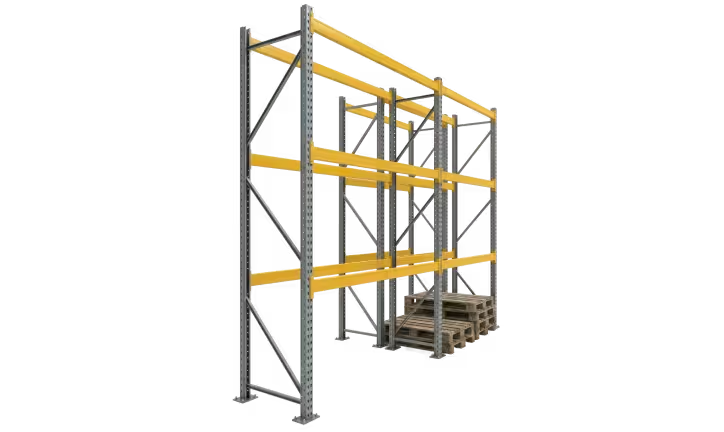
Selective Pallet Rack
The most common warehouse racking system — teardrop-style roll-formed rack in single and double rows. MWS relocates selective pallet rack of all sizes, beam capacities, and upright heights, with full RMI/ANSI MH16.1-compliant reinstallation.
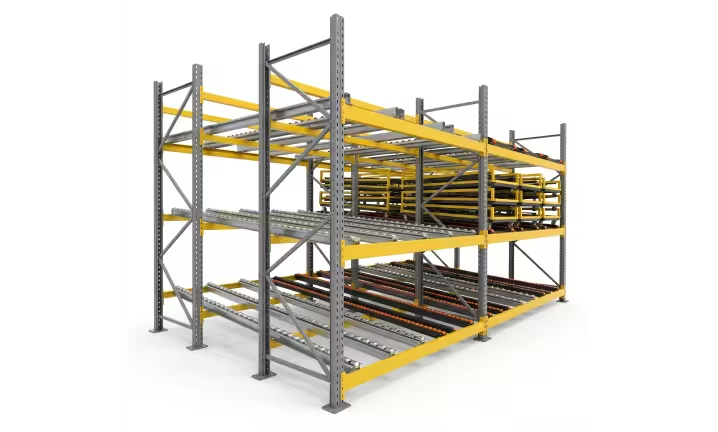
Push-Back & Pallet
Flow Rack
High-density systems with gravity-fed carts (push-back) or skate-wheel lanes (pallet flow) that must be re-engineered for the new bay depth at the destination facility. Lane configuration and slope are re-calibrated during reinstallation.
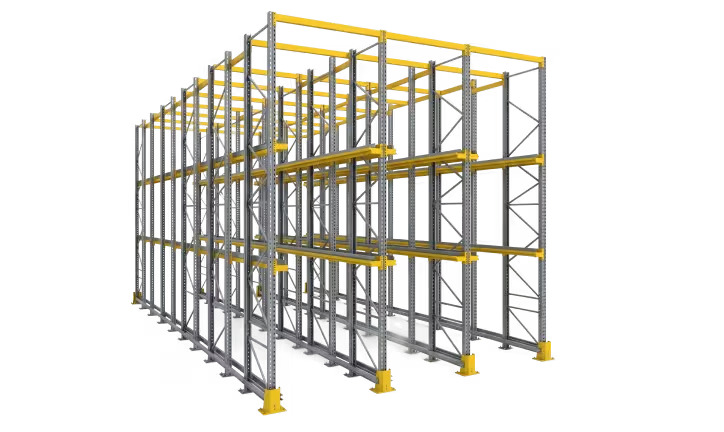
Drive-In & Drive-Through Rack
Structural drive-in and drive-through systems require re-engineering of lane depth and upright spacing to match the destination facility's column grid. MWS assesses column compatibility before teardown and adjusts bay configuration as needed.
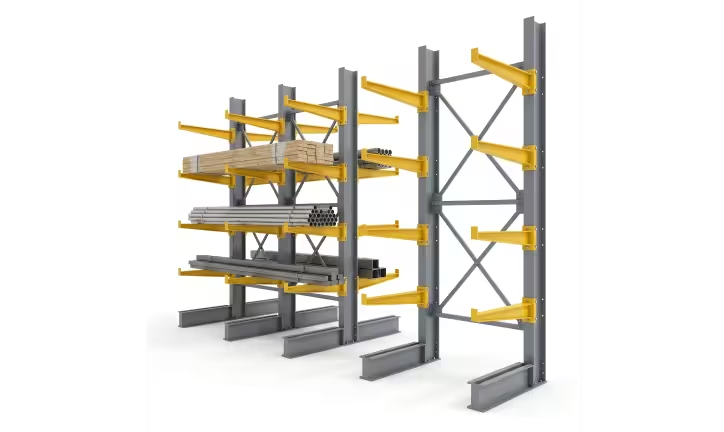
Cantilever Rack
Single and double-sided cantilever systems for long goods: lumber, pipe, steel, and sheet stock. Arms, bases, and uprights are inventoried and matched during teardown; arm extension changes after relocation are re-rated per manufacturer specification.
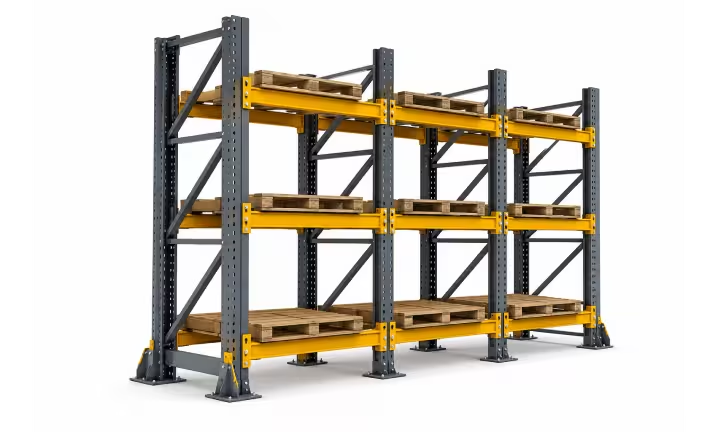
Structural Pallet Rack
Bolted C-channel structural rack — preferred for cold storage and high-seismic installations — requires different tooling and reassembly procedures than roll-formed teardrop rack. MWS crews handle both; seismic re-anchoring at the destination is assessed during Phase 1.
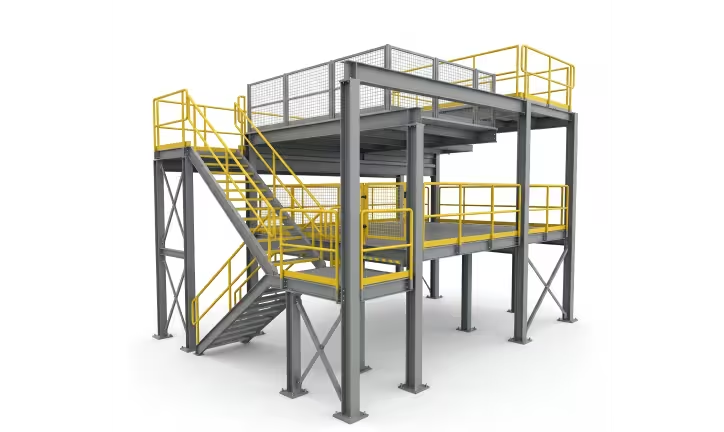
Mezzanines & Work Platforms
Multi-level mezzanines, work platforms, and catwalks require a full re-engineering review before reinstallation at a new facility. MWS coordinates updated PE-stamped drawings and permit applications for the destination, and manages the AHJ final inspection before the mezzanine is occupied.
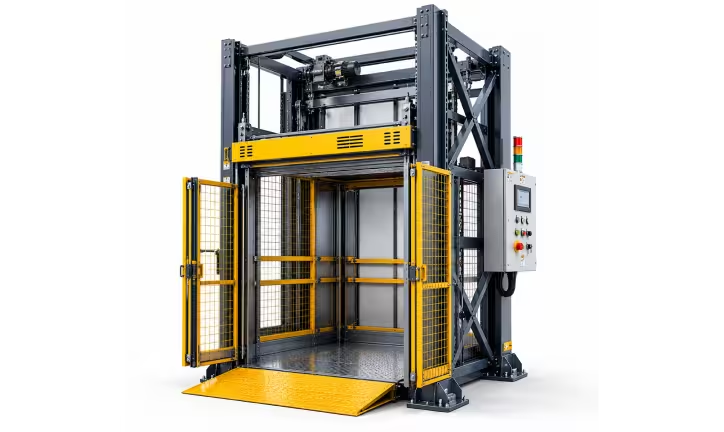
VRCs & VLMs (AS/RS)
Vertical Reciprocating Conveyors require re-permitting as elevators after any relocation. Vertical Lift Modules (VLMs) and automated carousels — including Vidir, Effimat, and ClassicMat systems — are relocated with OEM coordination to ensure software reconfiguration and commissioning are performed correctly.
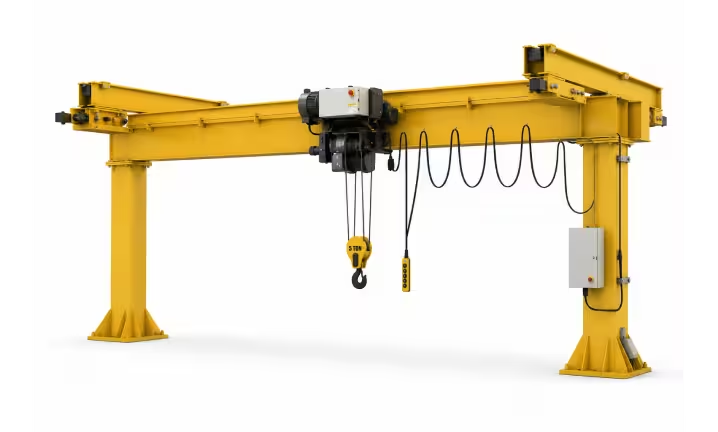
Bridge Cranes &
Jib Cranes
Free-standing bridge cranes, ceiling-hung bridge cranes, wall-mounted jib cranes, and gantry systems. MWS has been executing crane teardowns and relocations since 2010. Runway alignment and end-stop installation at the destination are verified before crane commissioning.
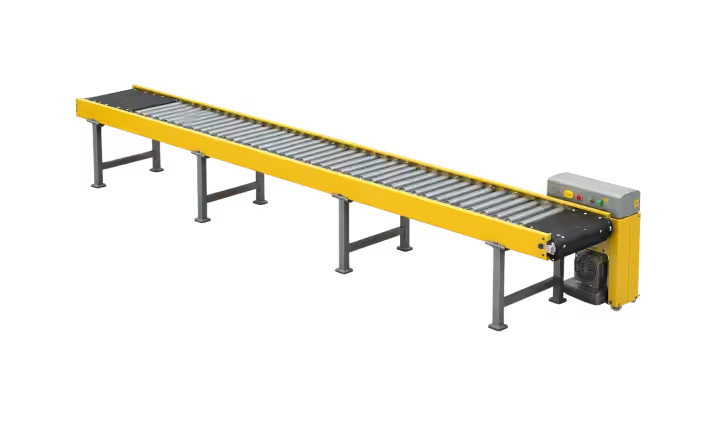
Gravity & Powered Conveyors
Belt conveyors, roller conveyors, accumulation conveyors, line shaft conveyors, and sortation equipment. Every conveyor relocated by MWS is re-leveled, re-tensioned, and sensor/scanner recalibrated at the new location — not just physically reassembled.
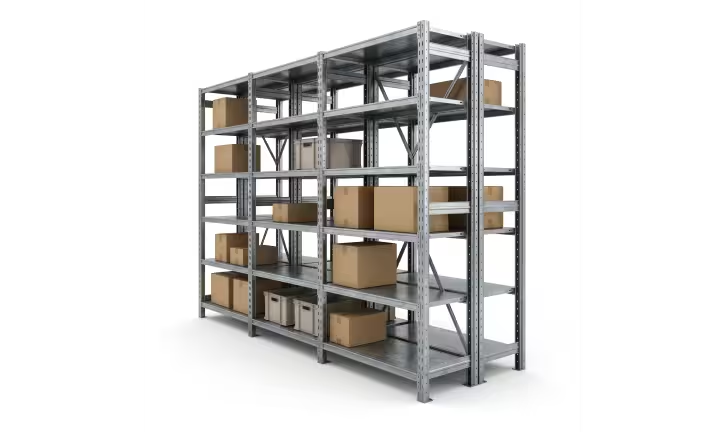
Steel Shelving & Modular Offices
Open and closed industrial steel shelving, wide-span shelving, two-level shelving systems, and modular in-plant offices. Shelving systems are disassembled, inventoried, and reinstalled per the new facility layout. Modular office panels are tracked and reinstalled in their configured layout.
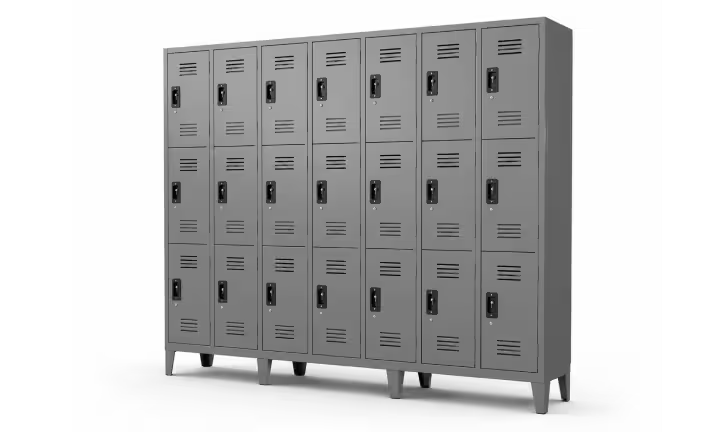
Lockers & Dock
Equipment
Industrial locker banks, dock levelers, dock seals, bumpers, and vehicle restraints. Dock equipment compatibility with the new facility's dock configuration is assessed during Phase 1; incompatible components are flagged before teardown to avoid reinstallation issues.
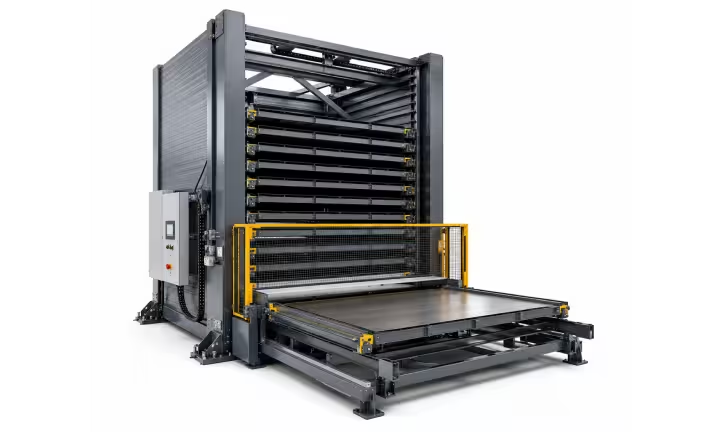
Specialized Storage Systems
Sheet towers, lumber cradle racks, tire storage carousels, crank-out cantilever systems, and STAK modular storage. Specialized systems are inventoried and documented during teardown; reinstallation is coordinated with manufacturer specs for any non-standard configurations.
METHODOLOGIES & COMPLIANCE STANDARDS
How MWS Executes Warehouse Reconfiguration & Relocation to Standard
Warehouse reconfiguration and relocation are not moving services — they are engineering and installation disciplines governed by specific technical standards. A rack system that was compliant in your old facility may not be compliant in a new one. Aisle widths that passed inspection at one building require re-verification after any configuration change. Fire suppression geometry — specifically the open flue spacing required by FM Global and NFPA 13 — changes the moment you move a rack row. MWS embeds compliance verification into every phase of every project, not as an afterthought but as a core deliverable.
The most frequently overlooked compliance requirement after a rack relocation is the fire code re-inspection. When rack rows move, the vertical flue spaces between rows change, which can compromise sprinkler water penetration to lower rack levels. We flag this risk during Phase 1 site assessment and coordinate with fire protection engineers or the local AHJ before reinstallation if repositioning affects sprinkler geometry. We have seen facilities pass their move only to receive a fire code violation notice 60 days later — because the installer did not understand what FM Global data sheet standards require. That does not happen on an MWS project.
| Standard | Key Warehouse Design Implication | Key Warehouse Design Implication |
|---|---|---|
| ANSI/RMI MH16.1-2023 | Industrial steel storage rack design, testing, and utilization; load plaques; base plate anchoring; height-to-depth ratio limits; LARC drawing requirements | Applied at all phases; anchor torque documented; load plaques updated; height-to-depth ratio re-evaluated at every new rack configuration; LARC drawings revised for any configuration change |
| OSHA 1910.176 | Material storage in general industry; aisle clearances; safe stacking; removal of hazards | Aisle clearance compliance verified post-reinstallation; load plaques confirmed at every bay; full recommissioning walkthrough before site handoff |
| OSHA 1910.333 / Lockout-Tagout | Energy control during disassembly of powered equipment (conveyors, VRCs, VLMs) | OSHA lockout/tagout procedures followed for all powered equipment disassembly and reconnection; crew trained and documented |
| FM Global Flue Spacing Standards | Open vertical flue spaces between rack rows required for adequate sprinkler water penetration to lower levels | Flue spacing verified at both origin and destination; any row repositioning that affects flue geometry is flagged; fire protection coordination arranged as needed |
| NFPA 13 Sprinkler Implications | Ceiling and in-rack sprinkler head placement relative to rack configuration; water density calculations | Sprinkler head clearances verified after reinstallation; in-rack sprinkler systems documented before teardown and re-reviewed at destination |
| IBC Seismic Anchoring | Rack anchor requirements in seismic design categories; lateral force resistance | Seismic zone comparison between origin and destination facilities performed during Phase 1; anchor plan revised for destination seismic requirements |
| Manufacturer Reinstall Specifications | Beam connector torque, anchor bolt type and diameter, base plate sizing, upright splice details per OEM specs | Manufacturer specs sourced for all rack brands on the project; reinstallation follows OEM requirements, not generic industry averages |
INDUSTRIES WE SERVE
Warehouse Reconfiguration & Relocation Across 8 Industries
Every industry has distinct triggers for reconfiguration or relocation — and distinct compliance, continuity, and handling requirements that govern how the project is executed. MWS has served all of the following verticals across Iowa, Illinois, Indiana, Michigan, Minnesota, Missouri, Ohio, Wisconsin, Kansas, Nebraska, North Dakota, and South Dakota. The common denominator: we have seen the specific challenges your industry presents, and we plan for them before mobilization.
Food & Beverage
Typical triggers: Lease expiration, distribution network consolidation, FIFO system upgrade, facility expansion to support new product lines.
Reconfig/move considerations: USDA/FDA compliance requirements at the new facility must be verified before reinstallation. FIFO-enforcing rack systems (pallet flow, carton flow) require lane slope and depth re-calibration. Cold storage racks may need corrosion-resistant anchor hardware at the destination. MWS has served Wells Blue Bunny and Hillshire Farms and understands food distribution compliance in depth.
Cold Storage & Refrigerated Warehousing
Typical triggers: Capacity expansion, temperature zone reconfiguration, lease transition to a new refrigerated building.
Reconfig/move considerations: Work in sub-zero environments requires properly equipped crews with cold-storage protocols. Structural pallet rack (C-channel, bolted connections) is preferred and more complex to disassemble. Floor heating systems at the destination must be operational before rack anchor installation. Condensation management during the transition window must be planned.
Third-Party Logistics (3PL)
Typical triggers: Client contract changes, network redesign, multi-client facility consolidation, lease renewal driving layout rationalization.
Reconfig/move considerations: 3PL facilities often contain a mix of rack brands, configurations, and client-specific storage zones. Every component must be inventoried to the client level so reinstallation preserves the correct client zone assignments. Phased reconfiguration or relocation must account for active client inventory in the facility throughout the project.
E-Commerce & Fulfillment
Typical triggers: SKU count growth requiring more pick faces, conveyor system upgrade, facility expansion or relocation to a larger fulfillment center.
Reconfig/move considerations: Conveyor-integrated pick modules are among the most complex systems to relocate — conveyor re-leveling, belt re-tensioning, scanner recalibration, and WMS integration testing must all be completed before go-live. Peak season constraints often make phased weekend relocation the only viable execution model. MWS has experience relocating accumulation conveyor and zero-pressure conveyor systems used in ecommerce fulfillment.
Manufacturing & Assembly
Typical triggers: Production line reconfiguration, facility consolidation post-acquisition, raw material storage expansion, overhead crane relocation for production layout change.
Reconfig/move considerations: Manufacturing facilities frequently include overhead bridge cranes and heavy-duty cantilever rack — both require specific teardown sequencing, rigging, and reinstallation procedures. Machine clearances and overhead crane runway height must be re-evaluated at the destination before any installation begins. MWS has been executing crane teardowns and relocations since 2010.
Pharmaceutical & Medical
Typical triggers: GMP facility transition, controlled substance storage reconfiguration, cold chain storage upgrade, regulatory-driven facility change.
Reconfig/move considerations: Pharmaceutical storage relocations require chain-of-custody documentation throughout the project. FIFO and segregation requirements must be maintained at the new facility before any inventory transition. Any structural or electrical modifications at the destination that affect the validated environment require re-validation before product is introduced.
Building Products & Lumber Distribution
Typical triggers: Outdoor/covered storage expansion, indoor cantilever relocation, lease exit requiring clearance of heavy structural rack.
Reconfig/move considerations: Cantilever rack systems for lumber, steel, and long goods require careful arm-and-upright inventory during teardown — arm lengths must be matched to uprights with the correct capacity rating. Outdoor cantilever systems require post anchor assessment at the new location before any load is applied.
Automotive
Typical triggers: Parts storage reconfiguration for new model year program, consolidation of parts distribution points, JIT delivery zone redesign.
Reconfig/move considerations: Automotive parts distribution typically involves a combination of pallet rack, cantilever rack, and wide-span shelving in specialized configurations for long goods and bulky components. Lineside delivery zone reconfiguration must be sequenced to maintain just-in-time delivery continuity.
COST & TIMELINE
What Does Warehouse Reconfiguration or Relocation Cost?
The most honest answer to the cost question is: it depends entirely on scope. A focused in-place rack reconfiguration in a single zone of a small facility is a fundamentally different project — in cost, crew size, and duration — from a full-facility relocation of a 200,000-square-foot distribution center with conveyors, a mezzanine, and a VRC. The tables below provide realistic benchmarks drawn from current Midwest market conditions. Use them for preliminary budgeting and inProject Typeternal approval; contact MWS at 515-635-1555 for a line-item project estimate.
One framing point that Scope Description consistently surprises first-time relocation buyers: relocating existing pallet rack and material handling equipment typically costs 30–50MWS Labor & Services (Estimated)% of the price of PurchKey Variable passing and installing new equipment at the destination.
If your existing rack is Small In-Place Reconfiguration in good condition and you have flexibility on layout, relocating it is almost always the right financial decision — and MWS can help you model both op10-25 rack sections; beam height changes, aisle repositioning, single zonetions. Additionally, equipment you choo $5,000-$20,000se not to relocate — surplus rack, conveyors, or shelving — can be sold through MWS's used equipment program, rWhether anchors must be relocated; weekend labor; new load placard cost covering 15–30% of original purchase price and offsetting project costs.
| Project Type | Scope Description | MWS Labor & Services | Key Variables |
|---|---|---|---|
| Small In-Place Reconfiguration | 10-25 rack sections; beam height changes, aisle repositioning, single zone | $5,000–$20,000 | Whether anchors must be relocated; weekend labor; new load placard cost |
| Medium In-Place Reconfiguration | 50-150 rack sections; multi-zone; may include conveyor repositioning | $20,000–$75,000 | Conveyor involvement; business hours vs. weekend execution; permit requirements |
| Partial Relocation | Subset of facility (one zone, one rack type) moved to new or existing facility | $25,000–$80,000 | Rack system complexity; conveyor scope; mezzanine involvement; timeline compression |
| Full Warehouse Relocation (under 50K sq ft) | Complete rack and equipment teardown, transport, and reinstall; selective rack primary | $40,000–$120,000 | Equipment mix; weekend cutover requirements; permit complexity; freight distance |
| Full Warehouse Relocation (50K–150K sq ft) | Large facility; mixed rack types; conveyor system; may include mezzanine | $100,000–$350,000 | AS/RS scope; crane rigging; phased execution timeline; multi-state freight |
| Full Warehouse Relocation (150K+ sq ft) | Major DC relocation; structural rack; conveyor | $150,000–$500,000+ | Number of origin sites; asset recovery offset; business continuity requirements |
All figures are MWS labor and services estimates only — freight, new components
(replacement uprights, anchors, wire deck), permit fees, and engineering drawings are additional.
Contact MWS at 515-635-1555 for a project-specific estimate.
Timeline by Project Type
| Project Type | MWS Execution Duration | Planning Lead Time Recommended |
|---|---|---|
| Small In-Place Reconfiguration (1 zone, 10-25 bays) | 2-5 days | 2-4 weeks |
| Medium In-Place Reconfiguration (multi-zone, 50-150 bays) | 1-3 weeks | 4-8 weeks |
| Partial Relocation (1 zone or rack type) | 1-2 weeks execution; varies with freight | 4-8 weeks |
| Full Warehouse Relocation (under 50K sq ft) | 2-4 weeks | 3-4 months |
| Full Warehouse Relocation (50K–150K sq ft) | 4-8 weeks | 4-6 months |
| Full Warehouse Relocation (150K+ sq ft) | 8-16 weeks | 6-9 months |
| Phased Relocation (weekend moves over multiple weekends) | 8-20 weekend windows | 3-6 months; earlier for complex systems |
| Decommissioning Only (full facility exit) | 1-6 weeks | 4-8 weeks (more for hard lease deadline) |
Facilities under a hard lease deadline should contact MWS as early as possible at 515-635-1555. Fast-track execution scheduling is available — but planning time cannot be compressed past the point where an engineered layout and compliance review are possible.
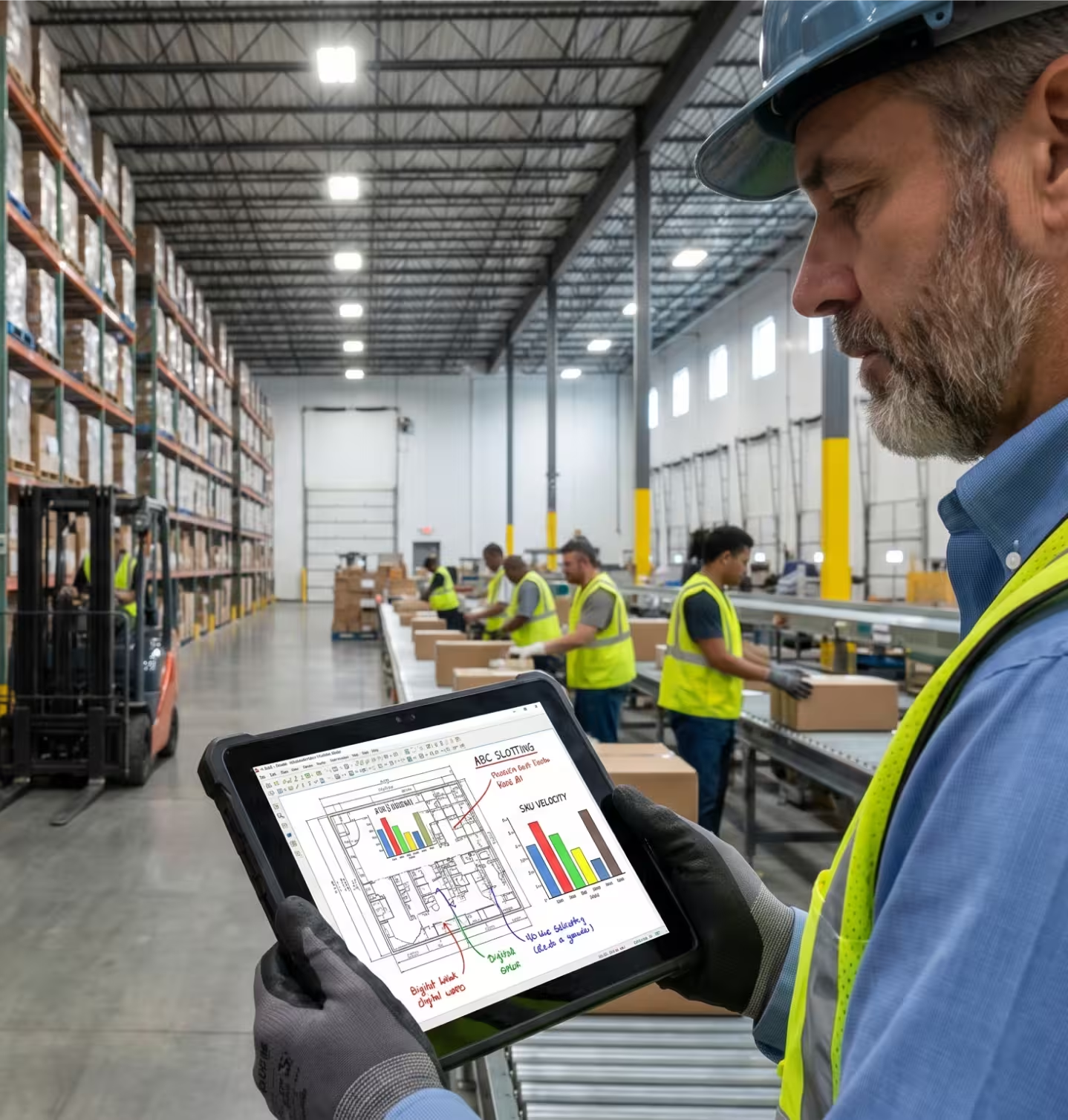
Key Cost Drivers for Warehouse Relocation & Reconfiguration:
- Rack scope: Total linear feet of pallet rack involved and rack system type (selective vs. structural vs. drive-in)
- Non-rack systems: Number and complexity of conveyors, mezzanines, VRCs, and cranes
- Component condition: Percentage of uprights and beams requiring replacement at teardown
- Business continuity requirements: Weekend/night labor vs. standard weekday execution
- Distance and freight: Distance between origin and destination; freight load count
- Permit complexity: Permit and engineering requirements at the destination jurisdiction
- Timeline compression: Hard deadline = premium scheduling
- Asset recovery offset: Surplus equipment sold through MWS used equipment program reduces net project cost
Get a Free Project Assessment for Your Warehouse Relocation or Reconfiguration
MWS provides no-obligation project assessments for warehouse reconfiguration and relocation projects across 12 Midwest states. We review your scope, timeline, and compliance requirements and give you a clear picture of what the project involves — before you commit to anything. Most assessments are completed within 5 business days of your first call.
Or call us at 515-635-1555
Compliance After Rack RelocationThe Standards That Govern Your Reinstallation
| Requirement | Standard | MWS Protocol |
|---|---|---|
| Anchor torque verification and documentation | ANSI/RMI MH16.1-2023, manufacturer anchor specs | Every base plate anchor torqued to spec with a calibrated torque wrench; values documented by bay in recommissioning report |
| Load Application and Rack Configuration (LARC) drawings | ANSI/RMI MH16.1-2023 | LARC drawings updated for any configuration change at destination; sealed drawings provided where required by local jurisdiction |
| Load placard installation and accuracy | OSHA 1910.176 / ANSI MH16.1 | Load plaques installed at every bay; reviewed and updated to reflect any beam height or upright gauge change from the origin configuration |
| RMI damage tolerance inspection during teardown | RMI Rack Safety Best Practices / ANSI MH16.1 | Every upright measured against RMI tolerance criteria during disassembly; bent, punched, or buckled columns removed from reinstallation scope |
| FM Global flue spacing re-verification | FM Global Property Loss Prevention Data Sheets | Flue spacing verified in destination layout before reinstallation begins; any row repositioning affecting sprinkler geometry is escalated before proceeding |
| NFPA 13 sprinkler clearances | NFPA 13 / Local AHJ requirements | Ceiling sprinkler clearances and in-rack sprinkler positions documented at origin; re-verified against destination sprinkler head locations before rack is positioned |
| Seismic anchor recalculation | ANSI MH16.1, IBC seismic provisions | Origin vs. destination seismic design category compared; anchor plan revised for destination requirements if seismic category differs |
| Building permit / AHJ inspection | Local jurisdiction (varies by state and municipality across all 12 MWS states) | Permit requirement assessed during Phase 1; permit application package prepared and submitted; AHJ final inspection coordinated for mezzanines, VRCs, and high-piled storage where required |
AS/IS vs. TO-BE
Why It Matters
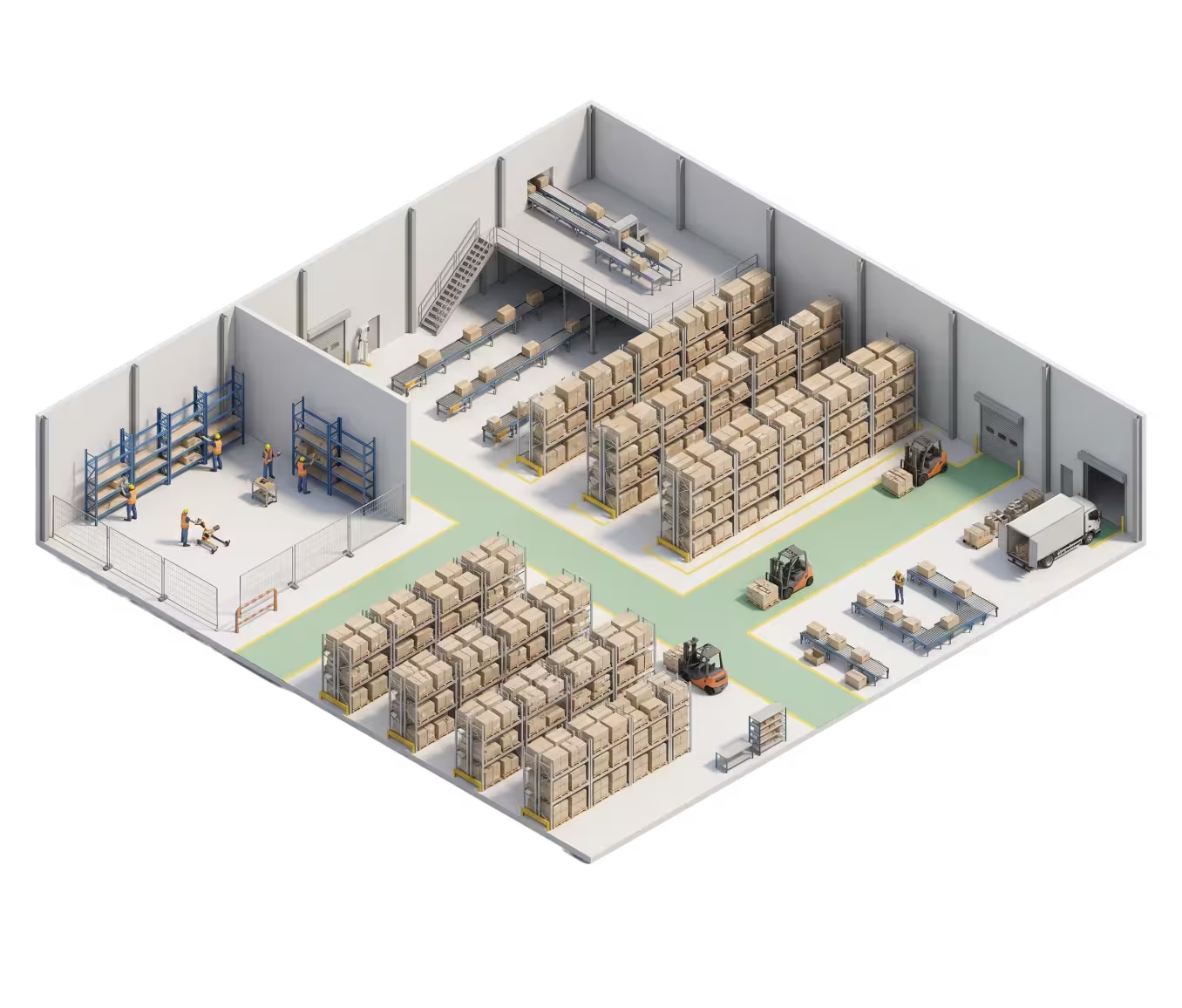
The AS/IS to TO-BE methodology is the professional standard for warehouse design consulting — and the most important reason to work with a qualified consultant rather than attempting an internal redesign without structured analytical support.
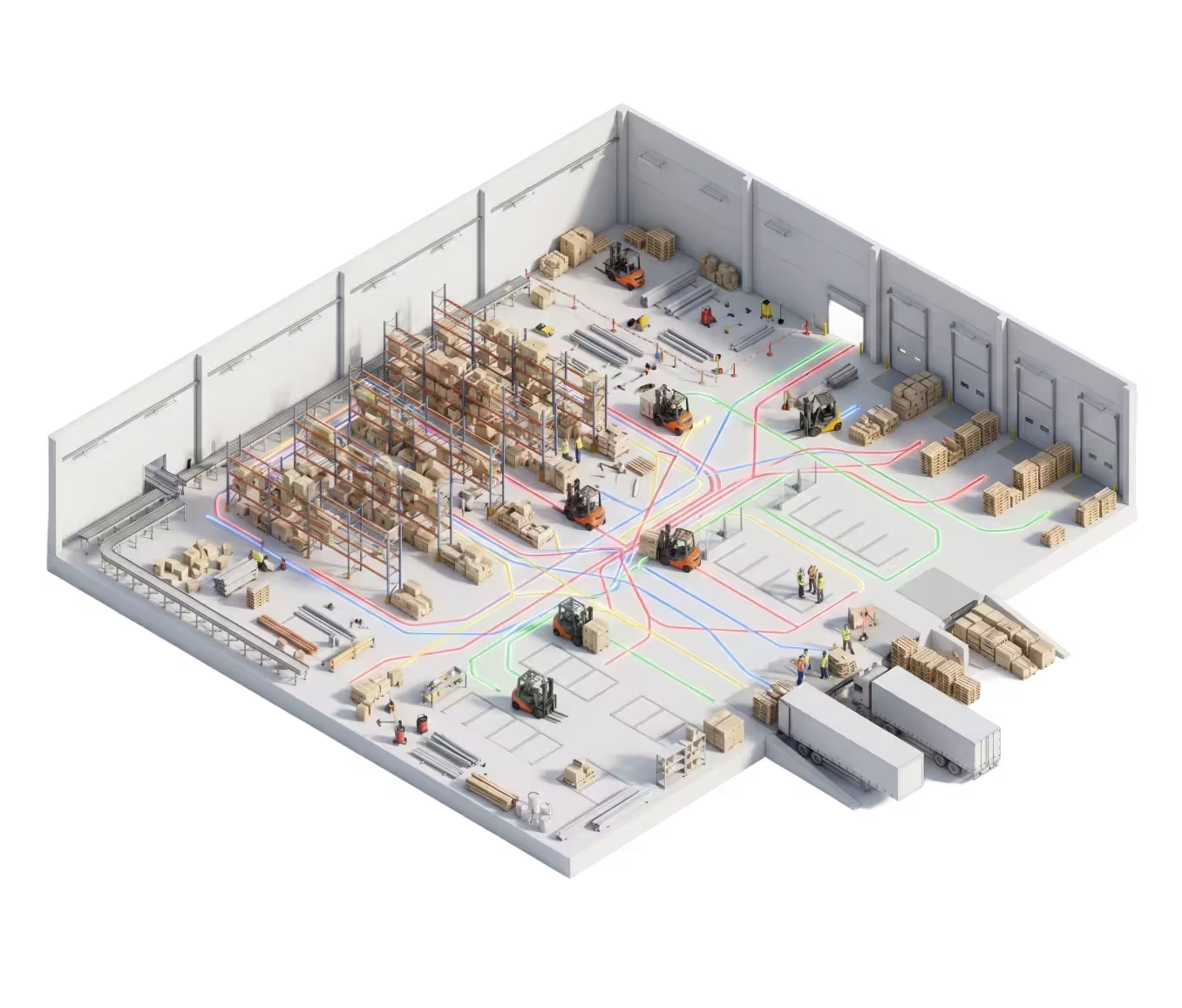
Without a Phased Plan
- Full facility shuts down for the duration of the move
- Inventory cleared and held offsite with no pick capability
- Rack reinstalled without verified engineered layout — misaligned rows discovered after load-in
- Fire code violation notice 60 days post-move because flue spacing changed
- Sprinkler re-inspection required; facility partially out of service during correction
- Load plaques missing or carrying old capacity values — OSHA citation risk
- VRC reinstalled without re-permitting — insurance and code liability
- Operations resume two weeks late; customer penalties applied
MWS Phased Approach
- Zone-by-zone or aisle-by-aisle sequencing: production runs in unaffected zones throughout
- Engineered CAD layout confirmed before teardown: no surprises at reinstallation
- FM Global and NFPA sprinkler geometry verified before any rack row is repositioned
- Anchor torque documented by bay: recommissioning report in hand before first pallet goes on
- Load plaques updated at every bay as part of standard recommissioning protocol
- VRC and mezzanine AHJ inspection scheduled in advance; no delay at go-live
- Weekend and night-shift execution available for highest-disruption phases
- Operations resume on schedule; dedicated project manager maintains your timeline
8 Common Warehouse
Design Mistakes That Cost
Operations Real Money
After 50+ years and 1,200+ warehouse design projects across 12 Midwest states, MWS consultants have seen every design mistake a warehouse can make — often more than once. These eight are the most common and most costly.
Starting teardown before the destination layout is confirmed
The most expensive mistake in warehouse relocation. Rack disassembled at the origin and moved to a destination whose floor slab is too thin for the anchor plan, or whose column grid doesn't match the drive-in bay depth, means the project stops cold. MWS confirms the destination layout in Phase 1 — before a bolt is touched.
Using internal employees for rack teardown
Untrained personnel disassembling a loaded rack is the most common cause of relocation-related structural failures and OSHA citations. Top-down teardown sequencing, RMI damage assessment during teardown, and OSHA lockout/tagout for powered equipment are specialized skills. Rack collapse during DIY teardown is a documented safety event that can result in willful OSHA violations exceeding $156,000 per citation
Hiring a general moving company instead of a systems integrator.
General movers handle furniture and freight. They do not understand RMI/ANSI MH16.1 anchor specifications, height-to-depth ratio compliance, LARC drawing obligations, or fire suppression geometry. Moving your rack with a general mover means it may be physically reassembled — but not reinstalled to code. MWS is a warehouse systems integrator, not a mover.
Skipping the fire code review
Moving rack rows changes the open vertical flue spacing between rows. FM Global and NFPA 13 have specific requirements for flue spacing to ensure sprinkler water penetrates to lower rack levels. No competitor and no general mover will catch this — MWS flags it in Phase 1 and coordinates with your fire protection engineer or AHJ before reinstallation.
Ignoring the seismic zone difference between facilities
A rack system anchored to code at a facility in Iowa or Illinois may need a completely different anchor specification at a facility in a higher seismic design category. Reinstalling with the origin anchor plan at a destination with different seismic requirements creates code non-compliance that will surface in an AHJ inspection.
Mixing upright brands or beam connector types during reassembly
Beams and uprights must match connector type (teardrop, slotted, structural bolt-pattern) and gauge. After a relocation, especially if replacement components are purchased to fill gaps, it is easy to inadvertently create unrated beam-to-upright connections. MWS verifies connector compatibility before any beam is installed at the destination.
Failing to update load plaques after any configuration change.
OSHA 1910.176 requires a visible load capacity sign at every rack bay. If the beam heights, upright gauge, or rack depth changed between the origin and destination configurations, the old load plaque is no longer accurate — and carrying it over is an OSHA citation waiting to happen. MWS updates every placard as part of standard recommissioning.
Starting too late
The most common client call MWS receives is: "Our lease is up in 60 days — can you start Monday?" The answer is almost always yes for teardown — but a quality relocation requires a Phase 1 site assessment, engineered layout, permit application, and business continuity plan that takes time to produce correctly. Facilities under a hard deadline should call **515-635-1555** as early as possible.
DECOMMISSIONING & ASSET RECOVERY + WHY MWS
Warehouse Decommissioning & Asset Recovery
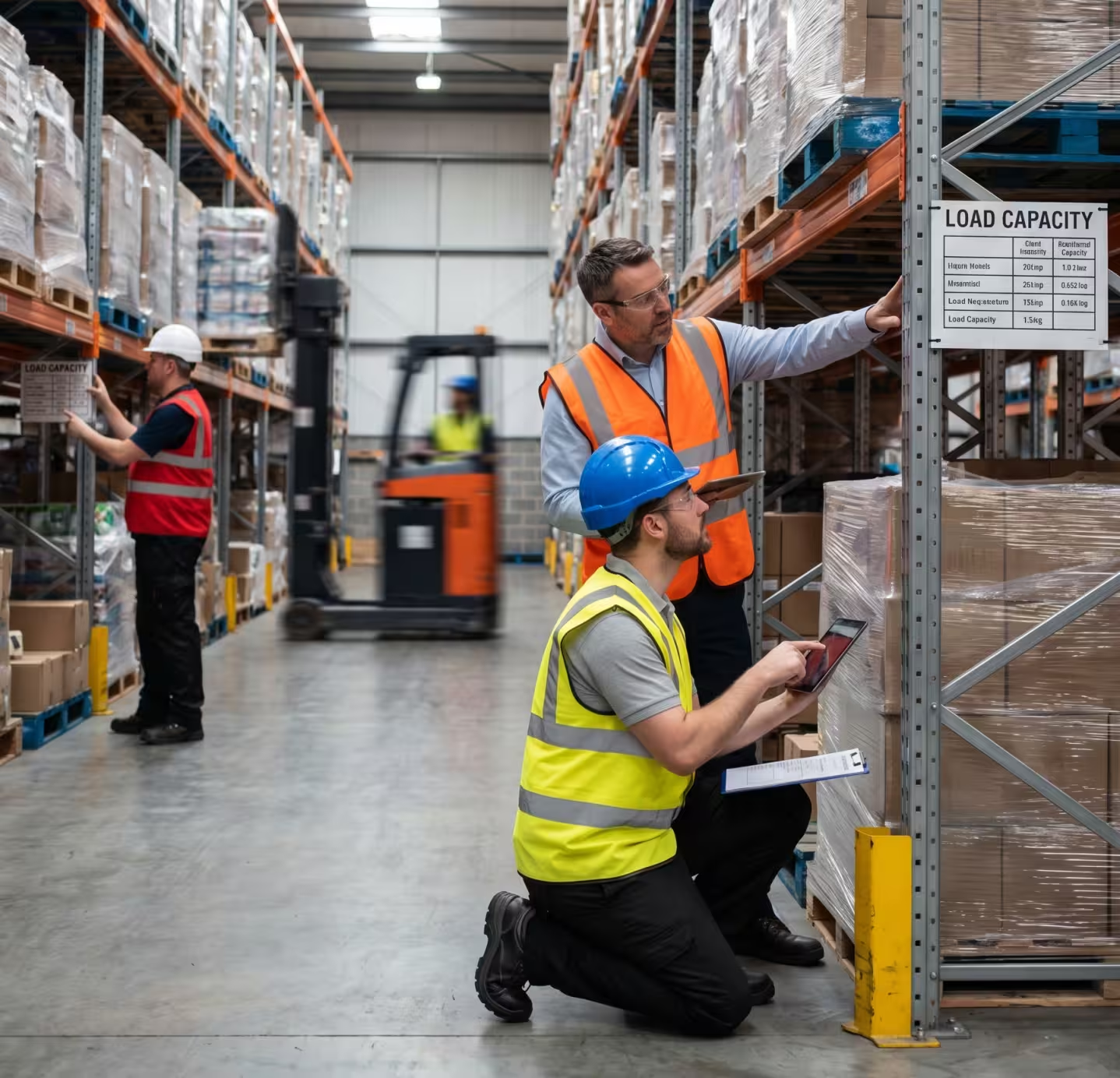
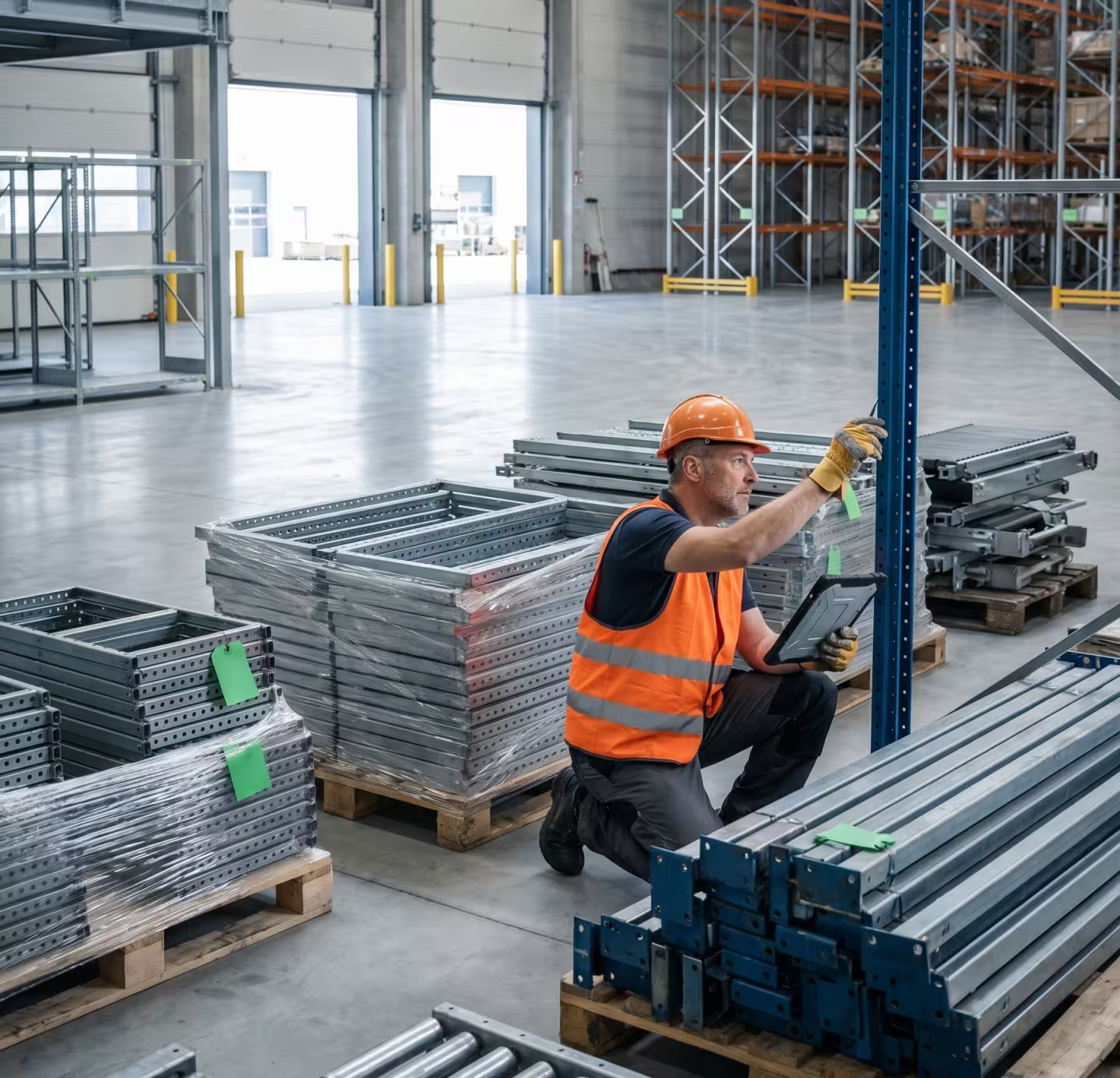
Warehouse decommissioning is the full teardown, inventory, and removal of all storage systems and material handling equipment from a facility that is being vacated — typically at lease-end or post-facility closure. It is a time-sensitive, compliance-governed project that requires the same technical discipline as a full relocation — but the destination is not another facility; it is a combination of resale, reuse, scrap, and disposal channels.
MWS offers warehouse decommissioning as a standalone service across all 12 Midwest states. Our decommissioning scope includes systematic top-down rack teardown, full component inventory with condition grading, palletizing for removal, coordination of resale or liquidation for usable equipment, responsible scrap processing for damaged components, anchor hole documentation (patching is a landlord coordination item), and final facility photos for landlord handoff. We produce a decommissioning completion report documenting the scope, component disposition, and final facility condition — the documentation your real estate and legal teams need to support security deposit return and lease exit compliance.
Asset Recovery
Offset Your Project Costs
Equipment you decommission does not have to be a pure cost. MWS can assess your surplus rack, shelving, conveyors, and mezzanine components for resale value during the Phase 1 site assessment.
Reusable pallet rack in good condition — particularly popular brands like Unarco (Steel King), Ridg-U-Rak, and Interlake Mecalux — can recover 15–30% of original purchase price through MWS's used equipment channels, with proceeds applied against project costs. Damaged uprights and bent beams are flagged for scrap; we coordinate scrap pickup and recycling.
The net result: your decommissioning project costs less than it would if every component went to landfill. Call **515-635-1555** to get a preliminary equipment assessment.
DIY vs. Vendor Options:
Why a Systems Integrator Matters
| Capability | DIY | General Moving Company | Material Handling Integrator (Generic) | MWS |
|---|---|---|---|---|
| Rack teardown to RMI standards | ✕No – training rarely exists internally | ✕No – not trained in rack systems | ✓Yes | ✓Yes – 50+ years, ANSI/RMI trained crews |
| Destination layout engineering | ✕No | ✕No | !Varies | ✓Yes – in-house engineering, 40+ year engineering firm relationship |
| Fire code / NFPA / FM Global review | !Rarely | ✕No | !Sometimes | ✓Yes – standard Phase 1 deliverable |
| Seismic anchor recalculation | ✕No | ✕No | !Sometimes | ✓Yes – assessed at every destination site |
| Post-move recommissioning report | ✕No | ✕No | !Sometimes | ✓Yes – standard deliverable at project close |
| Asset recovery / used equipment program | ✕No | ✕No | !Rarely | ✓Yes – MWS used equipment channels; proceeds offset project cost |
| Conveyor + mezzanine + crane scope | ✕No | ✕No | !Varies | ✓Yes – full-scope integrator for all systems |
| Weekend/night cutover execution | !Possible but costly with overtime | !Sometimes | !Sometimes | ✓Yes – standard MWS scheduling option |
| ISN Certification | ✕N/A | !Rarely | !Sometimes | ✓Yes – ID: 400-690402 |
| Dedicated project manager | !Internal PM with other responsibilities | ✕Rarely | !Sometimes | ✓Yes – single point of contact, start to sign-off |
Why MWS: 6 Reasons to Choose the Midwest's Most Experienced Integrator
50+ Years of Midwest Execution History
Founded in Iowa in 1979, MWS has been designing and building Midwest warehouses since before most of our competitors existed. Forty-six years of project experience means we've seen every configuration, every operational challenge, and every implementation complication — and we know how to prevent the ones that can be prevented.
In-House Crews.
No Subcontracting
Every MWS reconfiguration and relocation is executed by our own trained installation crews — not subcontracted labor hired for the project. The same crews who installed the rack know exactly how to take it apart correctly, inspect it accurately, and reinstall it to standard. When you hire MWS, you get the team with 50+ years of Midwest installation experience, not a labor broker's day crew.
Design-to-Execution Continuity.
MWS's Warehouse Design & Consulting service is the planning counterpart to this page — the same team that designs your new layout executes the physical move. The engineered CAD layout confirmed in Phase 1 is produced by our in-house engineering capability, supported by a 40+ year relationship with the same engineering firm. You get a continuous chain from layout design to rack installation, with no handoff gap between the designer and the crew.
Full-Scope Integrator Rack, Conveyor, Mezzanine, Crane.
Most rack installers handle rack. MWS handles rack, belt and roller conveyors, mezzanines, VRCs, VLMs, bridge cranes, jib cranes, and dock equipment — all under one project, with one project manager, one contract, and one point of accountability. Eliminating multiple subcontractors eliminates coordination failures, schedule conflicts, and liability gaps.
Asset Recovery Program Reduces Your Net Project Cost.
When you decommission equipment you no longer need, MWS can assess, inventory, and list it through our used equipment channels — offsetting a meaningful portion of project cost. We have the network to sell quality surplus pallet rack, shelving, conveyors, and mezzanines to buyers across the Midwest. What you cannot sell, we coordinate for responsible scrap processing. The result is a project that costs you less than the sticker price on the teardown.
ISN Certified — Your Enterprise Compliance Requirement Met.
MWS is ISN Certified (ID: 400-690402) — the contractor pre-qualification credential required by most large enterprise clients and Fortune 500 operations to verify safety, insurance, and compliance standing before a vendor is allowed on site. For operations with formal contractor management programs, MWS is already pre-qualified on ISNetworld. Call 515-635-1555 to confirm qualification status with your procurement team's requirements.
Get a Free Project Assessment for Your Warehouse Relocation or Reconfiguration
12-State Service Area
Iowa
Des Moines, Cedar Rapids, Davenport, Sioux City, Iowa City, Waterloo, Ames, West Des Moines, Ankeny, Council Bluffs, Dubuque, Urbandale
Illinois
Chicago, Rockford, Aurora, Naperville, Joliet, Springfield, Peoria
Indiana
Indianapolis, Fort Wayne, Evansville, South Bend, Hammond
Michigan
Detroit, Grand Rapids, Lansing, Ann Arbor, Flint, Kalamazoo
Minnesota
Minneapolis, St. Paul, Rochester, Duluth, Bloomington, Brooklyn Park, Plymouth, Minnetonka
Missouri
Kansas City, St. Louis, Springfield, Columbia
Ohio
Columbus, Cleveland, Cincinnati, Toledo, Akron
Wisconsin
Milwaukee, Madison, Green Bay, Kenosha, Racine
Kansas
Wichita, Overland Park, Kansas City
Nebraska
Omaha, Lincoln, Bellevue
North Dakota
Fargo, Bismarck, Grand Forks
South Dakota
Sioux Falls, Rapid City, Aberdeen
Can't find your state? MWS takes on projects across the country for the right scope.
Call 515-635-1555 to discuss your project regardless of location.
Frequently Asked Questions: Warehouse Design & Consulting
What is the difference between warehouse reconfiguration and warehouse relocation?
Warehouse reconfiguration is the physical rearrangement or modification of storage systems — pallet rack, shelving, conveyors, pick modules — within the same building. The facility does not change; the equipment configuration does. Reconfiguration is triggered by capacity problems, layout inefficiency, new automation, SKU mix changes, or a need for higher density without moving buildings. Warehouse relocation is the physical move of storage systems and material handling equipment from one facility to a new one — including teardown, palletizing, transport coordination, and reinstallation at the destination. The two services share technical execution methods — both require trained installation crews, RMI/ANSI MH16.1-compliant teardown and reinstallation, and post-project recommissioning — but they serve different triggering events and buyer contexts. MWS handles both as a single-source integrator, which is particularly valuable when a relocation requires a full reconfiguration of the new space, or when a reconfiguration surfaces a need for new equipment or facility upgrades. Call 515-635-1555 to discuss which service fits your current situation.
Can my warehouse stay open during a reconfiguration or partial relocation?
Yes, in most cases. MWS designs reconfiguration and partial relocation projects in phases so your operation continues in unaffected aisles and zones while work proceeds in designated work areas. For a full-facility reconfiguration, a zone-by-zone approach with temporary rack staging maintains at least 60–70% of pick capacity throughout the project — your operations team agrees to the sequencing plan before work begins. For facility-to-facility relocations, a phased approach moves equipment zone by zone over multiple weekends while the balance of the facility operates normally from the origin site. The critical requirement for a live-operation reconfiguration is that the rack being worked must be completely cleared of inventory before MWS touches it — we coordinate with your operations team on the buffer stock and alternate storage plan that makes the sequencing possible.
Can the work be done on nights and weekends to avoid operational disruption?
Yes. MWS routinely schedules pallet rack teardown, relocation, and reinstallation during off-peak windows — including overnight shifts, Saturday execution, and full Friday-to-Sunday weekend cutovers — particularly for active warehouses with five- or six-day operational schedules. A weekend cutover plan consolidates the most disruptive work into a single window so Monday morning operations are unaffected. This is available for both in-place reconfiguration projects and for full-facility relocation projects where distance between buildings makes a phased approach practical. Weekend and after-hours execution may carry a labor premium; MWS provides a clear cost comparison between standard and off-hours scheduling so you can make the right call for your operation. Call 515-635-1555 to ask about current weekend scheduling availability.
How much does warehouse reconfiguration cost?
Costs vary widely by scope. A small in-place reconfiguration — repositioning 10–25 rack sections, adjusting beam heights in one zone — may cost $5,000–$20,000 in MWS labor and services. A medium-scope multi-zone reconfiguration with conveyor modifications can run $20,000–$75,000. A full-facility reconfiguration involving 200+ rack bays, conveyor rerouting, and mezzanine modifications can reach $100,000–$250,000 or more. Key cost drivers are: total rack sections in scope, whether conveyors or mezzanines are involved, the degree of component replacement required (damaged uprights, worn hardware), and whether weekend/after-hours labor is needed. MWS provides a line-item project estimate before mobilization — no surprises mid-project. For a preliminary discussion of your scope, call 515-635-1555 or email sales@warehousesolutionsinc.com.
How much does a full warehouse relocation cost?
For a standard selective pallet rack facility under 50,000 square feet, MWS labor and services typically range from $40,000–$120,000, excluding freight and replacement components. A larger facility of 50,000–150,000 square feet with mixed rack types, a conveyor system, and a mezzanine typically runs $100,000–$350,000 in MWS execution costs. Major distribution centers over 150,000 square feet with structural rack, conveyors, and cranes can reach $300,000–$600,000 or more. The key framing point: relocating existing equipment typically costs 30–50% of buying and installing new at the destination. If your existing rack is in serviceable condition, you almost always save money by relocating it. Additionally, equipment you choose not to relocate — surplus rack, conveyors, shelving — can be sold through MWS's used equipment program, with proceeds offsetting your total project cost. Call 515-635-1555 for a scope-based estimate.
How long does a warehouse relocation take?
Physical execution by MWS — teardown through reinstallation — typically runs 2–4 weeks for a smaller selective rack facility and 4–8 weeks for a facility with mixed rack types, a conveyor system, and a mezzanine. Large distribution centers with structural rack and complex equipment can take 8–16 weeks. However, the planning that must precede physical execution — Phase 1 site assessment, engineered CAD layout for the destination, permit applications, and business continuity planning — takes an additional 4–12 weeks depending on facility complexity and jurisdiction. Facilities under a hard lease deadline should plan to begin the MWS engagement at least 3–6 months before the required move completion date. If your timeline is already compressed, call 515-635-1555 immediately — MWS has experience executing fast-track relocations, but early engagement is essential.
Do relocated pallet racks need to be re-inspected and re-permitted after reinstallation?
Yes. After any relocation or reconfiguration, pallet rack must be re-inspected and re-anchored per RMI/ANSI MH16.1-2023. Load plaques must be reviewed and updated to reflect any configuration changes. In most jurisdictions within MWS's 12-state service area, pallet rack installations — including reinstallations — require building permits and a final inspection by the local Authority Having Jurisdiction (AHJ), particularly for high-piled storage applications. For mezzanines and VRCs, permit re-inspection is mandatory after any relocation. MWS manages the permit application process, coordinates the AHJ inspection, and provides the recommissioning documentation package as a standard project deliverable. This is not optional compliance — it is the difference between a professionally executed relocation and a liability waiting to surface.
Does moving racking affect our fire suppression system compliance?
Yes — this is one of the most commonly overlooked compliance requirements in warehouse relocation. FM Global Property Loss Prevention Data Sheets and NFPA 13 govern the open vertical flue spaces required between rack rows to allow adequate sprinkler water penetration to lower rack levels. When rack rows are repositioned — even within the same facility — the flue geometry changes. If the new row configuration reduces flue spacing below code requirements, your sprinkler system will not function as designed during a fire event. MWS performs a fire suppression geometry review as part of every Phase 1 site assessment and flags any proposed rack positioning that could create a flue spacing problem. We coordinate with your fire protection engineer or the local AHJ before repositioning any rack row that affects sprinkler coverage. Ignoring this step is one of the eight common mistakes we see on self-managed relocations — and the correction after the fact is always more expensive than addressing it upfront.
What is warehouse decommissioning, and do you offer it?
Warehouse decommissioning is the full teardown, inventory, and removal of all storage systems and material handling equipment from a facility being vacated — typically at lease expiration, post-acquisition facility closure, or post-disaster facility exit. It differs from relocation in that there is no destination facility for reinstallation; the scope is teardown, component disposition (resale, reuse, scrap), removal, and landlord handoff documentation. MWS offers decommissioning as a standalone service across Iowa, Illinois, Indiana, Michigan, Minnesota, Missouri, Ohio, Wisconsin, Kansas, Nebraska, North Dakota, and South Dakota. Our decommissioning scope includes top-down rack teardown, component condition grading, resale coordination through MWS's used equipment program, responsible scrap processing for damaged components, and a final decommissioning report with facility photos for landlord handoff. Decommissioning projects often surface significant asset recovery value — quality pallet rack can return 15–30% of original purchase price — which partially or significantly offsets teardown costs. Call 515-635-1555 or email sales@warehousesolutionsinc.com to discuss.
What is a phased warehouse relocation, and is it right for my operation?
A phased warehouse relocation moves zones or departments of a facility sequentially — typically over multiple weekends or in planned operational windows — while the balance of the operation continues running at the origin site. Rather than a single move event that shuts everything down, a phased relocation transfers the facility incrementally, maintaining operations at both the origin and destination simultaneously during the transition period. This approach is ideal when: the new facility is within reasonable distance of the old one (typically under 200 miles), the operation cannot tolerate a full-stop move, inventory buffering can cover the transition windows for each zone moved, and the overall project timeline allows for an extended move period (typically 8–16 weeks of active relocation weekends). The trade-off is a longer overall timeline and a period of split-site operations that requires careful planning. MWS has executed phased relocations across all 12 Midwest states and can design the specific sequencing plan that fits your operational constraints. Call 515-635-1555 to discuss your scenario.
What happens to old or surplus racking we don't want to relocate?
Equipment you choose not to relocate has multiple disposition paths, and MWS can manage each of them. During the Phase 1 site assessment, we grade your surplus rack components by condition: reusable-as-is, reusable-with-repair, or scrap. Reusable pallet rack — particularly from manufacturers like Unarco (Steel King), Ridg-U-Rak, and Interlake Mecalux — can be sold through MWS's used equipment program. We inventory the components, photograph them, and list them through our channels; proceeds are applied against your project costs. Cantilever arms, wire decking, conveyors, and shelving in good condition also have active resale markets. For components that cannot be sold, MWS coordinates responsible scrap pickup and processing. The combination of asset recovery and scrap coordination often offsets 15–30% of total decommissioning costs — turning what feels like a pure expense into a partial capital recovery event. Contact us a 515-635-1555 or sales@warehousesolutionsinc.com to start the assessment.
What makes MWS different from a general moving company or freight broker?
General moving companies handle furniture and commercial freight — they do not design, engineer, or execute rack reinstallation. A freight broker coordinates transport but has no installation crew. MWS is a warehouse systems integrator: we assess, design, disassemble, transport-coordinate, reinstall, and recommission — everything under one contract, one project manager, and 50+ years of Midwest execution history. Practically, this means: we can confirm the destination layout fits before teardown begins; we inspect every component during disassembly and flag what must be replaced before reinstallation; we handle the permitting and compliance obligations so you don't receive a violation notice 60 days after move-in; and we produce the documentation — anchor torque records, load plaque updates, recommissioning report — that protects you in any OSHA inspection or insurance audit. The cost of hiring MWS versus patching together a mover + a rack installer + an inspector is almost always lower when you account for coordination failures, compliance gaps, and the cost of correcting a non-compliant reinstallation after the fact. Call 515-635-1555 to discuss your project.

CLAIM YOUR
FREE
Consultation
Save Time and Money
Start Your Free Project Assessment
Move Smart, Not Twice
Whether you are planning a warehouse relocation, an in-place rack reconfiguration, or a full decommissioning, MWS gives you a straight answer on scope, timeline, and cost — with no obligation. Tell us about your project and a project specialist will contact you within one business day.
515-635-1555 · sales@warehousesolutionsinc.com · 2006 Highway 17 North, Suite 48, Goldfield, IA 50542
Or call us at 515-635-1555
Save time. We will contact you
Provide your details, and we’ll help you find exactly what you need