
BELT CONVEYORS
Belt Conveyor Systems from a Trusted Warehouse Belt Conveyor Supplier & Integrator
We design, supply, and install belt conveyor systems that move your products faster, farther, and more reliably — from flat transport to steep inclines, light parcels to heavy loads, across every inch of your warehouse.
Speak with an expert  515-635-1555
Home / Warehouse Equipment / Conveyors and Automated Systems / Belt Conveyor System
Belt conveyor systems are the workhorse of modern warehouse automation — the single most versatile, widely deployed conveyor technology in distribution centers, fulfillment operations, and manufacturing facilities worldwide. If your operation moves packages, cartons, bulk materials, or individual items from point A to point B, a belt conveyor is almost certainly part of the solution.
At Midwest Warehouse Solutions (MWS), we are a full-service belt conveyor supplier and belt conveyor integrator with over 50 years of experience designing, engineering, procuring, installing, and maintaining belt conveyor systems tailored to your specific operation. Whether you need a simple slider bed belt conveyor for a packing line or a complex multi-zone incline belt conveyor system spanning multiple levels of your facility, we deliver turnkey solutions that work from day one.
Belt conveyors account for the largest share of the global conveyor market — and for good reason. They handle the widest range of product types, operate at speeds up to 600 feet per minute (FPM), can transport materials on flat, inclined, declined, and curved paths, and integrate seamlessly with barcode scanners, WMS software, robotic picking systems, and other warehouse automation technologies.
The global belt conveyor market is projected to exceed $5.5 billion by 2027, driven by explosive growth in e-commerce fulfillment, manufacturing automation, and the ongoing shift toward automated material handling across every industry. Operations that invest in belt conveyor systems today are building the infrastructure for decades of competitive advantage.
What Are Belt Conveyor Systems?
A belt conveyor system is a powered material handling solution that uses a continuous belt — made of rubber, PVC, polyurethane, fabric, or modular plastic — stretched over two or more pulleys (a drive pulley and one or more idler pulleys) to transport products, packages, or bulk materials from one point to another within a warehouse, distribution center, or manufacturing facility.
The drive pulley is connected to an electric motor (typically via a gear reducer) that powers the belt's movement. As the belt rotates continuously, products placed on its surface are carried along at a controlled, consistent speed. Belt conveyor systems can operate horizontally, on inclines up to 30+ degrees (with cleated or high-friction belts), on declines, and around curves — making them the most geometrically flexible conveyor system type available.
Modern belt conveyor systems go far beyond simple product transport. They incorporate sensors, barcode scanners, photo-eyes, programmable logic controllers (PLCs), and warehouse management system (WMS) integration to create intelligent, automated product flow — routing, tracking, accumulating, and delivering items to precise destinations with minimal human intervention.
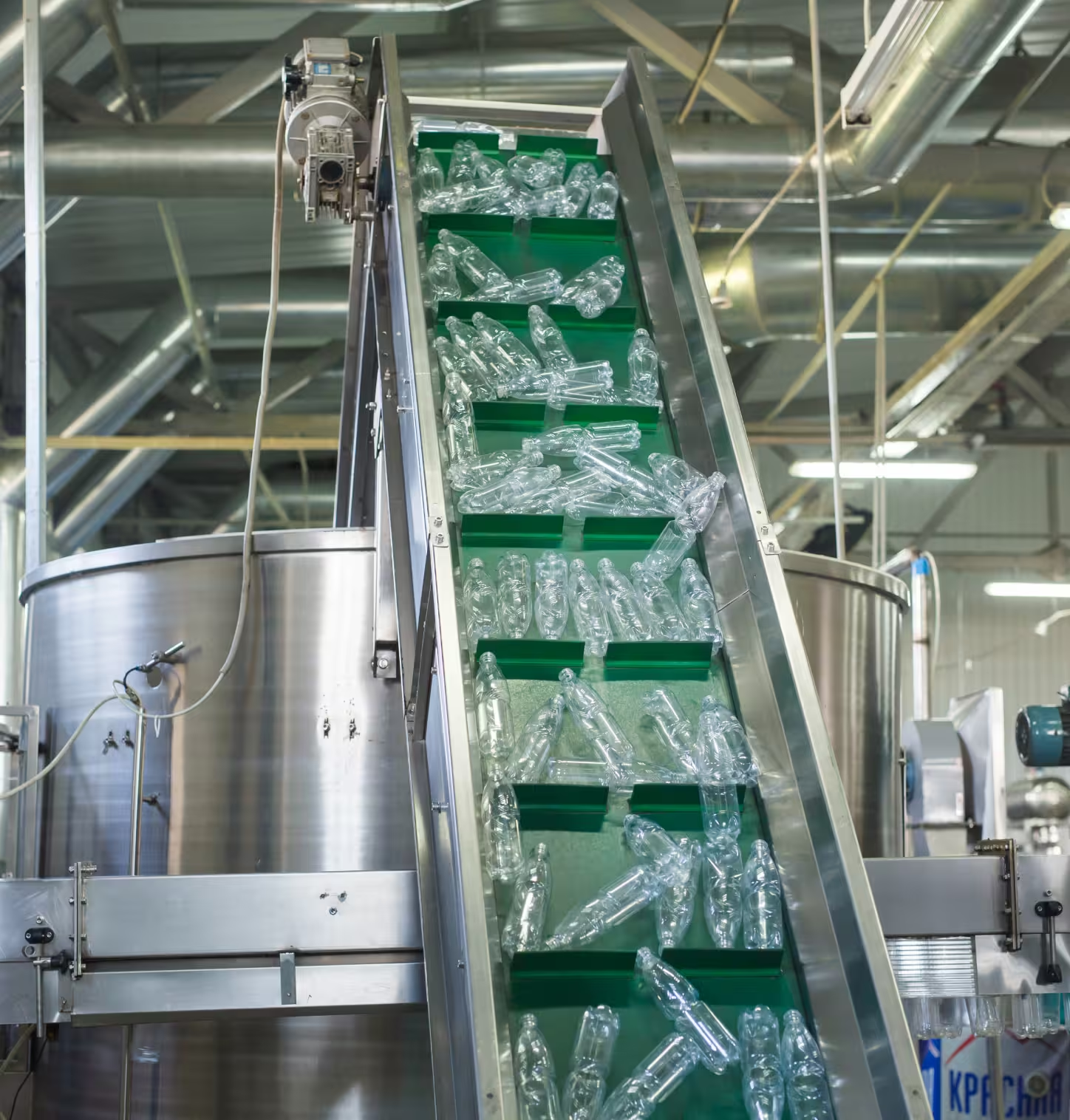
"The belt conveyor is the most versatile and widely used conveyor type in warehouse automation capable of handling everything from envelopes and polybags to 100-pound cartons and bulk materials across flat, inclined, and curved paths."
Key Components of a
Belt Conveyor System
| Component | Function | Common Options |
|---|---|---|
| Conveyor Belt | Continuous loop that carries products from load point to discharge | Rubber, PVC, polyurethane, fabric, modular plastic, cleated, textured |
| Drive Pulley | The surface that carries products from point to point | Lagged (rubber-coated) for grip; crowned for tracking |
| Idler Pulleys | Non-powered pulleys that support and guide the belt | Flat, troughing, return, impact, self-aligning |
| Electric Motor | Provides power to the drive pulley via gear reduction | 0.5 HP to 25+ HP; VFDs for variable speed control |
| Bed / Deck | Surface under the belt that provides structural support | Slider bed (steel plate), roller bed (rollers reduce friction) |
| Frame & Structure | Structural steel or aluminum frame supporting the entire system | Painted steel, galvanized, stainless steel, aluminum |
| Take-Up System | Maintains proper belt tension for tracking and power transfer | Screw take-up (manual), gravity take-up (automatic) |
| Sensors & Controls | Detection, tracking, and automation of product flow | Photo-eyes, barcode scanners, PLCs, HMIs, VFDs |
| Guards & Safety | Protect workers from moving parts and pinch points | E-stop pull cords, guard rails, nip point guards, light curtains |
Motor-Driven
Electric motors with gear reducers power the belt at controlled speeds from 20 to 600+ FPM
Continuous Transport
Products ride on a smooth, uninterrupted surface with no gaps or rollers to catch on
Multi-Directional
Operate horizontally, on inclines/declines up to 30°+, and around curves
Variable Speed
VFDs (variable frequency drives) allow real-time speed adjustment based on throughput needs
Product-Friendly
Smooth belt surface protects fragile items, polybags, irregular shapes, and small parts
WMS-Integrated
PLC controls communicate with your WMS for automated routing, tracking, and coordination
Modular & Scalable
Add sections, merge lines, and expand capacity as your operation grows
Low Profile
Available in low-profile designs that fit under workstations, mezzanines, and into tight spaces
See how belt conveyor systems
can transform your operation.
Or all us at 515-635-1555
Key Benefits of Belt
Conveyor Systems
Investing in belt conveyor systems delivers immediate and compounding returns across productivity, labor, accuracy, safety, and operational flexibility. Here's why belt conveyors are the most popular conveyor type in warehouse automation.
| Benefit | Impact | Key Data Point |
|---|---|---|
| Unmatched Versatility | Handle the widest range of product types, sizes, and weights | From polybags to 100+ lb cartons |
| High-Speed Transport | Move products at consistent, controllable speeds | Up to 600 FPM |
| Incline & Decline Capability | Transport between levels without lifts or elevators | Inclines up to 30°+ with cleated belts |
| Reduced Labor Costs | Automate repetitive product transport tasks | 20–30% labor cost reduction |
| Improved Throughput | Process more orders per hour with continuous flow | 2–3x throughput vs. manual handling |
| Product Protection | Smooth surface prevents damage to fragile or irregular items | Ideal for polybags, small parts, glass |
| Order Accuracy | Integrate scanners and WMS for precise routing | Up to 99.9% accuracy |
| Worker Safety | Eliminate manual lifting, carrying, and repetitive motion | Significant injury reduction |
| Low Maintenance | Simple design with fewer moving parts than roller systems | Lower total cost of ownership |
| Space Flexibility | Flat, incline, decline, and curved configurations | Maximize every square foot |
| Easy Integration | Connect with scanners, PLCs, WMS, and robotic systems | Seamless warehouse automation |
| Fast ROI | Combined savings pay for the system | ROI in 2–3 years |
Unmatched Versatility
Belt conveyor systems handle the widest range of products of any conveyor type. Unlike roller conveyors — which require flat-bottomed, rigid items — belt conveyors transport polybags, envelopes, irregularly shaped items, small parts, loose materials, and heavy cartons with equal reliability. This makes the belt conveyor the default choice for e-commerce fulfillment centers where product mix varies constantly.
Product Protection
The smooth, continuous surface of a belt conveyor eliminates the gaps and transitions that can catch, tip, or damage products on roller conveyors. This makes belt conveyor systems ideal for fragile items, polybags, small parts, and any product that needs gentle, stable transport.
High-Speed, Consistent Transport
Belt conveyors operate at speeds from 20 FPM
(for precision applications) to 600+ FPM for high-throughput mainline transport. Variable frequency drives (VFDs) allow real-time speed adjustment, so your belt conveyor system can accelerate for peak volume and slow down for scanning, weighing, or operator interaction — all automatically.
Enhanced Order Accuracy
Integrate barcode scanners, RFID readers, and vision systems with your belt conveyor system for automated identification and routing. Combined with WMS integration and PLC control, belt conveyors help achieve up to 99.9% order accuracy — reducing returns, re-ships, and customer complaints.
Incline and Decline Capability
Need to move products between levels? Incline belt conveyors and decline belt conveyors transport items up and down slopes — eliminating the need for elevators, lifts, or manual carrying between floors. With cleated or high-friction belt surfaces, belt conveyor systems handle inclines up to 30 degrees or more, connecting mezzanines, pick modules, and multi-level operations seamlessly.
Worker Safety
Belt conveyor systems eliminate the most common causes of warehouse injuries — manual lifting, carrying heavy loads, repetitive motion, and excessive walking. By automating product transport, you reduce injury risk, lower workers' compensation costs, and improve employee retention.
Reduced Labor Costs
Automate the repetitive, low-value task of moving products from point to point. Belt conveyor systems reduce material handling labor by 20–30%, allowing you to redeploy workers to higher-value tasks like picking, packing, quality control, and customer service.
Low Maintenance
Belt conveyors have a simpler mechanical design than many other conveyor types — fewer moving parts, fewer bearings, and fewer components to wear out. This translates to lower maintenance costs, less downtime, and a lower total cost of ownership over the life of the system.
Improved Throughput
Process 2–3x more orders per hour compared to manual material handling. Belt conveyors run continuously without breaks, fatigue, or shift changes — maintaining consistent product flow around the clock for operations running 24/7.
Space Flexibility
Belt conveyor systems run flat, climb inclines, descend declines, and navigate curves — all within the same continuous line. This geometric flexibility lets you route product flow through complex facility layouts, around obstacles, and between levels, maximizing every square foot of your warehouse.
Types of Belt Conveyor Systems
We Supply & Install
Not all belt conveyors are the same. Different applications require different belt types, bed styles, and configurations. As an experienced belt conveyor integrator, MWS helps you select, configure, and install the exact belt conveyor system for your operation.
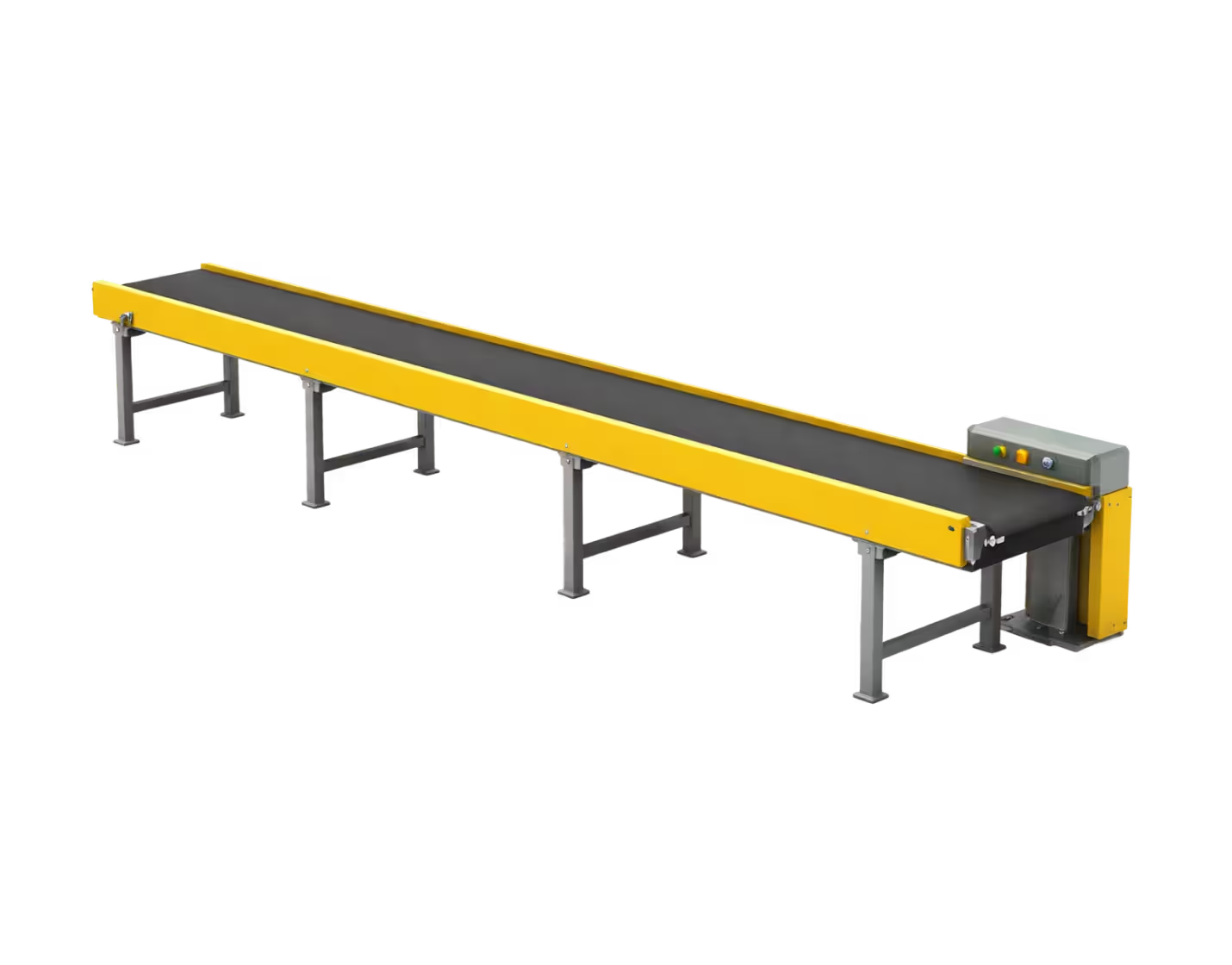
01
Slider Bed Belt Conveyors
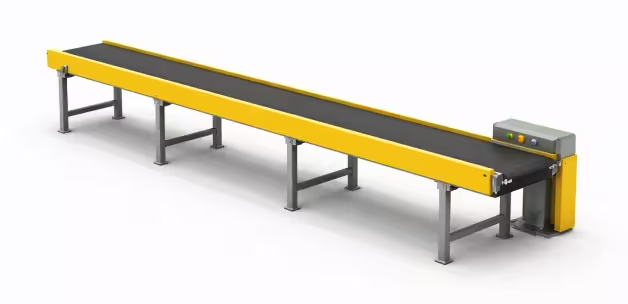
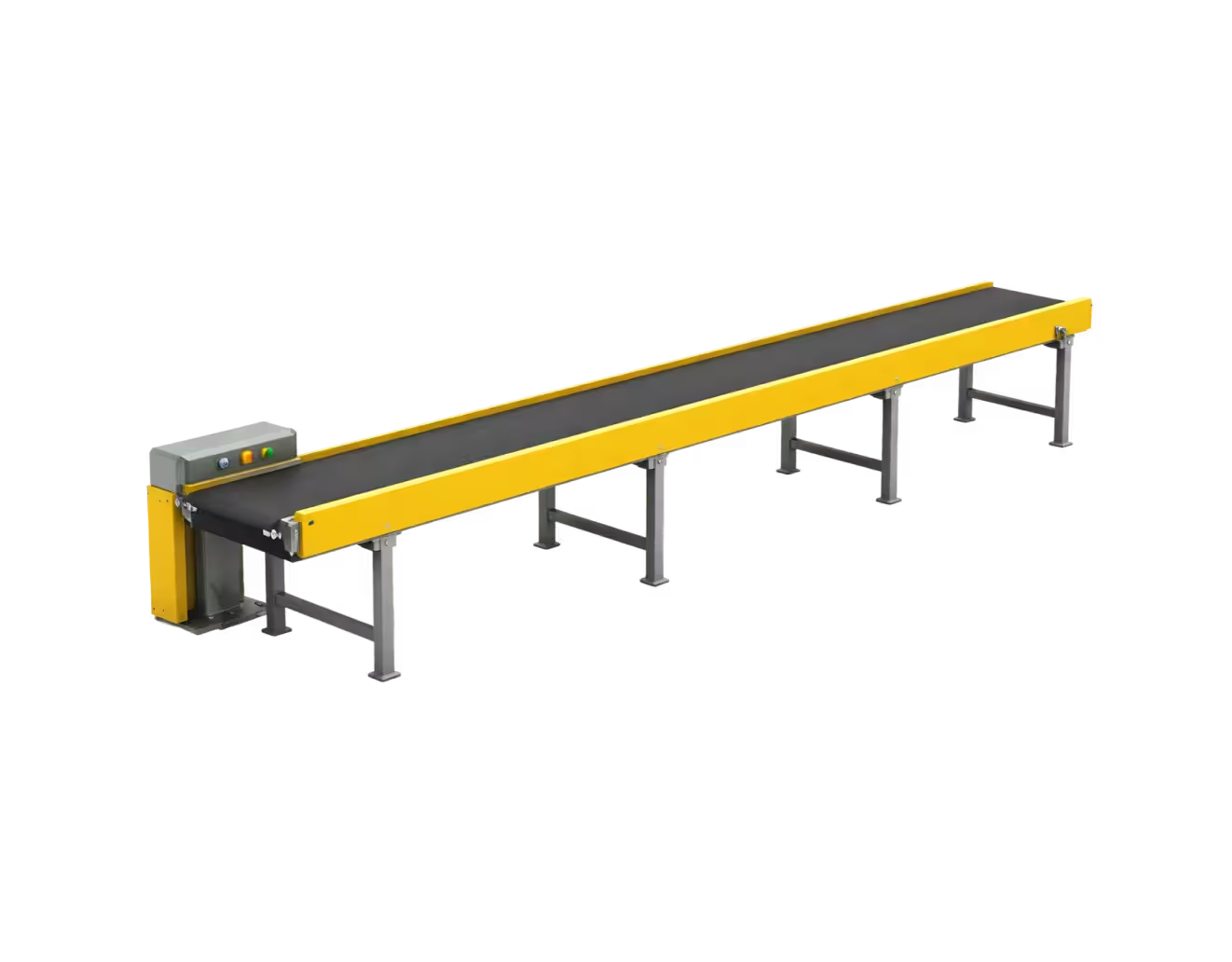
Slider bed belt conveyors are the most common and economical type of belt conveyor system. The belt slides over a smooth steel or UHMW plate, providing a continuous, stable surface for product transport.
- Belt widths: 6" to 60"+
- Up to 300 FPM
- Up to 150 lbs/ft
- E-Commerce
- Distribution
02
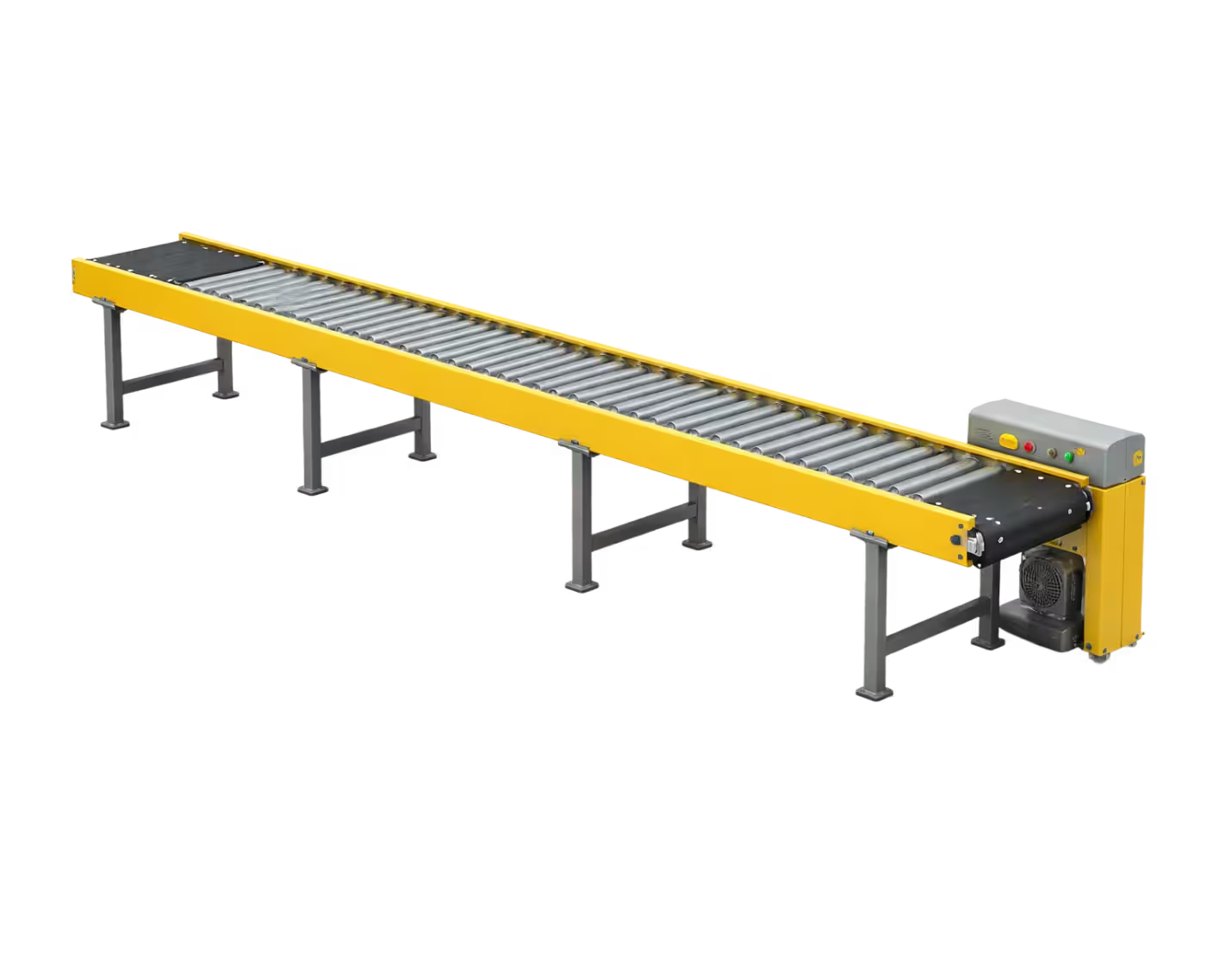
Roller Bed Belt Conveyors
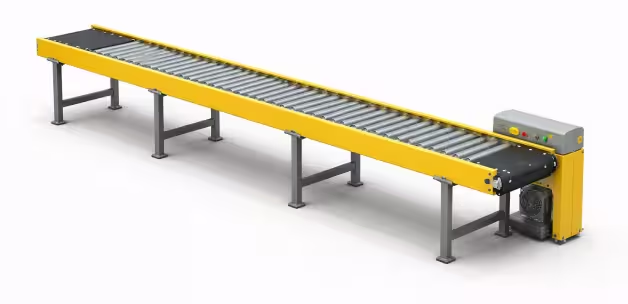
Roller bed belt conveyors feature a series of rollers beneath the belt instead of a flat plate. The rollers reduce friction, allowing the system to handle heavier loads over longer distances with less motor power.
- Belt widths: 12" to 72"+
- Up to 600 FPM
- Up to 300+ lbs/ft
- Distribution
- Manufacturing
03
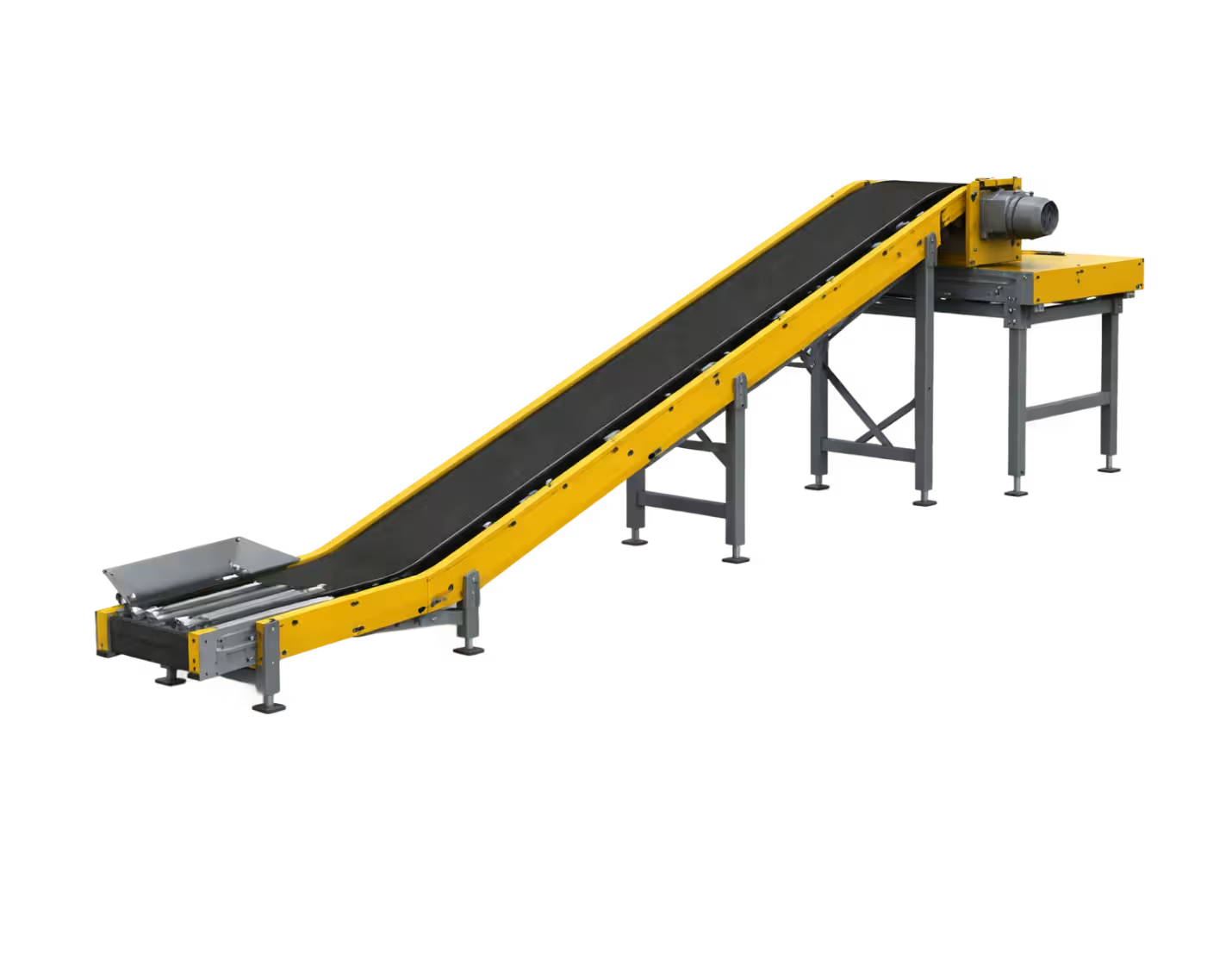
Incline & Decline Belt Conveyors
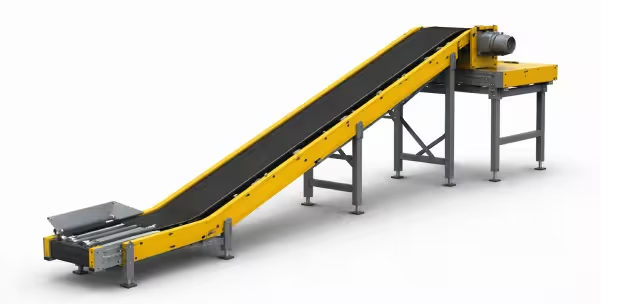
Incline belt conveyors and decline belt conveyors move products between different elevations — connecting ground floors to mezzanines, pick modules to packing areas, or receiving docks to storage levels.
- 5° to 30°+ incline
- Up to 300 FPM
- Multi-Level Warehouses
- E-Commerce
04
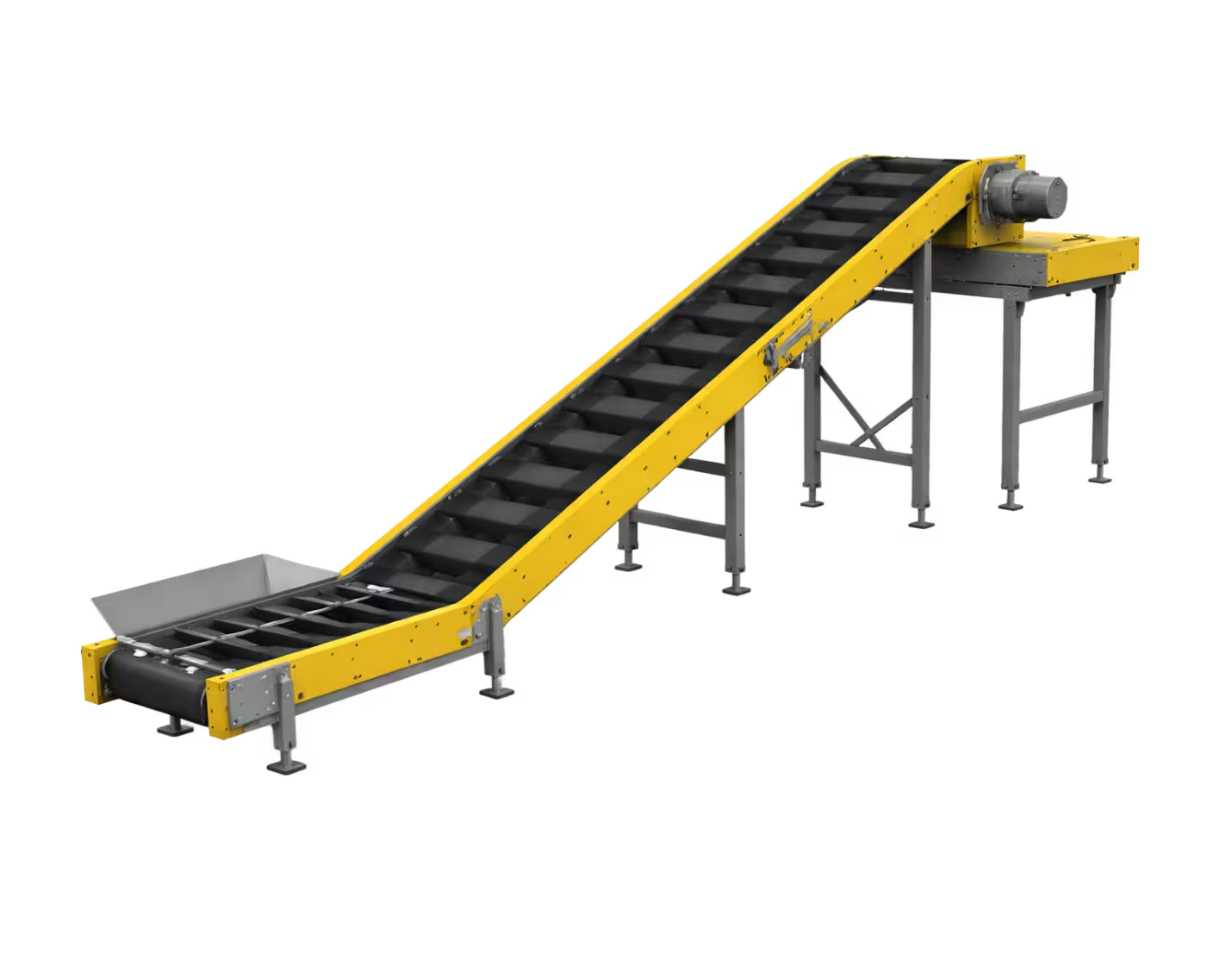
Cleated Belt Conveyors
Cleated belt conveyors feature vertical barriers (cleats) attached to the belt surface at regular intervals. These cleats prevent products from sliding backward on steep inclines or declines.
- Up to 45°+ incline
- Up to 200 FPM
- Manufacturing
- Food Recycling
05
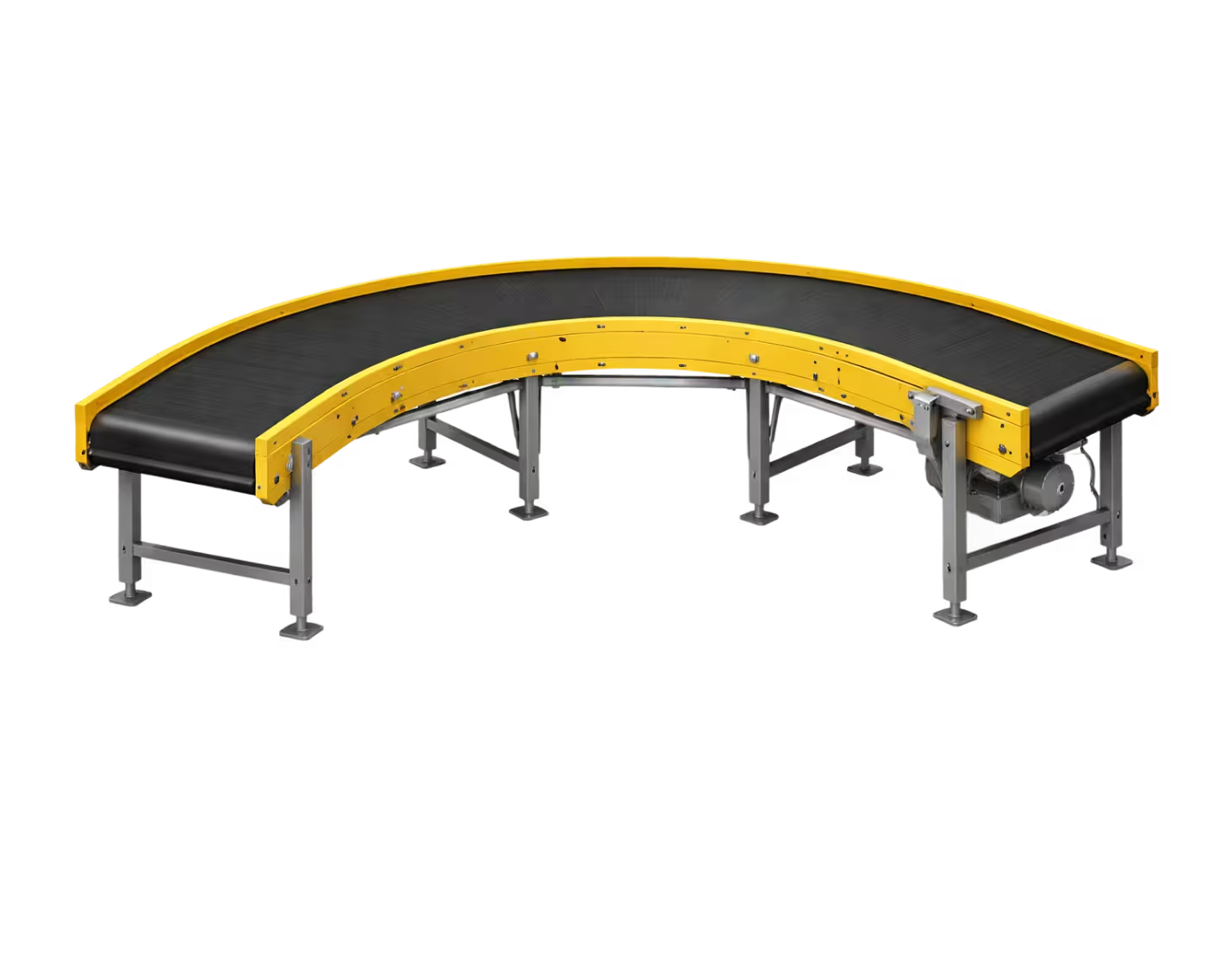
Curved Belt Conveyors
Curved belt conveyors change the direction of product flow — routing items around corners, through turns, and along winding paths without requiring a transfer point.
- 30°, 45°, 60°, 90°, 180° curves
- Up to 600 FPM
- E-Commerce
- Distribution
- Airports
06
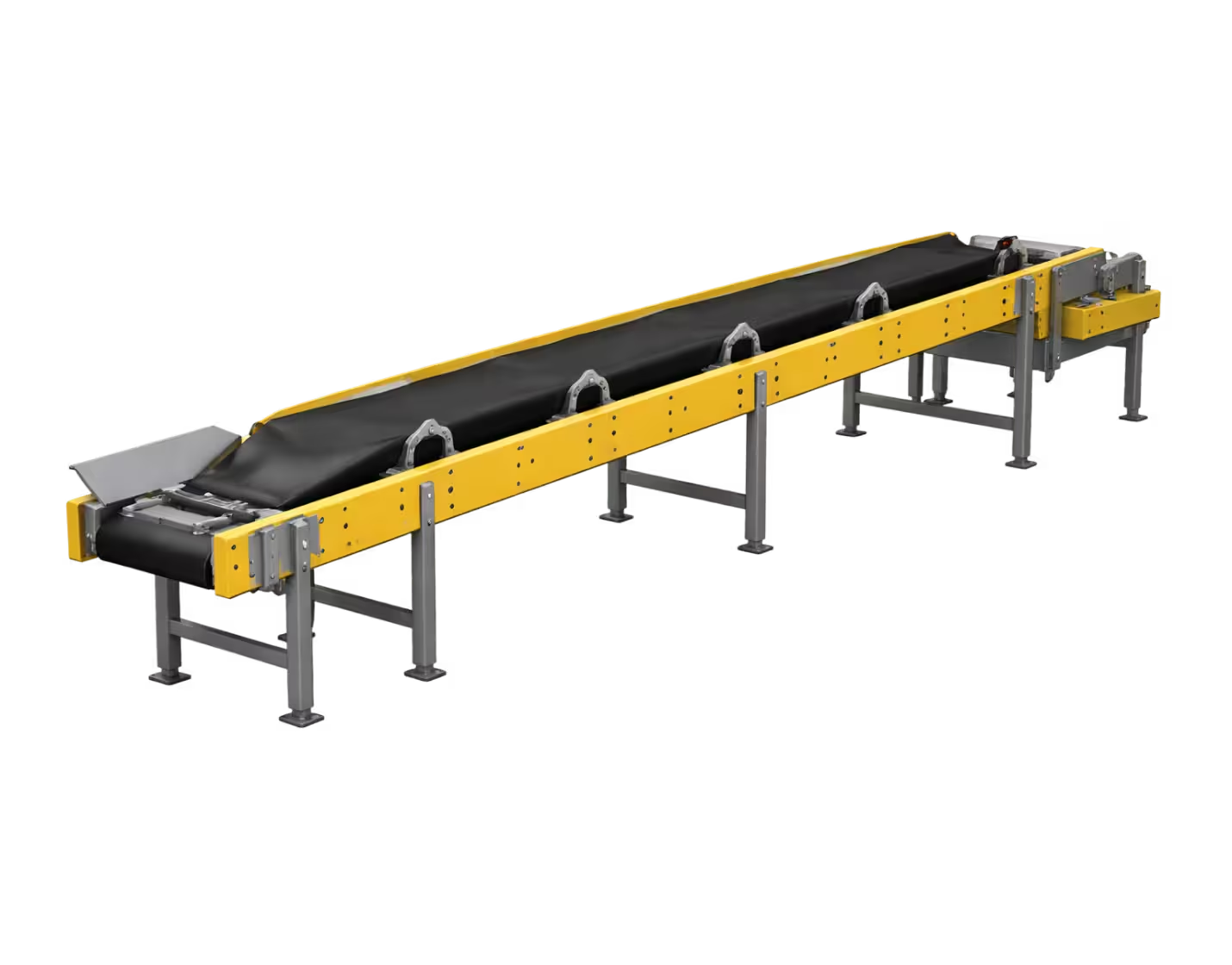
Troughed Belt Conveyors
Troughed belt conveyors shape the belt into a U-shaped channel using angled idler rollers. This trough design contains bulk materials — preventing spillage and increasing carrying capacity.
- Trough angles: 20°, 35°, 45°
- Belt widths: 18" to 96"+
- Recycling
- Mining
- Manufacturing
07
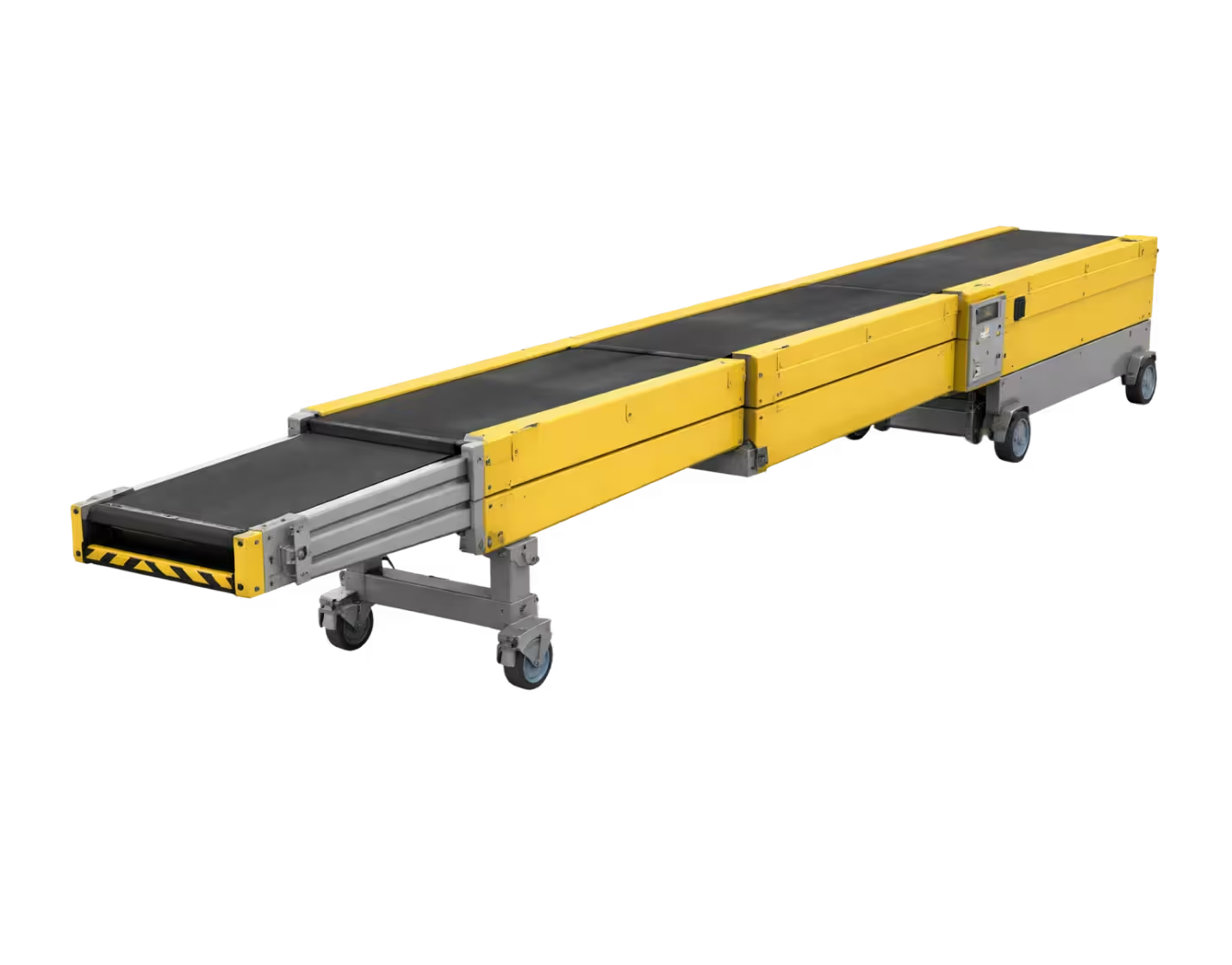
Telescoping / Extendable Belt Conveyors
Telescoping belt conveyors extend and retract to reach into truck trailers and shipping containers for loading and unloading, dramatically increasing loading/unloading speed.
- Up to 60+ feet extended
- Up to 75 lbs/pkg
- Distribution
- 3PL
- Retail
08
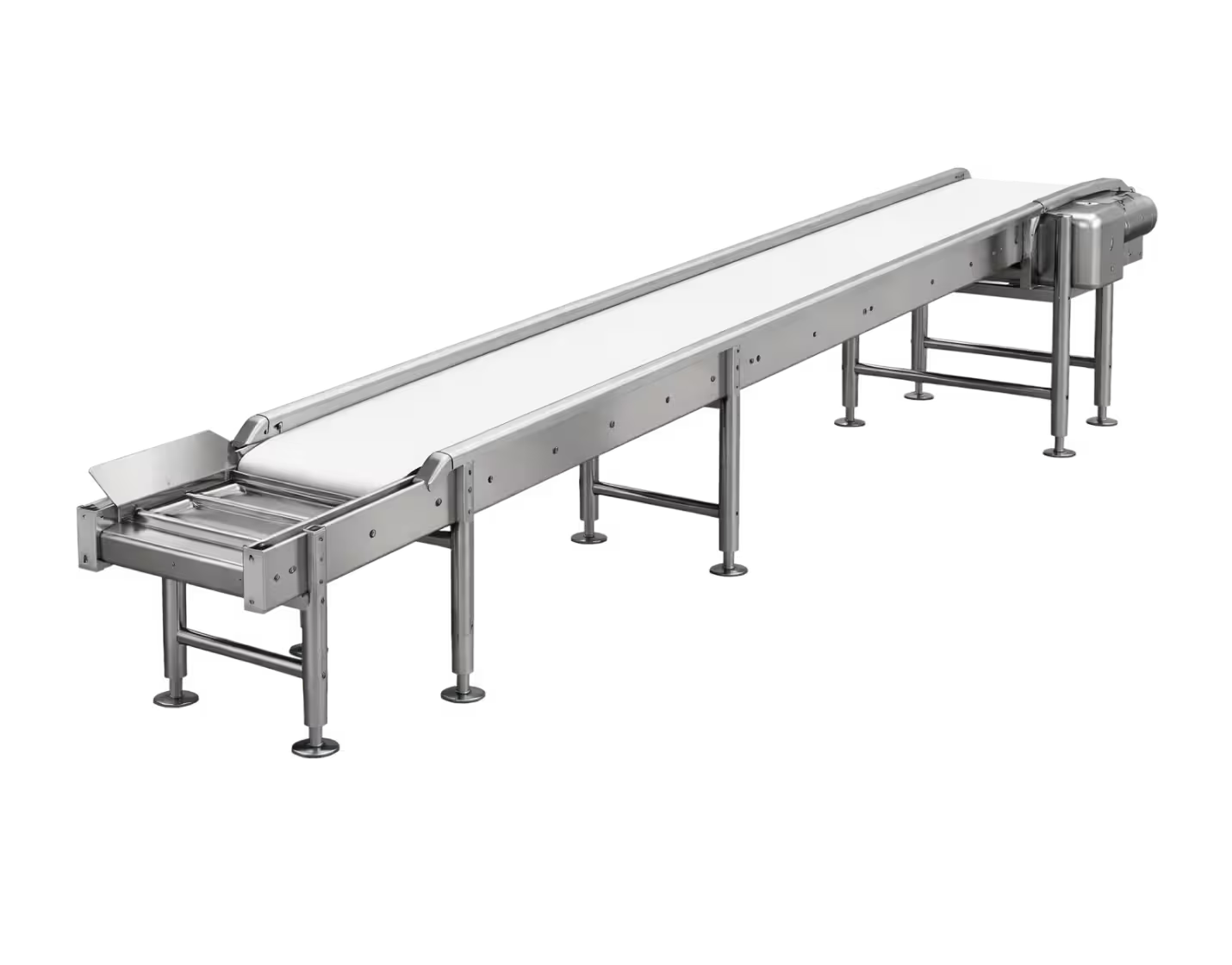
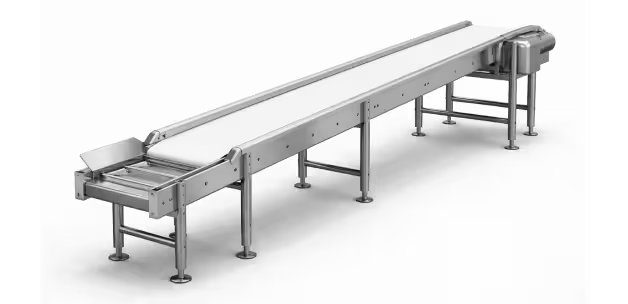
Sanitary / Washdown Belt Conveyors
Sanitary belt conveyors are designed for food processing, pharmaceutical, and cleanroom environments where hygiene, sanitation, and regulatory compliance are critical.
- Stainless steel (304/316)
- FDA/USDA approved
- IP65/IP69K rated
- Food & Beverage
- Pharmaceutical
Not Sure Which Belt Conveyor
Type Is Right for Your Operation?
Talk to a belt conveyor specialist who can evaluate your needs and recommend the best solution for your facility.
Or all us at 515-635-1555
Belt Conveyor Types at
a Glance Comparison Table
Use this table to compare the key characteristics of each automated conveyor system type and determine which is the best fit for your warehouse or distribution center.
Slider Bed
Best Application
Packing, inspection, assembly
Load Capacity
Light to Medium (up to 150 lbs/ft)
Max Speed
Up to 300 FPM
Incline Capability
Flat only (0°)
Typical Cost/Linear Ft
$150–$500
Top Industries
E-Commerce, Distribution, Manufacturing
Roller Bed
Best Application
Heavy loads, long runs, mainlines
Load Capacity
Medium to Heavy (up to 300+ lbs/ft)
Max Speed
Up to 600 FPM
Incline Capability
Flat only (0°)
Typical Cost/Linear Ft
$300–$800
Top Industries
Distribution, Manufacturing, 3PL
Incline / Decline
Best Application
Level changes, mezzanine feeds
Load Capacity
Light to Medium
Max Speed
Up to 300 FPM
Incline Capability
5° to 30°+
Typical Cost/Linear Ft
$400–$1,000
Top Industries
Warehousing, E-Commerce, Manufacturing
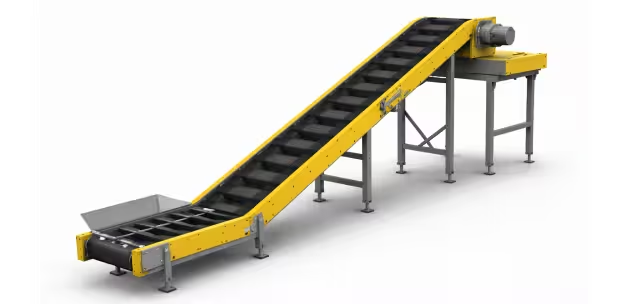
Cleated
Best Application
Steep inclines, bulk, small parts
Load Capacity
Light to Medium
Max Speed
Up to 200 FPM
Incline Capability
Up to 45°+
Typical Cost/Linear Ft
$500–$1,200
Top Industries
Manufacturing, Food, Recycling
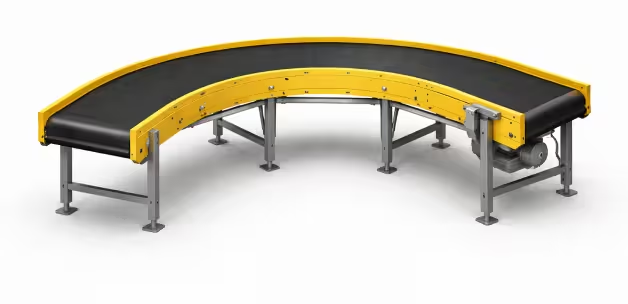
Curved
Best Application
Corners, direction changes
Load Capacity
Light to Medium
Max Speed
Up to 600 FPM
Incline Capability
Flat only (0°)
Typical Cost/Linear Ft
$800–$2,000
Top Industries
E-Commerce, Distribution, Airports
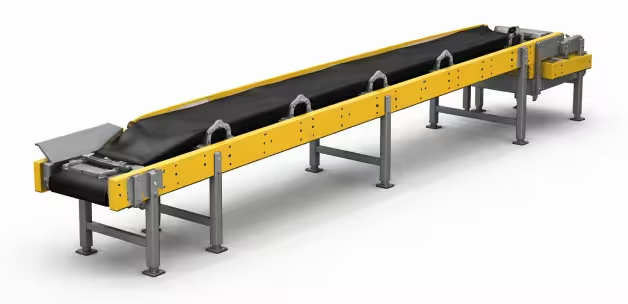
Troughed
Best Application
Bulk materials, scrap, aggregate
Load Capacity
Heavy (bulk)
Max Speed
Up to 600 FPM
Incline Capability
Flat only (0°)
Typical Cost/Linear Ft
$800–$2,000
Top Industries
E-Commerce, Distribution, Airports
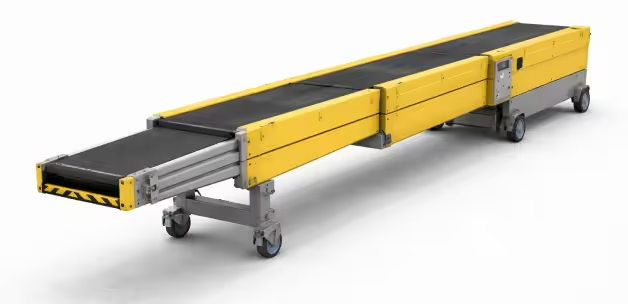
Telescoping
Best Application
Truck loading/unloading, docks
Load Capacity
Light to Medium (per pkg)
Max Speed
Up to 600 FPM
Incline Capability
Flat only (0°)
Typical Cost/Linear Ft
$800–$2,000
Top Industries
E-Commerce, Distribution, Airports
Sanitary / Washdown
Best Application
Food, pharma, cleanroom
Load Capacity
Light to Medium
Max Speed
Up to 300 FPM
Incline Capability
Flat only (0°)
Typical Cost/Linear Ft
$800–$2,000
Top Industries
E-Commerce, Distribution, Airports
Belt Conveyor System Cost Guide
One of the most common questions we receive: "How much do belt conveyor systems cost?
The answer depends on the type of belt conveyor, system length, automation level, and installation requirements. Here is a transparent, detailed breakdown to help you budget.
Belt Conveyor System Cost by Type
| Belt Conveyor Type | Cost per Linear Foot | Typical Total Project Range | What's Included |
|---|---|---|---|
| Slider Bed | $150–$500/ft | $10,000–$200,000 | Frame, belt, motor, drive, basic controls |
| Roller Bed | $300–$800/ft | $25,000–$500,000 | Rollers, frame, belt, motor, controls |
| Incline / Decline | $400–$1,000/ft | $15,000–$300,000 | Cleated or high-friction belt, motor, frame, guards |
| Cleated | $500–$1,200/ft | $20,000–$250,000 | Cleated belt, motor, frame, containment skirts |
| Curved | $800–$2,000/ft | $10,000–$150,000 | Tapered rollers, curved frame, belt, motor |
| Troughed | $400–$1,500/ft | $25,000–$500,000+ | Troughing idlers, belt, frame, motor, covers |
| Telescoping | $20,000–$80,000/unit | $20,000–$80,000 | Complete extendable unit on casters |
| Sanitary / Washdown | $500–$1,500/ft | $15,000–$300,000 | Stainless steel frame, FDA belt, quick-release |
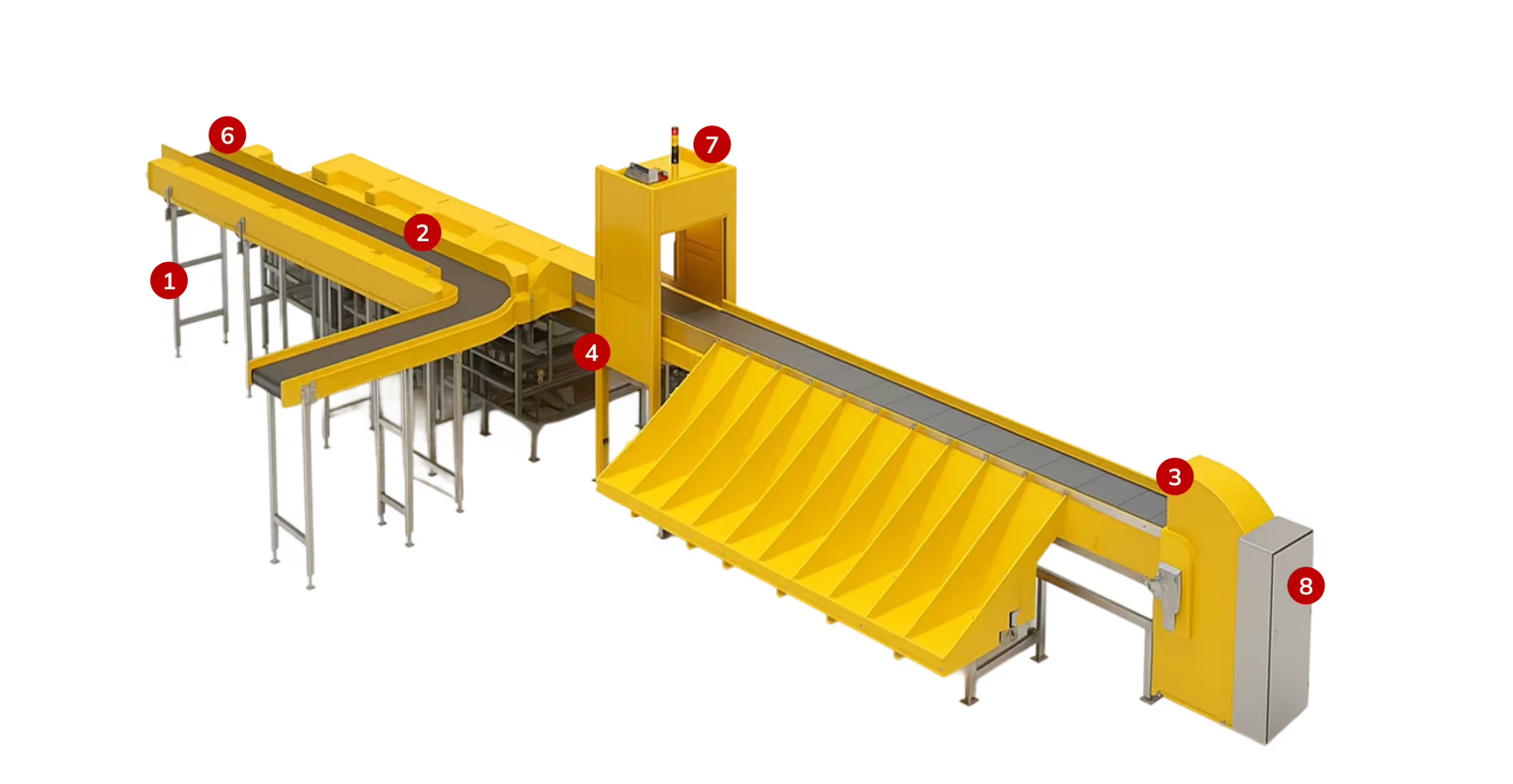
Key Characteristics of Automated
Conveyor Systems
Total System Length
Longer systems = higher total cost (but lower cost/ft at scale)
Belt Material & Type
Specialty belts (cleated, FDA, high-temp) cost more
Motor & Drive Package
HP, VFDs, and gear reducers affect pricing
Installation Complexity
Mezzanine integration, structural work, phased install
Environmental Requirements
Washdown, cold storage, cleanroom add cost
Belt Conveyor Type
Roller bed and curved cost more than slider bed
Automation Level
Sensors, PLCs, VFDs, WMS integration add cost
Controls & Software
PLC programming, HMI panels, WMS connectivity
Manufacturer / Brand
Premium brands carry higher price with better warranties
The bottom line: A complete belt conveyor system for a mid-sized warehouse operation typically ranges from $50,000 to $500,000+ depending on scope, type, automation level, and facility requirements. Simple slider bed belt conveyor lines can start under $15,000. Contact a belt conveyor systems supplier like MWS for a free consultation and custom quote.
Need Help Deciding Between Belt and Roller Conveyors?
Schedule a free consultation with our team. We'll evaluate your operation and recommend the best solution.
Or all us at 515-635-1555
Belt Conveyor System Cost Guide
One of the most common questions we receive: "How much do belt conveyor systems cost?
The answer depends on the type of belt conveyor, system length, automation level, and installation requirements. Here is a transparent, detailed breakdown to help you budget.
Belt Conveyor System Cost by Type
| Specification | Typical Range (Warehouse/Distribution) | Notes |
|---|---|---|
| Belt Speed | 20–600+ FPM | VFD-controlled for variable speed |
| Belt Width | 6"–72"+ | Most warehouse applications: 12"–36" |
| Load Capacity (per linear foot) | 10–300+ lbs | Depends on bed type (slider vs. roller) |
| Conveyor Length | 3 ft–500+ ft (per section) | Multiple sections can be joined |
| Incline Angle | 0°–30°+ (up to 45°+ with cleats) | Higher angles require cleated or textured belt |
| Motor Power | 0.5 HP–25+ HP | Matched to load, length, and speed |
| Throughput | Up to 3,600+ items/hour (per line) | Depends on speed, product size, gap spacing |
| Belt Material | Rubber, PVC, PU, fabric, modular plastic | Selected based on product and environment |
| Operating Temperature | -20°F to 300°F+ (specialty belts) | Cold storage to high-temp manufacturing |
| Noise Level | 60–75 dB (typical) | Quieter than chain or roller systems |
Belt Speed Selection Guide
20–65
FPM
Operator Loading / Unloading Zone
Safe speed for manual interaction
40–100
FPM
Packing Line /
Inspection Station
Allows visual inspection and handling
80–200
FPM
Scanning /
Weighing Zone
Consistent speed for accurate reads
200–400
FPM
General Transport (mainline)
High throughput between zones
400–600+ FPM
Operator Loading / Unloading Zone
Maximum throughput for sortation systems
Industries That Use
Belt Conveyor Systems
Belt conveyor systems power operations across virtually every industry that moves products, packages, or materials at volume.
E-Commerce & Retail
- Belt Types: Slider bed, roller bed, incline, curved
- Applications: Order fulfillment, sortation feed, shipping
Polybags, envelopes, cartons, mixed SKUs
Manufacturing & Assembly
- Belt Types: Slider bed, roller bed, cleated
- Applications: Production line feeding, WIP transport, assembly
Parts, components, sub-assemblies
Food & Beverage
- Belt Types: Sanitary/washdown, incline, cleated
- Applications: Processing lines, packaging, ingredient transport
Packaged food, raw ingredients, bottles
Pharmaceutical & Healthcare
- Belt Types: Sanitary, slider bed, low-profile
- Applications: Cleanroom transport, order fulfillment, compliance
Medications, medical devices, lab supplies
Distribution & 3PL
- Belt Types: Roller bed, slider bed, telescoping
- Applications: Mainline transport, cross-docking, dock loading
Cartons, totes, cases, parcels
Cold Storage & Frozen Goods
- Belt Types: Cold-rated belt, incline, roller bed
- Applications: Freezer-to-dock transport, cold chain logistics
Frozen food, cold-chain pharmaceuticals
Recycling & Waste
- Belt Types: Troughed, cleated, slider bed
- Applications: Sorting lines, material transport, scrap handling
Mixed recyclables, paper, plastics, metals
Airports & Baggage Handling
- Belt Types: Curved, slider bed, incline
- Applications: Baggage transport, check-in, claim carousels
Luggage, oversized items
Automotive & Heavy Industry
- Belt Types: Roller bed, cleated, troughed
- Applications: Parts delivery, assembly line, scrap removal
Metal parts, components, stampings
Parcel & Postal
- Belt Types: Slider bed, curved, incline
- Applications: Package sorting, scanning, shipping
Packages, parcels, flats, polybags
Automated Conveyor Systems
vs. Manual Material Handling
Still evaluating whether to invest in automated conveyor systems?
Here's a direct comparison to help you make the case.
| Belt Conveyor Systems |
|---|
| Roller Conveyor Systems |
|---|
| Belt Conveyor Systems | Roller Conveyor Systems |
|---|---|
Need Help Deciding Between Belt and Roller Conveyors?
Schedule a free consultation with our team. We'll evaluate your operation and recommend the best solution.
Or all us at 515-635-1555
How to Choose the Right
Belt Conveyor System
Selecting the right belt conveyor system requires evaluating your products, throughput targets, facility layout, and automation needs. Here's a structured framework.
The best approach: Work with an experienced belt conveyor integrator like MWS. We evaluate all of these factors during our free, no-obligation consultation and recommend a belt conveyor system tailored to your exact needs.
Our Proven Belt Conveyor System Installation Process
From initial assessment to ongoing support, our structured process ensures your belt conveyor system is designed right, installed right, and performs right — every time.

01
Consultation & Needs Assessment
WEEK 1-2
Our team visits your facility to evaluate your current operations, product types, throughput requirements, elevation changes, and growth plans. We document every detail — no cost, no obligation.
02
Custom Belt Conveyor
Design
WEEK 3-6
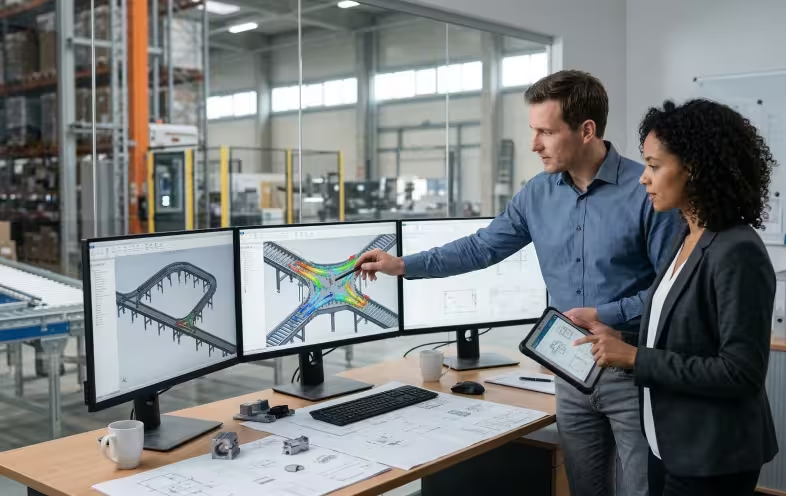
Our engineers create a custom belt conveyor system layout using CAD modeling and simulation software. We select the optimal belt type, bed style, speed, width, and incline angles.
03
Equipment
Procurement
WEEK 6-12
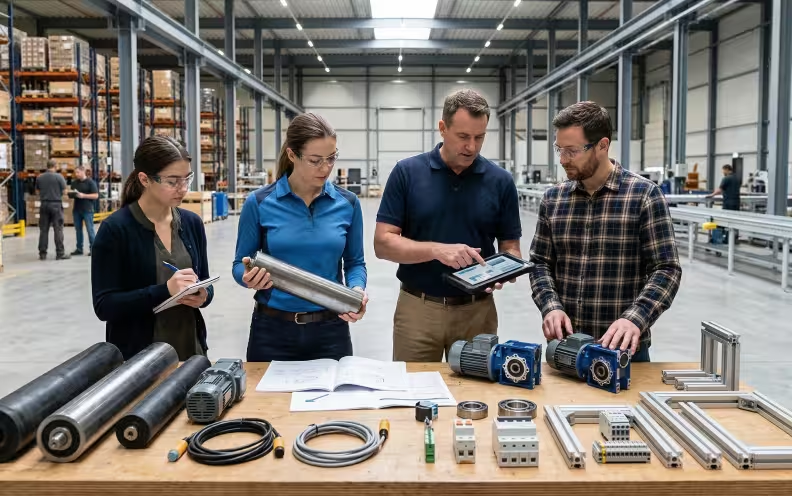
We source the best belt conveyor equipment from top manufacturers including Hytrol, Dorner, Interroll, Dematic. We leverage volume relationships for competitive pricing.
04
Professional
Installation
WEEK 12-24
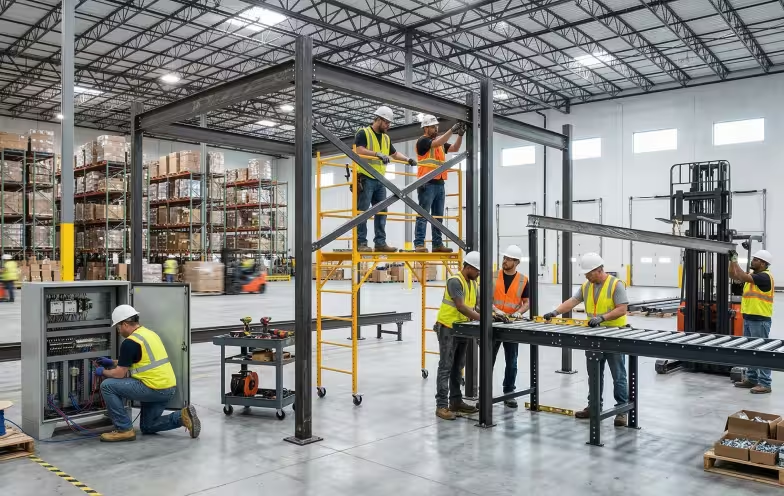
Our certified installation crews handle every aspect — structural steel, electrical, belt installation, controls wiring, and PLC programming. We minimize disruption to ongoing operations.
05
Testing, Commissioning
& Training
WEEK 24-26
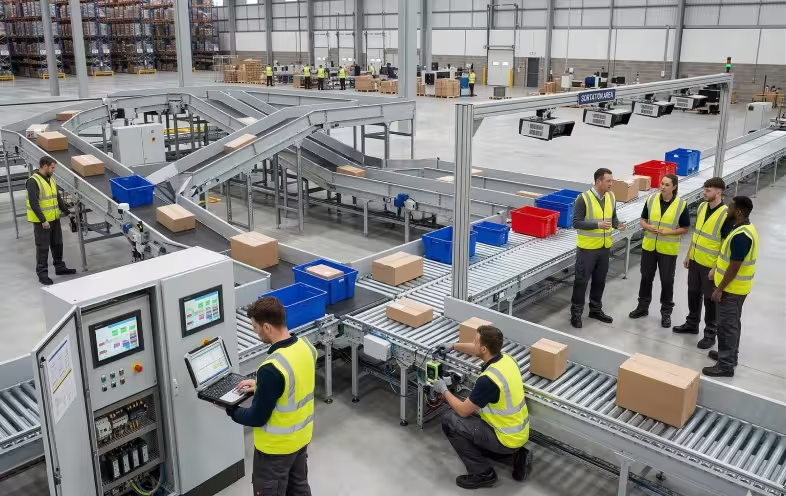
Every belt conveyor system undergoes rigorous testing. We run your actual products through every path, verify speeds, check tracking and tension, and train your operators.
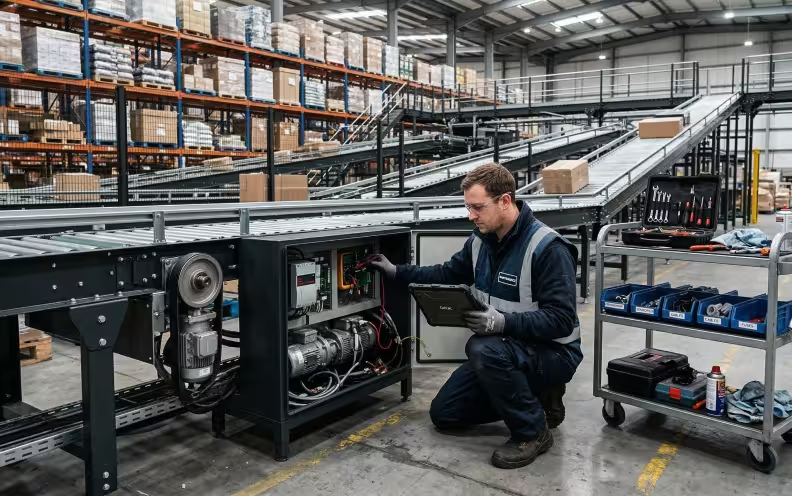
06
Ongoing Maintenance
& Support
ONGOING
We offer preventive maintenance programs, emergency service, belt replacement, spare parts, and system optimization reviews to keep your belt conveyors at peak performance.
Ready to Get Started?
Request a free consultation and let our team design a belt conveyor system built for your operation.
Or all us at 515-635-1555
Why Choose MWS as Your
Belt Conveyor Systems Supplier
We don't just sell belt conveyor equipment — we design, engineer, install, and support complete belt conveyor systems. That's the integrator difference.
MWS vs. Other Belt Conveyor Suppliers — Comparison
| Capability | MWS (Full-Service Integrator) | Equipment-Only Dealer | Online Conveyor Retailer |
|---|---|---|---|
| Custom Belt Conveyor System Design | |||
| Multi-Brand Equipment Access | |||
| Belt Type & Configuration Expertise | |||
| Professional Installation | |||
| Controls & PLC Programming | |||
| WMS / ERP Integration | |||
| Commissioning & Training | |||
| Ongoing Maintenance & Support | |||
| Single Point of Accountability | |||
| 50+ Years of Warehouse Expertise |
Full-Service Belt Conveyor Integration
MWS manages every phase — from initial assessment and design to procurement, installation, PLC programming, WMS integration, and ongoing maintenance. One partner. One accountable team.
50+ Years of Warehouse Expertise
Founded in 1979, MWS brings over five decades of warehouse equipment and conveyor automation experience. We've designed and installed belt conveyor systems for operations of every size.
Top Manufacturer Partnerships
We partner with Hytrol, Dorner, Interroll, Dematic, and others — giving you access to premium belt conveyor equipment at competitive pricing.
Turnkey Automated Conveyor Solutions
From the first site visit to the final commissioning walkthrough and operator training — we handle your entire belt conveyor system project.
Midwest Service Coverage
Based in Iowa, serving belt conveyor installations across IA, IL, IN, MI, MN, MO, OH, WI, KS, NE, ND, and SD — with service teams that respond fast.
Single-Source Accountability
No finger-pointing between equipment vendors, electricians, and software providers. MWS is your single point of contact for your entire belt conveyor system project.
Frequently Asked Questions About Belt Conveyor Systems
Get answers to the most common questions about belt conveyor systems, costs, installation timelines, maintenance, and specifications. These are the questions warehouse managers, operations directors, and facility planners ask most about belt conveyors.
What is a belt conveyor system?
A belt conveyor system is a powered material handling solution that uses a continuous belt — made of rubber, PVC, polyurethane, fabric, or modular plastic — stretched over two or more pulleys to transport products, packages, or bulk materials from one location to another within a warehouse, distribution center, or manufacturing facility. The belt is powered by an electric motor connected to a drive pulley, creating continuous, controlled product movement. Belt conveyor systems can operate horizontally, on inclines up to 30°+ (with cleated or high-friction belts), on declines, and around curves — making them the most geometrically versatile conveyor type available. Modern belt conveyors incorporate sensors, barcode scanners, PLCs, and WMS integration for automated routing, tracking, and product flow management.
What are the main types of belt conveyor systems?
The main types of belt conveyor systems used in warehouse and distribution applications include: Slider bed belt conveyors — the most common and economical type, with the belt sliding over a smooth plate for general-purpose transport. Roller bed belt conveyors — featuring rollers beneath the belt for handling heavier loads over longer distances. Incline and decline belt conveyors — for moving products between different elevations. Cleated belt conveyors — with vertical barriers for steep inclines and bulk materials. Curved belt conveyors — for changing direction around corners. Troughed belt conveyors — shaped into a U-channel for bulk material containment. Telescoping belt conveyors — extendable for truck loading and unloading. Sanitary/washdown belt conveyors — stainless steel construction for food, pharma, and cleanroom applications. Most modern belt conveyor installations combine multiple types to create an integrated material handling system.
How much do belt conveyor systems cost?
Belt conveyor system costs vary based on type, length, automation level, and installation complexity. As a general range: slider bed belt conveyors cost $150–$500 per linear foot; roller bed belt conveyors range from $300–$800 per linear foot; incline belt conveyors run $400–$1,000 per linear foot; and curved belt conveyors cost $800–$2,000 per linear foot. A simple slider bed belt conveyor line for packing or inspection may start under $15,000, while a complete belt conveyor system for a mid-sized warehouse typically ranges from $50,000 to $500,000+ depending on scope and complexity. The best approach is to contact a belt conveyor systems supplier like MWS for a free consultation and custom quote. Call 515-635-1555 for a no-obligation estimate.
What is the difference between a slider bed and roller bed belt conveyor?
A slider bed belt conveyor has the belt sliding over a smooth flat plate (steel or UHMW plastic), while a roller bed belt conveyor has a series of rollers beneath the belt. The key differences: Slider bed — lower cost, ideal for light to medium loads (up to ~150 lbs/ft), best for shorter runs, packing lines, and general-purpose transport. Slightly higher friction means more motor power needed for long runs. Roller bed — rollers reduce friction dramatically, enabling heavier loads (up to 300+ lbs/ft), longer distances, and higher speeds with less motor power. Costs more upfront but handles heavy-duty applications that slider beds cannot. Most MWS belt conveyor designs use slider bed for lighter, shorter sections and roller bed for heavy, long-distance mainlines.
Can belt conveyors handle inclines and declines?
Yes. Belt conveyor systems are one of the few conveyor types that can effectively transport products on inclines and declines. Standard smooth belts handle angles up to approximately 10–15 degrees. Rough-top or textured belts extend capability to 15–25 degrees. Cleated belt conveyors handle steep inclines of 30 degrees to 45+ degrees by using vertical barriers that prevent products from sliding backward. Sidewall cleated belts can even approach vertical angles. The maximum angle depends on product weight, size, belt type, and cleat configuration. MWS engineers calculate the optimal incline angle and belt type for your specific products during the design phase.
What belt speeds are typical for warehouse belt conveyor systems?
Belt conveyor speeds in warehouse applications typically range from 20 FPM to 600+ FPM, depending on the application. Operator loading zones run at 20–65 FPM for safety. Packing and inspection lines operate at 40–100 FPM. Scanning and weighing stations use 80–200 FPM for accurate reads. General mainline transport runs at 200–400 FPM. High-speed sortation feeds reach 400–600+ FPM. Variable frequency drives (VFDs) allow belt conveyor systems to adjust speed automatically based on zone requirements, accumulation needs, and downstream readiness — providing a continuous, optimized flow throughout your facility.
How do belt conveyor systems compare to roller conveyor systems?
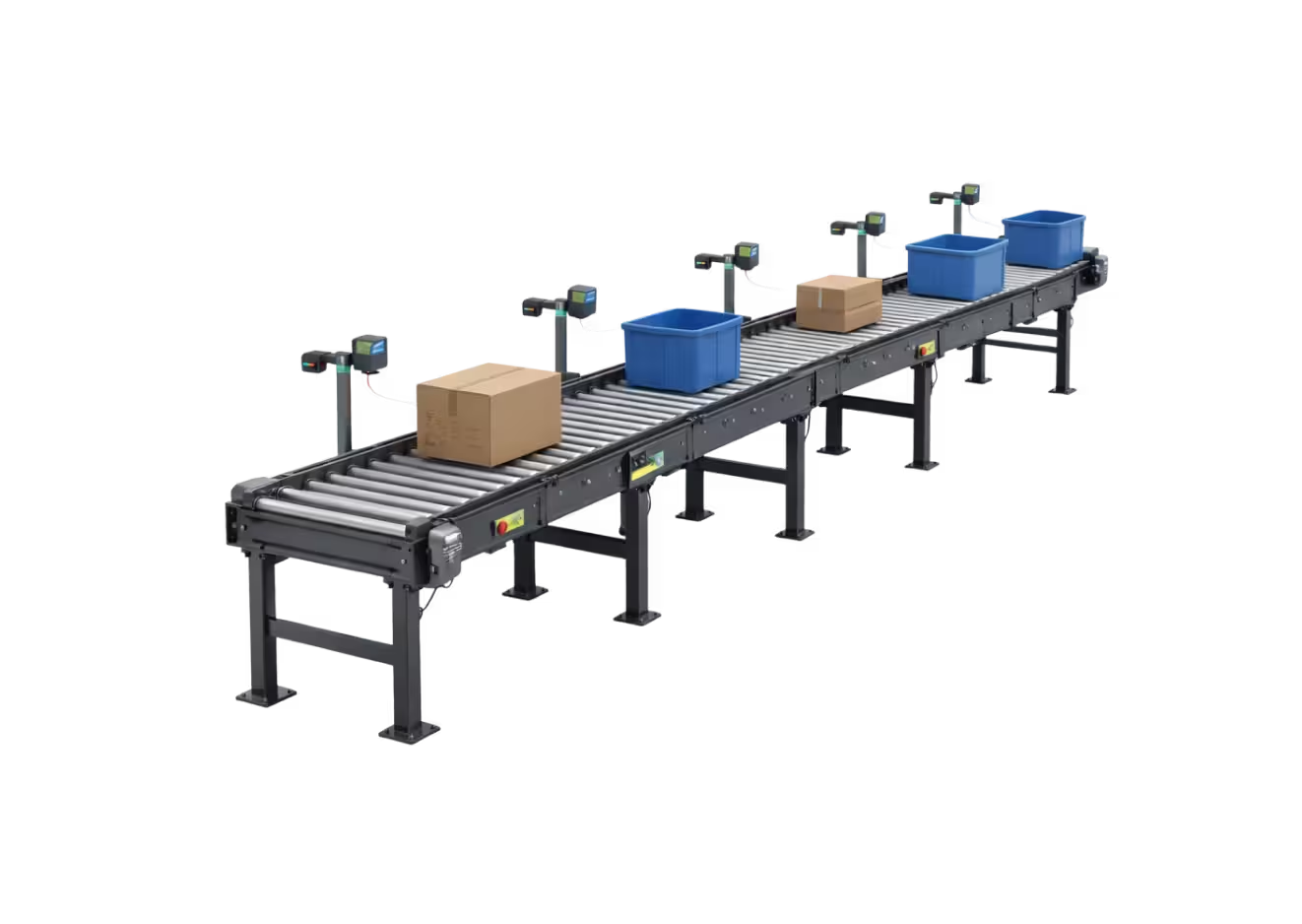
Belt conveyors and roller conveyors each excel in different applications. Belt conveyor systems are superior for: handling polybags, envelopes, and irregularly shaped items; transporting fragile products that need a smooth, continuous surface; incline and decline transport; and mixed-SKU e-commerce fulfillment. Roller conveyors are better for: heavy, rigid, flat-bottomed items like cartons and totes; zero-pressure accumulation zones; and energy efficiency (zone-powered rollers only activate when needed). Most high-performance warehouse operations use both conveyor types together — belt conveyors where versatility and product protection matter, and rollers where heavy-duty accumulation and sortation are the priority.
How long does belt conveyor system installation take?
Belt conveyor system installation timelines depend on system size, complexity, and site conditions. A simple, single-line belt conveyor installation may take 1–3 weeks. A mid-sized system with multiple belt types, inclines, and basic controls typically requires 4–8 weeks for installation and commissioning. A comprehensive multi-zone belt conveyor system with full WMS integration can take 2–4 months from design completion to commissioning. The complete end-to-end project timeline — including consultation, design, procurement, installation, and commissioning — typically ranges from 3–9 months. MWS works with you to develop phased installation plans that minimize disruption to ongoing operations.
What maintenance do belt conveyor systems require?
Regular preventive maintenance is essential for optimal belt conveyor system performance and longevity. Key maintenance activities include: Daily — visual belt inspection, debris removal, tracking verification, and listening for unusual noises. Weekly — belt tension checks, idler/roller inspection, pulley alignment verification, and emergency stop testing. Monthly — bearing lubrication, motor/gearbox inspection, drive component checks, and sensor cleaning. Quarterly — splice and joint inspection, electrical connection checks, sensor calibration, and belt wear analysis. Annually — full system audit including motor testing, belt condition assessment, structural inspection, and performance benchmarking. Modern IoT-enabled belt conveyor systems also support predictive maintenance through real-time monitoring of vibration, temperature, and power consumption.
What belt material should I choose for my belt conveyor system?
The right belt material depends on your product, environment, and application. PVC belts — the most common and economical choice for general warehouse applications; good for packages, cartons, and moderate temperatures. Polyurethane (PU) belts — higher durability and better resistance to oils, chemicals, and wear; preferred for food-grade and higher-demand applications. Rubber belts — excellent for heavy loads, outdoor use, and abrasive materials; highest durability. Fabric belts — lightweight and flexible; good for light-duty applications. Modular plastic belts — interlocking sections that can be replaced individually; easy to clean, ideal for food processing. Silicone belts — high-temperature resistance for baking, heating, or other thermal applications. MWS selects the optimal belt material for your belt conveyor system based on product type, weight, environment, and regulatory requirements.
Can belt conveyor systems integrate with WMS and automation equipment?
Yes. Modern belt conveyor systems integrate seamlessly with all major warehouse management systems (WMS), including SAP, Oracle WMS, Manhattan Associates, Blue Yonder, Körber, HighJump, and many others. Integration is achieved through PLCs that communicate via standard protocols (OPC-UA, APIs, middleware) with your WMS to receive routing instructions, update inventory, and coordinate with other automation systems. Belt conveyors also integrate with barcode scanners, RFID readers, print-and-apply labelers, robotic picking arms, automated storage and retrieval systems (AS/RS), and sortation equipment. MWS handles all WMS and automation integration as part of our turnkey belt conveyor system installation.
Can belt conveyor systems work in cold storage and freezer environments?
Yes. Specialized belt conveyor systems are available for cold storage and freezer environments operating at temperatures as low as -20°F to -40°F. These systems use cold-rated components including: cold-temperature belt material (PVC and PU compounds rated for sub-zero operation); stainless steel or cold-rated steel frames; low-temperature lubricants for bearings and moving parts; sealed motors rated for freezer operation; and moisture-resistant electrical components. Cold storage belt conveyor systems reduce worker exposure to hazardous freezer environments, maintain product integrity through the cold chain, and improve throughput in temperature-sensitive supply chains. MWS designs and installs cold storage belt conveyor systems for food, pharmaceutical, and frozen goods operations across the Midwest.
What industries use belt conveyor systems most?
Belt conveyor systems are the most widely used conveyor type across nearly every industry: E-commerce and retail — for order fulfillment, sortation feeding, and shipping automation. Distribution and 3PL — for mainline transport, cross-docking, and dock loading. Manufacturing and assembly — for production line feeding and work-in-process transport. Food and beverage — for processing, packaging, and cold chain handling. Pharmaceutical — for cleanroom-compliant transport and regulatory fulfillment. Automotive — for parts delivery and assembly line support. Recycling and waste — for sorting lines and scrap handling. Parcel and postal — for package sorting and scanning. Any operation moving products or materials at volume can benefit from belt conveyor automation.
How long do belt conveyor systems last?
A well-maintained belt conveyor system frame and structure can last 20–30+ years. Individual components have different lifecycles: conveyor belts typically last 3–7 years depending on usage, load, and environment (abrasive applications may require more frequent replacement). Motors typically last 10–15 years with proper maintenance. Bearings last 5–10 years depending on load and environment. PLCs and controls can last 15–20 years with software updates. Regular preventive maintenance — including belt tension monitoring, lubrication, alignment checks, and scheduled belt replacements — maximizes the overall lifespan and reliability of your belt conveyor system. MWS offers maintenance programs specifically designed to extend the life of every component.

CLAIM YOUR
FREE
Consultation
Save Time and Money
Free consultation
Request a Free Belt
Conveyor System Quote
Tell us about your operation and our team will design a custom belt conveyor system tailored to your requirements. No obligation. Fast response. 50+ years of expertise behind every recommendation.
Or all us at 515-635-1555
Save time. We will contact you
Provide your details, and we’ll help you find exactly what you need