
Freestanding bridge crane
Freestanding Bridge Cranes from a Trusted Workstation Bridge Crane Supplier & Installer
We design, supply, and install freestanding bridge cranes that deliver overhead lifting coverage for your entire work cell — no building modification required. Self-supporting. Modular. Expandable. From 250 lbs to 4,000 lbs capacity.
Or call a crane specialist now 515-635-1555
Home / Warehouse Equipment / Cranes, Hoists & Rigging System / Fresstanding bridge crane
Freestanding bridge cranes are self-supporting overhead lifting systems that bolt directly to your facility floor — without requiring any modification to your building's roof, walls, or columns. The crane uses its own steel columns and runway system to carry loads, transferring all forces directly to the floor and foundation — not your building structure.
At Midwest Warehouse Solutions (MWS), we are a full-service freestanding bridge crane supplier and workstation crane integrator with over 50 years of experience designing, procuring, installing, and maintaining freestanding bridge crane systems across the Midwest. From a single workstation bridge crane for a machining cell to a multi-bay freestanding crane system covering your entire production floor — we deliver turnkey solutions engineered for your operation.
What Is a Freestanding Bridge Crane?
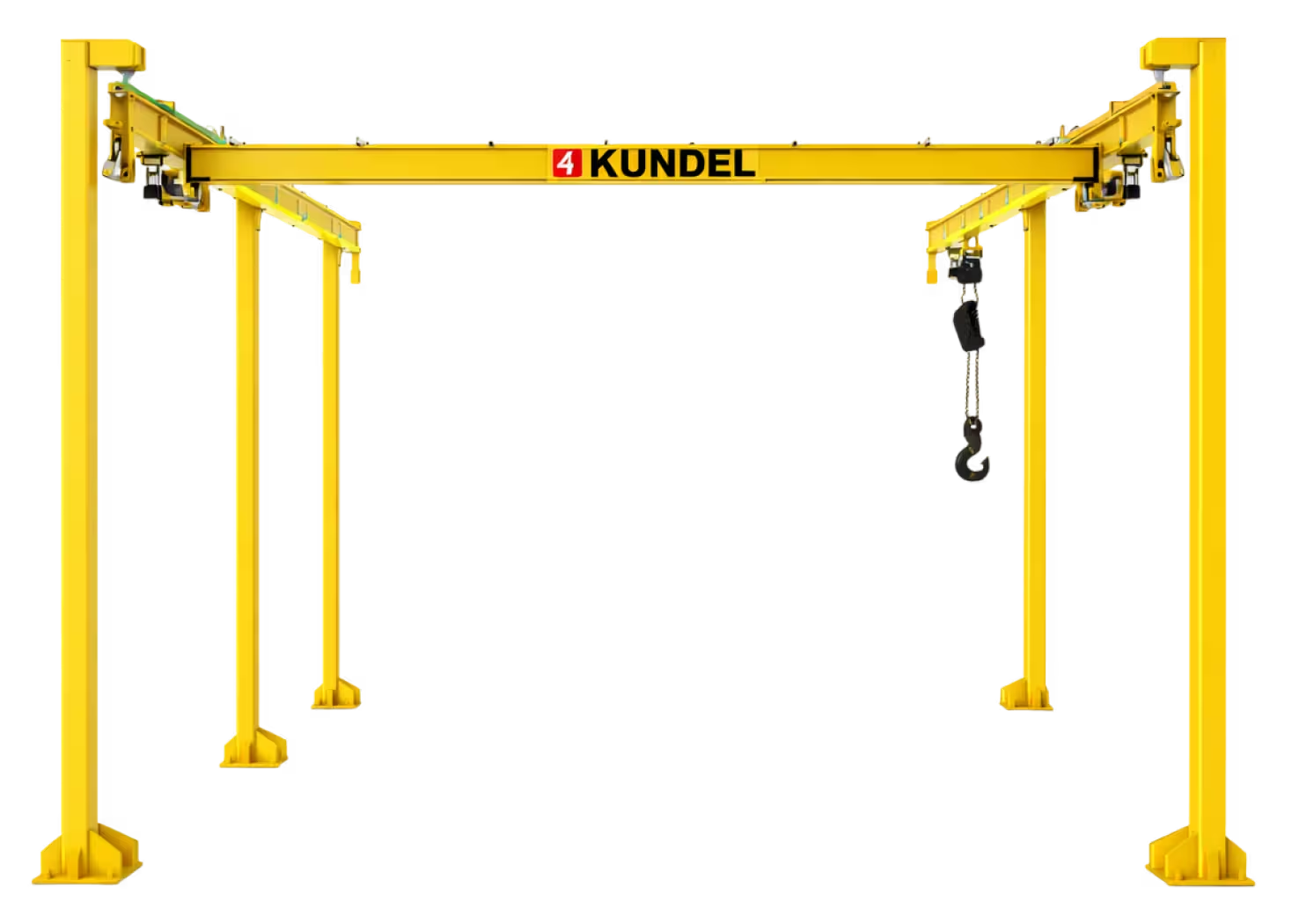
A freestanding bridge crane is a self-supporting overhead lifting system consisting of a bridge (crossbeam) that travels along two parallel runways, which are mounted on their own floor-standing steel columns rather than attached to the building structure. A hoist and trolley ride along the bridge, giving the operator full X-Y-Z axis control to lift, lower, and position loads anywhere within the crane's rectangular coverage area.
The key differentiator of a freestanding bridge crane is structural independence. Because the crane's columns are bolted directly to the floor — typically requiring only a standard 6-inch reinforced concrete slab — there is no load transfer to the building's roof, walls, or existing columns. This makes freestanding bridge cranes the ideal solution when building modification is impractical, prohibited, or cost-prohibitive.
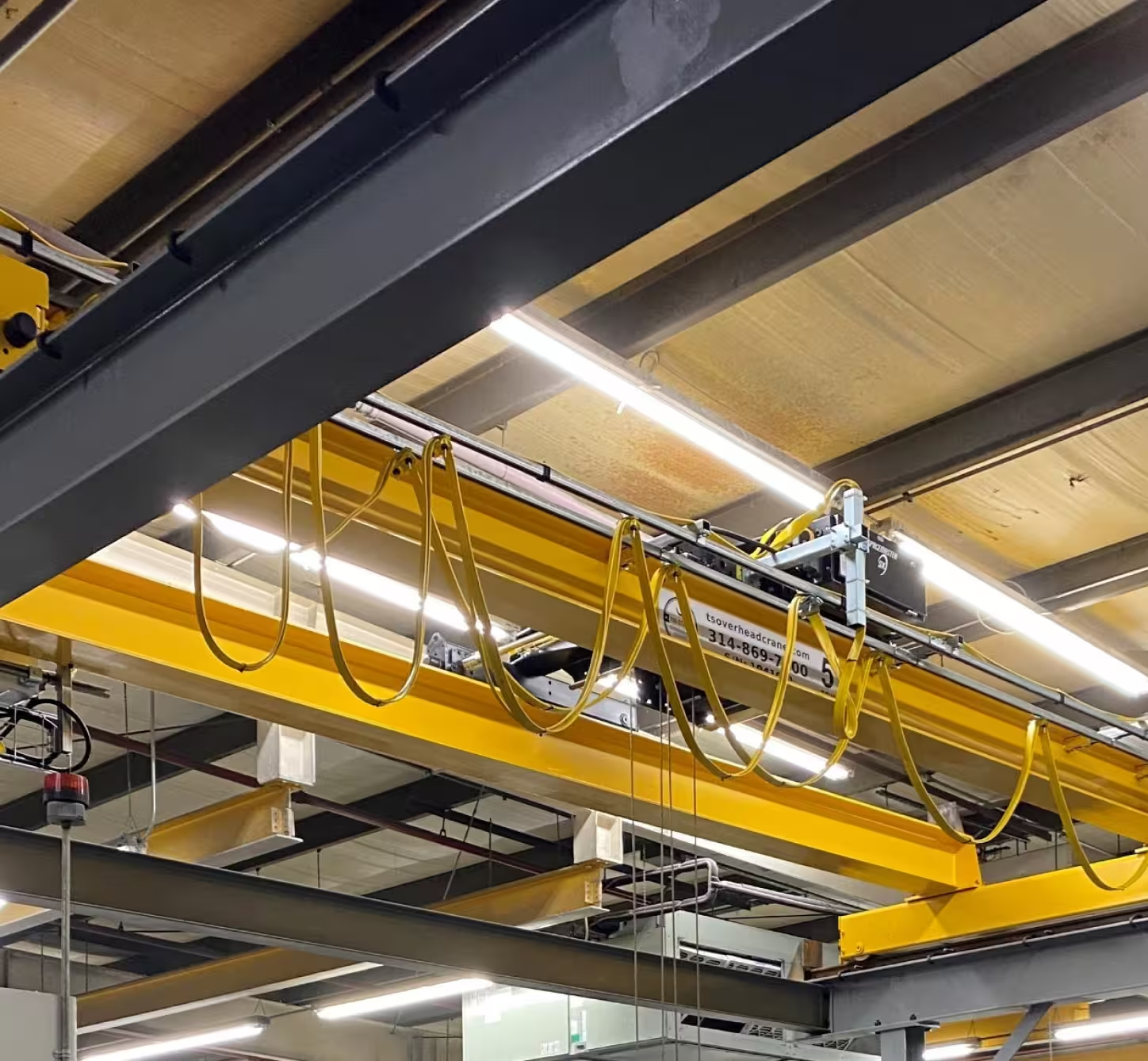
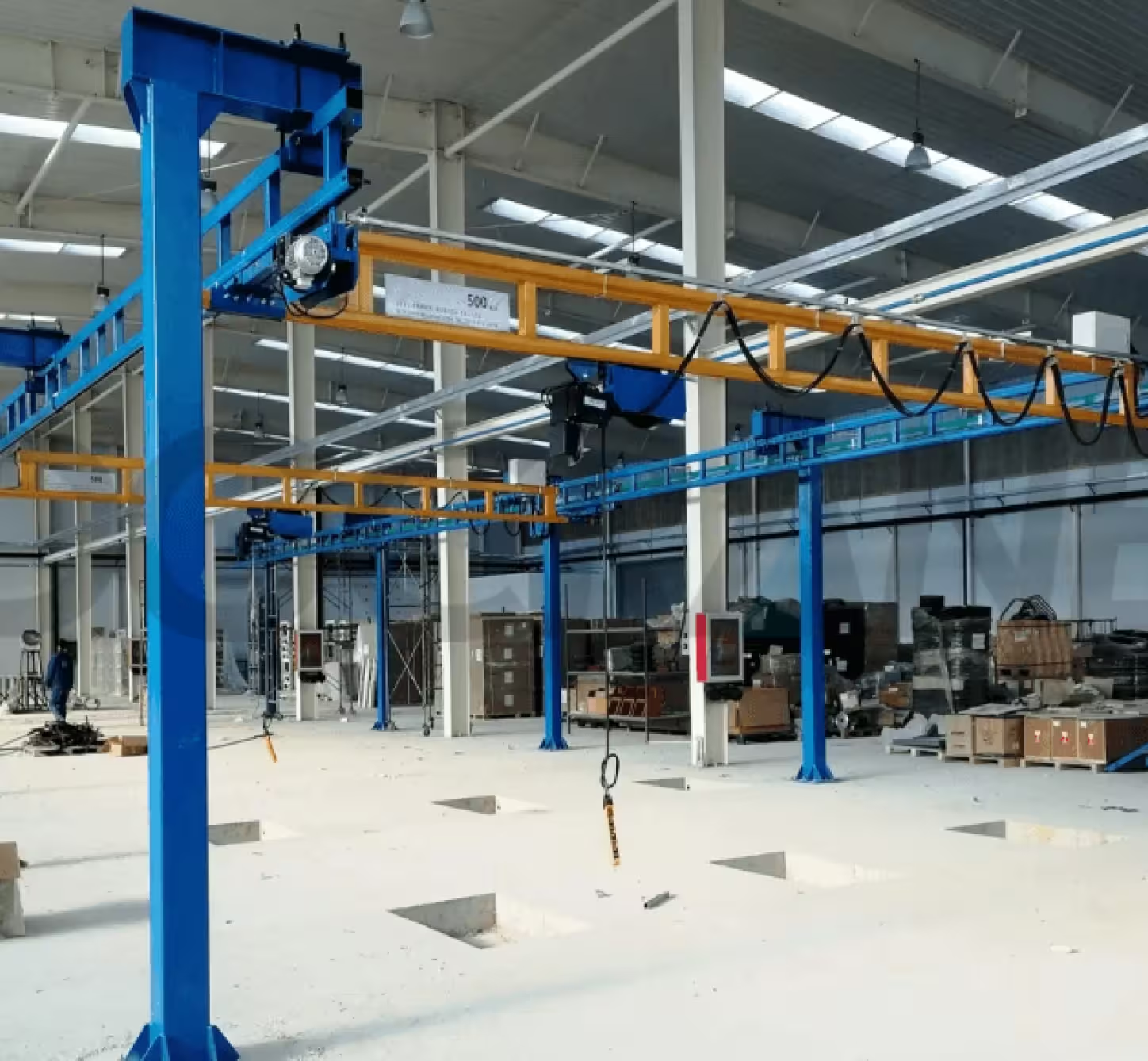
Modern freestanding bridge cranes use enclosed track (also called enclosed rail) rather than traditional I-beam. The enclosed track design reduces friction by up to 50% compared to open I-beam systems, provides a cleaner operating surface (no debris buildup on the track), enables smoother trolley and bridge travel, and extends the life of wheels and bearings. This is why a single operator can manually push loads of 1,000+ lbs on a freestanding workstation bridge crane with minimal effort.
Freestanding bridge cranes — also called workstation bridge cranes, freestanding workstation cranes, or free standing overhead cranes — are among the fastest-growing segments of the industrial crane market. Their modular, bolt-together design makes them ideal for leased buildings, retrofit applications, facilities with weak roof structures, and operations that need the flexibility to expand, reconfigure, or relocate their crane systems as production demands change.
A freestanding bridge crane is a floor-mounted, self-supporting overhead crane system that provides rectangular lifting coverage without any attachment to the building structure — making it the most versatile overhead crane solution for retrofit, leased, and flexible-layout facilities.
Key Components of a Freestanding
Bridge Crane
| Component | Function | Common Options |
|---|---|---|
| Support Columns | Floor-mounted steel columns that carry all crane loads to the foundation | Painted steel, galvanized, stainless steel; bolt-down base plates |
| Runway Beams (Rails) | Horizontal tracks mounted on columns that the bridge travels along | Enclosed track (steel or aluminum), I-beam; lengths from 10' to unlimited |
| Bridge (Crossbeam) | Horizontal beam that spans between runways; hoist and trolley travel along it | Enclosed track or I-beam; spans from 4' to 40' |
| End Trucks | Wheeled assemblies that connect the bridge to the runways and enable bridge travel | Manual or motorized (powered) |
| Hoist & Trolley | Lifting mechanism (hoist) mounted on a wheeled carriage (trolley) that rides along the bridge | Manual chain hoist, electric chain hoist, air hoist; capacities 250–4,000 lbs |
| Base Plates & Anchors | Steel plates and anchor bolts that secure columns to the concrete floor | Wedge anchors, epoxy anchors; sized for load and seismic zone |
| Controls & Power | Controls & PowerElectrical systems for powered hoists and motorized bridge/trolley travel | Pendant controls, radio remote, festoon or cable reel power |
| Safety Devices | Systems to prevent overtravel, overload, and collisions | Limit switches, overload protection, bumpers, end stops |
Component
Support Columns
Function:
Floor-mounted steel columns that carry all crane loads to the foundation
Common Options:
Painted steel, galvanized, stainless steel; bolt-down base plates
Runway Beams (Rails)
Function:
Horizontal tracks mounted on columns that the bridge travels along
Common Options:
Enclosed track (steel or aluminum), I-beam; lengths from 10' to unlimited
Bridge (Crossbeam)
Function:
Horizontal beam that spans between runways; hoist and trolley travel along it
Common Options:
Enclosed track or I-beam; spans from 4' to 40'
End Trucks
Function:
Wheeled assemblies that connect the bridge to the runways and enable bridge travel
Common Options:
Manual or motorized (powered)
Hoist & Trolley
Function:
Lifting mechanism (hoist) mounted on a wheeled carriage (trolley) that rides along the bridge
Common Options:
Manual chain hoist, electric chain hoist, air hoist; capacities 250–4,000 lbs
Base Plates & Anchors
Function:
Steel plates and anchor bolts that secure columns to the concrete floor
Common Options:
Wedge anchors, epoxy anchors; sized for load and seismic zone
Controls & Power
Function:
Controls & PowerElectrical systems for powered hoists and motorized bridge/trolley travel
Common Options:
Pendant controls, radio remote, festoon or cable reel power
Safety Devices
Function:
Systems to prevent overtravel, overload, and collisions
Common Options:
Limit switches, overload protection, bumpers, end stops
Self-Supporting
Crane loads transfer to the floor, not
the building structure
Modular & Bolt-Together
No field welding required; columns
anchored by four bolts each
Expandable
Add columns, extend runways, add
bridges at any time
Multiple Bridges
Multiple bridges (same or mixed capacities)
can share one runway system
Enclosed Track Design
Reduces friction up to 50% vs. I-beam;
cleaner, smoother operation
Full X-Y-Z Coverage
Bridge travels along runways (X),
trolley along bridge (Y), hoist
lifts/lowers (Z)
Relocatable
Unbolt and move to a new location
or building
Manual or Powered
Available with manual push/pull or
motorized bridge and trolley travel
How a Freestanding
Bridge Crane Works
A freestanding bridge crane gives your operator full X-Y-Z axis control to lift, move, and position loads anywhere within a rectangular coverage area — all without touching the building structure.
01
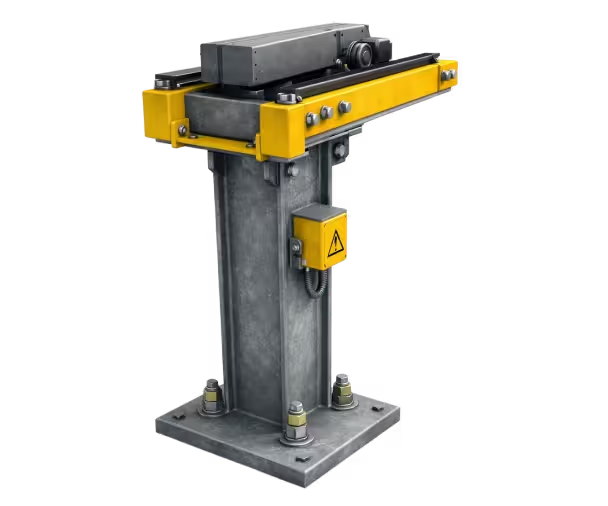
Floor-Mounted Columns
Steel columns bolt directly to your concrete floor — no attachment to the building's roof, walls, or structure. All crane loads transfer to the floor and foundation.
02
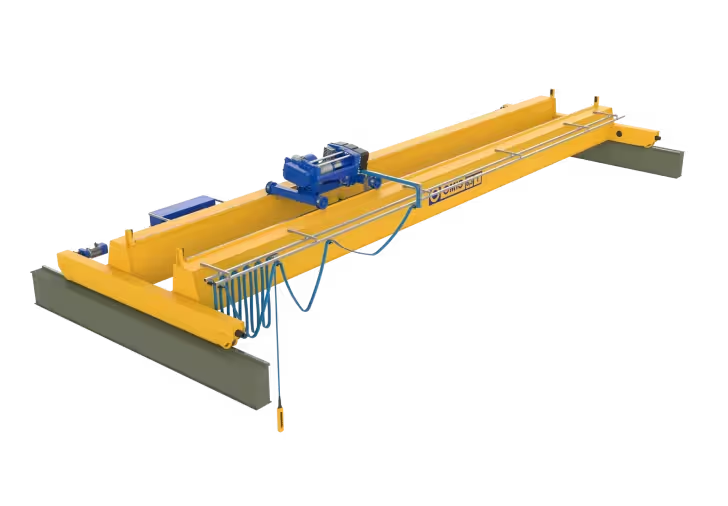
Bridge Travels Along Runways
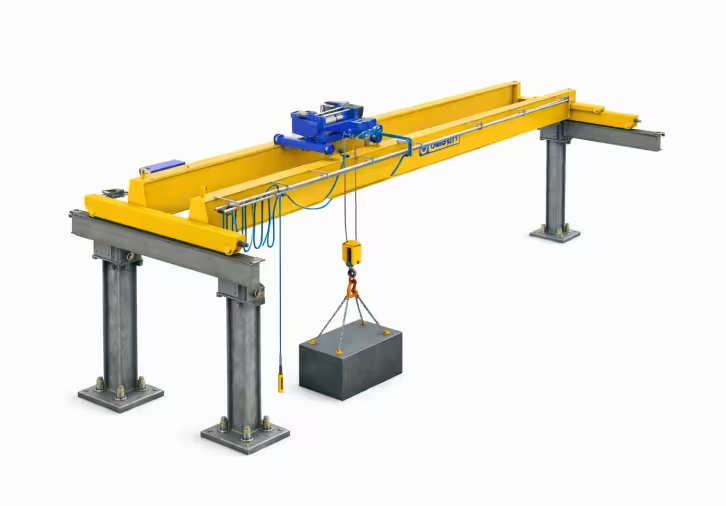
Two parallel runways (enclosed track) are mounted on top of the columns. The bridge beam rides along these runways, covering the full length of your work area (X-axis).
03
Hoist & Trolley Position Your Load
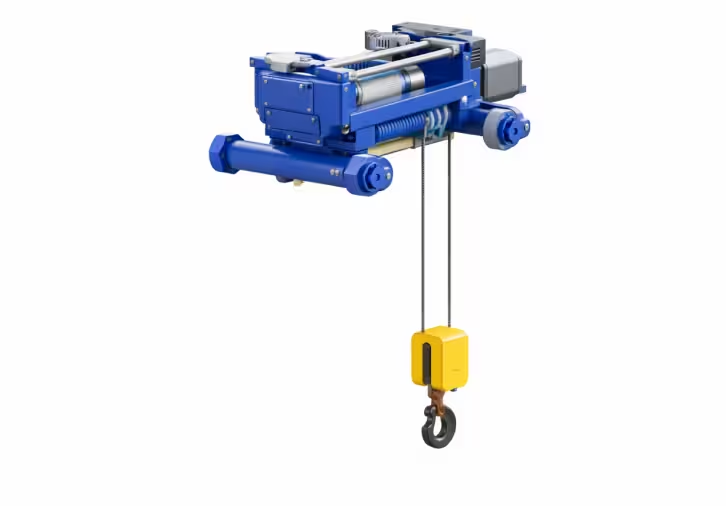
A hoist and trolley ride along the bridge, traveling side to side (Y-axis) while the hoist lifts and lowers your load (Z-axis). One operator controls all three axes.
05
Full Rectangular Coverage
The result: complete X-Y-Z lifting coverage across your entire work cell. Self-supporting, modular, expandable — and zero building modification required.
Not Sure Which Belt Conveyor
Type Is Right for Your Operation?
Talk to a belt conveyor specialist who can evaluate your needs and recommend the
best solution for your facility.
Call 515-635-1555 for a
free consultation
Key Benefits of Freestanding
Bridge Cranes
Freestanding bridge cranes improve worker productivity by up to 28% compared to manual lifting, reduce workplace injuries, and deliver immediate ROI through faster cycle times, reduced labor costs, and operational flexibility that no other crane type can match in retrofit and flexible-layout applications.
| Benefit | Impact | Key Data Point |
|---|---|---|
| No Building Modification | Install without touching roof, walls, or columns | Standard 6" concrete floor is all you need |
| Self-Supporting Structure | Independent load path — no building dependency | Forces transfer directly to floor/foundation |
| Ergonomic Lifting | Reduce manual lifting strain and repetitive motion injuries | Up to 28% productivity increase |
| Modular & Expandable | Add columns, runways, and bridges as needs grow | Unlimited runway length |
| Relocatable | Unbolt and move to new location when needed | Ideal for leased buildings |
| Enclosed Track Design | Smoother, easier operation than I-beam | Up to 50% less friction |
| Multi-Bridge Capability | Multiple bridges share one runway system | Mixed-capacity configurations available |
| Fast Installation | Bolt-together assembly, no welding | Often installed in 1–3 days |
| Low Maintenance | Enclosed track = less debris, less wear | 10-year / 20,000-hour warranties available |
| Full Area Coverage | Rectangular coverage area for complete work cell access | Up to 40' span × unlimited length |
| Improved Cycle Times | Faster material handling = more output per shift | Measurable throughput gains |
| Worker Safety | Eliminate manual lifting of heavy parts and materials | Reduce workplace injury claims |
Benefit
No Building Modification
Impact:
Install without touching roof, walls, or columns
Key Data Point:
Standard 6" concrete floor is all you need
Self-Supporting Structure
Impact:
Independent load path — no building dependency
Key Data Point:
Forces transfer directly to floor/foundation
Ergonomic Lifting
Impact:
Reduce manual lifting strain and repetitive motion injuries
Key Data Point:
Up to 28% productivity increase
Modular & Expandable
Impact:
Add columns, runways, and bridges as needs grow
Key Data Point:
Unlimited runway length
Relocatable
Impact:
Unbolt and move to new location when needed
Key Data Point:
Ideal for leased buildings
Enclosed Track Design
Impact:
Smoother, easier operation than I-beam
Key Data Point:
Up to 50% less friction
Multi-Bridge Capability
Impact:
Multiple bridges share one runway system
Key Data Point:
Mixed-capacity configurations available
Fast Installation
Impact:
Bolt-together assembly, no welding
Key Data Point:
Often installed in 1–3 days
Low Maintenance
Impact:
Enclosed track = less debris, less wear
Key Data Point:
10-year / 20,000-hour warranties available
Full Area Coverage
Impact:
Rectangular coverage area for complete work cell access
Key Data Point:
Up to 40' span × unlimited length
Improved Cycle Times
Impact:
Faster material handling = more output per shift
Key Data Point:
Measurable throughput gains
Worker Safety
Impact:
Eliminate manual lifting of heavy parts and materials
Key Data Point:
Reduce workplace injury claims
Zero
No Building Modification Required
The crane's own columns and base plates carry all loads directly to the floor. Install in leased buildings, weak-roof facilities, or any space where overhead crane installation was previously impossible
100%
Self-Supporting, Independent Load Path
Every force — dead load, live load, dynamic load — travels down through the crane's own columns to the floor slab. The building is completely unaffected
28%
Ergonomic Material Handling
Enclosed track reduces friction so an operator can manually push a 1,000+ lb load with one hand. Reduces physical strain, fatigue, and repetitive motion injuries.
∞
Enhanced Order Accuracy
Start with a single-bay system and expand at any time. Add columns to extend runways. Add additional bridges for more lifting points. Grows with your operation.
Mobile
Relocatable — Take It With You
Bolted (not welded) to the floor, you can disassemble and relocate the entire system. Moving buildings? Reconfiguring your floor? The crane moves with you.
50%
Enclosed Track — Smoother, Cleaner
Trolley wheels ride inside the rail — less friction, less wheel wear, less maintenance, and smoother load positioning than open I-beam systems.
Multi
Multiple Bridges, Mixed Capacities
A single runway system can support multiple bridges — even at different capacities. Four 500 lb bridges on a 2,000 lb runway, all operating side by side.
1-3 days
Fast Installation — Days, Not Weeks
Each column is anchored with four bolts — no welding, no concrete footers, no building modification. A typical single-bay system installed in 1–3 days.
Get an Accurate Freestanding
Bridge Crane Quote
Schedule a free consultation with our team. We'll evalTell us about your lifting needs and we'll provide a detailed freestanding bridge crane quote — including equipment, hoist, installation, and commissioning.
uate your operation and recommend the best solution.
Call 515-635-1555 for a
free consultation
01 Floor Supported Bridge
Cranes Up to 3 Tons
Powered by Kundel KTRAC®
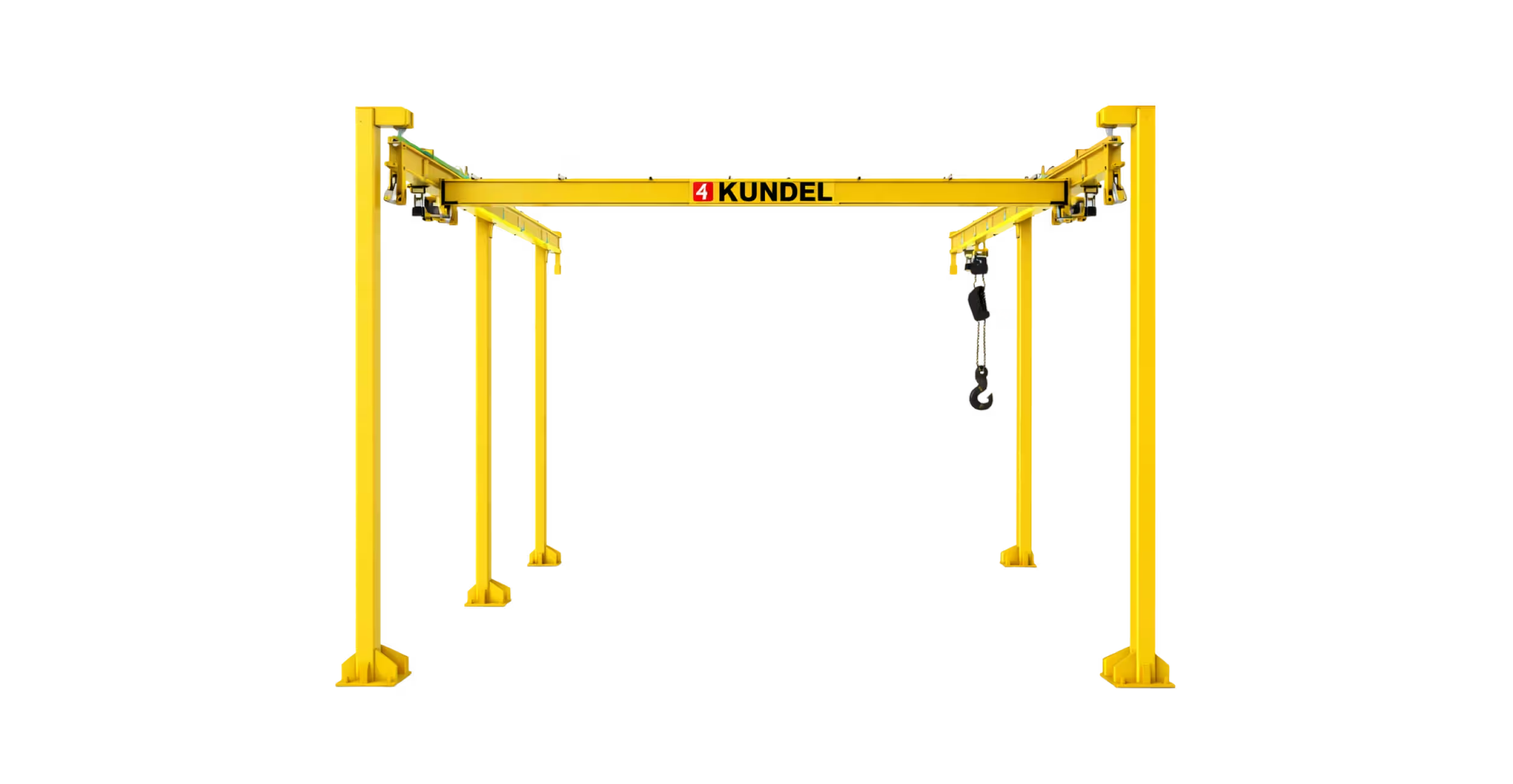
Floor supported bridge cranes in the 3-ton class are the workhorses of modern manufacturing and assembly facilities. These freestanding bridge crane systems bolt directly to your concrete floor, require no tiebacks to building structure, and deliver push-pull manual operation — allowing a single operator to effortlessly move loads of 1,000 lbs or more by hand. MWS features the Kundel KTRAC® Custom Crane Kit as our flagship floor supported bridge crane for applications up to 3 tons.
The KTRAC® crane system has been scientifically proven and well documented to move far easier than the competition, with nearly 30% more square footage coverage than any other competing product. Its open-end (headerless) design, raised bridge ends, and all cast steel endtrucks set it apart as the premier push-pull bridge crane system in the industry. Available in 1, 2, and 3-ton configurations, KTRAC® bridge cranes serve manufacturing, assembly, machining, warehousing, and maintenance applications throughout the Midwest.
Key Benefits
80 grade high yield steel
Construction throughout for unmatched strength-to-weight ratio
Internal conductor bar
Eliminates festooning entirely — no cable management required
Modular and reconfigurable
Adapt the system as your operations change
Shortest endtruck approach in the industry
Maximize usable work area under the crane
No tiebacks required
Completely self-supporting structure; zero building attachment
4-point adjustable support columns
With jack-studs — no shimming required for precise leveling
10:1 safety factor
Built into every component
Lifetime warranty available
On structural components
Exceeds CMAA industry standards
For freestanding bridge crane design and performance
| Specification | KTRAC® Value |
|---|---|
| Lifting Capacity | Max 3 Ton (1/2, 1, 2, 3 ton configurations) |
| Installation Time | 12×12×12 system installed in under 6 hours |
| Material | 80 grade high yield steel |
| Internal Electric | Internal conductor bar — eliminates festooning |
| Modular | Reconfigure to meet specific operational needs |
| Trolleys/Endtrucks | Shortest approach in the industry |
| Lengths | Max span 47' – Max run 44' |
| Post Plates | Fully adjustable for precise leveling |
| Posts | NO tiebacks required |
| Support Locations | Can be varied along the runway |
| Custom | Built to customer requirements |
02 Ceiling Hung Bridge Cranes
Up to 3 Tons
Powered by Kundel KTRAC® Ceiling
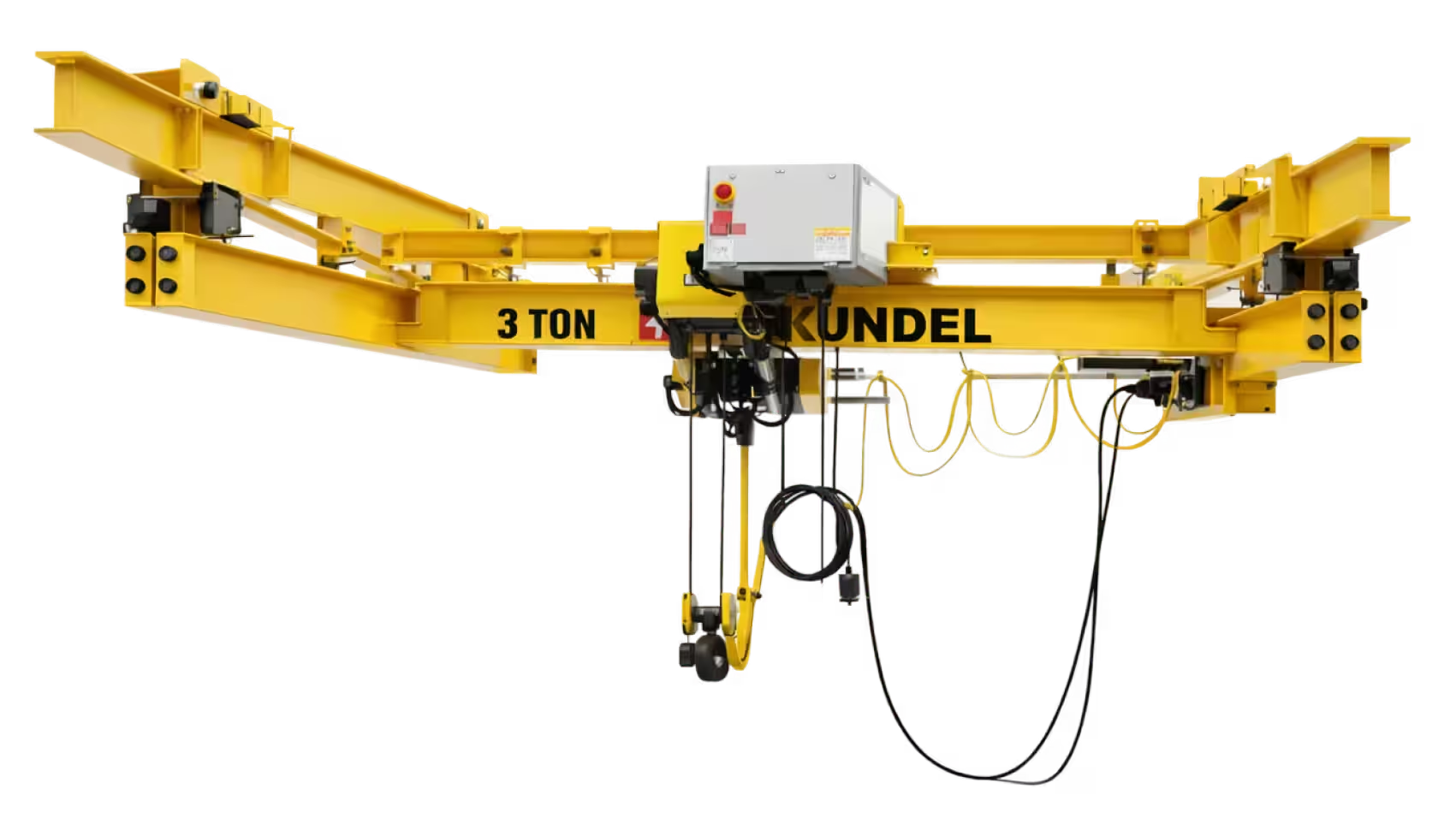
Ceiling hung bridge cranes deliver the same outstanding lifting performance and KTRAC® quality as floor supported systems — but without any floor columns. Instead, the runway system is suspended from the building’s ceiling or roof structure using fully adjustable ceiling hangers. This configuration preserves 100% open floor space beneath the crane, making it the ideal freestanding bridge crane solution for facilities where floor space is at a premium, or where columns would interfere with material flow, vehicle paths, or equipment placement.
The Kundel KTRAC® ceiling crane system features the same 80 grade high yield steel construction, internal conductor bar, and industry-shortest endtruck approach as the floor mounted version. The ceiling hangers include a spherical connection that provides automatic self-leveling — eliminating the need for shimming and ensuring precise runway alignment regardless of ceiling variations. Support hanger locations can be varied along the runway to match your ceiling structure.
Key Benefits
100% open floor space
No columns taking up work area or restricting material flow
Fully adjustable ceiling hangers
For precise runway alignment and leveling
Auto-leveling via spherical connection
Self-adjusting for accurate installation
Same KTRAC® quality
80 grade steel, internal conductor bar, modular design
Ideal for
Assembly lines, packaging cells, machine work areas, and cleanrooms
Support
Hanger locations varied along runway to match building structure
| Specification | KTRAC® Ceiling Value |
|---|---|
| Lifting Capacity | Max 3 Ton |
| Installation Time | 12×12×12 system installed in under 6 hours |
| Material | 80 grade high yield steel |
| Internal Electric | Internal conductor bar — eliminates festooning |
| Modular | Reconfigure to meet specific operational needs |
| Trolleys/Endtrucks | Shortest approach in the industry |
| Lengths | Max span 47' – Max run 44' |
| Post Plates | Fully adjustable for precise leveling |
| Posts | Spherical connection gives auto leveling |
| Support Locations | Can be varied along the runway |
| Custom | Built to customer requirements |
03 Floor Supported Bridge Cranes
Up to 5 Tons
Kundel STRAC® & CraneWerks
When your lifting requirements step up to the 2.5 to 5-ton range, or when you need fully motorized VFD-controlled bridge travel for high-frequency or long-distance moves, the floor supported bridge crane solution shifts to motorized systems engineered for heavier industrial work. MWS partners with Kundel STRAC® and CraneWerks to provide the best-in-class floor supported bridge cranes in this capacity range.
The Kundel STRAC® system is a motorized freestanding bridge crane featuring variable frequency drive (VFD) controls, built-in dynamic braking, wireless pendant option, and external conductor bar that eliminates festooning entirely.
Like the KTRAC®, the STRAC® requires no tiebacks and installs in half the time of competing systems.
CraneWerks brings over 25 years of industry leadership in freestanding runway systems. CraneWerks systems are factory-tested, PE-approved, and available in single-girder and double-girder configurations with spans reaching up to 104 feet. For applications requiring heavy-duty structural performance with complete engineering documentation, CraneWerks freestanding bridge cranes represent the top tier of the industry.
Key Benefits
80 grade high yield steel
Construction throughout for unmatched strength-to-weight ratio
Internal conductor bar
Eliminates festooning entirely — no cable management required
Modular and reconfigurable
Adapt the system as your operations change
Shortest endtruck approach in the industry
Maximize usable work area under the crane
No tiebacks required
Completely self-supporting structure; zero building attachment
4-point adjustable support columns
With jack-studs — no shimming required for precise leveling
10:1 safety factor
Built into every component
Lifetime warranty available
On structural components
| Specification | KTRAC® Ceiling Value |
|---|---|
| Lifting Capacity | Max 5 Ton (2.5 and 3.5 ton trolley options) |
| Installation Time | 1/2 that of competitor |
| Material | 80 grade high yield steel |
| Internal Electric | External conductor bar — eliminates festooning |
| Modular | Reconfigure to meet specific operational needs |
| Trolleys/Endtrucks | Built-in dynamic braking |
| Lengths | Max span 50' – Max run 50' |
| Post Plates | Inverted control travel – VFD |
| Posts | NO tiebacks required |
| Support Locations | Can be varied along the runway |
| Custom | Built to customer requirements |
04 Ceiling Hung Bridge Cranes
Up to 5 Tons
Kundel STRAC® & CraneWerks
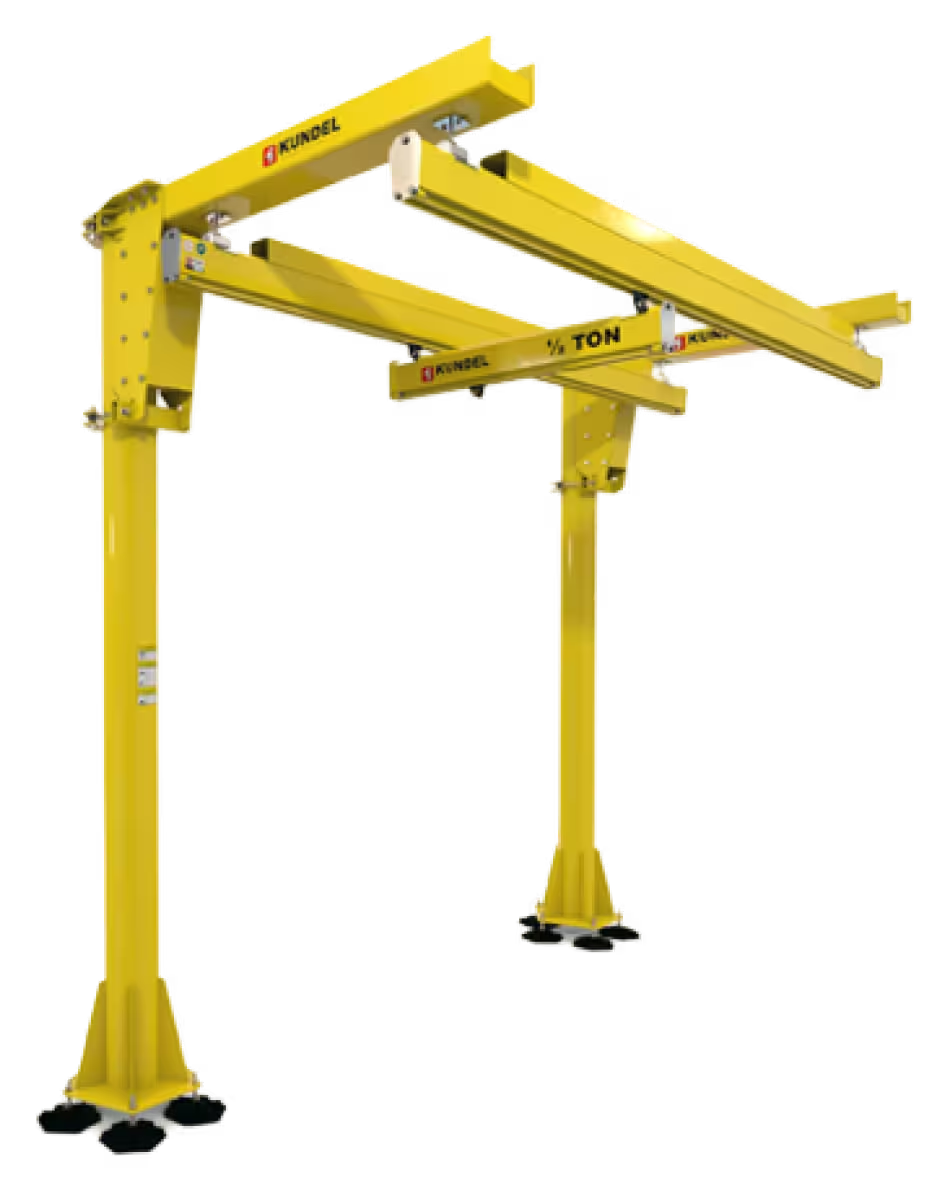
Ceiling hung bridge cranes in the 5-ton class combine the floor-space advantages of a ceiling-mounted system with the full power of motorized VFD-controlled operation. The Kundel STRAC® Ceiling system is designed for facilities where columns are not an option — assembly lines with floor-level conveyors, machine cells with tight floor layouts, packaging lines, or any environment where maximizing usable floor area is essential to operations.
With spans up to 55 feet and runs up to 55 feet, the STRAC® Ceiling system covers substantial work areas while keeping the entire floor clear for material flow and operator movement. All the advanced motorized features of the floor-mounted STRAC® are present — VFD controls, dynamic braking, external conductor bar — in a ceiling-hung configuration that requires a structural assessment of the building’s roof or ceiling to verify adequate support capacity. MWS manages this assessment as part of our site evaluation process.
| Specification | KTRAC® Ceiling Value |
|---|---|
| Lifting Capacity | Max 5 Ton |
| Installation Time | 1/2 that of competitor |
| Material | 80 grade high yield steel |
| Internal Electric | External conductor bar — eliminates festooning |
| Modular | Reconfigure to meet specific operational needs |
| Trolleys/Endtrucks | Built-in dynamic braking |
| Lengths | Max span 55' – Max run 55' |
| Post Plates | Inverted control travel – VFD |
| Posts | NO floor columns required (ceiling hung) |
| Support Locations | Can be varied along the runway |
| Custom | Built to customer requirements |
Need 10 Tons or More
of Lifting Capacity?
For facilities requiring 10 tons and above, MWS offers both Kundel and Cranewerks crane solutions, delivering scalable and highly customizable systems. For higher-capacity requirements, Cranewerks provides greater lifting limits and expanded capabilities.
For facilities requiring up to 10 tons, the Kundel TTRAC system is a reliable and efficient solution.
Or all us at 515-635-1555
Key Benefits of Freestanding
Bridge Cranes
Freestanding bridge cranes improve worker productivity by up to 28% compared to manual lifting, reduce workplace injuries, and deliver immediate ROI through faster cycle times, reduced labor costs, and operational flexibility that no other crane type can match in retrofit and flexible-layout applications.
|
|
|
|---|---|---|
| Feature | Floor Supported | Ceiling Hung |
| Mounting | Bolted to concrete floor via steel columns | Attached to building ceiling/roof structure via hangers |
| Floor Space Impact | Columns occupy some floor space at perimeter | 100% open floor space — zero floor obstructions |
| Building Modification | None — self-supporting structure; bolts to floor only | Requires structural assessment of roof/ceiling capacity |
| Weight Capacity | Up to 10 tons (TTRAC®) | Up to 5 tons (STRAC® Ceiling) |
| Max Span | Up to 55' (TTRAC® / STRAC®) | Up to 55' (STRAC® Ceiling) |
| Installation | Faster — no building structural assessment needed | Requires PE evaluation of building ceiling/roof structure |
| Relocation | Easy — unbolt columns and move | More complex — depends on building structure at new location |
| Concrete Requirement | 6–8" reinforced concrete slab | N/A — ceiling mounted (floor slab not loaded) |
| Best For | Leased buildings, flexible layouts, relocatable crane needs | Maximize floor space, permanent installations, tight floor layouts |
| Ideal Industries | Manufacturing, assembly, warehousing, maintenance shops | Assembly lines, packaging, machine cells, cleanrooms |
Floor Supported
Feature
| Mounting | Bolted to concrete floor via steel columns |
| Floor Space Impact | Columns occupy some floor space at perimeter |
| Building Modification | None — self-supporting structure; bolts to floor only |
| Weight Capacity | Up to 10 tons (TTRAC®) |
| Max Span | Up to 55’ (TTRAC® / STRAC®) |
| Installation | Faster — no building structural assessment needed |
| Relocation | Easy — unbolt columns and move |
| Concrete Requirement | 6– 8" reinforced concrete slab |
| Best For | Leased buildings, flexible layouts, relocatable crane needs |
| Ideal Industries | Manufacturing, assembly, warehousing, maintenance shops |
Ceiling Hung
Feature
| Mounting | Attached to building ceiling/roof structure via hangers |
| Floor Space Impact | 100% open floor space — zero floor obstructions |
| Building Modification | Requires structural assessment of roof/ceiling capacity |
| Weight Capacity | Up to 5 tons (STRAC® Ceiling) |
| Max Span | Up to 55’ (STRAC® Ceiling) |
| Installation | Requires PE evaluation of building ceiling/roof structure |
| Relocation | More complex — depends on building structure at new location |
| Concrete Requirement | N/A — ceiling mounted (floor slab not loaded) |
| Best For | Maximize floor space, permanent installations, tight floor layouts |
| Ideal Industries | Assembly lines, packaging, machine cells, cleanrooms |
Not Sure Which Is Right for You?
MWS crane specialists evaluate your facility, workflow, ceiling structure, and lifting requirements to recommend the optimal freestanding bridge crane configuration — floor supported or ceiling hung. Call 515-635-1555 or request a free consultation below.
Ready to Configure
Your Freestanding Bridge Crane?
Whether floor supported or ceiling hung, 3-ton or 10-ton — our crane specialists will design the right system for your facility. Free consultation. Turnkey installation. Midwest coverage.
Or all us at 515-635-1555
Freestanding Bridge Crane Cost Guide
One of the most common questions we receive: "How much do freestanding bridge cranes cost?" The answer depends on the type, capacity, span, number of bridges, and installation requirements. Here is a transparent breakdown.
Freestanding Bridge Crane Cost by Type
| Crane Configuration | Equipment Cost | Installation | Total Project | What's Included |
|---|---|---|---|---|
| Single bridge 250–500 lbs, 15–20' span | $5,000–$15,000 | $2,000–$5,000 | $7,000–$20,000 | Columns, runways, bridge, end trucks, base plates, anchors |
| Single bridge 1,000 lbs, 20–25' span | $10,000–$25,000 | $3,000–$8,000 | $13,000–$33,000 | Above + electric hoist, festoon power, pendant control |
| Single bridge 2,000 lbs, 25–30' span | $20,000–$40,000 | $5,000–$12,000 | $25,000–$52,000 | Above + motorized bridge/trolley, heavier columns |
| Single bridge 4,000 lbs, 30' span | $30,000–$55,000 | $8,000–$15,000 | $38,000–$70,000 | Truss-style bridge, heavy-duty columns, powered operation |
| Multi-bridge system (2–4 bridges) | $25,000–$80,000 | $8,000–$20,000 | $33,000–$100,000 | Multiple bridges, shared runway, mixed capacities |
| Heavy-duty top-running (1–5 ton) | $40,000–$120,000 | $15,000–$40,000 | $55,000–$160,000 | I-beam runways, heavy columns, possible foundation work |
| Stainless steel / washdown | $15,000–$60,000 | $5,000–$15,000 | $20,000–$75,000 | Stainless components, FDA-grade finishes |
Key Factors That Affect
Freestanding Bridge Crane Cost
Capacity (Load Rating)
Higher capacity = heavier columns, runway, bridge = higher cost. A 4,000 lb system costs roughly 3–4x more than a 250 lb system.
Bridge Span
Wider spans require stronger track sections. Cost increases significantly above 25'.
Runway Length
Longer runways = more columns, more track, more base plates. Cost increases linearly.
Number of Bridges
Each additional bridge adds cost, but shared runway systems are more economical.
Manual vs. Powered
Manual systems are less expensive. Powered adds $3,000–$10,000+ per bridge.
Hoist Type
Manual chain hoists are most economical. Electric chain hoists add $1,000–$5,000.
Track Material
Steel is standard. Aluminum is lighter but more expensive. Stainless is the most expensive.
Installation Complexity
Standard bolt-down is straightforward. Foundation work adds cost.
Floor/Foundation Conditions
Weak or uneven floors may require remediation.
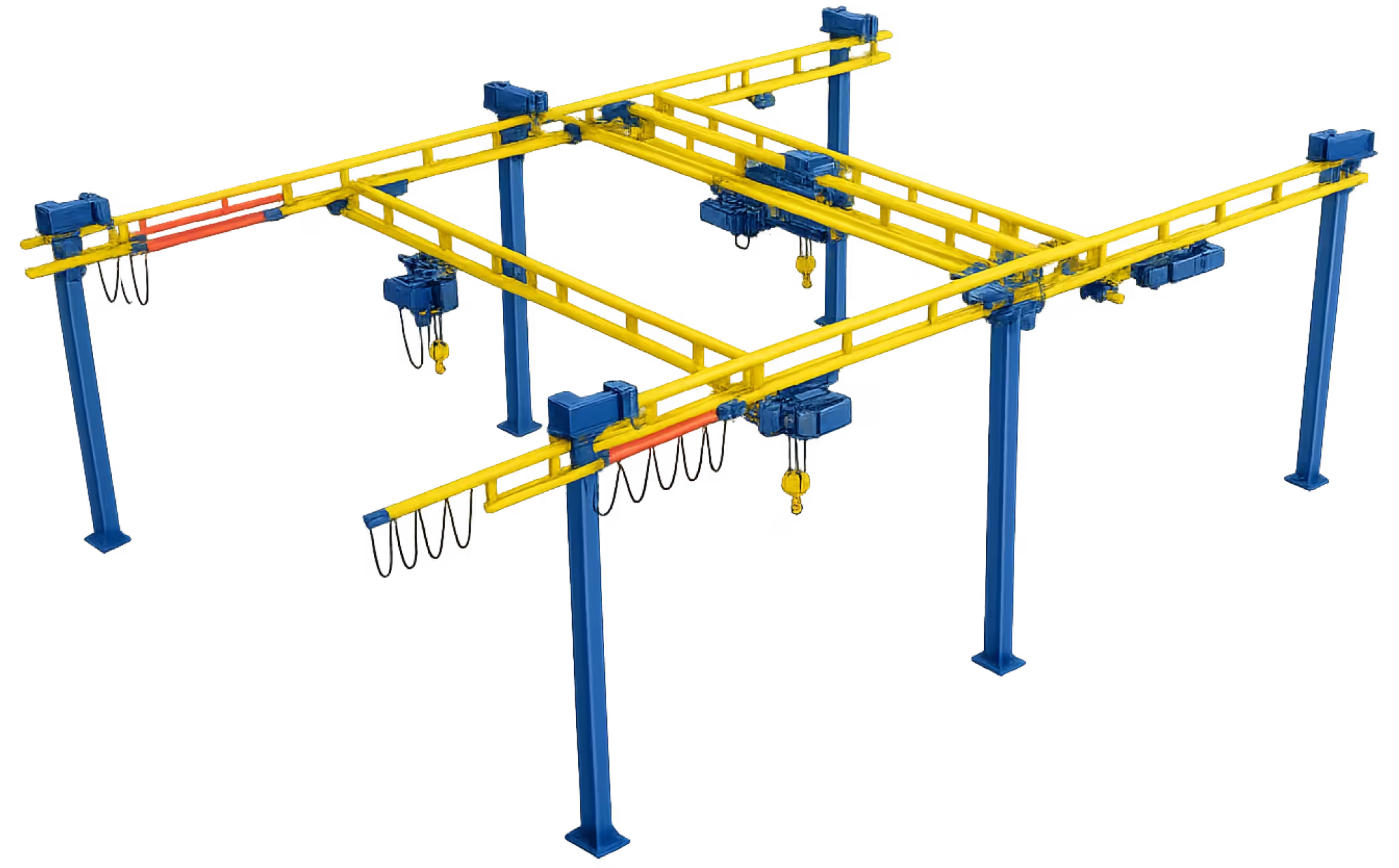
Bottom Line
A complete single-bridge freestanding bridge crane system for a typical work cell ranges from $10,000 to $50,000 depending on capacity, span, and features. Multi-bridge production systems range from $30,000 to $100,000+. Contact MWS at 515-635-1555 for a free consultation and custom quote.
Get an Accurate Freestanding
Bridge Crane Quote
Schedule a free consultation with our team. We'll evalTell us about your lifting needs and we'll provide a detailed freestanding bridge crane quote — including equipment, hoist, installation, and commissioning.
uate your operation and recommend the best solution.
Or all us at 515-635-1555
Industries That Use Freestanding
Bridge Cranes
Freestanding bridge cranes power lifting operations across virtually every industry that handles parts, materials, or equipment at the workstation level.
Manufacturing & Assembly
- Crane Types: Standard steel, multi-bridge
Parts feeding, sub-assembly, machine tending, WIP transfer. Applications: Automotive parts, electronics assembly, metal fabrication.
Warehousing & Distribution
- Crane Types: Standard steel, foundationless
Loading dock material handling, heavy parcel positioning, palletizing. Applications: 3PL, distribution centers.
Food & Beverage
- Crane Types: Stainless steel, washdown
Ingredient handling, equipment maintenance, packaging line support. Applications: Processing, bottling, cold storage.
Pharmaceutical & Cleanroom
- Crane Types: Stainless, aluminum
Controlled environment material handling. Applications: API handling, equipment positioning, cleanroom operations.
Tool & Die / Mold Shops
- Crane Types: Heavy-duty, steel enclosed
Die loading/unloading, mold changes, heavy tooling positioning. Applications: Injection molding, stamping, CNC machining.
Utilities & Energy
- Crane Types: Heavy-duty
Transformer maintenance, switchgear handling, turbine components. Applications: Power plants, substations, maintenance facilities.
Steel Fabrication & Metalworking
- Crane Types: Heavy-duty, top-running
Plate handling, beam positioning, welding fixtures. Applications: Fab shops, structural steel, machine shops.
Aerospace / Defense
- Crane Types: Aluminum, stainless
Precision component handling, maintenance operations. Applications: MRO, assembly, composite layup.
Automotive
- Crane Types: Multi-bridge, powered
Engine building, transmission assembly, component handling. Applications: Assembly lines, repair shops, body shops.
Precast Concrete
- Crane Types: Heavy-duty, outdoor-rated
Mold handling, form changes, finished product manipulation. Applications: Precast plants, concrete product manufacturing.
Freestanding Bridge Crane
Specifications & Performance Data
Understanding the technical specifications of belt conveyor systems helps you match the right system to your throughput requirements, product characteristics, and facility constraints.
| Specification | KTRAC® Up to 3 Ton | STRAC® Up to 5 Ton | TTRAC® Up to 10 Ton |
|---|---|---|---|
| Lifting Capacity | Max 3 Ton (1/2, 1, 2, 3 ton configs) | Max 5 Ton (2.5, 3.5 ton trolley options) | Max 10 Ton |
| Max Bridge Span | 47 feet | 50' (floor) / 55' (ceiling) | 55 feet |
| Max Runway Length | 44 feet | 50' (floor) / 55' (ceiling) | 55 feet |
| Material | 80 grade high yield steel | 80 grade high yield steel | 80 grade high yield steel |
| Operation | Push/Pull (manual) | Motorized VFD | Motorized VFD with radio control option |
| Electric System | Internal conductor bar (eliminates festooning) | External conductor bar (eliminates festooning) | External conductor bar |
| Braking | Standard | Built-in dynamic braking | Built-in dynamic braking |
| Endtrucks | Shortest approach in the industry (all cast steel) | Motorized endtrucks with VFD control | Heavy-duty motorized endtrucks |
| Column Posts | NO tiebacks required | NO tiebacks required | NO tiebacks required |
| Column Leveling | Fully adjustable post plates, jack-stud | Fully adjustable | Fully adjustable |
| Floor Requirement | 6" reinforced concrete | 6" reinforced concrete | 8" reinforced concrete |
| Safety Factor | 10:1 | 10:1 | 10:1 |
| Installation Time | 12×12×12 system under 6 hours | 1/2 that of competitor | 1/2 that of competitor |
| Standards | Exceeds CMAA; OSHA 1910.179; ASME B30 | Exceeds CMAA; OSHA 1910.179; ASME B30 | Exceeds CMAA; OSHA 1910.179; ASME B30 |
| Warranty | Lifetime warranty available (structural) | Manufacturer warranty | Manufacturer warranty |
| Custom Build | Built to customer requirements | Built to customer requirements | Built to customer requirements |
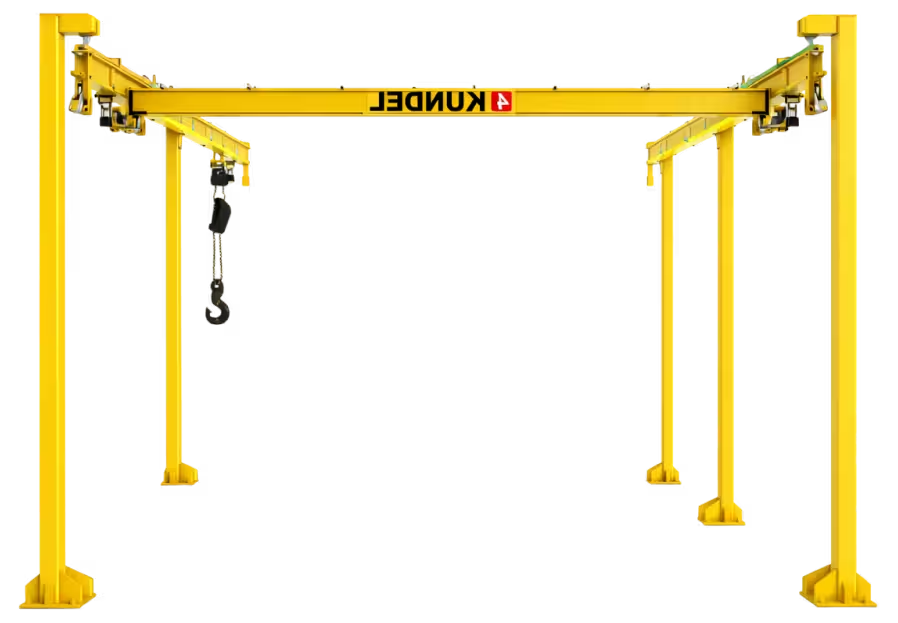
Freestanding Bridge Crane vs. Other Crane
Types Head-to-Head Comparison
|
|
|---|---|
| Freestanding Bridge Crane | Other Crane Types |
|
No building modification required
Self-supporting — bolts to floor
Rectangular X-Y coverage area
Modular, expandable, relocatable
Multiple bridges on one runway
Enclosed track = smooth operation
Install in 1–3 days
Ideal for leased buildings
|
Overhead Bridge Crane:
Higher capacity (up to 100+ tons)
Full building span coverage
Requires building structural support
Major installation = weeks to months
Not relocatable
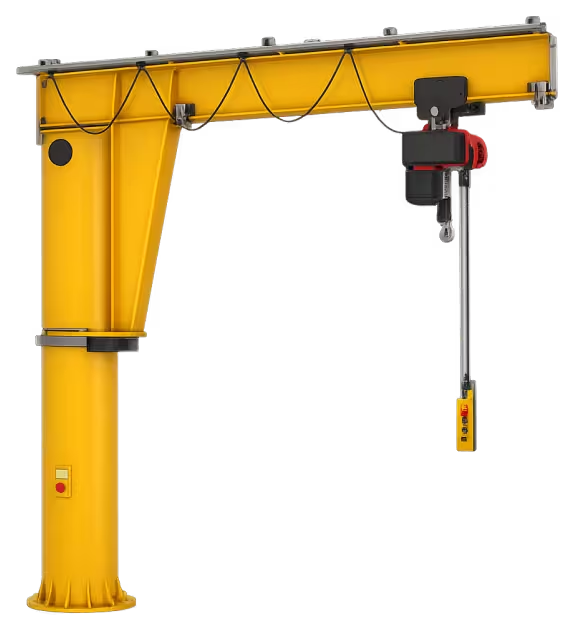
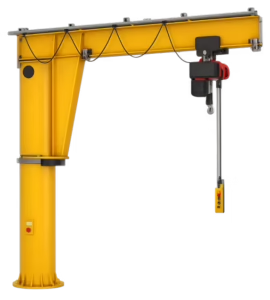
Jib Crane:
Lower cost per unit, small footprint
Circular (arc) coverage only — not rectangular
Limited reach/rotation, single lifting point
Gantry Crane:
Portable / outdoor capable, no building attachment
Floor rails can obstruct traffic
Slower travel, less precise positioning
|
Freestanding Bridge Crane
| No building modification required |
| Self-supporting — bolts to floor |
| Rectangular X-Y coverage area |
| Modular, expandable, relocatable |
| Multiple bridges on one runway |
| Enclosed track = smooth operation |
| Install in 1-3 days |
| Ideal for leased buildings |
Other Crane Types
Overhead Bridge Crane:
| Higher capacity (up to 100+ tons) |
| Full building span coverage |
| Requires building structural support |
| Major installation = weeks to months |
| Not relocatable |
Jib Crane:
| Lower cost per unit, small footprint |
| Circular (arc) coverage only — not rectangular |
| Limited reach/rotation, single lifting point |
Gantry Crane:
| Portable / outdoor capable, no building attachment |
| Floor rails can obstruct traffic |
| Slower travel, less precise positioning |
Let Our Crane Specialists
Help You Choose
Talk to a crane specialist who can evaluate your lifting needs and recommend the best solution for your facility.
Or all us at 515-635-1555
How to Choose the Right
Freestanding Bridge Crane
Selecting the right automated conveyor system is one of the most important decisions you'll make for your warehouse operation. Here's a structured framework to guide your evaluation
Our Proven Freestanding Bridge Crane Installation Process
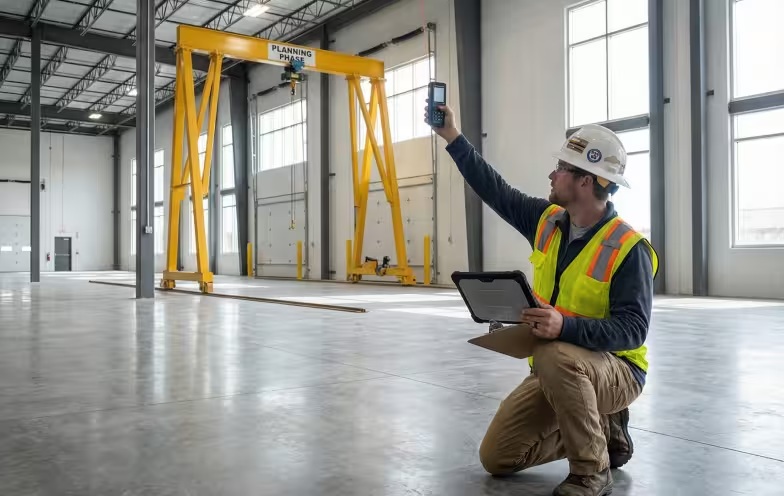
01
Consultation & Site Assessment
WEEK 1-2
Site visit, load analysis, floor evaluation, ceiling height measurement
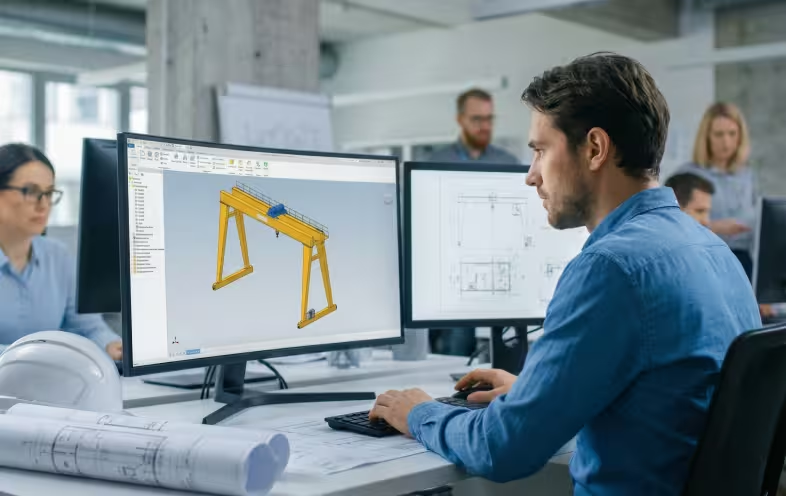
02
Custom Crane Design
WEEK 2-3
CAD modeling, capacity/span/track selection, detailed drawings
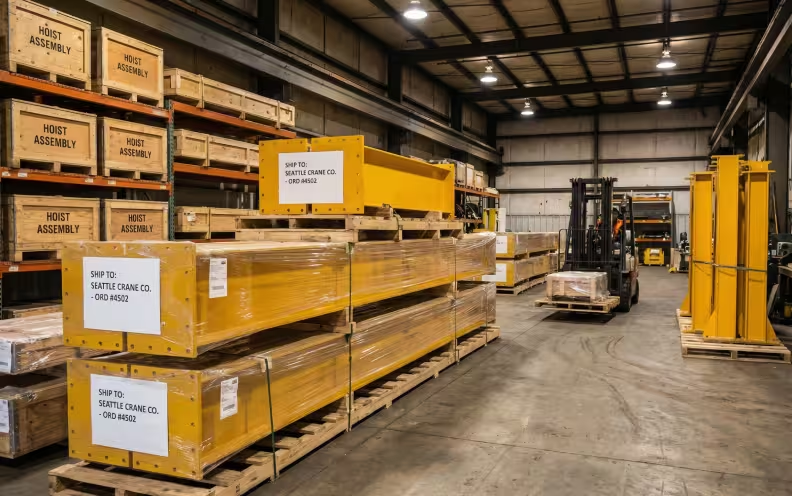
03
Equipment Procurement
WEEK 3-6
Source from Gorbel, Spanco, CraneWerks. Coordinate delivery.
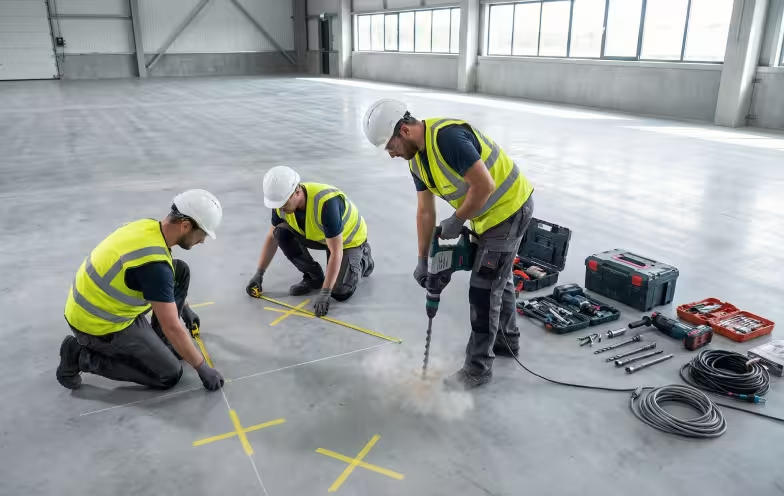
04
Floor Preparation & Layout
DAY 1
Mark locations, verify floor, drill anchors. Minimal disruption.
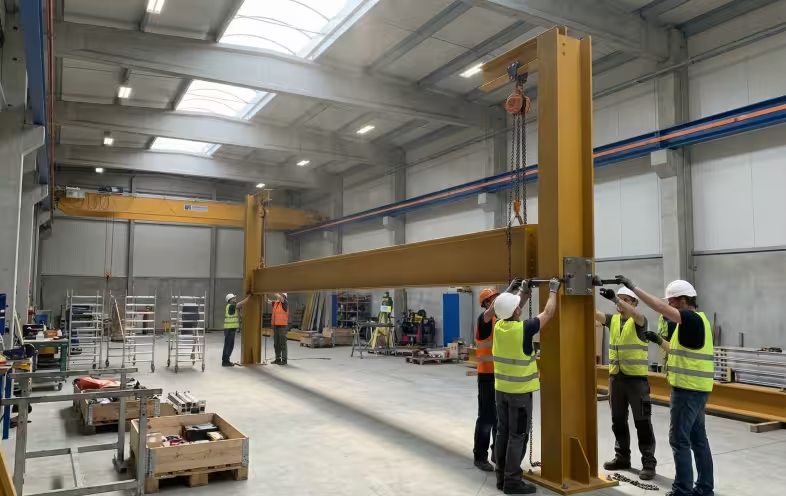
05
Column & Runway Installation
DAY 1-2
Erect columns, install runways, align to spec, torque bolts.
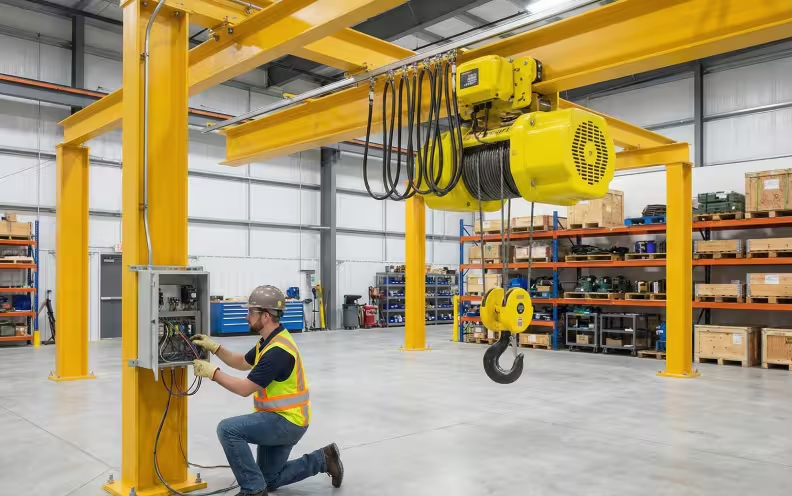
06
Bridge, Hoist & Controls
DAY 2-3
Install bridges, mount hoists, connect electrical, install controls.
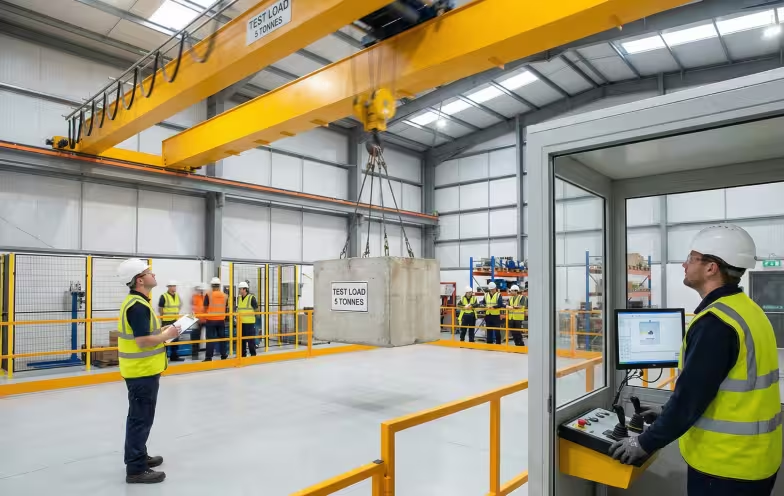
07
Testing & Training
DAY 3
Load test, verify travel, test safety devices, operator training.
08
Ongoing Support
ONGOING
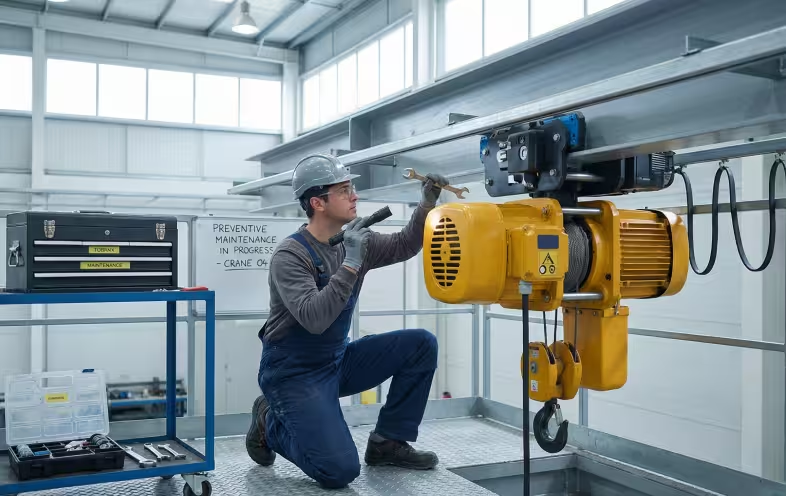
Preventive maintenance, annual inspections, emergency service, parts.
Ready to Get Started?
Request a free consultation and let our team design a belt conveyor system built for your operation.
Or call us at 515-635-1555
Freestanding Bridge Crane
Maintenance Guide
DAILY
- Visual inspection of bridge, runway, and columns for damage
- Check hoist chain/wire rope for wear, kinks, or damage
- Test all controls (pendant, radio) for proper function
- Verify hook latch closes fully
- Listen for unusual noises during operation
Purpose: Catch problems before they cause downtime or safety hazards
WEEKLY
- Inspect wheels and end trucks for wear or flat spots
- Check runway rail for alignment and debris
- Verify all limit switches function correctly
- Inspect electrical connections and festoon system
Purpose: Prevent component degradation between monthly inspections
Monthly
- Lubricate all moving parts per manufacturer specifications
- Inspect all bolted connections and tighten as needed
- Check column base plates and anchor bolts
- Inspect hoist brake for proper holding
- Test overload protection device
Purpose: Maintain mechanical integrity and compliance readiness
Quarterly
- Comprehensive structural inspection of columns, runways, bridge
- Detailed hoist examination including chain/rope, hook, brake
- Electrical system review (contactors, relays, VFDs)
- Review and update maintenance records
Purpose: Identify wear trends and plan component replacements
Annually
- Full crane inspection per OSHA 1910.179 and ASME B30
- Load test at rated capacity
- Non-destructive testing (if required by classification)
- Complete documentation for compliance records
- MWS offers annual inspection and certification services
Purpose: Regulatory compliance and long-term system integrity
Common Freestanding Bridge Crane
Issues and Solutions
Why Choose MWS as Your
Freestanding Bridge Crane Supplier
We don't just sell cranes — we design, engineer, install, and support complete freestanding bridge crane systems. That's the integrator difference.
50+ Years of Experience
Since 1979, MWS has been designing and installing material handling systems across the Midwest. Freestanding bridge cranes are among our most requested products.
Dedicated Service Team
One partner. One accountable team. One freestanding bridge crane system that works from day one. Emergency service and parts when you need them.
Multi-Brand Access
We source from Gorbel, Spanco, CraneWerks, Kundel, and other top manufacturers to get you the best crane for your application at competitive pricing.
Turnkey Installation
MWS manages every phase — from initial assessment and engineered crane system design to equipment procurement, professional installation, load testing, operator training, and ongoing maintenance.
Midwest Coverage
We serve Iowa, Illinois, Indiana, Michigan, Minnesota, Missouri, Ohio, Wisconsin, Kansas, Nebraska, North Dakota, and South Dakota.
Competitive Pricing
As a high-volume integrator, we leverage manufacturer relationships to deliver premium crane systems at competitive pricing — including equipment, installation, and commissioning.
| Capability | MWS (Full-Service Integrator) | Equipment-Only Dealer | Online Crane Retailer |
|---|---|---|---|
| Custom Crane System Design | |||
| Multi-Brand Equipment Access | |||
| Site Assessment & Floor Evaluation | |||
| Professional Installation | |||
| Load Testing & Commissioning | |||
| Operator Training | |||
| Preventive Maintenance Programs | |||
| Annual OSHA/ASME Inspections | |||
| Multi-Crane System Integration | |||
| Emergency Service & Parts |
Frequently Asked Questions
About Freestanding Bridge Cranes
What is a freestanding bridge crane?
A freestanding bridge crane is a self-supporting overhead lifting system that uses its own floor-mounted steel columns and runway structure to provide rectangular lifting coverage without any attachment to the building’s roof, walls, or columns. Capacities range from 250 lbs to 4,000 lbs for enclosed track systems, and up to 10+ tons for heavy-duty configurations.
How much do freestanding bridge cranes cost?
Costs vary based on capacity, span, track type, and installation. Basic systems start at $7,000–$20,000 installed. Mid-range: $25,000–$52,000. Heavy-duty: $55,000–$160,000+. Contact MWS at 515-635-1555 for a free quote.
Do freestanding bridge cranes require building modification?
No. They are self-supporting and bolt directly to the floor. No modification to roof, walls, or columns. Standard 6" reinforced concrete is typically sufficient.
Freestanding bridge crane vs. overhead bridge crane?
An overhead bridge crane relies on the building’s structure. A freestanding bridge crane uses its own independent columns bolted to the floor. Freestanding is ideal for leased buildings, weak-roof facilities, and retrofit applications.
What is the maximum capacity?
Standard enclosed track: 250 to 4,000 lbs. Heavy-duty top-running: 1 to 10+ tons.
What floor is required?
Standard 6" reinforced concrete for most systems up to 4,000 lbs. MWS includes floor evaluation in our site assessment.
Can they be relocated?
Yes. Bolt-together design, no welding, no building attachment. Disassemble and move to a new location or building.
How long does installation take?
Standard single-bridge: 1–3 days. Multi-bridge/complex: 3–5 days. Much faster than traditional overhead cranes.
What are the OSHA requirements?
Covered under OSHA 1910.179 and ASME B30 standards. Includes daily inspection, periodic documented inspections, annual comprehensive inspection, operator training, and maintenance documentation.
What is an enclosed track?
Enclosed track is a hollow rail where trolley wheels ride inside rather than on top of an I-beam. Benefits: 50% less friction, cleaner operation, smoother positioning, reduced wear.
Can multiple bridges share one runway?
Yes. Multiple bridges, even at different capacities, can operate on one runway system simultaneously.
What brands does MWS supply?
Gorbel, Spanco, CraneWerks, Kundel, Air Technical Industries (ATI), and others. We select the best crane for your application.
Freestanding bridge crane vs. jib crane?
Freestanding: rectangular X-Y coverage, larger areas, multiple lifting points. Jib: circular arc coverage, single station. Many facilities use both.
Does MWS offer maintenance and inspection?
Yes. Preventive maintenance programs, OSHA/ASME-compliant annual inspections, load testing, training refreshers, and emergency service. Call 515-635-1555.

CLAIM YOUR
FREE
Consultation
Save Time and Money
Free consultation
Get Your Free Freestanding
Bridge Crane Consultation Today
Request a Free Freestanding Bridge Crane Quote
Tell us about your lifting needs and our engineering team will design a custom freestanding bridge crane system. Free consultation. No obligation.
Or all us at 515-635-1555
Save time. We will contact you
Provide your details, and we’ll help you find exactly what you need