
WAREHOUSE SHELVING
Industrial Steel Shelving Systems for Warehouses & Storage
Heavy-duty metal shelving designed for strength, organization, and scalability.
Speak with an expert  515-635-1555
Home / Warehouse Equipment / Steel Shelving Shop Equipment / Industrial Steel Shelving
At Midwest Warehouse Solutions Inc. (MWS), steel shelving units are one of the most widely used and versatile storage systems we design and install. Industrial steel shelving provides a durable, efficient way to organize inventory, parts, cartons, and supplies in warehouses, distribution centers, manufacturing facilities, and storage areas.
Compared to pallet racking, steel shelving is designed for hand-loaded or light material handling environments, making it ideal for small to medium inventory, parts storage, picking operations, and back-of-house warehouse organization.
As a warehouse systems supplier and integrator, MWS designs industrial metal shelving
systems around real load requirements, aisle layouts, picking workflows, and future growth — ensuring shelving performs reliably as operations evolve.
At Midwest Warehouse Solutions Inc. (MWS), steel shelving units are one of the most widely used and versatile storage systems we design and install. Industrial steel shelving provides a durable, efficient way to organize inventory, parts, cartons, and supplies in warehouses, distribution centers, manufacturing facilities, and storage areas.
Compared to pallet racking, steel shelving is designed for hand-loaded or light material handling environments, making it ideal for small to medium inventory, parts storage, picking operations, and back-of-house warehouse organization.
As a warehouse systems supplier and integrator, MWS designs industrial metal shelving
systems around real load requirements, aisle layouts, picking workflows, and future growth — ensuring shelving performs reliably as operations evolve.
At Midwest Warehouse Solutions Inc. (MWS), steel shelving units are one of the most widely used and versatile storage systems we design and install. Industrial steel shelving provides a durable, efficient way to organize inventory, parts, cartons, and supplies in warehouses, distribution centers, manufacturing facilities, and storage areas.
Compared to pallet racking, steel shelving is designed for hand-loaded or light material handling environments, making it ideal for small to medium inventory, parts storage, picking operations, and back-of-house warehouse organization.
As a warehouse systems supplier and integrator, MWS designs industrial metal shelving
systems around real load requirements, aisle layouts, picking workflows, and future growth — ensuring shelving performs reliably as operations evolve.
What Is Industrial Shelving?
Industrial steel shelving is a modular storage system built from heavy-gauge steel uprights and adjustable shelves, designed for manual storage and picking.
Unlike pallet racking, shelving is:
Industrial steel shelving is a modular storage system built from heavy-gauge steel uprights and adjustable shelves, designed for manual storage and picking.
Unlike pallet racking, shelving is:
- Hand-loaded
- Optimized for cartons and small SKUs
- Designed for narrow aisle layouts
- Adjustable in small increments
It is commonly used in warehouses, manufacturing facilities, maintenance departments, parts rooms, and distribution centers.
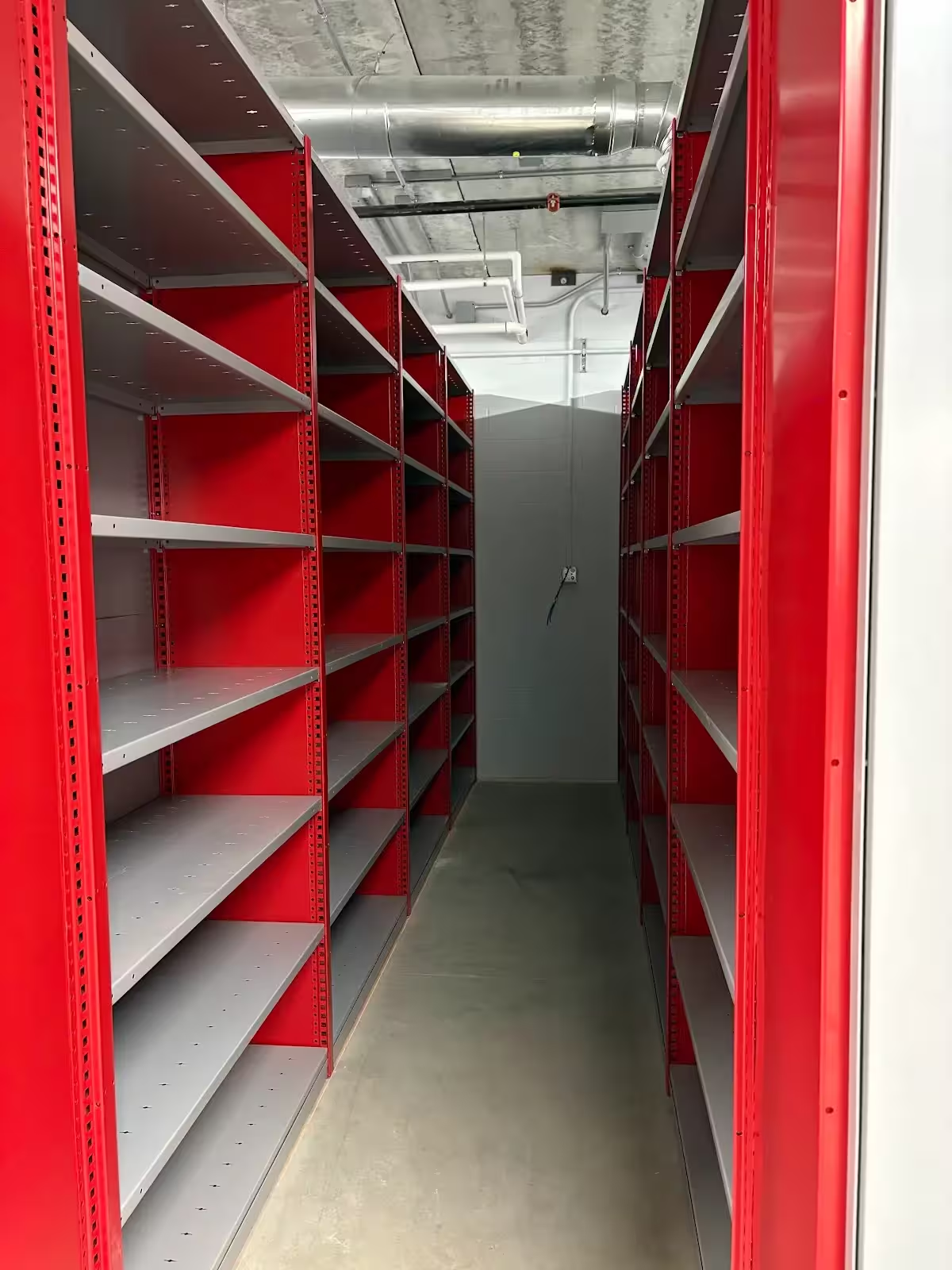
Types of Industrial Steel
Shelving Systems
Steel shelving is not one-size-fits-all. Different shelving designs support different load requirements,
inventory types, and workflows.
Boltless steel shelving
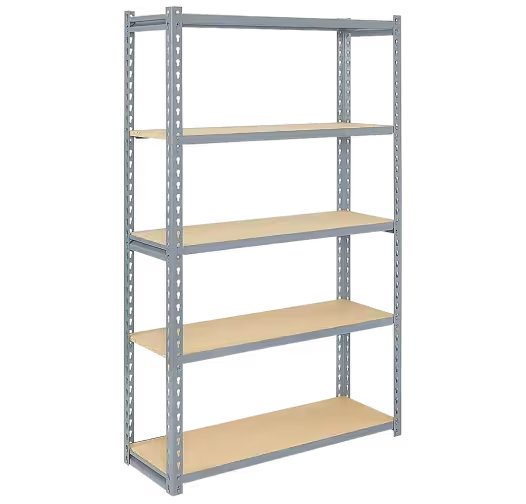
Fast assembly, adjustable storage
Heavy‑duty steel shelving
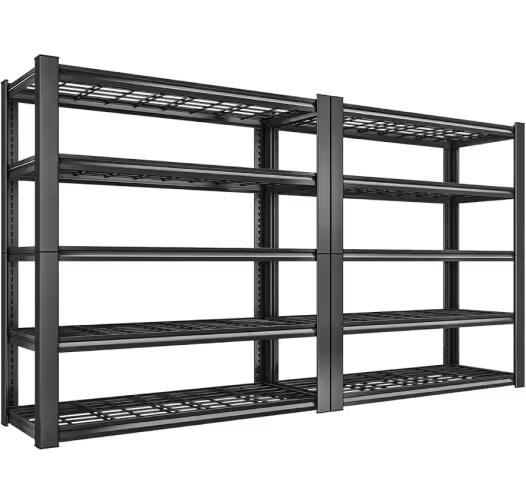
High load capacity
per shelf
Closed steel shelving
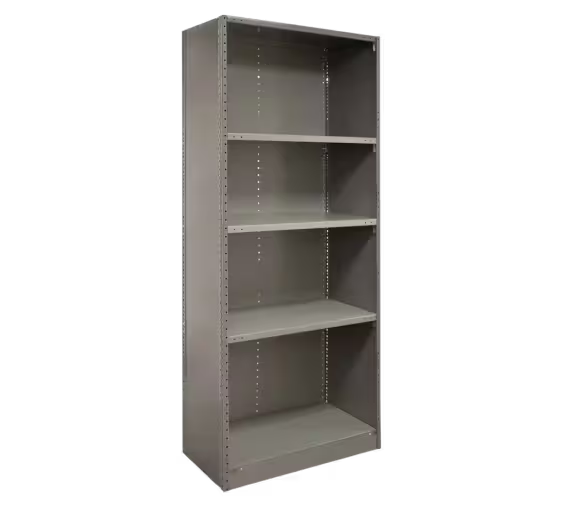
Small parts, bins, and cartons
Open steel shelving
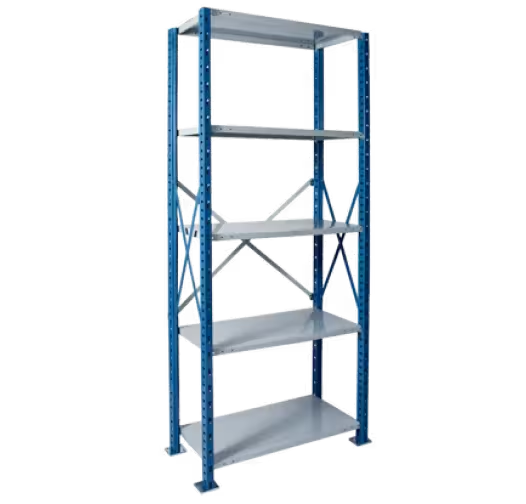
Small parts, bins, and cartons
Premium Industrial Shelving Systems
Powered by Rousseau
MWS integrates heavy-duty shelving systems manufactured by Rousseau Metal, known for modular engineering, durability, and industrial performance
01
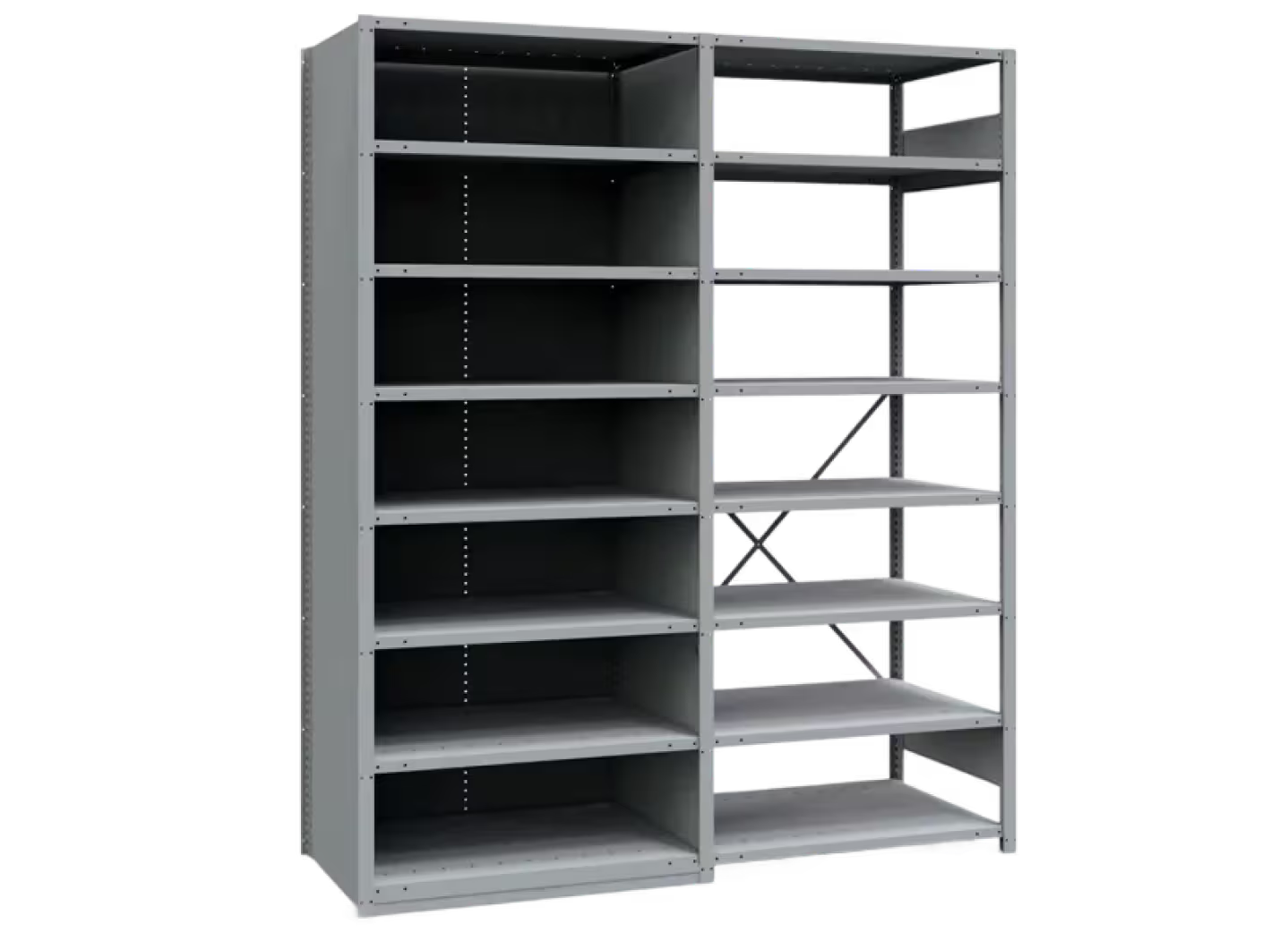
Boltless Spider® Steel Shelving (Single-Level Systems)
Rousseau Boltless Spider® Industrial Steel Shelving delivers durable, flexible storage for warehouses, maintenance rooms, parts departments, and manufacturing environments.
When Boltless Shelving Makes Sense:
- Manageable inventory volumes
- Fast, simple access
- Limited ceiling height
- Need for frequent reconfiguration
02
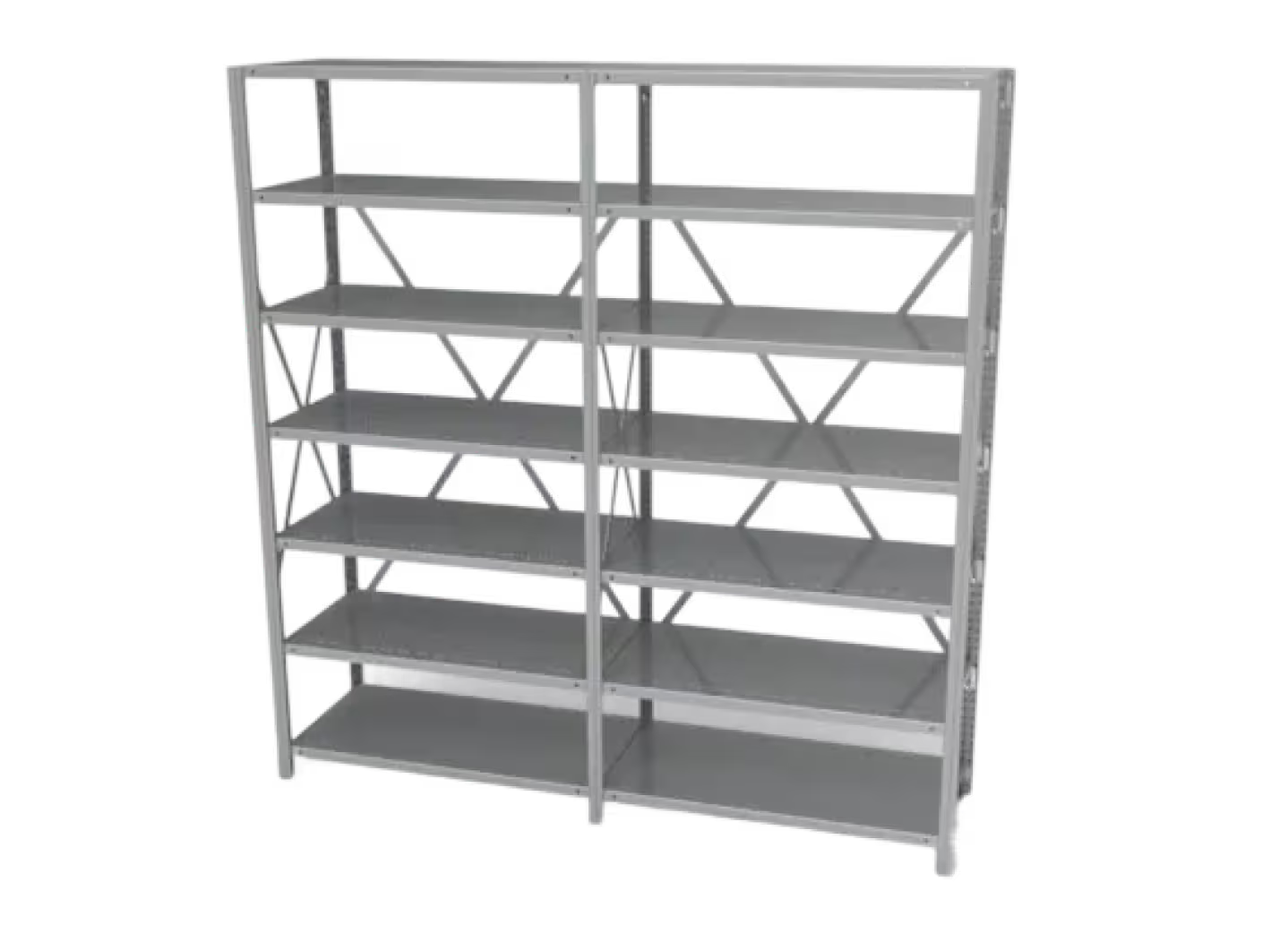
Open Industrial Steel Shelving Systems
Rousseau Open Shelving offers maximum visibility and fast picking for frequently used inventory.
Key Benefits:
- Up to 800 lb per shelf (1,100 lb reinforced)
- Boltless assembly with 1″ adjustability
- Open design for quick identification
- Common-post layout increases usable space
- Expandable to multi-level systems
Ideal Applications:
- Parts rooms
- Maintenance departments
- Assembly areas
- Tool cribs
Optional Accessories:
- Shelf dividers
- Plastic bin panels
- Utility panels
- Hooks & tool holders
- Back and side panels
03
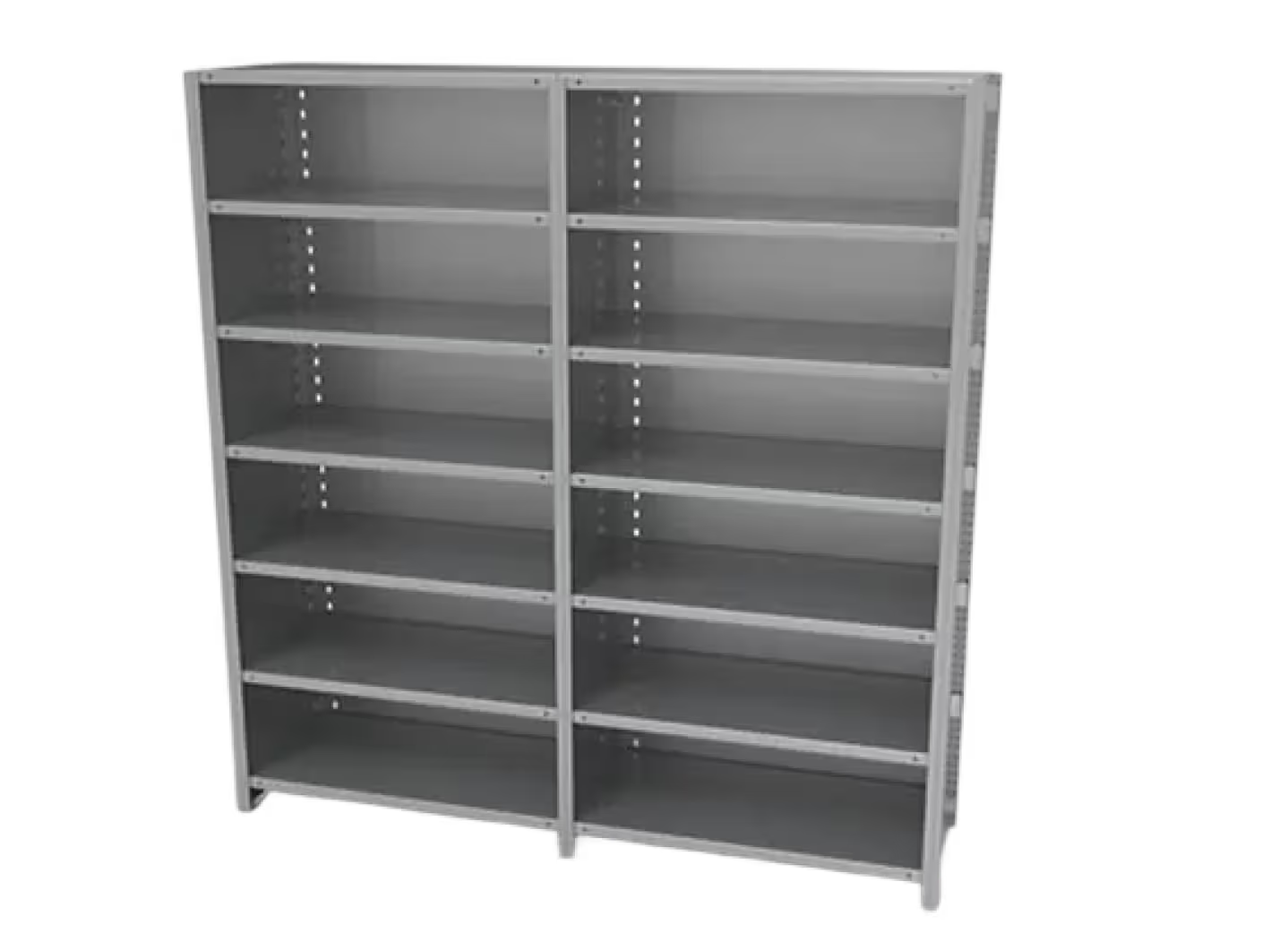
Closed Industrial Steel Shelving Systems
Rousseau Closed Shelving combines rugged construction with enclosed protection for clean, organized, and secure inventory environments.
Key Benefits:
- High load capacity
- Dust & impact protection
- Adjustable shelves in 1″ increments
- Integrated drawer compatibility
- Professional organized appearance
Door Options:
- Solid steel doors
- Polycarbonate visibility doors
- Hinged or stacked systems
- Lockable configurations
04
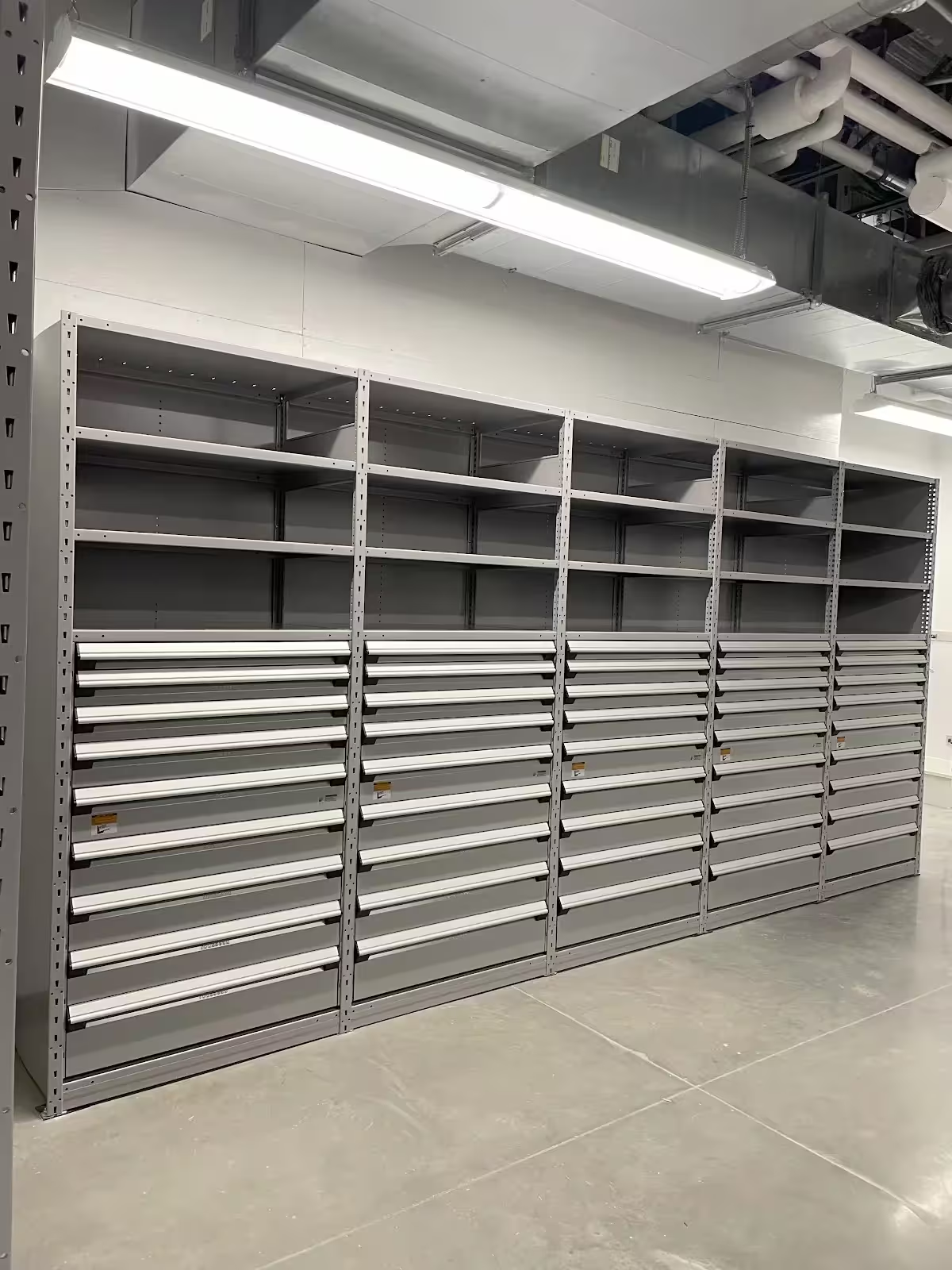
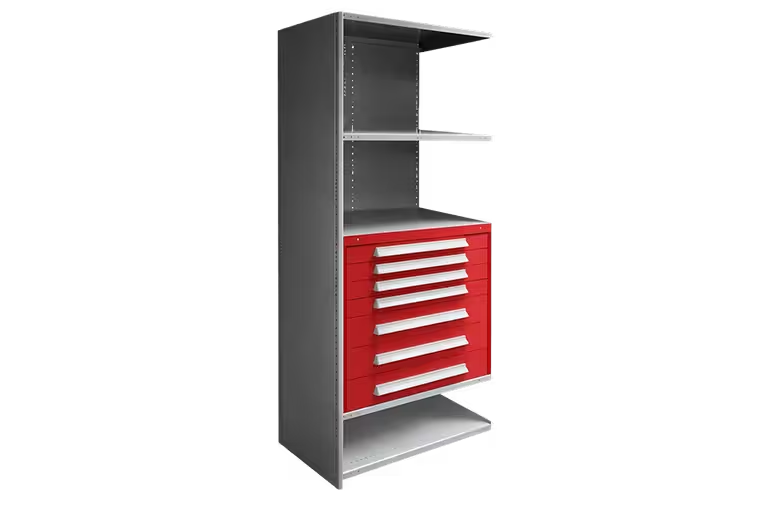
Industrial Shelving With Drawers
Hybrid systems combining open shelving and heavy-duty modular drawers.
Benefits:
- Store small, medium, and large items in one footprint
- Improve pick accuracy
- Increase density without expanding space
- Lifetime drawer rolling warranty
Common Uses:
- Tool cribs
- Maintenance departments
- Manufacturing parts storage
- Distribution centers
05
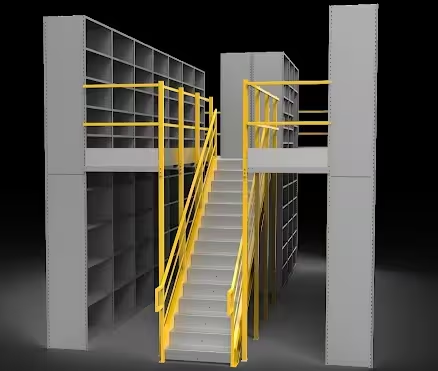
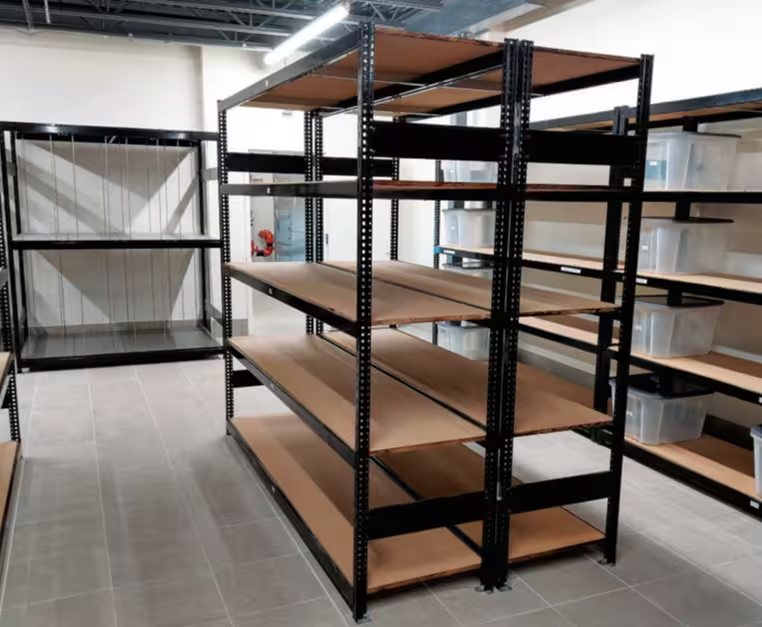
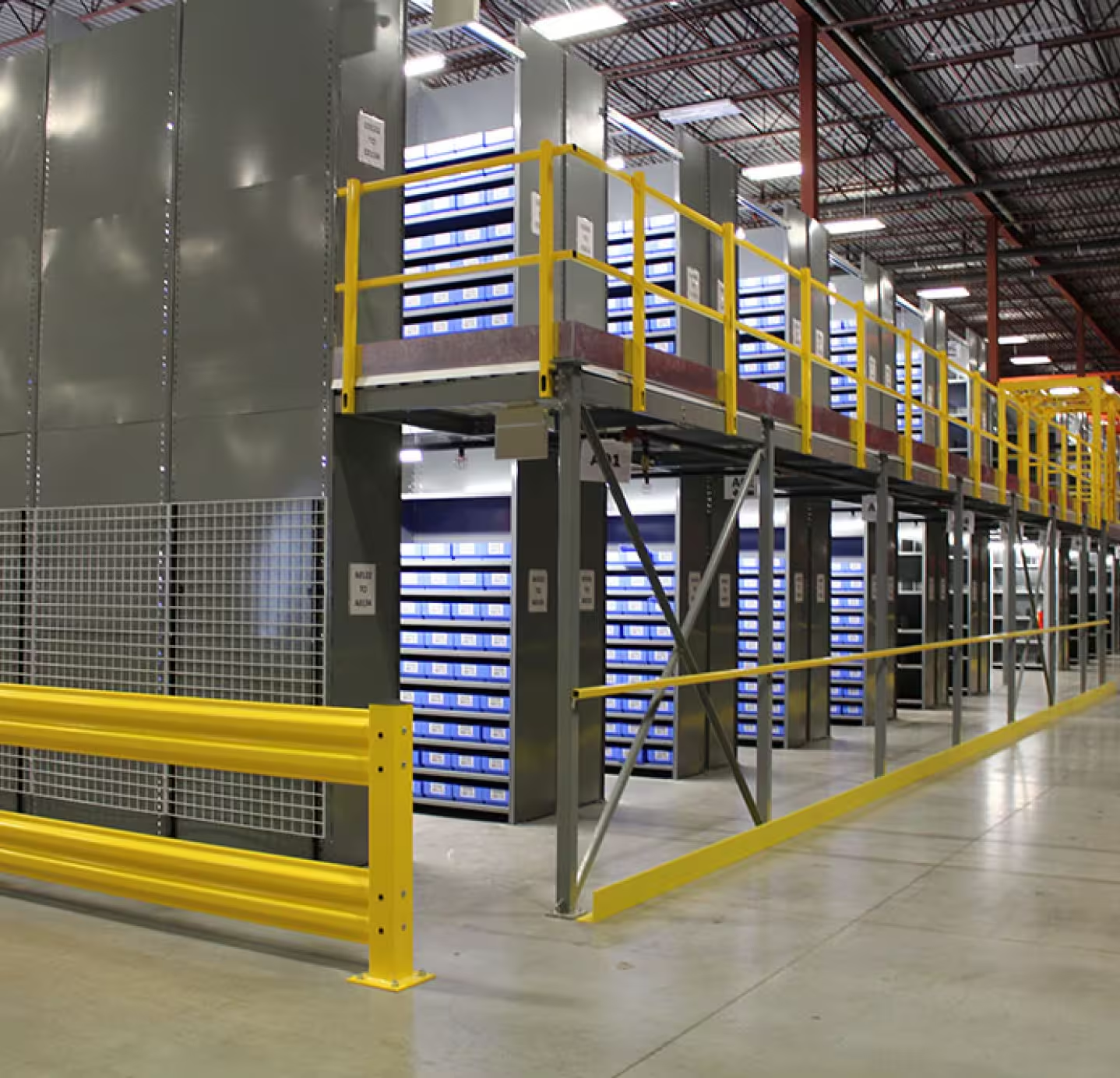
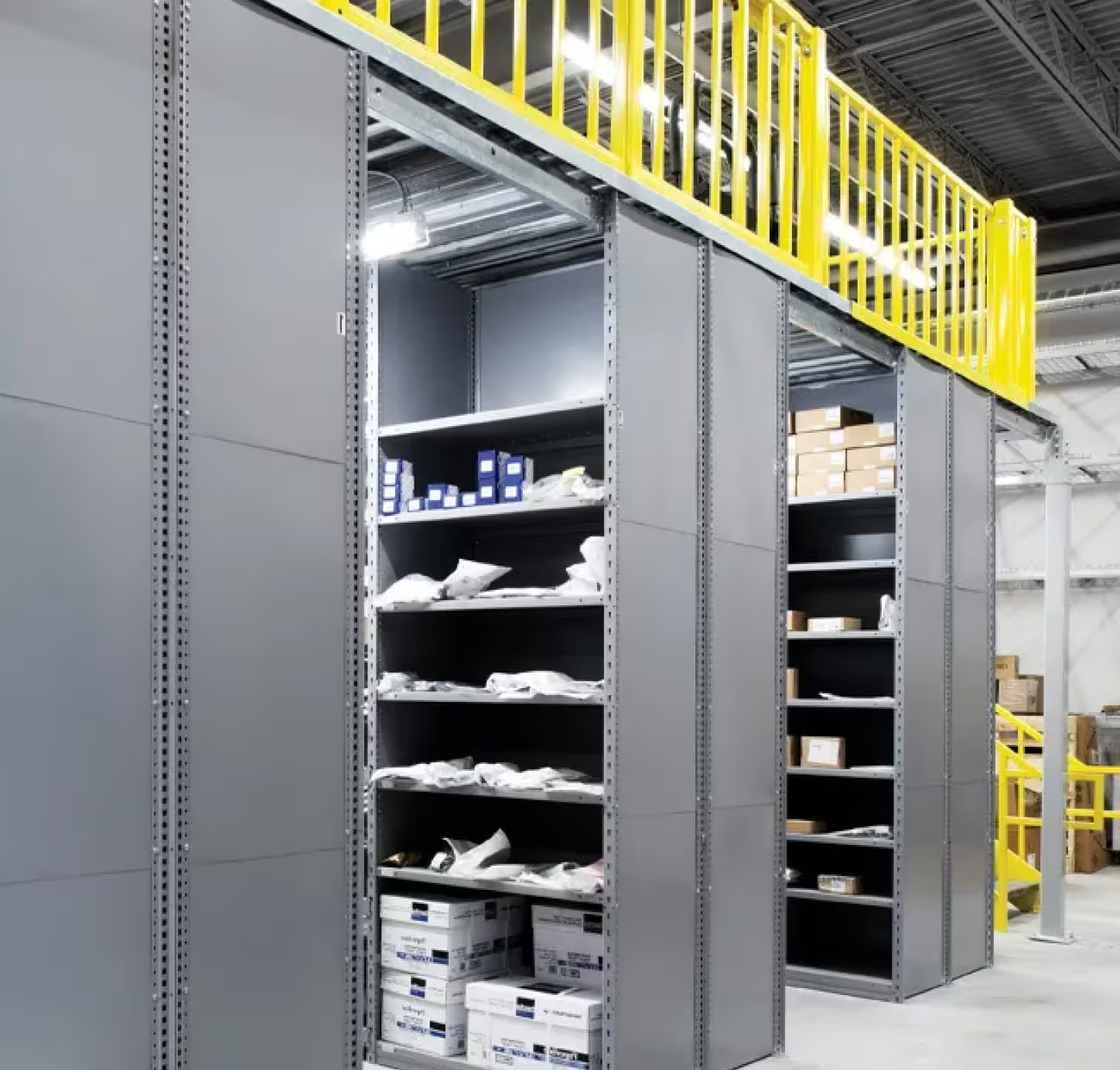
Two-Level Industrial Steel Shelving Systems
Two-level shelving systems dramatically increase storage capacity by utilizing vertical space.
Best When:
- SKU counts are high
- Floor space is limited
- Ceiling height is available
- Manual picking must expand
Two-Level Shelving vs Mezzanines
Two-level shelving is shelving-supported picking. Mezzanines are structural platforms for broader workspace use.
06
Mini Racking Systems for Small Parts
High-density shelving engineered for compact parts storage.
Benefits:
- Heavy-duty steel construction
- Modular expansion
- Bin & divider compatibility
- Adjustable shelf increments
Ideal For:
- Small parts warehouses
- Assembly lines
- Electrical & mechanical components
- Service departments
Key Features & Benefits
of Steel Shelving Systems
Most shelving projects begin with the need to organize inventory efficiently while keeping items accessible and easy to pick.
At Midwest Warehouse Solutions, we recommend industrial steel shelving when it offers the best balance of accessibility, flexibility, durability, and cost for hand-loaded inventory.
Why industrial steel shelving is widely used:
Efficient use of warehouse floor space
Steel shelving supports narrow aisle layouts and dense storage of cartons, bins, and parts, making it ideal where forklift access is not required.
Optimized for manual picking and accessibility
Warehouse shelving is designed for hand-picked inventory, keeping items visible and within easy reach to improve picking speed and accuracy.
Flexible and adjustable shelving layouts
Shelves can be repositioned to accommodate changing SKUs, carton sizes, or inventory volumes as operations evolve.
Durable steel construction for industrial use
Industrial metal shelving is built to withstand daily warehouse activity, including frequent picking and restocking.
Scalable, modular system design
Shelving systems can be expanded or reconfigured over time as storage needs grow.
Cost-effective storage for hand-loaded inventory
For manual storage and picking, steel shelving is typically more economical than pallet racking or automation.
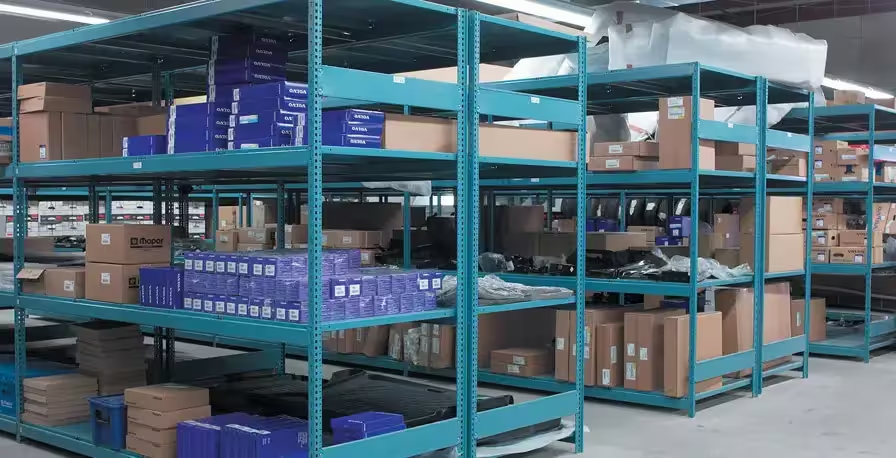
Rousseau Mini Racking Systems
High-Density Small Parts Storage
Rousseau Mini Racking delivers compact, modular storage for small components in high-volume environments.
Key Advantages
- Store more inventory in less space
- Heavy-duty steel construction
- Modular expansion
- Faster picking & fewer errors
- Clean, professional organization
Common Applications
- Parts warehouses
- Assembly lines
- Maintenance & MRO
- Tool cribs
- Distribution centers
System Features
- Reinforced uprights & shelves
- Adjustable shelf heights
- Bin, divider & drawer compatibility
- Easy system expansion
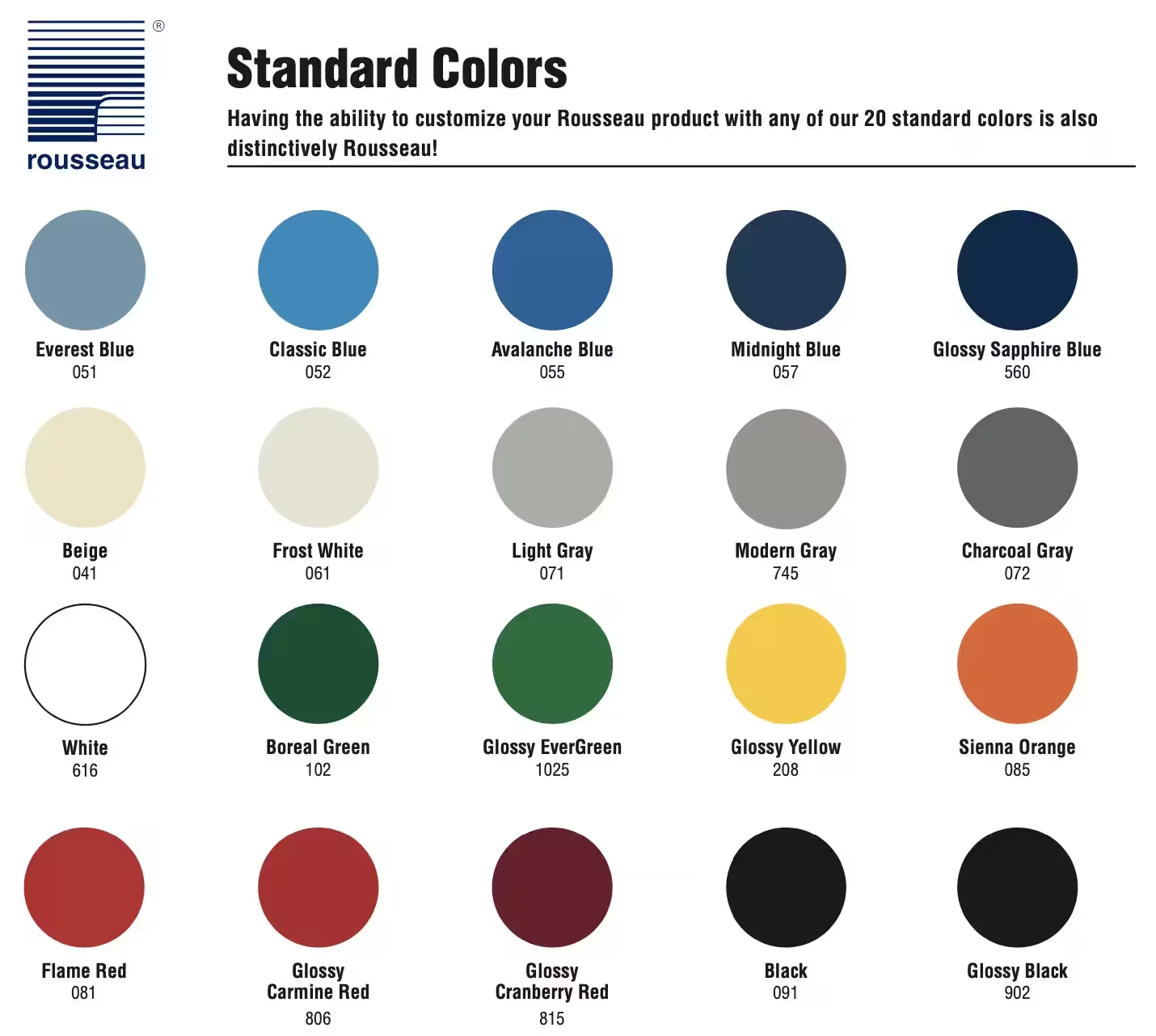
Rousseau Color Chart & Finish Options
Create a workspace that performs and looks professional.
Rousseau shelving systems are available in premium
powder-coated finishes designed for durability, corrosion resistance, and facility branding.
Color options improve:
- Visual organization
- Department zoning
- Long-term appearance
- Facility aesthetics
Use the chart to select standard available finishes.
Product Configuration Tool
Build Your Ideal Shelving System
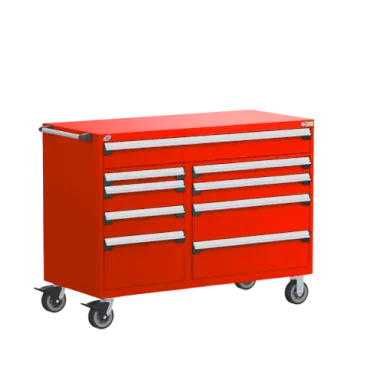
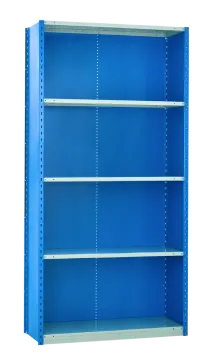
Design a fully customized shelving solution tailored to your inventory and workflow.
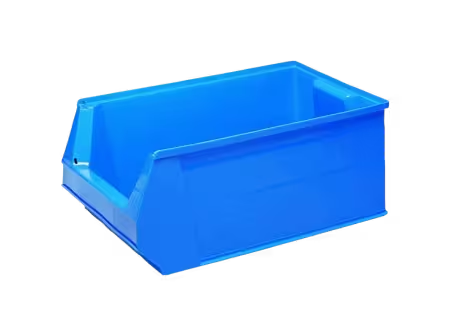
With the Rousseau Configuration Tool, you can:
- Select shelving dimensions and load capacity
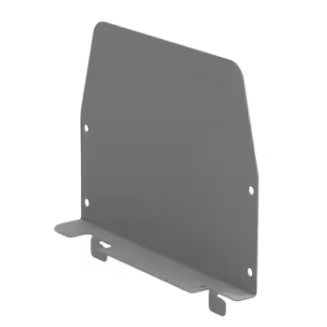
- Add drawers, doors, dividers, and roll-out shelves
- Integrate lighting, bin panels, and accessories
- Select shelving dimensions and load capacity
- Add drawers, doors, dividers, and roll-out shelves
- Integrate lighting, bin panels, and accessories

MWS reviews every configuration for safety, performance, and cost efficiency before providing final layouts and pricing.
Single-Level vs Multi-Level
Industrial Steel Shelving
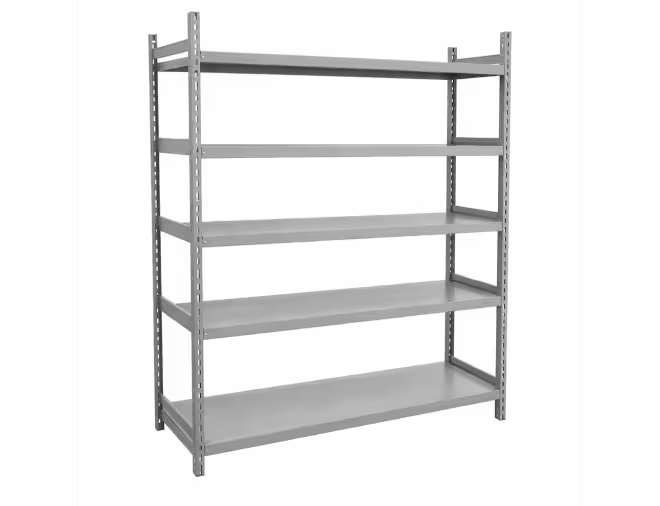
As warehouse storage needs grow, one common question is whether single-level steel shelving is sufficient or if a multi-level shelving configuration is the better solution.
At Midwest Warehouse Solutions, we help clients evaluate this decision based on available ceiling height, picking volume, SKU count, and growth plans, not just square footage
|
|
Feature | Single‑Level Steel Shelving | Multi‑Level Steel Shelving |
|---|---|---|
| Storage layout | One accessible shelving level | Two or more elevated picking levels |
| Best for | Smaller SKU counts, open layouts | High SKU density, limited floor space |
| Picking method | Manual picking at floor level | Manual picking across multiple levels |
| Vertical space usage | Fixed | Maximizes available ceiling height |
| Installation complexity | Low | Moderate |
| Typical applications | Stockrooms, light fulfillment | Distribution centers, service parts |
| Relationship to mezzanines | Standalone shelving | Shelving supported by platforms |
Single‑Level Steel Shelving
Feature
| Storage layout | One accessible shelving level |
| Best for | Smaller SKU counts, open layouts |
| Picking method | Manual picking at floor level |
| Vertical space usage | Fixed |
| Installation complexity | Low |
| Typical applications | Stockrooms, light fulfillment |
| Relationship to mezzanines | Standalone shelving |
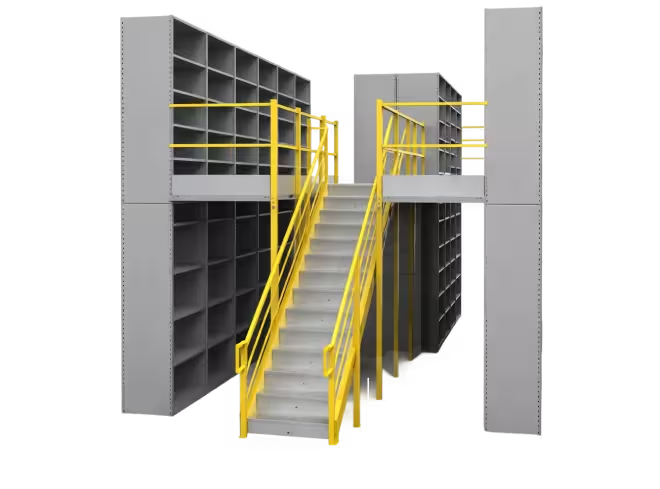
Multi‑Level Steel Shelving
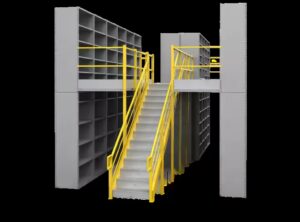
Feature
| Storage layout | Two or more elevated picking levels |
| Best for | High SKU density, limited floor space |
| Picking method | Manual picking across multiple levels |
| Vertical space usage | Maximizes available ceiling height |
| Installation complexity | Moderate |
| Typical applications | Distribution centers, service parts |
| Relationship to mezzanines | Shelving supported by platforms |
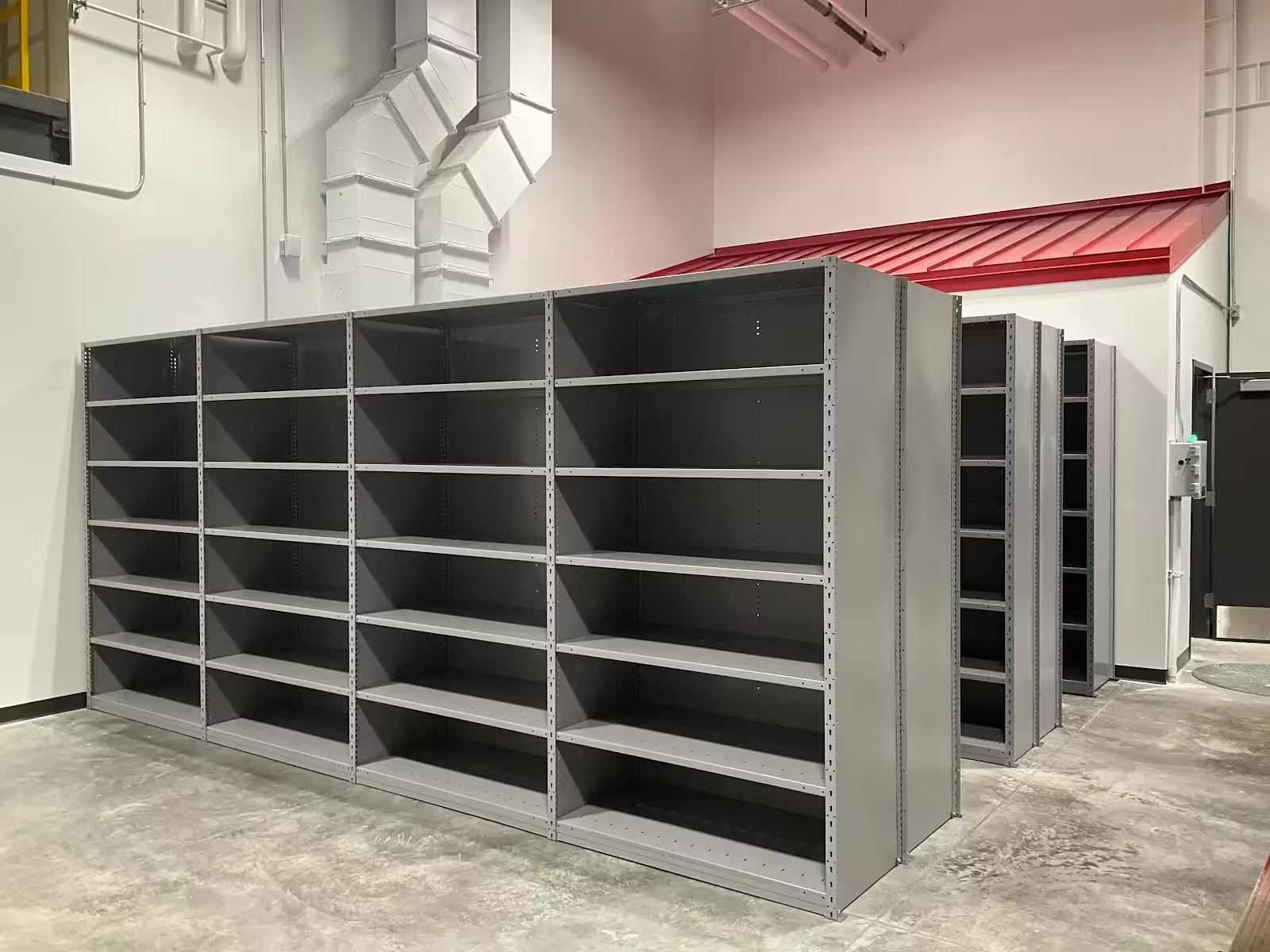
When Single-Level Steel
Shelving Makes Sense
At MWS, we typically recommend single-level shelving when:
- Inventory volumes are manageable at floor level
- Fast, simple access is a priority
- Ceiling height is limited or unused vertical access isn’t needed
- Layout flexibility and easy reconfiguration are important
When Two-Level Shelving Is Better
We often recommend multi-level shelving systems when:
- SKU counts are high and floor space is constrained
- Manual picking must be distributed across multiple levels
- Vertical space is available but building expansion isn’t practical
- Storage density needs to increase without pallet racking
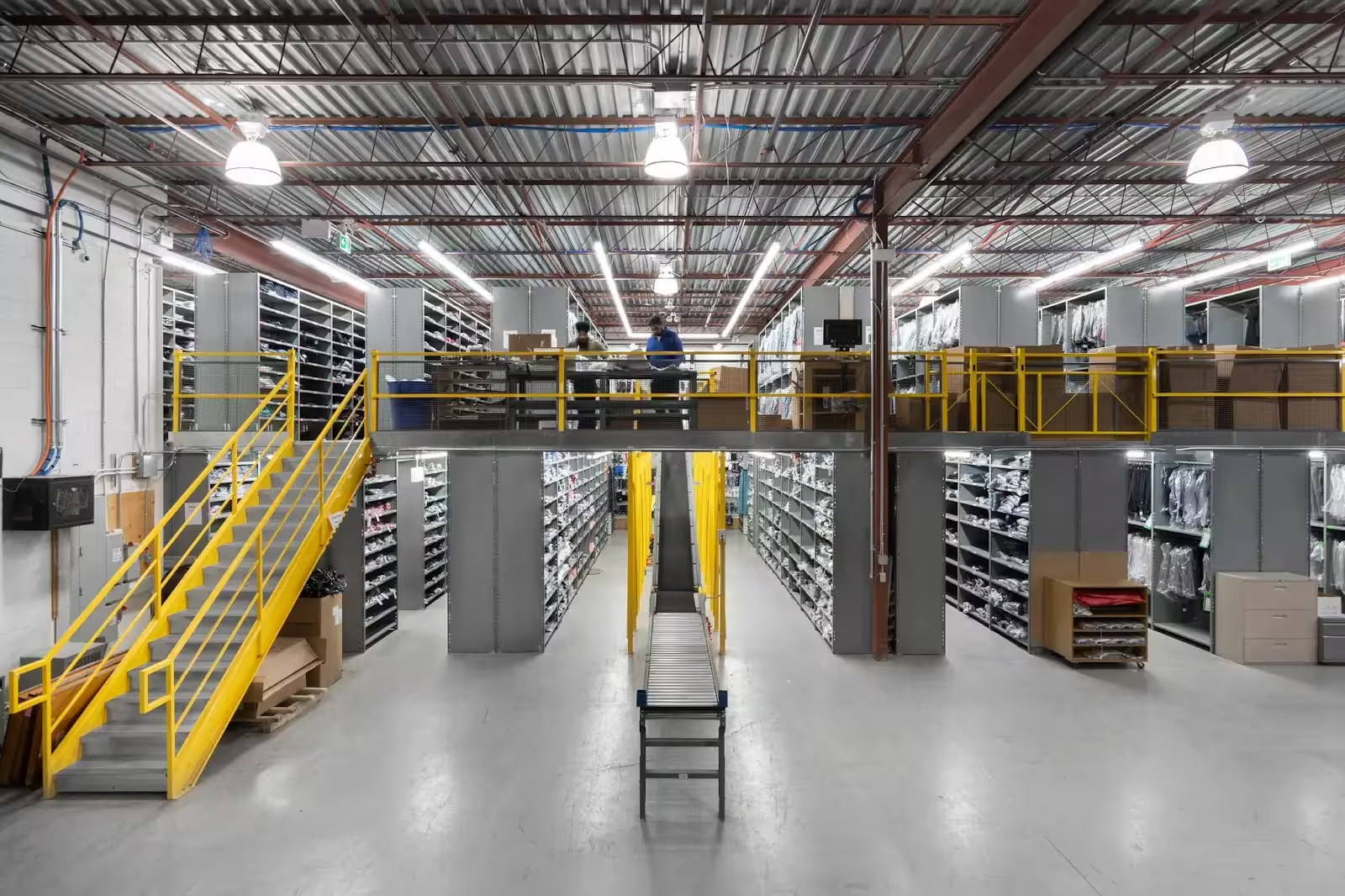
Multi-level shelving systems allow warehouses to increase picking capacity and storage density while maintaining manual access to inventory.
How Multi-Level Shelving Differs from Mezzanines
While multi-level shelving uses elevated platforms, it differs from traditional mezzanines. Multi-level shelving is typically designed around shelving-supported picking systems, whereas mezzanines are structural platforms designed for broader storage, equipment, or workspace use.
At MWS, we help determine whether a multi-level shelving system or a mezzanine is the right vertical expansion strategy based on operational requirements.
Which Is the Right Choice?
Industrial Steel Shelving vs Shelving with Drawers
When organizing warehouse inventory, one common decision is whether to use open industrial steel shelving or industrial shelving with drawers. While both systems are designed for manual storage, they support different inventory types and operational needs.
At Midwest Warehouse Solutions, we help clients choose between open shelving and drawer-based shelving by evaluating inventory size, access frequency, organization requirements, and picking accuracy — not just storage density.
|
|
Feature | Industrial Steel Shelving | Industrial Shelving with Drawers |
|---|---|---|
| Storage density | Open shelves | Open shelves |
| Best for inventory type | Cartons, bins, tools, bulk parts | Small parts, components, hardware |
| Visibility | Full visibility of stored items | Items organized within drawers |
| Picking speed | Fast access for larger items | Precise picking for small items |
| Organization level | Moderate | High |
| Inventory control | Visual organization | Compartmentalized control |
| Flexibility | Highly adjustable shelf spacing | Drawer sizes fixed or semi‑fixed |
| Typical use areas | Warehouses, fulfillment, stockrooms | MRO, manufacturing, parts rooms |
| Space efficiency | Efficient for mixed‑size items | Very efficient for dense small parts |
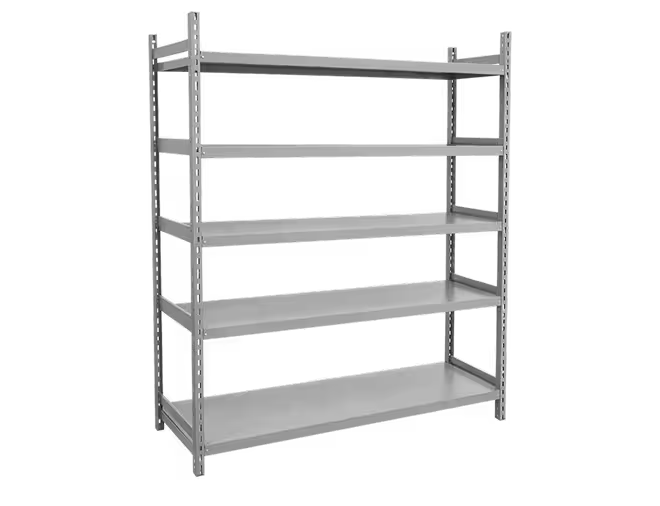
Industrial Steel Shelving
Feature
| Storage format | Open shelves |
| Best for inventory type | Cartons, bins, tools, bulk parts |
| Visibility | Full visibility of stored items |
| Picking speed | Fast access for larger items |
| Organization level | Moderate |
| Inventory control | Visual organization |
| Flexibility | Highly adjustable shelf spacing |
| Typical use areas | Warehouses, fulfillment, stockrooms |
| Space efficiency | Efficient for mixed‑size items |
Industrial Shelving with Drawers
Feature
| Storage format | Open shelves |
| Best for inventory type | Small parts, components, hardware |
| Visibility | Items organized within drawers |
| Picking speed | Precise picking for small items |
| Organization level | High |
| Inventory control | Compartmentalized control |
| Flexibility | Drawer sizes fixed or semi‑fixed |
| Typical use areas | MRO, manufacturing, parts rooms |
| Space efficiency | Very efficient for dense small parts |
How Industrial Steel Shelving Is Used in Warehouse Operations
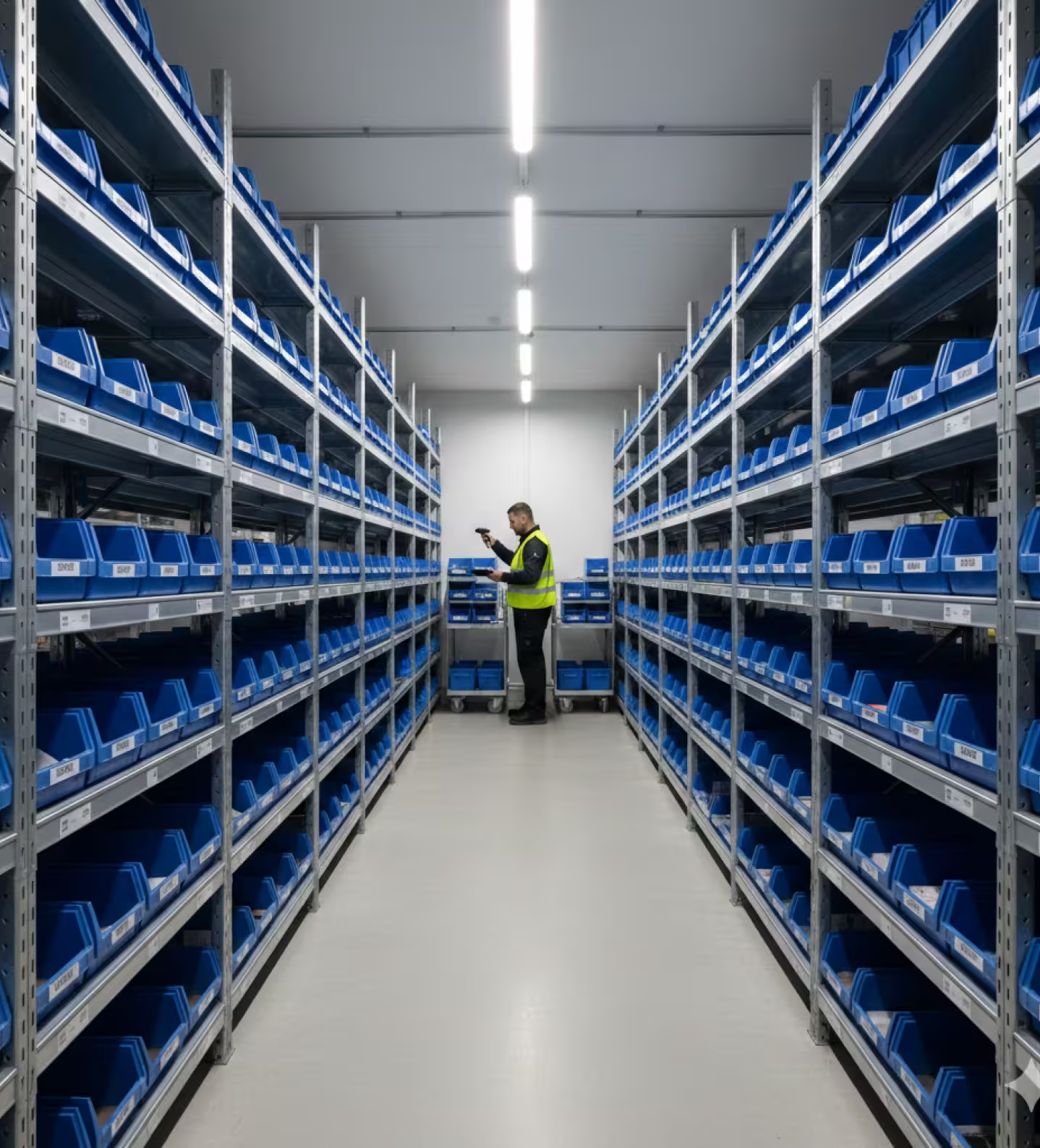
Industrial steel shelving is used to support manual storage and picking workflows where items must be easy to access, organize, and replenish.
At Midwest Warehouse Solutions, we design shelving layouts based on how inventory actually moves through a facility, from receiving to storage to picking and restocking.
In practice, warehouse shelving is commonly used to:
- Store cartons, bins, parts, tools, and supplies
- Organize SKUs for order picking and fulfillment
- Support maintenance, MRO, and spare-parts storage
- Create storage zones separate from pallet racking
- Improve picking efficiency by grouping fast-moving items within reach
Shelving systems are typically configured with adjustable shelf spacing so layouts can evolve as SKUs, carton sizes, or picking patterns change.
When used correctly, steel shelving improves inventory visibility, reduces picking time, and supports scalable warehouse operations without adding complex material handling equipment.
Industrial Steel Shelving
Design Considerations
At Midwest Warehouse Solutions, steel shelving systems are designed around how inventory is stored, accessed, and replenished — not just shelf dimensions.
Key design considerations include:
Shelf load capacity
Ensures each shelf safely supports the actual weight of cartons, bins, parts, or equipment being stored, including peak or uneven loads.
Total unit capacity
Accounts for the combined weight across all shelves and uprights, ensuring the shelving system remains structurally sound under full load.
Shelf size and adjustability
Determines how inventory is positioned and organized, and how easily shelf spacing can be modified as SKU sizes or quantities change.
Upright height and bay configuration
Affects storage density, vertical space utilization, and whether shelving should be designed as low-, mid-, or high-rise units.
Aisle layout and picking flow
Impacts picker movement, access efficiency, and overall workflow within the shelving area, especially in high-frequency picking environments.
Inventory type and access frequency
Helps define shelf spacing, load ratings, and layout based on whether items are fast-moving, bulky, fragile, or infrequently accessed.
Future expansion and reconfiguration
Ensures the shelving system can be expanded, reconfigured, or integrated with additional storage solutions as operations grow.
Steel Shelving Safety
& Load Ratings
Industrial steel shelving must be properly rated and installed to ensure safe operation.
Our systems incorporate:
- Load-rated shelves and uprights
- Anchoring where required
- Clear load capacity labeling
- Compliance with applicable safety standards
- Proper load distribution is critical to long-term safety and performance.
Industrial Steel Shelving Cost
What Impacts Pricing?
Steel shelving cost depends on system size, load capacity, and configuration.
At MWS, we focus on specifying the right level of capacity and flexibility, avoiding over-engineering where it isn’t needed.
| Cost Factor | Impact |
|---|---|
| Shelf load rating | Higher capacity increases cost |
| Shelf size and quantity | Larger systems require more material |
| Upright height | Taller units need heavier construction |
| Layout complexity | Multi-row layouts add components |
| Installation requirements | Anchoring and layout affect labor |
Cost Factor
Shelf load rating
Impact:
Higher capacity increases cost
Shelf size and quantity
Impact:
Larger systems require more material
Upright height
Impact:
Taller units need heavier construction
Layout complexity
Impact:
Multi-row layouts add components
Installation requirements
Impact:
Anchoring and layout affect labor
Why Choose Midwest Warehouse Solutions for Steel Shelving
Many companies sell shelving components. Fewer operate as a true warehouse systems supplier and integrator.
As a warehouse systems integrator with over 50 years of experience, Midwest Warehouse Solutions designs steel shelving as part of complete, scalable warehouse storage solutions.
As your steel shelving supplier, MWS provides:
- Manufacturer-engineered industrial steel shelving
- Expertise across shelving, racking, and layouts
- Application-specific load and layout design
- End-to-end support from design to installation
- Long-term support as storage needs change
Frequently Asked Questions
About Industrial Steel Shelving
What is industrial steel shelving used for?
Industrial steel shelving is used for manual storage and picking of cartons, bins, parts, tools, and supplies in warehouses, manufacturing facilities, and storage areas.
How much weight can industrial steel shelving hold?
Load capacity depends on the shelving design, shelf size, and upright construction. Heavy-duty steel shelving supports higher loads when properly rated and installed.
What is the difference between warehouse shelving and shelving for pallet racking?
Warehouse shelving is installed as standalone shelving rows, while shelving for pallet racking (pallet shelving racks) is installed inside pallet rack bays to support manual picking alongside pallet storage.
Is steel shelving better than pallet racking?
Steel shelving is better for hand-picked inventory and smaller items, while pallet racking is designed for forklift-handled pallets. Many warehouses use both systems together.
What is heavy-duty steel shelving?
Heavy-duty steel shelving features reinforced uprights and shelves designed to support higher loads per shelf, making it suitable for industrial and warehouse environments.
Can industrial steel shelving be adjusted or reconfigured?
Yes. Most industrial metal shelving systems are modular, with adjustable shelves that can be repositioned as inventory sizes or storage needs change.
Does industrial steel shelving need to be anchored?
Anchoring requirements depend on shelving height, load capacity, and local safety guidelines. Taller or heavily loaded shelving systems often require anchoring for stability.
How much does industrial steel shelving cost?
Steel shelving cost varies based on load rating, shelf size, number of shelves, upright height, and overall system configuration.
Can steel shelving be expanded in the future?
Yes. Industrial steel shelving systems are designed to be expanded or reconfigured as operations grow or storage requirements change.
Is industrial steel shelving safe?
Yes. When properly specified, installed, and used within rated capacities, industrial steel shelving provides a safe and reliable storage solution.

CLAIM YOUR
FREE
Consultation
Save Time and Money
Request a Steel Shelving Quote
Whether you need heavy-duty steel shelving, industrial metal shelving, warehouse shelving, or shelving for pallet racking, work with a team that designs storage solutions around real inventory, space constraints, and long-term growth.
Speak to a Shelving Expert
515-635-1555
Save time. We will contact you
Provide your details, and we’ll help you find exactly what you need